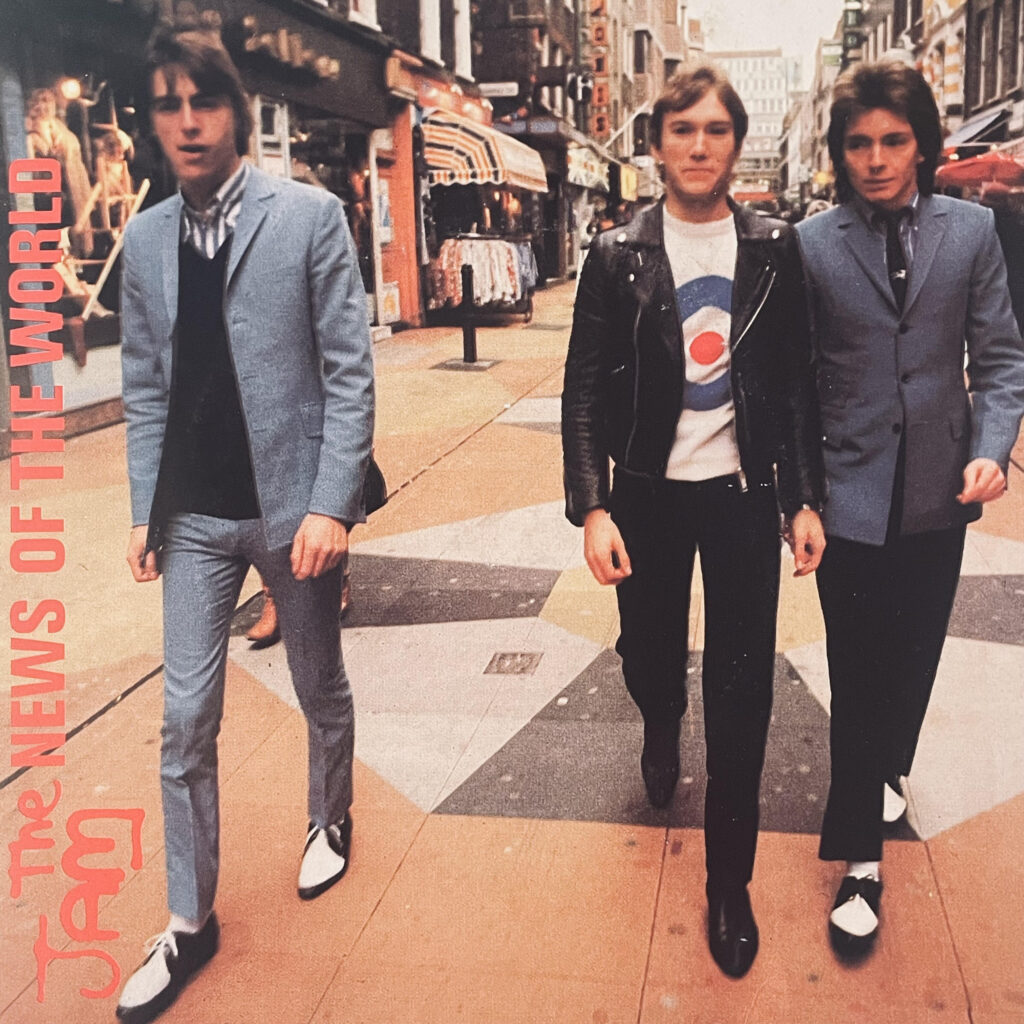
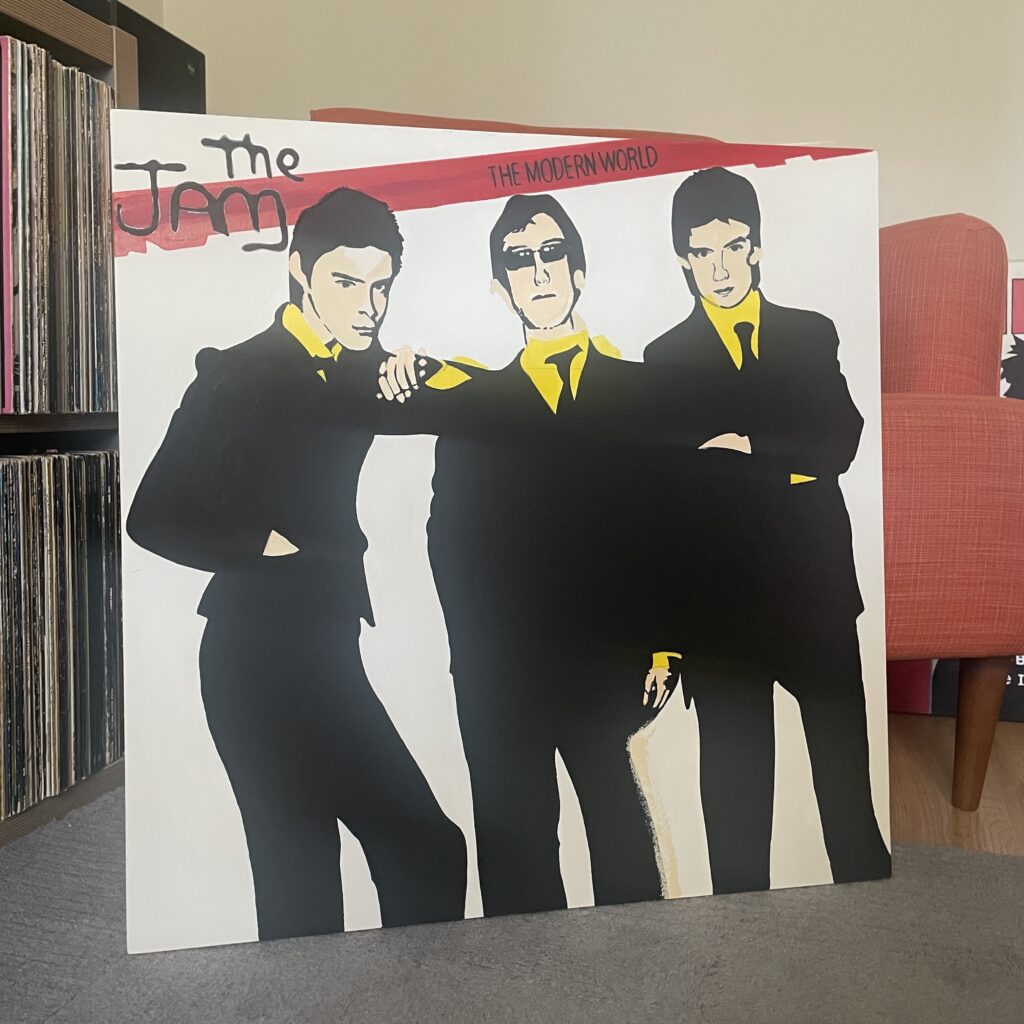
The introduction to my book Art Pop / Pop Art: a study of the influences of art school, famous artists and movements on pop and rock music. Those institutions where failure is motivation, where the eccentric and pretentious emerge into the fascinating space where art and music meet.
The Art School Revolution in Rock
It begins with paint splashes before guitar slashes. Hands stained with pigment before calloused by strings. Art school corridors have pumped more revolutionary blood into rock’s system than any conservatory ever could.
Consider the transformative parade of daubers-turned-rockers: Townshend with his windmill arm and operatic ambitions; Ferry, the suave pop-art provocateur; Bowie, that “chameleon, comedian, Corinthian and caricature”; Eno, the polymath dismantling sound like a child with a particle accelerator. This holy lineage stretches from The ‘Stones’ Keith Richards to Pulp’s Jarvis Cocker, with countless visionaries between.
What these visual thinkers brought wasn’t mere decoration but destruction, the impulse to tear down and rebuild. While classically trained musicians polished scales, the art school brigade posed a more subversive question: “Why make music this way at all?”
Canvas and Chord
The art school mentality transformed how music was conceived, packaged, and performed. Album artwork became an extension of the sonic statement. Warhol’s banana for the Velvet Underground announcing its art-house credentials before needle touched vinyl; his provocative zipper for the Rolling Stones. Consider too The Factory, not just Warhol’s silver-walled playground but the Manchester institution founded by art graduate Tony Wilson, who understood that bands like Joy Division and New Order needed proper framing.
Stage design reflected this visual thinking. Bowie’s transformations weren’t costume changes but conceptual renovations, each persona a living installation. Talking Heads’ David Byrne expanded concerts into performance art with his oversized suit and mechanical movements, a visual commentary no conservatory graduate would likely conceive.
The Clash’s aesthetic – sartorially and musically – owed everything to collage techniques from art school. The Pollock splattered Paul Simonon, a serial truant whose father assigned him to copy artistic masters, brought this sensibility to bass playing. Even Malcolm McLaren emerged from art school understanding bands as living artistic movements. Situationist provocateurs with amplifiers.
Conceptual Experimentation
Art school didn’t just transform music’s appearance, it fundamentally altered its sound. The dismantling of rock orthodoxy owes its framework to the experimental ethos of the art studio.
Brian Eno, having ‘Crashed his plane and walked away from it’ emerging from art school with concepts borrowed from John Cage, approached sound as malleable material. His Oblique Strategies cards instructing musicians to “Honour thy error as hidden intention” represented pure art school methodology. His ambient works treated music as environment rather than event, as gallery installation rather than narrative.
Pete Townshend’s concept albums weren’t mere song collections but gestures toward larger meaning, rock equivalents of installation art. His generation’s rebellion against rock’s three-minute constraints paralleled the art world’s expansion beyond traditional frames.
Post-punk’s angular assault on convention (prefigured by Eno’s “Third Uncle” from 1974), Wire’s stark minimalism, and Gang of Four’s razor-sharp deconstructions reflected critical theory central to 1970s art education. These weren’t just songs but sonic arguments – musical essays slicing through cultural assumptions with surgical precision.
A Lyrical Lens
The art school contingent’s most distinctive contribution may have been their observational sharpness. Ian Dury’s Pop Art tribute “Reasons To Be Cheerful, Part 3″ and Ray Davies’ character studies offer forensic examinations of English society, affectionate yet unsparing, finding universal truth in specific detail, 20th Century Hogarth .
Jarvis Cocker brought similar precision to his dissections of class dynamics and sexual politics. His lyrics function as short films, zooming in on telling details with Kubrickian focus. “If you called your dad he could stop it all, yeah!”
Even punk’s compression owed something to art school techniques, the ability to convey volumes through minimal means, musical guerrilla marketing. Steve Jones’ power chords and Joe Strummer’s manifestos demonstrated economy of expression. Bowie’s cut-up lyrical approach borrowed directly from Dadaists and William Burroughs. Creating meaning through collision rather than exposition.
A Broader Brush
This cross-pollination wasn’t merely stylistic but ideological. Pop Art’s appropriation of commercial imagery found its musical equivalent in sampling. Dadaism’s absurdist protest resonated through punk’s deliberate confrontation. Bauhaus principles influenced post-punk’s stark functionalism, literally embodied in the angular sound of that eponymous band.
Perhaps most crucially, art school’s emphasis on vision over technical prowess gave permission to prioritise expression over virtuosity. Three chords became sufficient if they were your three chords, played your way, serving your vision. This democratization of music-making owed everything to art school’s validation of the authentic voice; an ethic continued by Art Brut with their song “Formed a Band.”
A Continuing Legacy
This fertile cross-contamination continues today, though institutional pathways have multiplied. Digital landscapes enable new visual-sonic collaborations, while genres like hip-hop have developed visual literacy and sampling aesthetics paralleling art school methodologies, albeit minestrone of intellectual property.
What remains constant is the revolutionary potential when visual thinking collides with sonic exploration. When the eye informs the ear and conceptual frameworks shatter musical conventions. From The Beatles to Blur, popular music’s most interesting corners have been mapped by those who see sound as colour, approach composition as collage, and understand music as a multi-sensory experience.
The art school radicalisation of rock wasn’t merely accidental but a necessary infusion indeed rock’s periodic salvation from its own orthodoxies. Long may paint-stained (or mouse-clicking) fingers reach for guitars, synthesisers, and samplers. As you will realise from the following chapters, our ears and entertainment depend on it.
From Art Pop / Pop Art.
Copyright Steve Coulter / 45renegade 2025