OPINION: Art Punk & The Dismissal Of Punk Orthodoxy

Art punk was the moment punk stopped congratulating itself and started asking harder questions. Emerging in the late Seventies as a dismissal of punk orthodoxy and refusal to let that rebellion calcify into costume. It channelled punk’s energy through conceptual art, minimalism, electronics and a deep suspicion of rock mythology. Bands on both sides of the Atlantic treated punk less as a sound than as a method, stripping it down, warping it and, in some cases, dismantling it altogether. What followed was music that alienated as often as it thrilled, and in doing so quietly reshaped everything that came after.


Art punk was never a genre anyone involved bothered to name at the time. Like most labels that later harden into received wisdom, it was applied by critics trying to explain why certain Seventies punk records sounded wilfully strange, emotionally evasive and intellectually awkward compared to the pub-brawl version of punk that nostalgia prefers to freeze-frame. Punk, in the familiar story, was about demolition, a righteous zero hour where rock was burned down and rebuilt from instinct alone. Art punk accepted the need for destruction, then immediately started asking what else might be salvaged from the wreckage. Ideas, for one. Doubt, irony, formal experiment, the suspicion that rock music might actually benefit from thinking too hard about itself.

The distinction was not technical ability or even experimentation for its own sake, but intent. Art punk distrusted punk’s own emerging clichés almost as much as it despised the bloated theatrics of Seventies rock. It had no interest in authenticity as sweat or sincerity, seeing both as just another costume. Instead, it treated rock as a medium to be dismantled, reframed and occasionally mocked. Songs could be cut short, stretched into abstraction or reduced to repetition. Lyrics might read like fragments, slogans or private jokes at the listener’s expense. Performance itself became a problem to be solved, often by draining it of charisma altogether.

New York provided the first sustained proof that punk did not have to mean bluntness. Television looked like a rock band but behaved like a literary salon with amplifiers. Their long, spiralling guitar lines owed more to jazz, poetry and restraint than to punk’s scorched-earth economy. Marquee Moon remains a provocation precisely because it refuses easy allegiance. It is neither punk-as-slogan nor rock-as-spectacle, but something cool, elevated and faintly aloof, a record that suggested punk might be a framework rather than a rulebook.

Talking Heads took a different route, draining punk of romance and replacing it with tension. Early Talking Heads records sound like anxiety formalised, clipped rhythms and minimal figures supporting lyrics obsessed with alienation, systems and self-surveillance. Borrowing freely from Dada, conceptual art and pop anthropology, they treated the modern city as both subject and laboratory. Punk here was no longer about escape but about exposure, about making the listener sit with their own discomfort.

If Talking Heads intellectualised punk, Suicide obliterated its remaining assumptions. Drum machines, primitive synthesisers and confrontational repetition stripped rock to its barest, most threatening elements. Suicide were not interested in scenes, solidarity or even approval. Their music functioned like an endurance test, daring audiences to confront boredom, menace and emotional void. In retrospect, they feel less like a punk band than a warning about where punk might end up if it followed its own logic to the extreme.

That logic became even more unstable in the American Midwest. Pere Ubu sounded like industrial collapse rendered as art. Drawing on musique concrète, free jazz and an atmosphere of civic decay, they made punk that felt genuinely alien. The Modern Dance was not a refinement of punk but a mutation, proving that the form could absorb noise, abstraction and paranoia without becoming polite. It is no accident that later British post-punk musicians treated Pere Ubu less as peers than as evidence that almost anything was possible.

Conceptual control reached its most explicit form with Devo, who turned the band into a piece of performance art. Their theory of de-evolution, identical uniforms and mechanical rhythms drained rock of humanist pretence. Devo’s satire was not playful but forensic, exposing the stupidity and conformity beneath American optimism. Punk, for them, was simply the most efficient delivery system for bad news.

In Britain, art punk arrived not as an opening statement but as punk’s second thought. Once the safety pins were commodified and the outrage routinised, bands began interrogating what punk could still do. Wire understood earlier than most that punk’s real weapon was not speed or volume but reduction. Pink Flag treated songs as raw material, slogans rather than statements. What followed was even more radical: a steady erasure of punk itself in favour of electronics, abstraction and distance. Wire did not betray punk. They completed it, then moved on.

Magazine offered a more overtly literary escape route. Howard Devoto replaced punk’s blunt nihilism with modernist unease, his lyrics circling alienation, desire and power rather than simply rejecting everything in sight. The music incorporated keyboards and art-rock structures without lapsing into comfort. Magazine mattered because they insisted that punk intelligence did not have to disguise itself as rage.

If some of this still looked like rock music, Throbbing Gristle arrived to ensure that nobody in the U.K. at least felt safe confusing art punk with entertainment. Emerging directly from the performance art collective COUM Transmissions, Throbbing Gristle treated sound as material and provocation as principle. Tape loops, electronics, transgression and deliberate moral discomfort replaced songs altogether. Their work sits at the outer edge of art punk, but it is essential, because it demonstrates the endgame of punk taken seriously as an artistic idea rather than a style. Once you accept that anything can be questioned, you eventually question whether music needs to behave like music at all.

The influences that shaped these bands rarely pointed backwards. Minimalism suggested repetition without payoff. Krautrock offered propulsion without blues heritage. In praise of negative space Dub revealed space and absence as compositional tools. Conceptual art legitimised irony, framing and emotional detachment. Above all, art punk rejected sincerity as a moral virtue. Authenticity, as rock had defined it, was exposed as another sentimental fiction.

What makes art punk still matter is how badly it fits with the way punk is now remembered. Contemporary punk nostalgia prefers leather jackets, simple narratives and the comforting lie that rebellion can be endlessly replayed without consequence. Art punk tells a harsher truth. It says that punk only mattered when it refused to behave, when it alienated its audience, when it dismantled its own myths faster than the market could package them. Very little of that spirit survives in a culture that treats punk as heritage branding.

Art punk was not about saving punk. It was about proving that punk was disposable. That once its job was done, the only honest response was to push it somewhere uncomfortable and leave it there. The real scandal is not that punk ended, but that so much of what followed pretended it never asked these questions at all.

POP CULTURE: The Proto-Punk Who Sparked London’s Seditionaries

Malcolm McLaren and Vivienne Westwood’s mid-1970s New York encounter with polymath Richard Hell, the New York Dolls and the CBGB scene reshaped British music, feeding directly into Seditionaries, punk rock, the Sex Pistols and the confrontational style that defined 1976–77.

The punk provocateurs Malcolm McLaren and Vivienne Westwood’s time in New York in 1974–75 was brief, but it was decisive. They arrived in a city that was fraying at the edges, financially broken and culturally fertile, and they treated it less as a destination than as a raid. What they encountered downtown was not simply music or fashion, but a way of assembling identity from debris. It was a lesson they would carry back to London and weaponise.

New York at that moment was defined by a ragged glamour. Clothes were cheap, borrowed, stolen or simply falling apart. The New York Dolls embodied this most theatrically, collapsing glam rock’s lipstick excess into something louche and desperate. Their women’s dresses, platform boots and smeared makeup looked less like fantasy and more like survival. McLaren was drawn to them precisely because they treated image as confrontation. He briefly managed the band, dressed them, and attempted to frame them as a kind of moving scandal. Although the relationship was short-lived and commercially unsuccessful, it sharpened his understanding of how style could precede sound.

More influential still was Richard Hell. If the Dolls represented decadent collapse, Hell represented refusal. His look, assembled rather than designed, became one of punk’s most enduring visual templates. Torn T-shirts held together with safety-pins, hair hacked short and spiked by accident rather than design, trousers ripped at the knee not for effect but because they had given up. Hell’s clothes were not costumes, they were statements of indifference, and that indifference was the point. He did not dress to shock so much as to signal disengagement from polish, aspiration or glamour. McLaren saw immediately that this look was infinitely reproducible and deeply symbolic. You did not need money, training or permission to look like Richard Hell. You only needed nerve.

The music around CBGB reinforced this. Bands played fast, loud and with minimal technique. The Ramones reduced rock to its skeleton, Television stretched it nervously, and Hell’s own bands treated lyrics as fragments rather than sermons. The common thread was an amateur ethic that felt closer to art-school provocation than rock professionalism. McLaren absorbed this wholesale. He was less interested in fidelity than in effect. What mattered was how quickly an idea could be communicated, worn, photographed and copied.

When McLaren and Westwood returned to London, the King’s Road shop became the site where these ideas were translated. By 1974 it was trading as SEX, and it already specialised in provocation, fetish references and sexual frankness. But the New York influence sharpened its focus. The clothes became rougher, more aggressive, and more deliberately unfinished. Westwood began turning garments into arguments. Rips were left visible. Pins were exposed. Slogans were confrontational rather than decorative. This was not nostalgia or homage. It was adaptation.

By 1976 the shop had evolved again, this time into Seditionaries. The name itself signalled intent. Seditionaries crystallised what punk looked like at the moment it broke into public consciousness. Bondage trousers, destroyed knitwear, obscene or political graphics, tartan subverted into something hostile rather than heritage. The lineage from New York was clear. Richard Hell’s torn shirts reappeared, reworked and intensified. The Dolls’ theatricality was stripped of camp and replaced with menace. What had been downtown nonchalance became London antagonism.

Seditionaries did not merely sell clothes. It defined a uniform. This was crucial. Punk’s power lay in its immediacy and recognisability. The clothes could be assembled cheaply, but the Westwood versions carried authority. They were prototypes, templates for replication. Teenagers across Britain copied them with bin bags, razors and marker pens. The look travelled faster than the music.

The Sex Pistols emerged directly from this environment. McLaren’s genius intervention was assembling the band as a Situationist art statement as much as a musical unit. The Situationists were a mid-century art movement made up of artists, writers and political agitators and based in Paris. Their mission was nothing less than the complete transformation of everyday life through carefully engineered provocations designed to expose the empty spectacle of consumer capitalism.  McLaren’s vision for the band was to embody this. John Lydon, later Rotten was recruited because he was not only intelligent and well read but also looked right. His genuine alienation and sneering confrontational vocal delivery was totally on spec. The Pistols wore Seditionaries clothes because they were made for them. The band became the shop’s loudest advertisement, and the shop became the band’s ideological bunker. The Pistols did not invent punk style. They broadcast it. Also in a musical style unlike the atypical New York-New Wave-CBGBs bands. Their sound is more attributable to Detroit, Michigan’s Iggy Pop and MC5, British Glam Rock riffs from Bowie’s ‘Spiders From Mars’ and the original Pistols bassist and primary musical songwriter Glen Matlock was influenced by Sixties bands like The Kinks, The Who and Small Faces.

What McLaren had learned in New York was that chaos could be curated. Richard Hell had demonstrated that refusal could be worn on the body. The Dolls had shown that scandal could be staged. Westwood provided the craft, intelligence and historical literacy to turn these influences into garments that felt inevitable rather than borrowed. Seditionaries was not a copy of New York. It was a distillation, filtered through British class anxiety, boredom and anger.

In the years that followed, arguments over credit and authorship would harden. It is well documented that Hell is begrudging of the duos’ appropriation of his style. McLaren was accused of manipulation, Westwood was elevated to designer-genius status, and the American roots of punk style were sometimes obscured by nationalist mythology. But the chain remains visible. From downtown Manhattan thrift-store wreckage to King’s Road sedition, the same ideas recur: clothes as provocation, music as delivery system, style as a form of speech.

The New York visit did not invent punk, but it gave McLaren and Westwood a grammar. They returned with a sense that culture could be assembled quickly, aggressively and in public. Seditionaries was the proof of concept. Punk, as it appeared in 1976 and 1977, wore its influences openly, ripped and repurposed. It looked the way it did because someone had seen Richard Hell and understood immediately that the future of style lay not in polish, but in refusal.

RETROSPECTIVE: London Is Drowning and I Live By The River

Today marks the 45th anniversary of London Calling, The Clash’s groundbreaking double album that redefined punk and reshaped British music. More than just a record, it was a bold statement, mixing genres, politics and raw emotion with a restless energy that still resonates. In this definitive retrospective, I delve into the album’s iconic sleeve, the sprawling diversity of its songs, and the pivotal role played by producer Guy Stevens in crafting a sound both urgent and timeless.

The Clash London Calling Retrospective


By the winter of nineteen seventy nine The Clash were standing at a crossroads that most bands never reach. Punk had given them a voice and a platform, but it was already clear that the narrow version of the movement being sold back to the public would not hold them. London Calling arrived not as a rejection of punk but as an argument with it. An artful double album crammed into a single sleeve, a density made up of ideas and restless energy, it sounded like a band refusing to be boxed in by its own reputation. This was The Clash insisting that urgency did not have to mean limitation, and that rebellion could be rhythmic, melodic and historically aware all at once.

“London Calling is the first of The Clash’s albums that is truly equal in stature to their legend”. Charles Shaar Murray NME 1979.

The sleeve announced that intent before a note was heard. Pennie Smith’s photograph of Paul Simonon mid swing, bass guitar raised and about to be smashed against the stage floor at the Palladium in New York, is still one of the defining images of British music. It is beautifully blurred, caught in motion rather than reverence. Overlaid with the pink and green lettering lifted from Elvis Presley’s debut album, it made a knowing claim on rock and roll history while quietly asserting ownership of it. The decision to house the double vinyl in a single sleeve was driven by CBS insistence the album was a single album but relented to the inclusion of a 12 inch single. Artfully the band added the further nine tracks to the extra vinyl and flipped the 45rpm to 33rpm – the finished ‘double’ album complimented by a “Pay No More Than” hype sticker. So no gatefold excess, the lyrics were printed on the inner sleeves, practical and open, inviting the listener to engage with the words as part of the experience rather than as an accessory.

Musically the record sprawls, but it never drifts. The title track opens like an emergency broadcast, Strummer’s voice riding a sinewy rhythm as images of nuclear anxiety, flooding and social collapse tumble out with the urgency of a last transmission. From there the album refuses to settle into any single identity. Brand New Cadillac barrels through rockabilly with reckless joy. Jimmy Jazz slouches through smoky shadows. Rudie Can’t Fail lifts the mood with warmth and swing, its horns and skank rhythm sounding like celebration as defiance.

What becomes clear as the sides unfold is that this breadth is not a stunt. These styles were absorbed, argued over and lived with. The historically underrated Mick Jones brings melody and pop intelligence, shaping songs that are generous and emotionally direct. One of the album’s most cherished moments, Train in Vain, sits at the very end of Side Four and was a late addition, originally intended to be given away as a free flexi-disc with NME before that plan fell through. The band insisted it be included on the album, but because the sleeves were already printed it was not listed on the cover or lyric sheets and initially appeared as a surprise hidden track etched into the run-off groove. Its immediacy and vulnerability, sung by Jones, with a narrative of love lost, feel like the intimate counterpoint to the political breadth that precedes it.

Joe Strummer’s writing elsewhere on the record grows more impressionistic and humane, trading blunt slogans for scenes, doubts and contradictions. Paul Simonon’s bass is central to the record’s physical pull, and his vocal turn on Guns of Brixton adds a colder, more controlled shade to the palette. Built on a taut reggae rhythm, the song’s sense of unease and inevitability reflects the lived tensions of South London without theatrical exaggeration. “When they knock on your front door, how you gonna come? With your hands on your head or on the trigger of your gun.” – now that is Thatcher’s London Punk ‘1979 style’.

The deeper cuts are where London Calling truly reveals its confidence. Koka Kola disguises its critique of creeping Americanisation beneath a jaunty shuffle, its irony sharpened by how pleasant it sounds. Spanish Bombs is one of Strummer’s finest lyrics, fragmented and poetic, its half-remembered Spanish phrases and images of civil war and tourism colliding into a meditation on distance, memory and solidarity. The Four Horsemen lurches forward with apocalyptic humour, biblical imagery delivered with a grin that barely masks the anxiety beneath. Death or Glory pairs one of Jones’s most immediate melodies with a lyric that quietly punctures the romance of rebellion itself.

Even the stylistic detours serve a purpose. Lover’s Rock leans into reggae’s sensuality without losing tension. Wrong ’Em Boyo tips its hat to ska’s roots with genuine affection, not as nostalgia but as acknowledgement. Each track adds another voice, another rhythm, sketching a map of London as a listening city where cultures collide and converse.

Holding this sprawl together was producer Guy Stevens, a volatile and divisive presence whose background proved crucial. Stevens came from an earlier era, steeped in rhythm and blues and shaped by his work with Mott the Hoople. He believed in feel above all else. Precision bored him. Commitment did not. His behaviour in the studio has become part of the album’s mythology, but beneath the chaos was a clear philosophy. Stevens pushed the band to play as if the songs might fall apart at any moment, to reach for performances that felt dangerous rather than correct.

That approach suits London Calling perfectly. The record breathes. Tempos flex. Instruments bleed into one another. There is space in the sound, even at its densest, and a looseness that gives tracks like Clampdown and Guns of Brixton their physical weight. The tension between band and producer was real, but it was productive, forcing instinct to override caution.

As a production, the album strikes a rare balance. It sounds expansive without being bloated, raw without being thin. The double album format could easily have sunk it, but instead it allows the band to pace the journey, each side carrying its own momentum and mood. By the time Train in Vain fades out, there is a sense of having travelled not just through styles, but through arguments, fears and affirmations.

Decades on, London Calling remains a challenge as much as a classic. It asks whether a band can grow without losing its edge, whether politics and pleasure can coexist, whether history can be acknowledged without becoming a trap. The sleeve still feels perfect. The songs still feel urgent. Guy Stevens’s restless spirit still hums through the grooves. The Clash did not simply make a great double album. They made a statement of intent that continues to sound alive, unresolved and necessary.

RETROSPECTIVE: Sex Pistols’ Punk Detonation

Nearly fifty years after its release, the Sex Pistols’ incendiary debut remains punk’s perfect storm, a molotov cocktail of working-class rage, musical brilliance, and media manipulation that changed British culture forever….


The album that didn’t just break rules – it obliterated the rulebook

Never Mind the Bollocks didn’t just land in 1977, it crashed through the plate-glass window of British society and sprayed the drawing room with cultural shrapnel. Nearly fifty years on, it still snarls like a kicked dog. In a landscape now wallpapered with playlist-core, TikTok hooks and sanitised rebellion-by-subscription, Bollocks feels like a holy relic from a time when music had the power to make the establishment sweat.

The Pistols weren’t a band in the traditional sense. They were a detonation. The result of a chemical reaction in the King’s Road boutique Sex, where Malcolm McLaren, part art school agitator, part snake-oil messiah set out to manufacture a British answer to the Ramones. What he ended up with was something far more combustible: four working-class lads with nothing to lose, contempt for the sacred, and just enough talent to weaponise it.

It was John Lydon, not McLaren, who gave the Pistols their real teeth. That infamous audition, Lydon miming Alice Cooper in a torn “I Hate Pink Floyd” T-shirt wasn’t an audition at all. It was a warning. And from the moment he snarled into a mic, Rotten was born. Not a singer in the usual sense, but a frontman who could turn a howl into a manifesto. His was a voice shaped by failed systems and boarded-up futures. You believed him not because he told the truth, but because he believed his own bile. And in a cultural moment drowning in fakes, that was radical.

His lyrics didn’t sermonise like The Clash or cartoon like the Ramones—they targeted. They named names. “The fascist regime.” “The tourists.” “The Queen.” This wasn’t abstract anger. This was brutalist literary wit, honed on council estates and spat back at a country that had turned its back on him.

Behind Rotten, the band were better than they ever get credit for. Steve Jones’ guitar work was pure sledgehammer pinched from Ronnie Wood’s toolkit and stripped of all bluesy indulgence. Paul Cook held it all together with dead-eyed discipline. And then there was Glen Matlock, the band’s melodic spine, the one who actually wrote songs. Before McLaren booted him out for liking the Beatles (the horror) in fairness his mum and dad weren’t too keen on his band membership either – Matlock laid the foundation for nearly every track that matters. Sid might’ve looked the part, but Glen sounded it.

And that brings us to Sid Vicious: the icon who couldn’t play. The most famous non-musician in music history. He brought nothing to the table musically, less than nothing, in fact but gave the tabloids something they couldn’t resist: a photogenic train wreck in safety pins and blood. He turned the band from agitators into tabloid currency, and McLaren milked every drop of it. Sid was myth in motion. His tragic end, overdosing after allegedly stabbing Nancy Spungen, would become punk’s dark parable. The image devoured the music.

But Never Mind the Bollocks is no chaotic mess. It’s a tight, brutal record, shaped by Chris Thomas, a producer fresh from Floyd’s palaces of sound, now neck-deep in spit and swearing. It shouldn’t have worked. But it did. It worked because the songs were solid, the delivery vicious, and the band at least for one special moment, utterly focused.

“Anarchy in the UK” starts with a leer and explodes into a full-throttle riot. “Pretty Vacant” is practically power pop under the sneer. And “Bodies”? Still disturbing, still necessary a razor blade of a song about abortion, trauma, and madness that no one today would dare touch.

And then there’s Art School McLaren’s marketing sorcery. Every cancelled gig, every court case, every playground rumour was stoked by him. The infamous Bill Grundy interview, the Jubilee boat stunt, contracts signed outside Buckingham Palace it was all punk as performance art. The Pistols were slashed, banned, burned, boycotted. Which, of course, meant they sold more records than God.

But you can’t sustain that level of heat. The 1978 U.S. tour, an mis-booked shambles by design saw Sid out of his mind, the band disintegrating, and Rotten fed up with being a performing monkey for the media circus. At Winterland in San Francisco, he looked out at the crowd and delivered the perfect punk epitaph: “Ever get the feeling you’ve been cheated?”

That line still echoes because it summed it all up; the manipulation, the disillusionment, the raw, ugly brilliance of it all. The Pistols didn’t burn out so much as combust in real time. And what followed, Sid’s death, McLaren’s myth-making, Lydon’s post-punk messiah rebirth in Public Image Ltd wasn’t an epilogue but a necessary failing forward.

Lydon, to his credit, didn’t retreat into parody. PiL pushed boundaries most punk bands wouldn’t touch; dub, experimentalism, post-punk minimalism. It didn’t make headlines, but it made art. Meanwhile, the world turned the Pistols into a brand. Punk became a T-shirt slogan, rebellion a marketing brief. Rotten became John Lydon again, appearing on butter ads and talk shows, but Bollocks remained.

And that’s the point. You can license the image, sell the nostalgia, but you can’t fake what this album captured. Never Mind the Bollocks is a time capsule filled with rage, wit, and electricity. It’s the sound of a band and a country on the brink. Could something like this happen today? Not a chance. The algorithms wouldn’t allow it. The PR team would step in. The snarl would be filtered and auto-tuned.

But that’s why this record matters more than ever. It reminds us that music can scare people. That songs can shake the foundations of the establishment. That sometimes, four angry kids with guitars can tell the world exactly where to stick it and be heard.

Never Mind the Bollocks isn’t just a punk album. It’s a battering ram through the front door of British culture. Nearly fifty years on, drop the needle and hear it again: that beautiful unrepeatable roar of latent energy stored in the opening chords of Holidays In The Sun.

ART POP / POP ART: The Surrealist Madness Of Vivian Stanshall

In the pantheon of British eccentrics who emerged from the art school movement of the 1960s, few figures loom as large or as magnificently unhinged as Vivian Stanshall. The towering frontman of the Bonzo Dog Doo-Dah Band represented something rather special in the landscape of British popular culture, a genuine surrealist who happened to stumble into rock and roll, bringing with him all the anarchic spirit and intellectual rigour of the art college underground.

Stanshall’s journey began at the Central School of Art and Design in London, where he arrived in the early 1960s with a head full of ideas and a theatrical sensibility that would prove impossible to contain within the conventional boundaries of fine art. The art schools of this period were hotbeds of creative ferment, places where the rigid class structures of British society seemed temporarily suspended, allowing working-class lads and middle-class misfits to rub shoulders with genuine bohemians and intellectual provocateurs.

At Central, Stanshall encountered not just the formal education in painting and sculpture that one might expect, but a whole universe of avant-garde thinking. The influence of Dada and Surrealism was particularly strong, movements that had already begun to seep into British popular culture through the work of figures like Spike Milligan and the Goons. For Stanshall, these weren’t merely historical curiosities but living, breathing philosophies that could be applied to everything from performance art to popular music.

The formation of the Bonzo Dog Doo-Dah Band in 1962 represented a natural evolution of Stanshall’s art school sensibilities. Originally conceived as a traditional jazz band with a twist, they initially called themselves the Bonzo Dog Dada Band – the group quickly evolved into something far more ambitious and bizarre. Stanshall’s vision was to create a kind of musical vaudeville that would incorporate elements of Victorian music hall, dadaist performance art, and rock and roll rebellion into a coherent (if completely mad) whole.

What made Stanshall particularly remarkable was his ability to synthesise high art concepts with genuinely popular entertainment. His lyrics displayed an encyclopaedic knowledge of British cultural history, from music hall traditions to surrealist poetry, yet they were delivered with such theatrical panache that they connected with audiences who might never have set foot in an art gallery. Songs like “I’m the Urban Spaceman” and “The Intro and the Outro” demonstrated his genius for creating pieces that were simultaneously sophisticated artistic statements and genuinely catchy pop songs.

The art school influence on Stanshall’s work manifested itself in numerous ways. His approach to performance was thoroughly theatrical, incorporating costume changes, elaborate props, and a kind of arch, self-aware humour that owed as much to conceptual art as it did to traditional comedy. The Bonzos’ performances were events rather than mere concerts, multimedia happenings that anticipated the performance art movement by several years.

Stanshall’s visual sensibility, honed during his time at Central, was equally important to the band’s identity. He was intimately involved in the design of album covers, stage sets, and promotional materials, ensuring that every aspect of the Bonzo Dog experience reflected his particular vision of organised chaos. The band’s aesthetic, a collision of Victorian imagery, psychedelic colour schemes, and surrealist juxtapositions became as important to their identity as their music.

Perhaps most significantly, Stanshall embodied the art school principle that popular culture could be a legitimate vehicle for serious artistic expression. At a time when the boundaries between high and low culture were being enthusiastically demolished by figures like Andy Warhol and Roy Lichtenstein, Stanshall demonstrated that a rock band could function as a kind of conceptual art project. The Bonzos weren’t simply making music; they were creating a complete artistic statement that encompassed music, performance, visual art, and cultural commentary.

The influence of particular teachers and movements within the art school system can be traced throughout Stanshall’s career. The emphasis on interdisciplinary collaboration that characterised art education in the 1960s clearly shaped his approach to the Bonzos, where traditional hierarchies between musicians, artists, and performers were gleefully ignored. The group functioned more like a collective of artists than a conventional rock band, with members contributing visual ideas, theatrical concepts, and musical arrangements in equal measure.

Stanshall’s later work, including his collaborations with Mike Oldfield and his extraordinary radio series “Rawlinson End,” (find it and thank me) continued to reflect his art school background. His ability to create rich, detailed fictional worlds populated by eccentric characters drew heavily on the surrealist tradition of automatic writing and stream-of-consciousness narrative. The character of Sir Henry Rawlinson, in particular, represented a kind of literary performance art, a sustained act of creative imagination that existed across multiple media.

The tragedy of Stanshall’s career was that his artistic vision was perhaps too uncompromising for the commercial music industry. Whilst the Bonzos achieved considerable success in the late 1960s including a number one hit with “I’m the Urban Spaceman” their refusal to conform to conventional expectations of what a pop group should be ultimately limited their commercial appeal. Stanshall’s perfectionism and his insistence on creative control made him a difficult figure for record companies to manage, and his later career was marked by periods of creative frustration, alcoholism and tragic personal difficulty.

Yet this very uncompromising quality was what made Stanshall such an important figure in the intersection of art and popular music. He demonstrated that it was possible to maintain artistic integrity whilst operating within the commercial music industry, albeit at considerable personal cost. His influence can be traced through subsequent generations of British musicians who have sought to combine intellectual rigour with popular appeal, from David Bowie’s theatrical persona to the conceptual complexity of bands like Radiohead.

The art school tradition that produced Stanshall represented a unique moment in British cultural history, a brief period when the boundaries between different forms of artistic expression seemed genuinely permeable. The education he received at Central School of Art and Design didn’t simply provide him with technical skills; it gave him a framework for understanding culture as a kind of raw material that could be manipulated, subverted, and transformed through the application of artistic imagination.

In the end, Vivian Stanshall’s legacy lies not simply in the music he made with the Bonzo Dog Doo-Dah Band, remarkable though that was, but in his demonstration that popular culture could be a vehicle for genuine artistic expression. His career represented a sustained argument for the possibility of maintaining artistic integrity within the commercial music industry, and his influence on subsequent generations of musicians who have sought to blur the boundaries between high and low culture cannot be overstated. He remains one of the most compelling examples of how the art school tradition of the 1960s could produce figures who were simultaneously serious artists and genuine eccentric entertainers, a combination that seems increasingly rare in our more compartmentalised cultural landscape.

He was also a collaborator with and close friend of Keith Moon which is a whole other story.

RETROSPECTIVE: The Art Punk Blueprint Of Chairs Missing

Nearly half a century after its release to a mixed response from fans and music writers , Wire’s ‘Chairs Missing’ continues to sound like a transmission from the future. While punk’s original fury has long since fossilised into museum pieces, this extraordinary second album remains as sharp, relevant and bewildering as the day it emerged from London’s art-school underground in 1978. No more punk of Pink Flag, synthesisers, atmospheric production and intricate arrangements had the hardcore punks scratching their heads.

What makes an album endure when so many of its contemporaries have faded into historical curiosity? How did four unassuming blokes in sensible jumpers manage to create a blueprint that’s still being copied today? And why does ‘Chairs Missing’ sound more modern than records released last week?

In this retrospective, I explore how Wire’s clinical precision, ruthless economy and gift for subversive melody created something that transcended its punk origins to become one of the most influential albums in rock history. From the metronomic menace of ‘Practice Makes Perfect’ to the gorgeous brevity of ‘Outdoor Miner’, ‘Chairs Missing’ didn’t just predict the future of guitar music – it wrote the instruction manual.


Looking back from our vantage point nearly half a century on, it’s almost impossible to overstate just how thoroughly Wire’s ‘Chairs Missing’ rewrote the rulebook. Released in that feverish summer of ’78 when punk was busy eating itself and disco was conquering the globe, this magnificent second album stands as the moment when four art-school oddities from London quietly laid the foundations for post-punk, alternative rock and about a dozen other genres that didn’t even have names yet.

What’s most striking today is how startlingly modern it still sounds. While the Sex Pistols’ once-revolutionary racket now feels like historical tourism (if you’re interested there is an actual Punk Tour of London), ‘Chairs Missing’ could have been recorded last Thursday. The clinical precision of ‘Practice Makes Perfect’, with its metronomic pulse and Colin Newman’s clipped vocals, created a template that bands are still copying today, whether they know it or not.

Wire’s great trick was ruthless economy. Nothing wasted, everything measured, not an ounce of fat or self-indulgence. When they emerged from the punk scene, they ditched the bondage trousers and safety pins while keeping the urgency and directness. To this unruly mix they added something genuinely new, a cool, analytical intelligence that treated the studio as a sterile surface lab and pop music as an experiment worth conducting properly.

‘I Am The Fly’ still buzzes with menace, Newman’s proclamation that he’s “the fly in the ointment” serving as the perfect manifesto for a band who were always happiest disrupting expectations. They were provocateurs, but never pranksters because there was too much serious intent behind those deadpan expressions.

The album’s great revelation was how Wire embraced melody without sacrificing their edge. ‘Outdoor Miner’ remains one of the most perfectly constructed pop songs of the era, its fabulous hooks and harmonies smuggled in inside a deceptively simple arrangement. At under two minutes, it demonstrated Wire’s other great talent, knowing exactly when to end a song. No three-minute pop formula for this lot, no siree.

‘Heartbeat’, once merely impressive, now sounds positively prophetic, its pulsing electronic textures and detached vocal style laying groundwork for everything from Joy Division to LCD Soundsystem. When Newman asks “How many heartbeats will there be?”, he’s not just confronting mortality but questioning the very mechanics of existentialism heady stuff for a time when most guitar bands were still bellowing about getting pissed or laid, or even being let out at all.

What’s become clearer with each passing decade is how ‘Chairs Missing’ represented a road map for what intelligent guitar music could be, cerebral without being pretentious, experimental without disappearing up its own backside and genuinely challenging without being unlistenable. In their forensic deconstruction of rock conventions, Wire created something far more durable than the three chord thash and bash of contemporaries.

The influence is simply everywhere: from R.E.M. to Radiohead, Elastica and Interpol, even Blur – they all owe some debt to Wire’s clinical brilliance. Even younger bands today, with their angular guitars and oblique lyrics, are still dipping into the well that Wire dug with ‘Chairs Missing’.

Nearly fifty years on, this remains the sound of a band operating with absolute clarity of purpose, creating music that existed entirely on its own terms whether that was jagged or etherial. While countless landmark albums from the period have aged like milk left out of the fridge, ‘Chairs Missing’ stands pristine and untarnished, still bewildering, still thrilling, still essential and still played.

Not bad for a bunch of art-school refugees who looked like mildly rogue bank clerks – which of course was also relatable to anyone making do outside of the Seditionaries clique.

RETROSPECTIVE: Joe Strummer’s Culture Clash Single

The Clash’s Reggae Revolution Examined. Just two years into the Seventies British punk era, this is no three-chord thrash. A brave, culturally and politically insightful brilliant record that asked questions the scene wasn’t ready to answer.

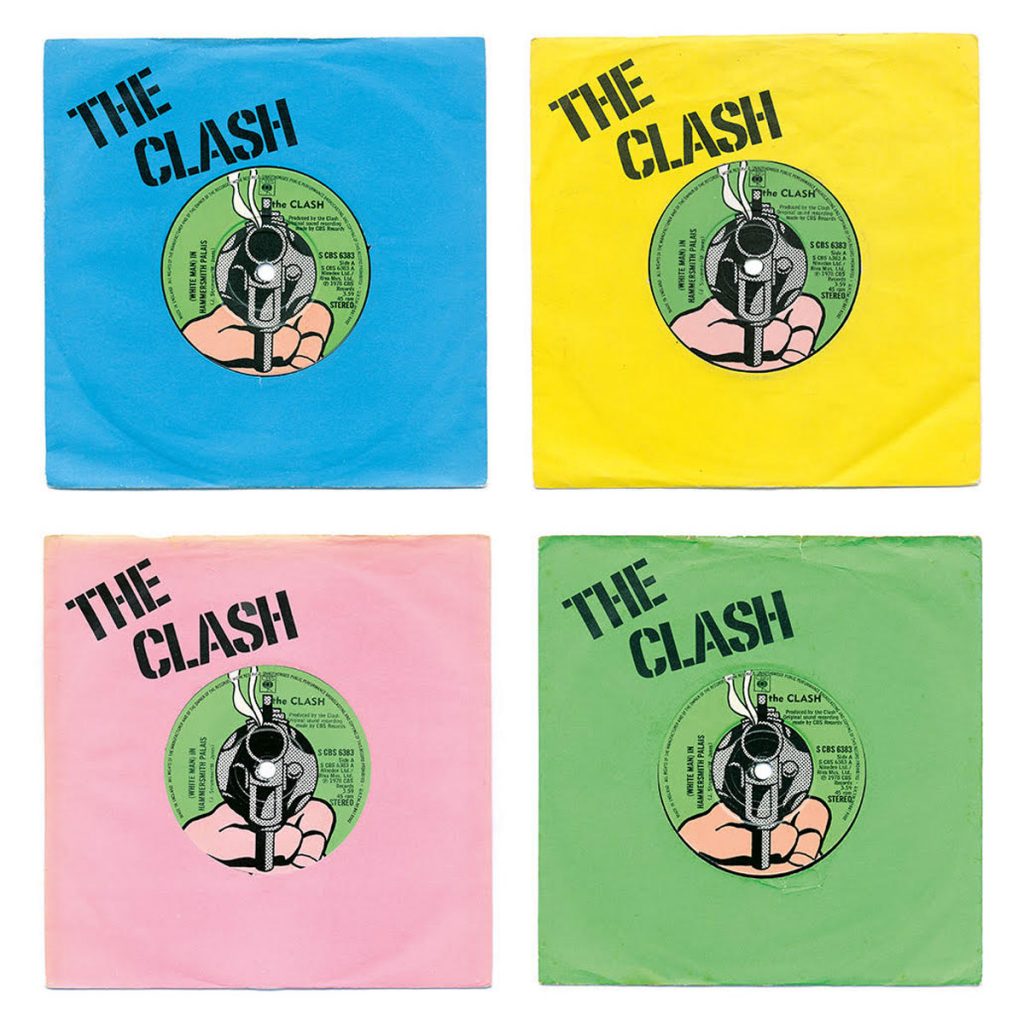
Four Colour The Clash White Man In Hammersmith Palais


Many years on from its release, Joe Strummer and Mick Jones’ most pointed cultural critique still cuts like a razor through the pretensions of punk’s supposed solidarity. ‘Seventy Eight’s “White Man In Hammersmith Palais” wasn’t just The Clash dipping their toes into reggae waters, it was a full-blooded dive into the contradictions of being white, privately educated (or art school) punks singing about revolution whilst signed to a major label.

The genesis of this track lies in Strummer and Don Letts’ pilgrimage to see Jamaican acts like Dillinger, Leroy Smart, and Delroy Wilson (the ‘Smooth Operator’) at the famous West London venue in early 1978. What they witnessed wasn’t the cultural communion Strummer expected, but a stark reminder of his own position as an outsider looking in. The resulting song became punk’s most honest examination of cultural tourism and political posturing.

Musically, it’s The Clash at their most adventurous pre-London Calling. The always under appreciated Topper Headon’s ska beat is perfect, not a ham-fisted attempt but a genuine understanding of reggae’s rhythmic subtleties. Mick Jones’ guitar work walks the tightrope between punk urgency and reggae’s more spacious approach, whilst Simonon’s bass provides the crucial foundation that makes the whole thing swing rather than simply thrash.

But it’s Strummer’s lyrical dissection of the disappointment of that night in the lightweight way the bands presented – plus the culture clash South London zeitgeist that elevates this from mere genre experiment to the essential punk document it has become. His observations about fashion victims “too busy fighting for a good place under the lighting’ and weekend revolutionaries were aimed squarely at punk’s emerging orthodoxies and not for the first time. That fabulous line about ‘turning rebellion into money’ and the hollowness of sloganeering hit closer to home than many wanted to admit. This wasn’t The Clash having a go at the establishment this was them turning the mirror on themselves and their scene, one now infiltrated by the Far Right.

The single’s commercial failure at the time, it barely scraped in, seems almost inevitable in hindsight. A huge fork in the road that was too reggae for the punk purists, too punk for the Rastas, and too uncomfortable for those who preferred their politics less complicated including anti-violence, wealth distribution, unity. Lyrically Strummer is really kicking off. Radio programmers didn’t know what to do with it, and neither did much of the press initially. This ain’t no White Riot redux.

Urban mythology has built up around the track over the years. Some claim Strummer wrote it in a fit of disgust after seeing Far Right punks and skinheads doing Nazi salutes at the Palais gig, though those who were there aren’t convinced of that. Others insist it was a direct response to criticism from Jamaican musicians about white bands appropriating reggae. The truth, as usual, is probably more mundane: four young men trying to make sense of their place in a musical and political landscape that was shifting beneath their feet.

What’s undeniable is the track’s influence on what followed. Without “White Man,” there’s no London Calling album, no “Rudie Can’t Fail,” no bridging of punk and reggae under the influence of Letts’, and that became one of The Clash’s defining characteristics. It opened doors not just for The Clash but forother bands who realised that punk’s year zero mentality was creative suicide and a punky reggae party might be route one for them too.

The production, handled by the band and Sandy Pearlman is sparse without being minimal, allowing each element space to breathe whilst maintaining punk’s essential urgency. The decision to keep Strummer’s vocals relatively low in the mix was inspired it forces you to lean in and listen rather than simply absorb. I’ve got four copies and I dread to think how many times my white ears have heard it. It’s impossible to get bored with.

Looking back, “White Man In Hammersmith Palais” stands as perhaps The Clash’s most prescient moment. Its questions about authenticity, appropriation, and the commodification of rebellion feel more relevant now than they did in 1978. ‘If Adolph Hitler flew in today, they’d send a limousine anyway’ they’d also get his opinion of this week’s Nazi atrocity. In an era when punk has been thoroughly sanitised and packaged for consumption, Strummer’s uncomfortable truths about the music industry are prophetic.

The Clash would go on to greater commercial success, but they never again achieved quite this level of self-awareness. “White Man” remains their most honest song, a moment when they looked in the mirror and didn’t like everything they saw, but had the courage to share that reflection with the world.

ART POP / POP ART: The Clash Cut And Paste Revolution

As the amber lights of The Rainbow dimmed on a hot night in May 1976, few in the perspiring audience realised they were witnessing more than just another gig. The Clash, in their first major London appearance promoting White Riot while supporting the The Jam, Buzzcocks and Subway Sect represented something beyond mere musical rebellion. In the jagged guitar work of Mick Jones and the snarling bass lines of Paul Simonon lay the foundations of a visual and conceptual revolution that owed as much to the corridors of Britain’s art schools as it did to the streets of Notting Hill.

The conventional narrative of punk rock often emphasises its working-class roots, positioning the movement as a visceral reaction against both the excesses of progressive rock and the stifling economic conditions of 1970s Britain. Yet beneath this compelling but simplified account lies a more nuanced story, one in which formal artistic training and calculated aesthetic choices played roles as crucial as raw anger and three-chord progressions.

Paul Simonon’s journey to becoming the iconic perfect cheek-boned bassist of The Clash began not with a guitar in his hands but with charcoal and canvas. His time at Byam Shaw School of Art in London, though brief, was highly influential and established a visual sensibility that would later define the band’s aesthetic as much as their sound.

“I was always drawing, even before music came along, that was my thing. I’d spend hours sketching the streets, the people, trying to capture something real about London that wasn’t in the tourist brochures.” Paul Simonon 1991.

At Byam Shaw, Simonon encountered formal artistic disciplines while maintaining his outsider’s perspective. Though he departed after just a year, frustrated by what he perceived as the institution’s disconnect from the urgent social realities of mid-1970s London, the techniques he absorbed proved transformative. His understanding of composition, negative space, and visual impact would later inform everything from The Clash’s stage presence to their iconic album artwork.

Malcolm McLaren, who through his partnership with Vivienne Westwood ran the Sex boutique in Soho, a place where punk band members congregated and the future Sex Pistols recruited noted: “Paul brought something different to punk, an actual artist’s eye. He understood intuitively how to construct an image that would provoke and endure. That’s not accidental; that’s training.”

This training manifested most visibly in Simonon’s approach to the bass guitar itself. Unlike many musicians who viewed their instruments purely as sonic tools, he approached his Fender Precision Bass (and occasional Rickenbacker 4001) as a visual element, a prop in a carefully constructed tableau. His famous bass-smashing moment, captured on the cover of “London Calling,” demonstrates this synthesis perfectly. The moment, often mistaken for spontaneous rage, was in fact a considered piece of performance art that Simonon later acknowledged drew from his understanding of compositional drama.

“I knew exactly what I was doing,” he admitted years later. “It wasn’t just anger, though there was plenty of that. It was about creating something visually powerful, something people would remember.”

While Simonon brought the raw visual power of street art and expressionism to The Clash, Mick Jones arrived with a different artistic heritage. His time at Hornsey College of Art, though similarly abbreviated, exposed him to post-war modernist thought that profoundly shaped his approach to songwriting and performance.

Hornsey had established itself as a hotbed of radical artistic thought following the famous student occupation of 1968, when students and faculty seized control of the college for six weeks, demanding fundamental reforms to art education. Though Jones arrived after this watershed moment, the institution retained its reputation for encouraging experimental approaches that questioned established boundaries between artistic disciplines.

“At Hornsey, they were teaching us that everything connected, art wasn’t just painting pictures to hang on walls; it was about communication, about challenging people to see things differently. That’s exactly what we were trying to do with The Clash.” Mick Jones.

This modernist, interdisciplinary approach shaped Jones’s guitar style and songwriting. His compositions frequently juxtaposed seemingly incompatible elements such as reggae rhythms against hard rock guitar lines, poetic social commentary against street slang, creating a collage effect that mirrored the cut-and-paste aesthetic of the band’s visual presentation.

Professor Brian Fielding, who taught at Hornsey during Jones’s brief tenure, observed: “Mick wasn’t our most technically accomplished student, but he grasped something essential about modernism the idea that art gains power through juxtaposition and re-contextualisation. When The Clash combined rockabilly with political manifestos or dub reggae with punk energy, that was pure modernist technique.”

No examination of The Clash’s artistic foundations would be complete without acknowledging the profound influence of artist, journalist and activist Caroline Coon. Though not formally their teacher in an institutional sense, Coon became a critical mentor figure whose background in fine art and radical politics helped shape the band’s direction.

After studying at Central Saint Martins in the 1960s, Coon had established herself as both a painter and a counter-cultural journalist when she encountered The Clash in their formative stages. Recognising their potential, she became their manager and de facto artistic director.

“Caroline understood exactly what we were trying to become before we did, she saw that punk wasn’t just about making noise; it was about creating a complete alternative language, visual, musical, political, everything.” Joe Strummer.

Coon brought rigorous artistic thinking to the band’s presentation. Her formal training enabled her to articulate visual strategies that amplified their political message. Under her guidance, The Clash developed a cohesive aesthetic that drew from Russian Constructivism, Jamaica’s political poster art, and American abstract expressionism, synthesising these influences into something that felt simultaneously revolutionary and accessible.

“I was simply applying what I’d learned as an art student,” Coon later explained modestly. “Art is most powerful when it connects with people’s lives, when it speaks to real conditions. The Clash had something urgent to say about those conditions, and my contribution was helping them find the visual vocabulary to say it.”

What distinguished The Clash from many of their punk contemporaries was their sophisticated understanding of bricolage, the postmodern technique of constructing new meaning through the recombination of existing cultural elements. This approach, central to the teaching at both Byam Shaw and Hornsey during the period, became fundamental to The Clash’s artistic strategy.

Simonon’s hand-painted shirts and customised instruments, Jones’s collage-inspired songwriting, and the band’s repurposing of military and workwear fashion all demonstrated bricolage in action. They appropriated symbols from across the cultural spectrum, from RAF target roundels to American western imagery, reconfiguring them to create new, subversive meanings.

This wasn’t merely fashion; it was applied semiotics. As cultural theorist Dick Hebdige would later observe in his seminal work “Subculture: The Meaning of Style,” The Clash’s visual presentation constituted “a form of consumer resistance” in which commercial objects were “worn and displayed in a way that subverted their original meaning.”

Bernie Rhodes, who managed the band after Coon’s departure, recognised the strategic value of this approach: “Most bands just wanted to make records. The Clash understood they were creating a complete cultural intervention. Every photograph, every poster, every stage set was carefully considered. That came directly from Mick and Paul’s art school background.” Evidenced also by the fury surrounding the release of Remote Control by CBS without their approval and subsequent rejection of this in the lyrics of Complete Control.

By the time The Clash released “London Calling” in 1979, the artistic influences that had shaped their development had cohered into a singular vision. The album’s iconic cover featuring Simonon smashing his bass on stage, was deliberately modelled after Elvis Presley’s debut album, creating a multi-layered visual statement about rock history and punk’s position within it.

Graphic designer Ray Lowry, who created the cover, worked closely with the band to realise this concept. “They weren’t like other musicians I’d worked with,” Lowry later recalled. “They understood design; they could talk about typography and composition. They knew exactly the historical references they wanted to invoke and subvert.”

Inside, the music demonstrated how completely Jones and Simonon had absorbed and transformed their artistic influences. Songs like “Lost in the Supermarket” applied situationist critiques of consumer culture that might have come straight from a Hornsey College lecture hall. “The Guns of Brixton” reflected Simonon’s ability to translate the visual immediacy of his art school training into urgent sonic landscapes.

In the decades following The Clash’s dissolution, both Jones and Simonon continued to demonstrate the lasting impact of their artistic foundations. Jones’s work with Big Audio Dynamite pioneered the integration of sampling and video art into rock music, while Simonon returned explicitly to the visual arts, exhibiting paintings that reflected his continuing engagement with urban landscapes and social commentary.

Their influence extended far beyond their own careers. The art school to punk pipeline they exemplified became a recognised pathway in British music, with institutions like Saint Martins, Goldsmiths, and the Royal College of Art producing successive generations of musicians who approached popular music as a multi-disciplinary art form rather than mere entertainment.

As writer Jon Savage noted: “The crucial contribution of The Clash was demonstrating that popular music could be simultaneously accessible and intellectually sophisticated, visceral and visually literate. That’s the art school legacy in action.”

In today’s fragmented cultural landscape, where musicians routinely control every aspect of their presentation across multiple media platforms, The Clash’s integrated artistic approach seems remarkably prescient. What appeared revolutionary in 1976, the idea that a band should consider every aspect of their output as part of a cohesive artistic statement has become standard practice.

This transformation owes much to those afternoons Simonon spent sketching at Byam Shaw, to Jones’s exposure to modernist theory at Hornsey, and to their collective willingness to apply formal artistic training to the raw materials of punk rock. In doing so, they helped establish popular music as a legitimate field for serious artistic expression, a cultural battlefield where trained artists could deploy their skills in service of authentic communication rather than academic abstraction.

The legacy of The Clash reminds us that the most enduring cultural revolutions often occur at the intersection of formal training and raw expression, where the techniques of the academy meet the urgency of the streets, creating something neither could produce alone.

Art Pop / Pop Art: a study of the influences of art school, famous artists and movements on pop and rock music. Those institutions where failure is motivation, where the eccentric and pretentious emerge into the fascinating space where art and music meet.

ART POP / POP ART: David Bowie, Art Classes & Derek Boshier

The Art School Dandy. Bowie’s Brush With Bohemia.

There was always something different about David Bowie, wasn’t there? While his contemporaries were busy being rock stars, he was busy being something else entirely: an art project with a guitar. As the rest of rock’s aristocracy draped themselves in velvet and attitude, young David Jones was meticulously crafting personas with the same care a painter applies to canvas or a sculptor to stone. And why wouldn’t he? The lad was steeped in art school sensibilities before he ever picked up a microphone.

When Bowie space-walked into our consciousness in the late Sixties, he brought with him the baggage of Bromley Technical High School, where his art teacher Owen Frampton (incredibly the father of “Frampton Comes Alive” Pete, as cosmic coincidence would have it) had stuffed the boy’s head with possibilities. It was here that our man first encountered the heady brew of visual thinking that would define his career. While most pop stars were channeling Elvis and Chuck Berry, Bowie was communing with the ghosts of Marcel Duchamp and Kurt Schwitters.

“I’ve always been a visual thinker, the music was always just one part of the whole package. I needed the visual element to complete the circuit.” David Bowie.

And complete it he did, in a series of personas that functioned less as costumes and more as living exhibitions of performance art: Ziggy Stardust, Aladdin Sane, the Thin White Duke. Each one a walking gallery installation, meticulously curated down to the last detail.

But it was his relationship with the British Pop Art movement that truly illuminated Bowie’s approach. Enter Derek Boshier, the pioneering artist whose conceptual thinking provided the spark for one of Bowie’s most iconic album sleeves.

Boshier, a graduate of the Royal College of Art and contemporary of David Hockney, had been pushing the boundaries of Pop Art since the early Sixties. By the time he encountered Bowie in the mid-Seventies, both men were operating in that fertile territory where high art and pop culture collide with the force of subatomic particles in CERN’s hadron collider.

The concept for “Heroes” that stark, Eno-drenched masterpiece of 1977, came directly from Boshier’s fascination with gesture and posture. The now iconic image of Bowie, arm raised in a peculiar mime salute that’s neither fascist nor friendly, was Boshier’s suggestion: a visual quotation of Erich Heckel’s painting “Roquairol.” It’s the kind of art-historical reference that would fly over the heads of most rock stars, but for Bowie, it was the nectar of Zeus.

“David understood exactly what I was trying to do, most musicians want to look cool or dangerous. David wanted to look interesting. That’s the art school influence right there choosing the intellectually provocative over the merely attractive.” Derek Boshier.

This wasn’t just about album covers, either. When Bowie moved to the Brutalist rebuilt concrete city of Berlin in the late Seventies, he wasn’t just running from cocaine and Los Angeles; he was deliberately placing himself in the epicentre of European expressionism. While holed up in that apartment above the auto parts shop, he wasn’t just sharing with Iggy Pop or recording with Eno; he was making pilgrimages to the Brücke Museum, communing with the ghosts of German expressionism.

The Berlin trilogy of “Low,” “Heroes,” and “Lodger” wasn’t just a musical departure; it was Bowie’s most explicit attempt to translate the fractured perspectives of expressionist art into sound. Listen to the instrumental second side of “Low” and you will ‘hear’ the angular distortions of Kirchner or the colour explosions of Nolde translated into synthesiser washes and oblique rhythms.

Even his collaborators were chosen with an art school sensibility. Brian Eno wasn’t just a sonic innovator; he was a graduate of the Winchester School of Art and a student of cybernetic theory and systems thinking. Their collaborations were less traditional songwriting sessions and more like conceptual art happenings, with Eno’s Oblique Strategies cards, themselves pure art school, directing the creative flow.

“The thing about David is that he approached recording studios the way other artists approach galleries. Each album was an installation, a complete environment with its own rules and internal logic.” Tony Visconti Record Producer.

This approach reached its zenith with Boshier’s involvement in the “Lodger” sleeve, an elaborate piece of conceptual art disguised as an album cover. The distorted image of Bowie falling, the deliberate reference to Polaroid manipulation techniques this wasn’t just packaging; it was a manifesto.

Throughout the Eighties, as Bowie’s commercial star rose and his artistic credibility occasionally wobbled, the art school influence remained his secret weapon. Even at his most commercial, during the “Let’s Dance” period, there was always something slightly off-kilter about his presentation a knowing wink to the cognoscenti that this, too, was performance art.

By the time he re-emerged with the industrial crunch of “Outside” in 1995, Bowie had circled back to his art school roots with a vengeance. Collaborating with Brian Eno again, he created not just an album but a complete fictional world populated by characters like Nathan Adler and Baby Grace Blue a concept album that owed more to installation art than it did to “The Rise and Fall of Ziggy Stardust.”

For his part, Boshier remained a touchstone throughout Bowie’s career, the connection to an art school sensibility that never left him. Their collaborations from “Heroes” through to Bowie’s later years represented one of pop music’s most enduring dialogues between rock and visual art.

In an era when most rock stars were content to be rock stars, Bowie remained defiantly, stubbornly, gloriously an art student at heart the smartest kid in the classroom who never stopped asking “what if?” While others were content to give the audience what they wanted, Bowie insisted on giving them what they didn’t know they needed.

His final album, “Blackstar,” released just days before his death in 2016, was perhaps his most complete art statement; a multimedia farewell that incorporated music, video, graphic design, and performance into a single, devastating whole. The falling astronaut, the blind prophet, the button-eyed specter weren’t just music video conceits; they were the culmination of a lifetime spent at the intersection of rock and conceptual art.

David Bowie wasn’t just influenced by art school thinking; he was its greatest ambassador in the realm of popular music. He took the experimental, boundary-pushing ethos of the art school and smuggled it into the mainstream inside trojan horses made of glitter, lightning bolts, and a space travelling Pierrot.

As we approach the tenth anniversary of his departure from this particular dimension, it’s worth remembering that Bowie’s greatest creation wasn’t Ziggy or the Thin White Duke or even his fabulous canon. It was the concept of David Bowie himself, the ultimate mixed-media art project, a half-century in the making, that changed not just music but the very idea of what a pop star could be.

For that, we have the art schools to thank. Not bad for an education that most parents would have considered a waste of time, eh?

__

Art Pop / Pop Art: a study of the influences of art school, famous artists and movements on pop and rock music. Those institutions where failure is motivation, where the eccentric and pretentious emerge into the fascinating space where art and music meet.

ART POP / POP ART: Ian Dury & Peter Blake

The Artistic Bond Between Ian Dury and Peter Blake.

In the vibrant landscape of post-war British art and music, few creative partnerships have been as meaningful yet understated as the one between punk & new wave pioneer Ian Dury and pop art master Sir Peter Blake. Their collaboration bridged the worlds of fine art and popular music, creating a visual and sonic language that celebrated British culture in absolute eccentric glory.

The foundation of their relationship was built at the Royal College of Art in London, where Blake taught in the painting school during the early 1960s. Among his students was a young Ian Dury, who enrolled to study painting before his musical career took flight. This teacher-student relationship evolved into a friendship and creative partnership that would span decades.

Blake, already known for his pop art style and collage techniques, recognised in Dury a kindred spirit who appreciated the beauty in everyday British imagery and vernacular. Both artists shared an affection for music hall traditions, seaside entertainment, and the rich tapestry of working-class British life.

Their most famous collaboration came in 1977 when Blake designed the iconic cover for Dury’s album “New Boots and Panties!!” with his band The Blockheads. The cover featured Dury and his son Baxter standing outside a clothing shop in London’s East End, capturing the authenticity and unpretentious quality that characterized both artists’ work.

This wasn’t Blake’s first venture into album artwork, he had already created the legendary collage for The Beatles’ “Sgt. Pepper’s Lonely Hearts Club Band” a decade earlier. However, his work with Dury reflected a different sensibility: less psychedelic fantasia and more urban realism, though both shared a deep appreciation for cultural references and visual richness.

The visual aesthetic Blake helped create for Dury became part of the artist’s signature style, combining elements of music hall, fairground art, and British seaside postcards with the energy of punk. This visual language perfectly complemented Dury’s lyrics, which celebrated similar themes with linguistic dexterity and wit.

What bound Blake and Dury together was more than just a professional relationship, it was a shared artistic philosophy, a Pop Art manifesto:

Democratic Art – Both believed in art that spoke to ordinary people without condescension. Blake’s pop art embraced everyday imagery and commercial design, while Dury’s music combined highbrow wordplay with the rhythms and language of the street.

British Cultural Heritage – They shared a deep appreciation for distinctly British forms of entertainment and expression from music hall traditions to seaside amusements, fairgrounds, and the rich lexicon of Cockney rhyming slang.

Visual Storytelling – Both artists were masterful visual storytellers. Blake through his intricate collages and paintings, Dury through his character-driven narratives and vivid lyrical portraits.

Authenticity – Neither artist was interested in pretension. Blake’s work celebrated real people and places, while Dury’s songs gave voice to characters often overlooked in popular music.

The visual language they developed together helped define Dury’s public persona as an artist deeply rooted in British tradition yet thoroughly modern in his sensibilities. Blake, for his part, continued to be inspired by music throughout his career. Having worked with Dury, he went on to create artwork for other British musicians, including Paul Weller, Oasis, and The Who. His experience collaborating with Dury undoubtedly informed these later musical partnerships. Ian Dury’s painting style very similar to Blake’s, in fact they could be confused.

The Blake-Dury collaboration represents an important moment in British cultural history, a time when the boundaries between “high” and “low” art were being deliberately blurred, and when artists were reclaiming and celebrating aspects of British culture that had been previously dismissed as vulgar or trivial. Evidenced in the 1962 BBC TV episode of ‘Monitor’ a previously establishment series reserved for fine art and classical music sensibilities showing a laid back, montage style documentary by Ken Russell dedicated to pioneering Pop Artists; Peter Blake, Derek Boshier, Pauline Boty & Peter Philips. These occasional media break outs preparing the ground for later.

Their partnership demonstrated how visual art and music could reinforce and elevate each other. Blake’s artwork didn’t simply influence Dury’s music it contextualised it, providing literary-visual pop art inspired cues that enhanced the listener’s understanding of the musical content. For me, the Blake-Dury relationship is the epitome of Pop Art and Art Pop, Blake’s influence was so essential to Dury I don’t believe he would have existed or been anywhere near as popular without. In perspective, the surprising statistic that Dury was the U.K.’s biggest selling pop artist in 1978.

Today, their collaboration stands as a testament to the power of cross-disciplinary artistic partnerships. The visual language they developed together continues to influence album artwork and the presentation of musical personas, while their shared appreciation for the vernacular aspects of British culture has helped shape subsequent generations of British artists and musicians.

In a cultural landscape increasingly dominated by global influences, the Blake-Dury partnership reminds us of the rich creative potential that can emerge from deeply local inspirations proving that the most universal art often comes from the most specific cultural contexts.

Their legacy lives on in their shared vision of an art that speaks to and celebrates the lives, language, and experiences of ordinary people an artistic philosophy as relevant today as it was when a young Ian Dury first sat in Peter Blake’s classroom at the Royal College of Art.

Ian Dury Royal College of Art, 1964-1967.

Art Pop / Pop Art: a study of the influences of art school, famous artists and movements on pop and rock music. Those institutions where failure is motivation, where the eccentric and pretentious emerge into the fascinating space where art and music meet.