ART REVIEW: Michael Craig Martin’s Pop Art Evolution

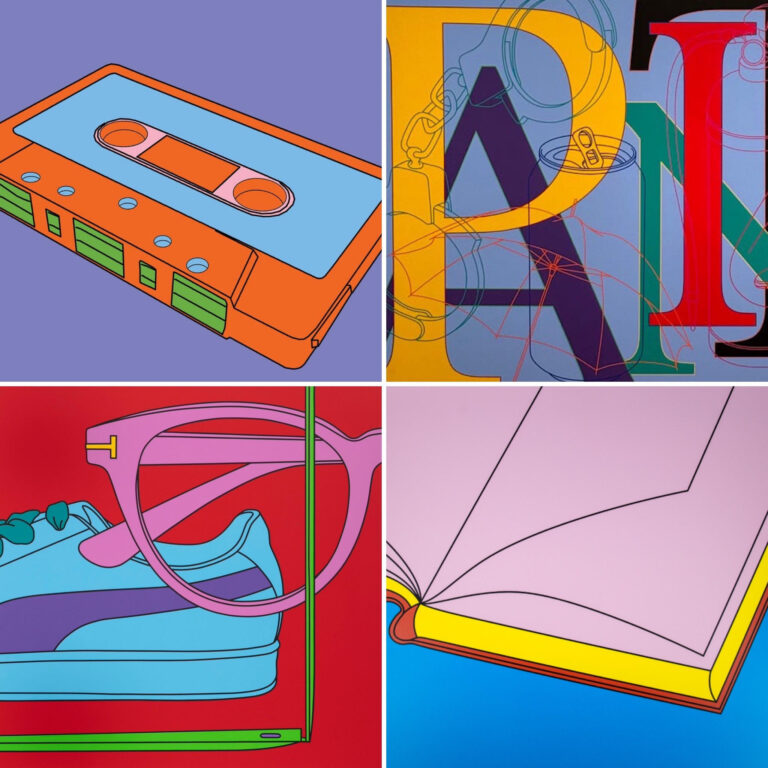
Sir Michael Craig-Martin is a pivotal figure in contemporary art, renowned for his timeless, vibrant, iconographic contributions to Pop Art. His work, characterised by bold, saturated colours and sharply outlined depictions of everyday objects, bridges the gap between the Pop Art movement’s origins and its evolving legacy in modern culture. His artistic vocabulary, rooted in simplicity, transforms the mundane into the monumental, making his pieces resonate with the viewer in striking and unexpected ways.


Stylistic Characteristics

Craig-Martin’s work focuses on the intersection of abstraction and familiarity. He employs flat, bright colours and black contour lines to create graphic depictions of objects like lightbulbs, ladders, and trainers. These objects are stripped of texture and three-dimensionality, emphasising their iconic forms over their functional or material qualities. This reductionist approach aligns him with the ethos of Pop Art: celebrating the everyday and critiquing the commodification of culture.

Unlike the Pop Art pioneers of the 1950s and 1960s, such as Andy Warhol and Roy Lichtenstein, Craig-Martin does not appropriate imagery from advertising or mass media. Instead, he focuses on the essence of objects themselves. This distinction makes his work feel personal and accessible, as though he’s inviting viewers to reconsider the visual world they often overlook.

Influences

Craig-Martin’s influences reflect a blend of Pop Art ideals and broader conceptual art traditions. His early education at Yale University under Josef Albers’s colour theory instilled in him a fascination with colour’s emotional and optical effects. This training is evident in his use of flat yet intensely vibrant hues that imbue his works with energy and a sense of immediacy.

Conceptual Art also plays a significant role in shaping Craig-Martin’s methodology. As part of the London-based movement in the 1960s and 1970s, he explored the relationship between objects and ideas, an approach seen in works like An Oak Tree (1973). In this seminal piece, he presents a glass of water with a written assertion that it is an oak tree, challenging perceptions of reality and meaning—a conceptual underpinning that complements his Pop Art visuals.

His contemporaries, such as Richard Hamilton and Eduardo Paolozzi, also influenced his practice, particularly in their focus on everyday objects as a mirror of consumer culture. Yet, Craig-Martin’s works feel more timeless, detached from the overt consumerism that defined the earlier generation of Pop Art. His minimalism suggests a meditative quality, drawing viewers into a dialogue with the objects themselves.

Legacy and Impact

Craig-Martin’s art has influenced generations of artists, particularly through his role as a professor at Goldsmiths, where he taught influential figures like Damien Hirst, Sarah Lucas, and Gary Hume. His approach—emphasising clarity, accessibility, and conceptual depth—resonates across various contemporary art movements.

In sum, Michael Craig-Martin revitalises the principles of Pop Art for a contemporary audience, melding colour theory, conceptual thought, and a deep appreciation for the everyday. His work not only celebrates objects but elevates them, turning the familiar into profound symbols of modern existence. By doing so, he ensures that Pop Art continues to evolve, remaining as relevant and thought-provoking as ever.

Sir Michael Craig Martin retrospective exhibition, 21st September to 10th December 2024 at Royal Academy of Arts, London W1JOBD. Previously published on my own website October 2024.

POP ART: U.K.Subs Another Kind Of Blues

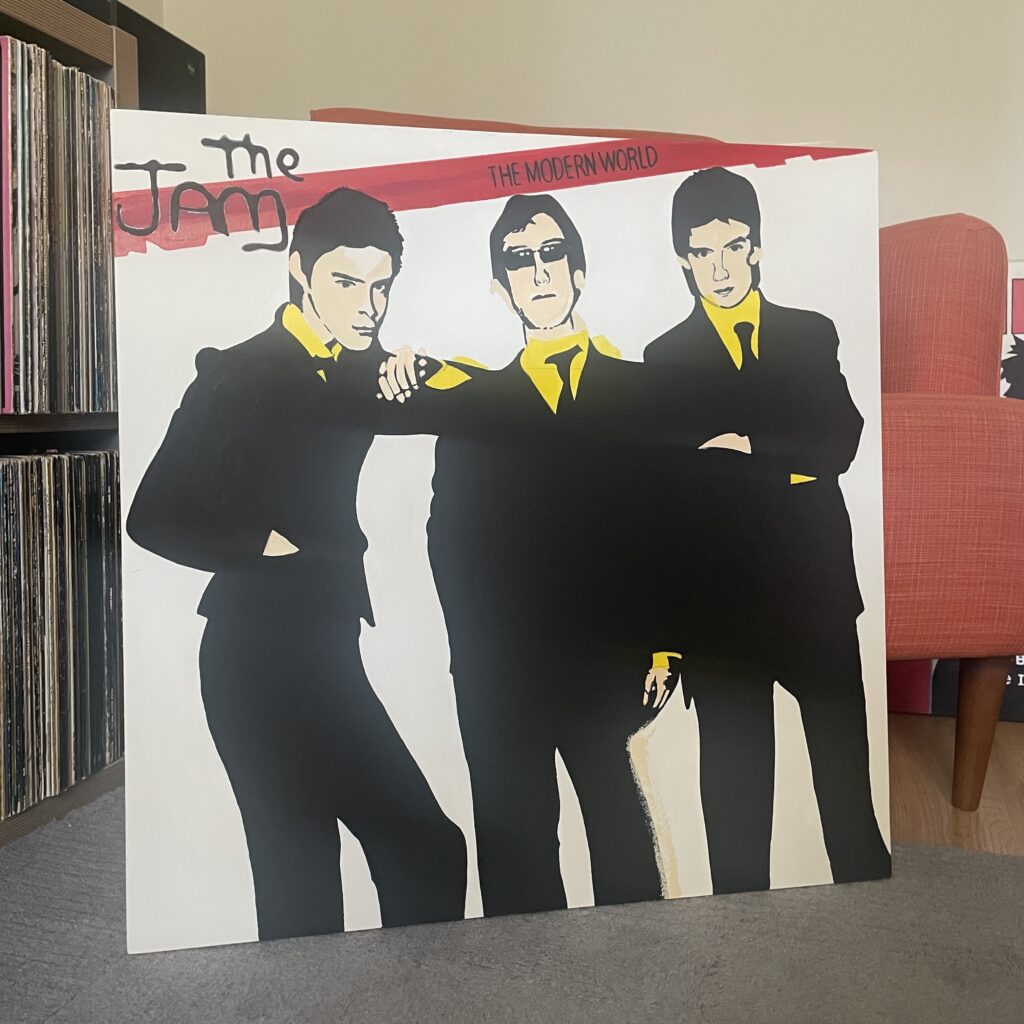
Another from my series of iconic Seventies & Eighties Punk Rock and New Wave record sleeves reimagined as standout Pop Art to show in an installation or hang in your space.

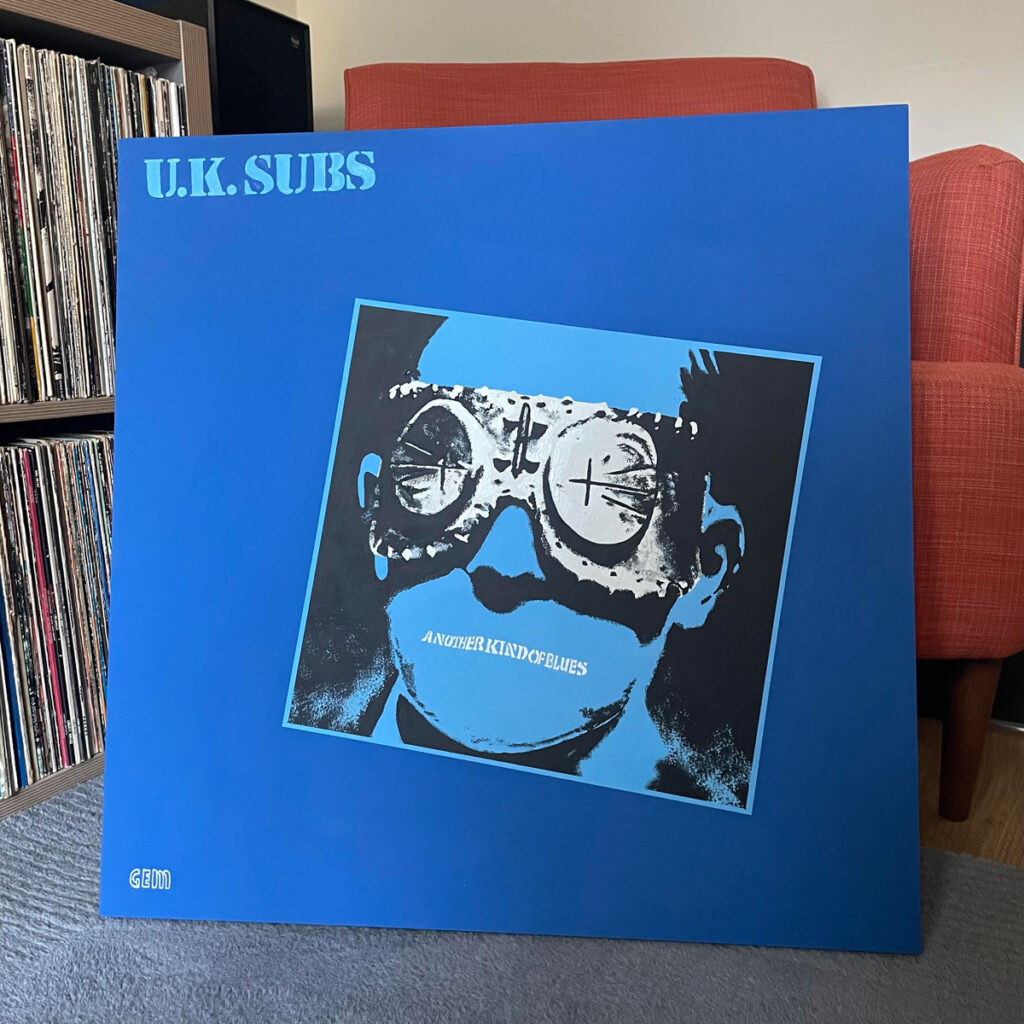
U.K. Subs – Another Kind Of Blues (1979)

Description: 600mm MDF with Pine Former. Acrylic Paint. 

UK Subs Pop Art


Few punk album covers are as instantly recognizable as the sleeve for the U.K. Subs’ debut album, Another Kind of Blues. Released in 1979, the record’s artwork became a visual anthem for the punk ethos, raw, bold, and unapologetic. Now, this iconic blue sleeve art is being reimagined as large-scale Pop Art, a 600mm celebration of punk history transformed into a striking new medium.

Revisiting an Icon – The original artwork, with its distressed texture, stark imagery, and raw aesthetic, perfectly encapsulated the grit and urgency of punk rock. The World War One Tank Driver Safety Goggles, reflected both the energy of the music and the band’s focus. It wasn’t just an album cover, it was a statement of intent.

My painted reinterpretation magnifies this classic design, scaling it up to 600mm and infusing it with the vibrant sensibilities of Pop Art. Bold, saturated colours are a facsimile of the original, and textures are replicated at the new large scale. This is Another Kind of Blues as you’ve never seen it before—a fusion of punk’s rebellion and Pop Art’s playful edge but wartime connotations capture the latent energy stored in the vinyl groove. 

Why Another Kind of Blues? The U.K. Subs’ debut album wasn’t just another punk record—it was a blueprint for a movement. Its themes of disillusionment and defiance resonate just as strongly today, and its artwork remains a cultural touchstone. This creative project explores how that punk ethos translates into the bold, ironic language of Pop Art, creating something that’s both a tribute to the past and a celebration of reinvention.

Experience the Art of Punk – This large-scale reimagining isn’t just for die-hard U.K. Subs fans, it’s for anyone who appreciates the power of art to provoke, inspire, and redefine cultural boundaries. The 600mm scale adds a monumental quality to the work, demanding attention and inviting viewers to experience Another Kind of Blues in a new, electrifying context.

This unique artwork forms part of my series of Punk Rock & New Wave record sleeves as 600mm Pop Art paintings. This body of work is set to be exhibited in Autumn 2025. 

Because the punk ethic never dies, it evolves.