POP CULTURE: The Proto-Punk Who Sparked London’s Seditionaries

Malcolm McLaren and Vivienne Westwood’s mid-1970s New York encounter with polymath Richard Hell, the New York Dolls and the CBGB scene reshaped British music, feeding directly into Seditionaries, punk rock, the Sex Pistols and the confrontational style that defined 1976–77.

The punk provocateurs Malcolm McLaren and Vivienne Westwood’s time in New York in 1974–75 was brief, but it was decisive. They arrived in a city that was fraying at the edges, financially broken and culturally fertile, and they treated it less as a destination than as a raid. What they encountered downtown was not simply music or fashion, but a way of assembling identity from debris. It was a lesson they would carry back to London and weaponise.

New York at that moment was defined by a ragged glamour. Clothes were cheap, borrowed, stolen or simply falling apart. The New York Dolls embodied this most theatrically, collapsing glam rock’s lipstick excess into something louche and desperate. Their women’s dresses, platform boots and smeared makeup looked less like fantasy and more like survival. McLaren was drawn to them precisely because they treated image as confrontation. He briefly managed the band, dressed them, and attempted to frame them as a kind of moving scandal. Although the relationship was short-lived and commercially unsuccessful, it sharpened his understanding of how style could precede sound.

More influential still was Richard Hell. If the Dolls represented decadent collapse, Hell represented refusal. His look, assembled rather than designed, became one of punk’s most enduring visual templates. Torn T-shirts held together with safety-pins, hair hacked short and spiked by accident rather than design, trousers ripped at the knee not for effect but because they had given up. Hell’s clothes were not costumes, they were statements of indifference, and that indifference was the point. He did not dress to shock so much as to signal disengagement from polish, aspiration or glamour. McLaren saw immediately that this look was infinitely reproducible and deeply symbolic. You did not need money, training or permission to look like Richard Hell. You only needed nerve.

The music around CBGB reinforced this. Bands played fast, loud and with minimal technique. The Ramones reduced rock to its skeleton, Television stretched it nervously, and Hell’s own bands treated lyrics as fragments rather than sermons. The common thread was an amateur ethic that felt closer to art-school provocation than rock professionalism. McLaren absorbed this wholesale. He was less interested in fidelity than in effect. What mattered was how quickly an idea could be communicated, worn, photographed and copied.

When McLaren and Westwood returned to London, the King’s Road shop became the site where these ideas were translated. By 1974 it was trading as SEX, and it already specialised in provocation, fetish references and sexual frankness. But the New York influence sharpened its focus. The clothes became rougher, more aggressive, and more deliberately unfinished. Westwood began turning garments into arguments. Rips were left visible. Pins were exposed. Slogans were confrontational rather than decorative. This was not nostalgia or homage. It was adaptation.

By 1976 the shop had evolved again, this time into Seditionaries. The name itself signalled intent. Seditionaries crystallised what punk looked like at the moment it broke into public consciousness. Bondage trousers, destroyed knitwear, obscene or political graphics, tartan subverted into something hostile rather than heritage. The lineage from New York was clear. Richard Hell’s torn shirts reappeared, reworked and intensified. The Dolls’ theatricality was stripped of camp and replaced with menace. What had been downtown nonchalance became London antagonism.

Seditionaries did not merely sell clothes. It defined a uniform. This was crucial. Punk’s power lay in its immediacy and recognisability. The clothes could be assembled cheaply, but the Westwood versions carried authority. They were prototypes, templates for replication. Teenagers across Britain copied them with bin bags, razors and marker pens. The look travelled faster than the music.

The Sex Pistols emerged directly from this environment. McLaren’s genius intervention was assembling the band as a Situationist art statement as much as a musical unit. The Situationists were a mid-century art movement made up of artists, writers and political agitators and based in Paris. Their mission was nothing less than the complete transformation of everyday life through carefully engineered provocations designed to expose the empty spectacle of consumer capitalism.  McLaren’s vision for the band was to embody this. John Lydon, later Rotten was recruited because he was not only intelligent and well read but also looked right. His genuine alienation and sneering confrontational vocal delivery was totally on spec. The Pistols wore Seditionaries clothes because they were made for them. The band became the shop’s loudest advertisement, and the shop became the band’s ideological bunker. The Pistols did not invent punk style. They broadcast it. Also in a musical style unlike the atypical New York-New Wave-CBGBs bands. Their sound is more attributable to Detroit, Michigan’s Iggy Pop and MC5, British Glam Rock riffs from Bowie’s ‘Spiders From Mars’ and the original Pistols bassist and primary musical songwriter Glen Matlock was influenced by Sixties bands like The Kinks, The Who and Small Faces.

What McLaren had learned in New York was that chaos could be curated. Richard Hell had demonstrated that refusal could be worn on the body. The Dolls had shown that scandal could be staged. Westwood provided the craft, intelligence and historical literacy to turn these influences into garments that felt inevitable rather than borrowed. Seditionaries was not a copy of New York. It was a distillation, filtered through British class anxiety, boredom and anger.

In the years that followed, arguments over credit and authorship would harden. It is well documented that Hell is begrudging of the duos’ appropriation of his style. McLaren was accused of manipulation, Westwood was elevated to designer-genius status, and the American roots of punk style were sometimes obscured by nationalist mythology. But the chain remains visible. From downtown Manhattan thrift-store wreckage to King’s Road sedition, the same ideas recur: clothes as provocation, music as delivery system, style as a form of speech.

The New York visit did not invent punk, but it gave McLaren and Westwood a grammar. They returned with a sense that culture could be assembled quickly, aggressively and in public. Seditionaries was the proof of concept. Punk, as it appeared in 1976 and 1977, wore its influences openly, ripped and repurposed. It looked the way it did because someone had seen Richard Hell and understood immediately that the future of style lay not in polish, but in refusal.

RETROSPECTIVE: Sex Pistols’ Punk Detonation

Nearly fifty years after its release, the Sex Pistols’ incendiary debut remains punk’s perfect storm, a molotov cocktail of working-class rage, musical brilliance, and media manipulation that changed British culture forever….


The album that didn’t just break rules – it obliterated the rulebook

Never Mind the Bollocks didn’t just land in 1977, it crashed through the plate-glass window of British society and sprayed the drawing room with cultural shrapnel. Nearly fifty years on, it still snarls like a kicked dog. In a landscape now wallpapered with playlist-core, TikTok hooks and sanitised rebellion-by-subscription, Bollocks feels like a holy relic from a time when music had the power to make the establishment sweat.

The Pistols weren’t a band in the traditional sense. They were a detonation. The result of a chemical reaction in the King’s Road boutique Sex, where Malcolm McLaren, part art school agitator, part snake-oil messiah set out to manufacture a British answer to the Ramones. What he ended up with was something far more combustible: four working-class lads with nothing to lose, contempt for the sacred, and just enough talent to weaponise it.

It was John Lydon, not McLaren, who gave the Pistols their real teeth. That infamous audition, Lydon miming Alice Cooper in a torn “I Hate Pink Floyd” T-shirt wasn’t an audition at all. It was a warning. And from the moment he snarled into a mic, Rotten was born. Not a singer in the usual sense, but a frontman who could turn a howl into a manifesto. His was a voice shaped by failed systems and boarded-up futures. You believed him not because he told the truth, but because he believed his own bile. And in a cultural moment drowning in fakes, that was radical.

His lyrics didn’t sermonise like The Clash or cartoon like the Ramones—they targeted. They named names. “The fascist regime.” “The tourists.” “The Queen.” This wasn’t abstract anger. This was brutalist literary wit, honed on council estates and spat back at a country that had turned its back on him.

Behind Rotten, the band were better than they ever get credit for. Steve Jones’ guitar work was pure sledgehammer pinched from Ronnie Wood’s toolkit and stripped of all bluesy indulgence. Paul Cook held it all together with dead-eyed discipline. And then there was Glen Matlock, the band’s melodic spine, the one who actually wrote songs. Before McLaren booted him out for liking the Beatles (the horror) in fairness his mum and dad weren’t too keen on his band membership either – Matlock laid the foundation for nearly every track that matters. Sid might’ve looked the part, but Glen sounded it.

And that brings us to Sid Vicious: the icon who couldn’t play. The most famous non-musician in music history. He brought nothing to the table musically, less than nothing, in fact but gave the tabloids something they couldn’t resist: a photogenic train wreck in safety pins and blood. He turned the band from agitators into tabloid currency, and McLaren milked every drop of it. Sid was myth in motion. His tragic end, overdosing after allegedly stabbing Nancy Spungen, would become punk’s dark parable. The image devoured the music.

But Never Mind the Bollocks is no chaotic mess. It’s a tight, brutal record, shaped by Chris Thomas, a producer fresh from Floyd’s palaces of sound, now neck-deep in spit and swearing. It shouldn’t have worked. But it did. It worked because the songs were solid, the delivery vicious, and the band at least for one special moment, utterly focused.

“Anarchy in the UK” starts with a leer and explodes into a full-throttle riot. “Pretty Vacant” is practically power pop under the sneer. And “Bodies”? Still disturbing, still necessary a razor blade of a song about abortion, trauma, and madness that no one today would dare touch.

And then there’s Art School McLaren’s marketing sorcery. Every cancelled gig, every court case, every playground rumour was stoked by him. The infamous Bill Grundy interview, the Jubilee boat stunt, contracts signed outside Buckingham Palace it was all punk as performance art. The Pistols were slashed, banned, burned, boycotted. Which, of course, meant they sold more records than God.

But you can’t sustain that level of heat. The 1978 U.S. tour, an mis-booked shambles by design saw Sid out of his mind, the band disintegrating, and Rotten fed up with being a performing monkey for the media circus. At Winterland in San Francisco, he looked out at the crowd and delivered the perfect punk epitaph: “Ever get the feeling you’ve been cheated?”

That line still echoes because it summed it all up; the manipulation, the disillusionment, the raw, ugly brilliance of it all. The Pistols didn’t burn out so much as combust in real time. And what followed, Sid’s death, McLaren’s myth-making, Lydon’s post-punk messiah rebirth in Public Image Ltd wasn’t an epilogue but a necessary failing forward.

Lydon, to his credit, didn’t retreat into parody. PiL pushed boundaries most punk bands wouldn’t touch; dub, experimentalism, post-punk minimalism. It didn’t make headlines, but it made art. Meanwhile, the world turned the Pistols into a brand. Punk became a T-shirt slogan, rebellion a marketing brief. Rotten became John Lydon again, appearing on butter ads and talk shows, but Bollocks remained.

And that’s the point. You can license the image, sell the nostalgia, but you can’t fake what this album captured. Never Mind the Bollocks is a time capsule filled with rage, wit, and electricity. It’s the sound of a band and a country on the brink. Could something like this happen today? Not a chance. The algorithms wouldn’t allow it. The PR team would step in. The snarl would be filtered and auto-tuned.

But that’s why this record matters more than ever. It reminds us that music can scare people. That songs can shake the foundations of the establishment. That sometimes, four angry kids with guitars can tell the world exactly where to stick it and be heard.

Never Mind the Bollocks isn’t just a punk album. It’s a battering ram through the front door of British culture. Nearly fifty years on, drop the needle and hear it again: that beautiful unrepeatable roar of latent energy stored in the opening chords of Holidays In The Sun.

RETROSPECTIVE: The Art Punk Blueprint Of Chairs Missing

Nearly half a century after its release to a mixed response from fans and music writers , Wire’s ‘Chairs Missing’ continues to sound like a transmission from the future. While punk’s original fury has long since fossilised into museum pieces, this extraordinary second album remains as sharp, relevant and bewildering as the day it emerged from London’s art-school underground in 1978. No more punk of Pink Flag, synthesisers, atmospheric production and intricate arrangements had the hardcore punks scratching their heads.

What makes an album endure when so many of its contemporaries have faded into historical curiosity? How did four unassuming blokes in sensible jumpers manage to create a blueprint that’s still being copied today? And why does ‘Chairs Missing’ sound more modern than records released last week?

In this retrospective, I explore how Wire’s clinical precision, ruthless economy and gift for subversive melody created something that transcended its punk origins to become one of the most influential albums in rock history. From the metronomic menace of ‘Practice Makes Perfect’ to the gorgeous brevity of ‘Outdoor Miner’, ‘Chairs Missing’ didn’t just predict the future of guitar music – it wrote the instruction manual.


Looking back from our vantage point nearly half a century on, it’s almost impossible to overstate just how thoroughly Wire’s ‘Chairs Missing’ rewrote the rulebook. Released in that feverish summer of ’78 when punk was busy eating itself and disco was conquering the globe, this magnificent second album stands as the moment when four art-school oddities from London quietly laid the foundations for post-punk, alternative rock and about a dozen other genres that didn’t even have names yet.

What’s most striking today is how startlingly modern it still sounds. While the Sex Pistols’ once-revolutionary racket now feels like historical tourism (if you’re interested there is an actual Punk Tour of London), ‘Chairs Missing’ could have been recorded last Thursday. The clinical precision of ‘Practice Makes Perfect’, with its metronomic pulse and Colin Newman’s clipped vocals, created a template that bands are still copying today, whether they know it or not.

Wire’s great trick was ruthless economy. Nothing wasted, everything measured, not an ounce of fat or self-indulgence. When they emerged from the punk scene, they ditched the bondage trousers and safety pins while keeping the urgency and directness. To this unruly mix they added something genuinely new, a cool, analytical intelligence that treated the studio as a sterile surface lab and pop music as an experiment worth conducting properly.

‘I Am The Fly’ still buzzes with menace, Newman’s proclamation that he’s “the fly in the ointment” serving as the perfect manifesto for a band who were always happiest disrupting expectations. They were provocateurs, but never pranksters because there was too much serious intent behind those deadpan expressions.

The album’s great revelation was how Wire embraced melody without sacrificing their edge. ‘Outdoor Miner’ remains one of the most perfectly constructed pop songs of the era, its fabulous hooks and harmonies smuggled in inside a deceptively simple arrangement. At under two minutes, it demonstrated Wire’s other great talent, knowing exactly when to end a song. No three-minute pop formula for this lot, no siree.

‘Heartbeat’, once merely impressive, now sounds positively prophetic, its pulsing electronic textures and detached vocal style laying groundwork for everything from Joy Division to LCD Soundsystem. When Newman asks “How many heartbeats will there be?”, he’s not just confronting mortality but questioning the very mechanics of existentialism heady stuff for a time when most guitar bands were still bellowing about getting pissed or laid, or even being let out at all.

What’s become clearer with each passing decade is how ‘Chairs Missing’ represented a road map for what intelligent guitar music could be, cerebral without being pretentious, experimental without disappearing up its own backside and genuinely challenging without being unlistenable. In their forensic deconstruction of rock conventions, Wire created something far more durable than the three chord thash and bash of contemporaries.

The influence is simply everywhere: from R.E.M. to Radiohead, Elastica and Interpol, even Blur – they all owe some debt to Wire’s clinical brilliance. Even younger bands today, with their angular guitars and oblique lyrics, are still dipping into the well that Wire dug with ‘Chairs Missing’.

Nearly fifty years on, this remains the sound of a band operating with absolute clarity of purpose, creating music that existed entirely on its own terms whether that was jagged or etherial. While countless landmark albums from the period have aged like milk left out of the fridge, ‘Chairs Missing’ stands pristine and untarnished, still bewildering, still thrilling, still essential and still played.

Not bad for a bunch of art-school refugees who looked like mildly rogue bank clerks – which of course was also relatable to anyone making do outside of the Seditionaries clique.

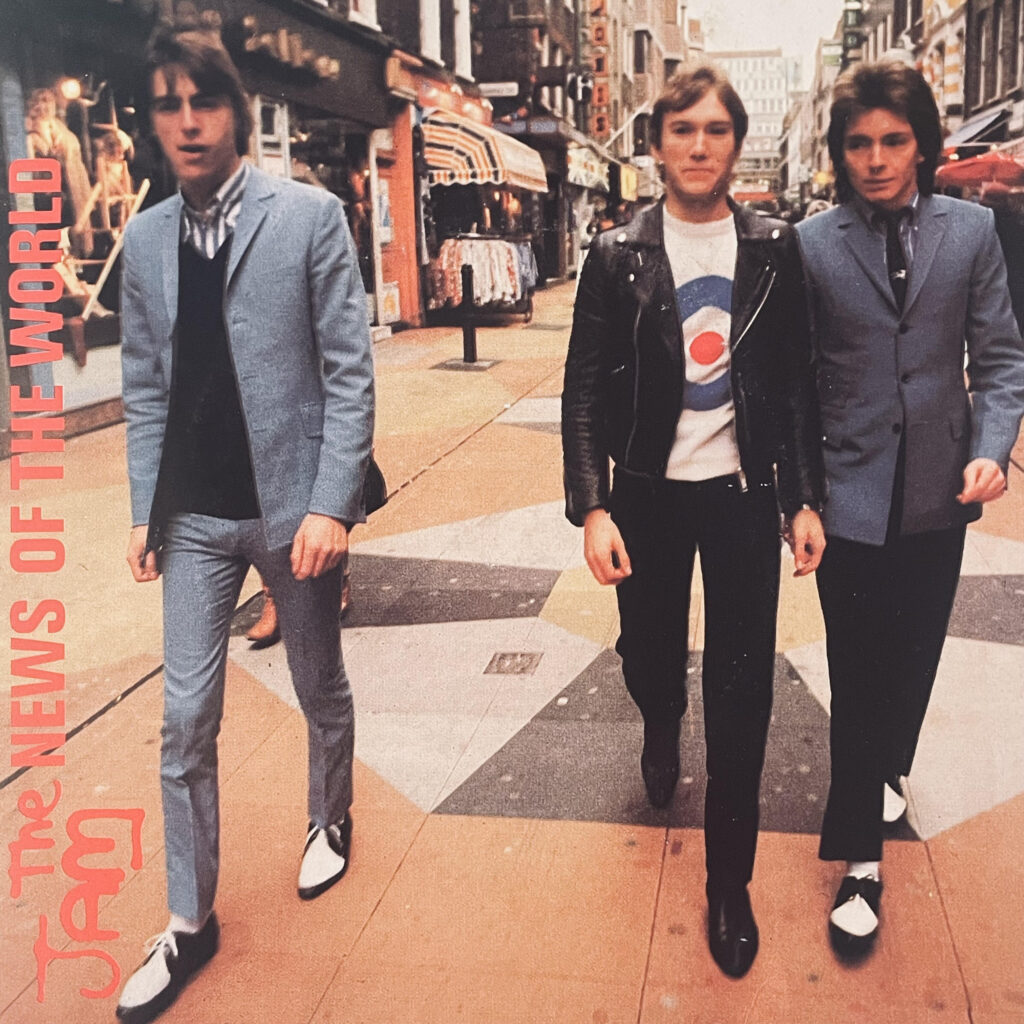
TESTIMONIAL: Rick Buckler, The Jam.

Is there a better three album run than The Jam’s All Mod Cons, Setting Sons & Sound Affects? Then there’s the singles. A canon of seven inch vinyl to match The Beatles & The ‘Stones. In fact no band released a better collection of B-Sides before or since. The Butterfly Collector is regarded by many as the greatest of all time. Pow

For a few years ‘The best f***ing band in the world’ John Weller’s infamous live introduction, were indeed that. Bang

Honed by constant live gigging at the hottest venues in ‘town, The Jam emerged as ‘straight-tied-Jam-shoed’ Punk Mod Power Pop style icons in 1977 on the crest of the Punk & New Wave Revolution. Danny Baker said it best, there would be no better fledgling Punk & New Wave era film than through the eyes of The Jam. A sonic A-Bomb In Wardour Street their looks, politics and energy made them Immediate darlings of the NME with an easy transition to cathode ray tube and a virtual 1978-82 BBC Top Of The Pops residency. The tightest of three pieces, where there is nowhere to hide.. Wham

Near the end they headlined the first episode of The Tube playing “Ghosts”, “In The Crowd”, “A Town Called Malice”, “This Is The Modern World”, “Move On Up”, “The Great Depression”, “Beat Surrender”, “Precious” a diverse and virtuoso 8 Track performance. Direction

Weller’s rug pull in 1982 meant a beat generation kept a candle alight for a reunion. But we all know the redux is never quite as good as the original. So those memories were never corrupted. Reaction

On the passing of the band’s drummer Rick Buckler, a brief testimonial of one of the most vital bands who have accompanied my life and millions of others having emerged for any child of the Sixties at such an influential teen-age. Creation

Brighton Rocked. RIP Rick.

The Jam 1978

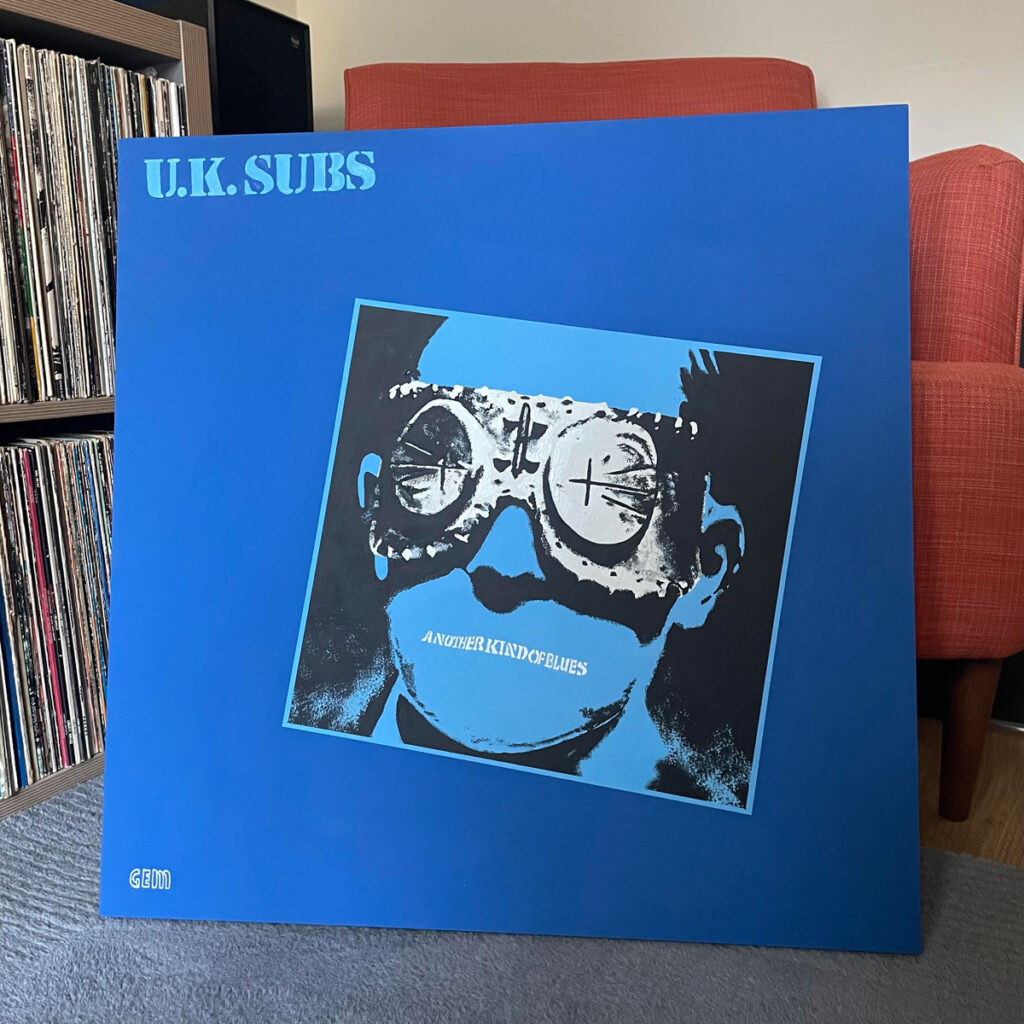
POP ART: U.K.Subs Another Kind Of Blues

Another from my series of iconic Seventies & Eighties Punk Rock and New Wave record sleeves reimagined as standout Pop Art to show in an installation or hang in your space.

U.K. Subs – Another Kind Of Blues (1979)

Description: 600mm MDF with Pine Former. Acrylic Paint. 

UK Subs Pop Art


Few punk album covers are as instantly recognizable as the sleeve for the U.K. Subs’ debut album, Another Kind of Blues. Released in 1979, the record’s artwork became a visual anthem for the punk ethos, raw, bold, and unapologetic. Now, this iconic blue sleeve art is being reimagined as large-scale Pop Art, a 600mm celebration of punk history transformed into a striking new medium.

Revisiting an Icon – The original artwork, with its distressed texture, stark imagery, and raw aesthetic, perfectly encapsulated the grit and urgency of punk rock. The World War One Tank Driver Safety Goggles, reflected both the energy of the music and the band’s focus. It wasn’t just an album cover, it was a statement of intent.

My painted reinterpretation magnifies this classic design, scaling it up to 600mm and infusing it with the vibrant sensibilities of Pop Art. Bold, saturated colours are a facsimile of the original, and textures are replicated at the new large scale. This is Another Kind of Blues as you’ve never seen it before—a fusion of punk’s rebellion and Pop Art’s playful edge but wartime connotations capture the latent energy stored in the vinyl groove. 

Why Another Kind of Blues? The U.K. Subs’ debut album wasn’t just another punk record—it was a blueprint for a movement. Its themes of disillusionment and defiance resonate just as strongly today, and its artwork remains a cultural touchstone. This creative project explores how that punk ethos translates into the bold, ironic language of Pop Art, creating something that’s both a tribute to the past and a celebration of reinvention.

Experience the Art of Punk – This large-scale reimagining isn’t just for die-hard U.K. Subs fans, it’s for anyone who appreciates the power of art to provoke, inspire, and redefine cultural boundaries. The 600mm scale adds a monumental quality to the work, demanding attention and inviting viewers to experience Another Kind of Blues in a new, electrifying context.

This unique artwork forms part of my series of Punk Rock & New Wave record sleeves as 600mm Pop Art paintings. This body of work is set to be exhibited in Autumn 2025. 

Because the punk ethic never dies, it evolves. 

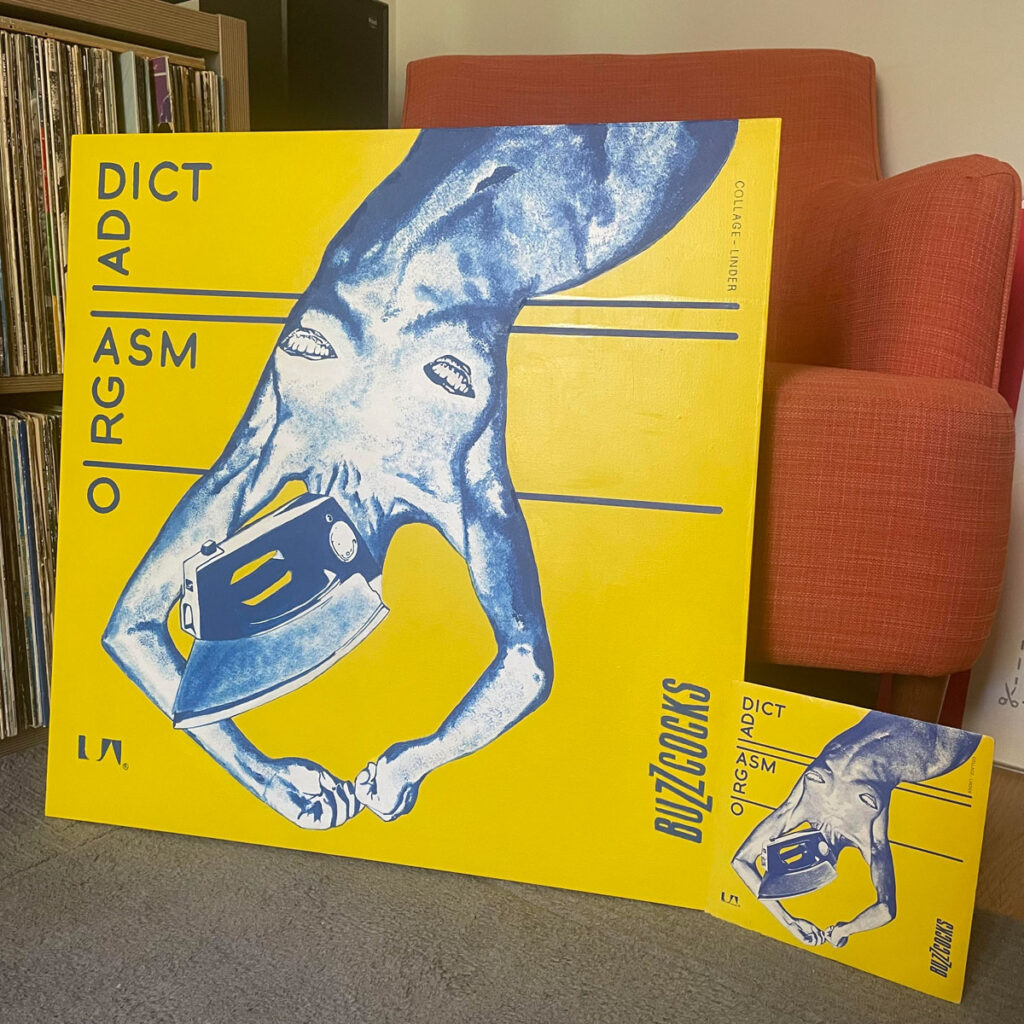
POP ART: Buzzcocks – Orgasm Addict

Another from my series of iconic Seventies & Eighties Punk Rock and New Wave record sleeves reimagined as standout Pop Art to show in an installation or hang in your space.

Buzzcocks – Orgasm Addict (1977)

Description: 600mm MDF with Pine Former. Acrylic Paint & Collage. 

Buzzcocks Orgasm Addict Pop Art


Orgasm Addict, Buzzcocks’ incendiary 1977 debut single, was more than just a punk anthem, it was a statement. It shattered taboos with its audacious lyrics and set the tone for a generation rebelling against conformity. Now, over four decades later, a reimagining of this punk rock milestone through a Pop Art lens, celebrating its raw energy, wit, and cultural significance.

This large-scale reinterpretation pays homage to the trailblazing visual language of Malcolm Garrett and Linder Sterling, whose iconic sleeve design remains as daring and provocative as the song itself. Sterling’s photomontage, a surreal collage of household appliances and fragmented bodies captured the disruptive ethos of punk while challenging traditional notions of sexuality and consumerism. It’s a masterpiece of subversive design, as relevant today as it was in the late ’70s.

From Punk Rock Icon to Pop Art – This reimagining amplifies the anarchic spirit of the original artwork, blending Sterling’s cut-and-paste aesthetic with the vibrant color palettes and bold forms of Pop Art. Think explosive neon hues, oversized textures, and recontextualized imagery that celebrates the song’s chaotic humor and uncompromising rebellion.

Malcolm Garrett’s typographic precision, those angular fonts and stark compositions also informs the design. This Pop Art transformation incorporates his graphic sensibility into a modernized framework, honoring his pioneering approach to blending music and bold , visual graphic art .

Why Orgasm Addict? Buzzcocks’ debut single isn’t just a punk classic; it’s a cultural landmark. The song’s tongue-in-cheek critique of excess and its frenetic energy feel tailor-made for a Pop Art transformation. This piece reexplores the tension between the song’s themes of desire, addiction, and liberation, bringing its provocative message to a new audience through a visual medium.

Experience the Rebirth. This reimagining isn’t just an homage it’s a conversation between past and present, punk rock and Pop Art, rebellion and reinvention. Whether you’re a lifelong Buzzcocks fan or a lover of bold, boundary-pushing art, this art piece invites you to rediscover Orgasm Addict as you’ve never seen it before. This may be the only large scale reinterpretaion of the single sleeve art as a painting worldwide.

Stay tuned for my exhibition details scheduled for this Autumn and exclusive behind-the-scenes insights into my creative process. 

You can join me as we celebrate the collision of music, art, and culture in the most electrifying way possible.

Vive Le Punk Rock – Vive Le Pop Art!

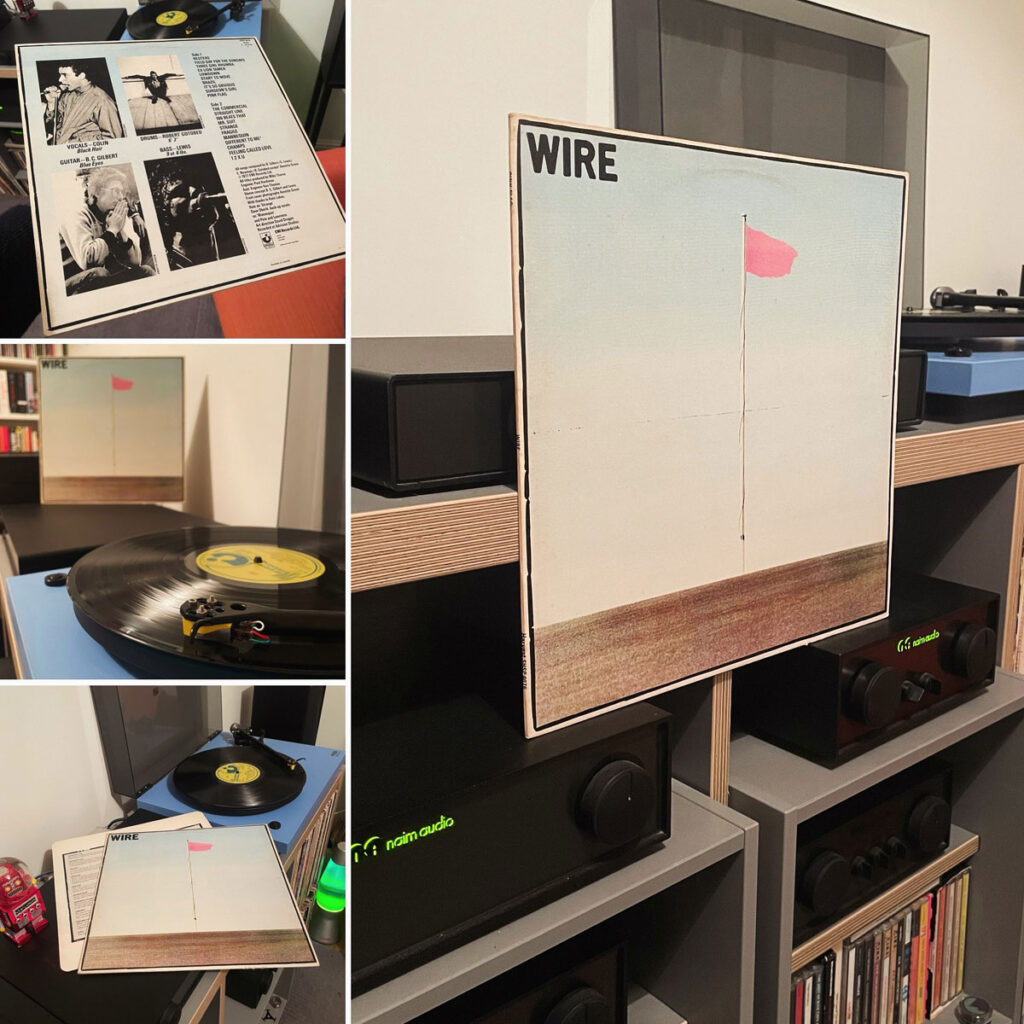
RETROSPECTIVE: Wire – Pink Flag (1977)

Another in a series of classic album reviews, with a sprinkling of intel that may be new to you. So whether you are a lifelong music fan or new to vinyl and want clues, grab a coffee.

Wire Pink Flag Album

Pink Flag isn’t just an album; it’s a surgical strike against the bloated corpse of rock ‘n’ roll. In a year when punk was spitting fire and sneering at the establishment, Wire delivered a record that wasn’t just a fistful of rebellion but a blueprint for how to burn the whole house down and start again.

From the moment the jagged riff of “Reuters” punches through the air, you know you’re not in Kansas or even the King’s Road, anymore. Wire took punk’s stripped-down ethos and stripped it even further, eschewing the cartoonish fury of their contemporaries for something cooler, sharper, and frankly, more dangerous. This isn’t music that demands you pogo; it demands you think.

Wire’s influences are etched into every angular note: the raw energy of The Ramones, the art-school ambition of early Roxy Music, and the austere minimalism of krautrock bands like Can and Neu!. But Pink Flag isn’t a mere patchwork of borrowed sounds. It’s a distillation of those ideas into something startlingly original.

With 21 tracks clocking in at just over 35 minutes, Wire redefined what a punk song could be. Take “Field Day for the Sundays,” which explodes in just 28 seconds, or “12XU,” a proto-hardcore missile that set the template for bands like Minor Threat years down the line. But it’s not all speed and aggression. “Strange” oozes unsettling menace (later covered by R.E.M.) while “Ex-Lion Tamer” balances its nervous energy with an almost robotic precision.

The genius of Pink Flag lies in its contradictions. It’s minimalist but densely packed with ideas. It’s confrontational but avoids punk’s chest-thumping clichés. It’s detached, yet every note bristles with intent. Bruce Gilbert’s angular guitar riffs, Graham Lewis’s churning bass lines, and Robert Gotobed’s taut drumming provide the perfect backdrop for Colin Newman’s deadpan delivery, which cuts like a scalpel through the chaos.

In 1977, Pink Flag stood apart from the punk explosion. It wasn’t chasing the charts like the Sex Pistols or indulging in rock ‘n’ roll mythology like The Clash. It was smarter, artier, and infinitely more subversive. This wasn’t music for the masses; it was music for those ready to tear down the old order and imagine something new.

Wire’s influence rippled out far beyond the grimy clubs of ’77. Post-punk, hardcore, indie rock, all owe a debt to Pink Flag. Bands like Joy Division, Sonic Youth, and even the aforementioned R.E.M. took cues from its skeletal structures and refusal to play by the rules. Decades later, it still sounds like the future: terse, taut, and utterly uncompromising.

Wire didn’t just wave a pink flag; they planted it defiantly in the ground and dared anyone to follow. Most couldn’t. Some didn’t even try.

Essential Tracks: “Reuters,” “Ex-Lion Tamer,” “12XU” “Mannequin” “Fragile” Oh, the whole album.

Verdict: A razor-sharp manifesto that shattered punk’s mold and laid the foundation for the avant-garde edge of rock.