ART POP / POP ART: Madcap Visions: Syd Barrett’s Psychedelic Impressionism

Or The Artistic Polymath Destroyed By Extreme Curiosity

‘Nobody knows where you are, how near or how far? Shine on you crazy diamond’. In the kaleidoscopic tumult of British psychedelia, no figure looms larger, or more tragically, than Roger Keith “Syd” Barrett. The founding genius of Pink Floyd didn’t just fall through the cracks of reality; he plummeted into an abyss of his own creation, one splashed with the vibrant hues of his artistic obsessions and ultimately poisoned by the very substances that initially seemed to unlock his creative potential.

Barrett was never merely a musician. In the drab landscape of post-war Cambridge, young Syd emerged as a polymath: a guitarist, singer, songwriter and, crucially, a visual artist whose sensibilities were formed in the crucible of fine art rather than the sweaty backrooms of rhythm and blues clubs.

Before Pink Floyd, Barrett studied at the Camberwell School of Arts, where he absorbed the anarchic spirit of Dadaism and the dreamy abstraction of Impressionism like a sponge. His early paintings reveal a fascination with fractured perspectives and sunburnt colours that would later infiltrate his songwriting. While his contemporaries were slavishly copying American blues records, Barrett was deconstructing reality itself, approaching music as another form of visual expression.

What Barrett understood, was that sound could be manipulated like paint. He wasn’t thinking in terms of chord progressions but in terms of colours and textures.

The Dadaist influence on Barrett’s work remains criminally under-appreciated. Dada that nihilistic art movement born in the carnage of World War I rejected reason and logic in favour of nonsense and intuition. Sound familiar? Barrett’s lyrics often read like they’ve been assembled using Tristan Tzara’s and JG Ballard’s cut-up technique: disconnected fragments forming a surreal collage of childhood memories, literary allusions and cosmic observations.

When Barrett sang about “a mouse in a hole” or “cats that were glass,” he wasn’t indulging in whimsy for its own sake. He was applying the Dadaist principle of deliberate irrationality as a means of liberation from conventional thinking. His songs were audio manifestations of Marcel Duchamp’s readymades ordinary objects (or in Barrett’s case, ordinary phrases) elevated to art through context and presentation.

His compositions twisted conventional song structures into new shapes, playing with silence and noise in ways that mirrored the Dadaists’ fascination with chaos and chance. The extended improvisations of early Floyd performances weren’t just drug-induced noodling; they were attempts to translate the spontaneity of Dadaist performance art into music.

If Dada provided the conceptual framework for Barrett’s art, Impressionism supplied its visual vocabulary. Like Monet or Renoir, Barrett was obsessed with capturing the ephemeral nature of perception, those fleeting moments when reality seems to shimmer and dissolve.

His guitar playing, with its liquid phrasing and emphasis on texture over technique, sought to replicate the Impressionists’ fascination with light. The shimmering cascades of notes in “Interstellar Overdrive” evoke the same sense of dissolved reality as Monet’s water lilies. Both ask: what happens when you stop trying to depict the world as it is and start exploring how it feels to perceive it?

Barrett’s use of the Binson Echorec delay unit wasn’t just a trendy effect; it was an attempt to smear sound across time in the same way the Impressionists smeared paint across canvas. His goal wasn’t to reproduce reality but to capture its subjective experience the way perception fragments and reforms in the mind’s eye.

Enter LSD, the accelerant that would both fuel Barrett’s artistic vision and ultimately consume it. When Barrett first dropped acid in 1965, it seemed to crystallize his artistic philosophy. Here was a substance that made manifest the very ideas he’d been exploring: the fragmentation of perception, the dissolution of boundaries, the revelatory power of irrationality.

“After Syd started taking acid,” recalled Pink Floyd drummer Nick Mason, “his music became more extreme. It was as if he was trying to recreate the experience through sound.”

The early Pink Floyd light shows, with their oil projections and stroboscopic effects, weren’t just psychedelic window dressing. They were Barrett’s attempt to create a total sensory environment that merged music and visuals into a unified art form – a kind of synaesthetic experience that would break down the barriers between sight and sound.

For a brief, incandescent moment, it worked. Barrett’s LSD use seemed to unlock new creative possibilities, allowing him to translate his visual art sensibilities into music with unprecedented clarity. The songs on “The Piper at the Gates of Dawn” are remarkable for their visual quality, they don’t just tell stories; they paint pictures, conjuring landscapes of the mind with a vividness that remains unmatched.

But the acid that illuminated Barrett’s vision soon began to obscure it. By late 1967, his behavior had become increasingly erratic. The man who had once meticulously constructed sonic collages now stood immobile on stage, detuning his guitar to produce discordant noises or simply staring into space.

Some saw this as a continuation of his Dadaist provocations, a deliberate subversion of performance conventions. Others recognized the darker truth: Barrett was no longer in control of his art or himself. The boundaries between creator and creation had dissolved entirely.

“Looking back,” said Roger Waters years later, “it’s clear that Syd was trying to disappear into his art. He wasn’t just making music about fragmented perception; his perception was actually fragmenting.”

Barrett’s final recordings with Pink Floyd reveal an artist caught between brilliance and disintegration. “Jugband Blues”, his last contribution to the band’s catalog, is a harrowing document of self-dissolution. When he sings, “I’m most obliged to you for making it clear that I’m not here,” it’s less a lyric than a dispatch from the frontiers of a disintegrating personality.

After his departure from Pink Floyd, Barrett retreated further into his painting, producing abstract works that became increasingly chaotic and dark. His brief solo career yielded moments of fractured beauty, but the coherence that had once held his artistic vision together had unraveled.

Barrett’s tragedy wasn’t just that he lost his mind, it’s that he lost it in pursuit of an artistic ideal. He wasn’t a cautionary tale about rock excess but about the dangers of pushing perception to its limits. Like Icarus, he flew too close to the sun, and the wax that held his wings together, his fragile sense of self, melted away.

In the end, Barrett chose silence over chaos, retreating to his mother’s house in Cambridge where he returned to painting and gardening, refusing to engage with his musical past. The man who had once sought to translate the visual into the auditory now lived in a world of private visions, inaccessible to the rest of us.

What remains is a body of work that stands as one of the most successful attempts to merge the visual and the auditory in popular music. Barrett didn’t just write songs; he created sensory experiences that translated the theories of Dadaism and Impressionism into a new language of sound.

In doing so, he mapped the furthest reaches of perception, both its wonders and its dangers, its Heaven and Hell, and while the journey ultimately cost him his creative voice, the maps he left behind continue to guide generations of artistic explorers who wisely choose to venture a little less far into the unknown.

Syd Barrett studied at Camberwell College of Art 1964-66

Art Pop / Pop Art: a study of the influences of art school, famous artists and movements on pop and rock music. Those institutions where failure is motivation, where the eccentric and pretentious emerge into the fascinating space where art and music meet.
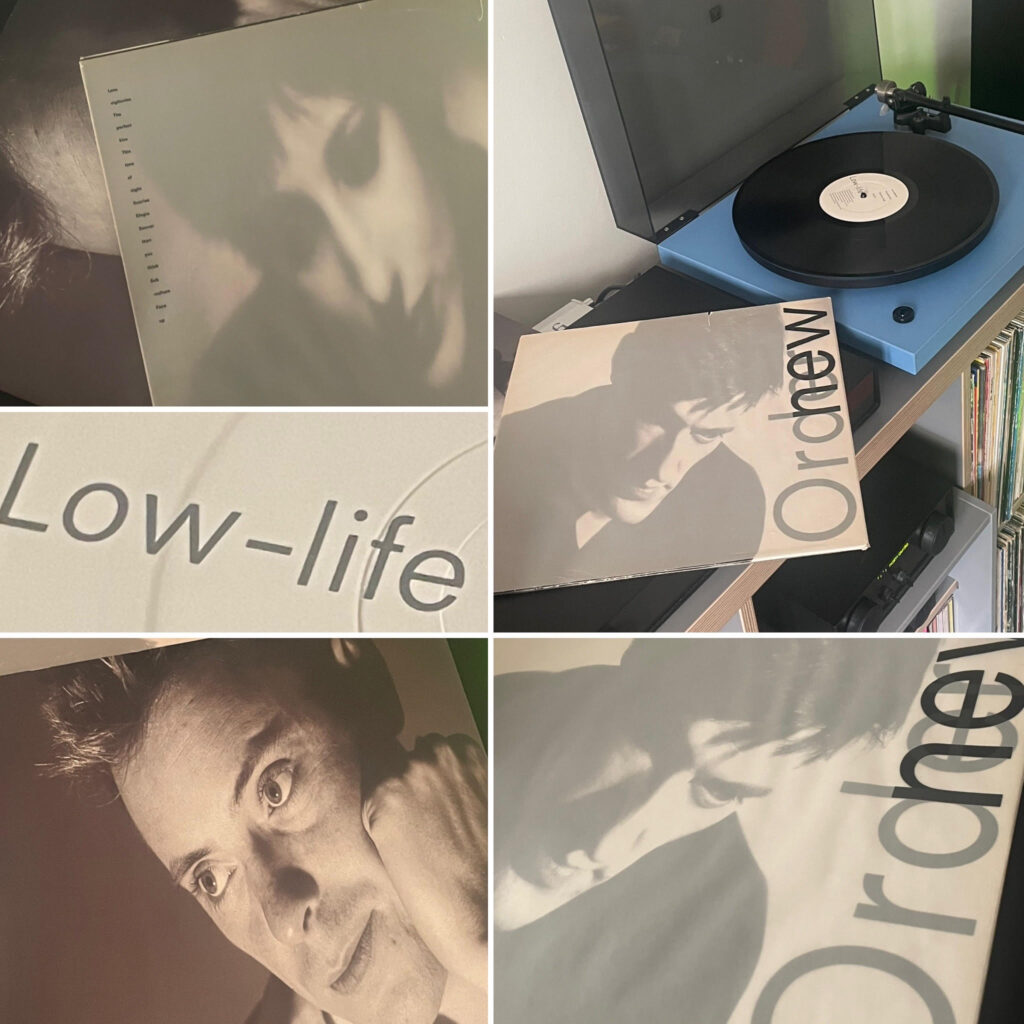
ART POP / POP ART: Peter Saville, Joy Division & New Order

The Man Who Framed Post-Punk: How Peter Saville’s art history and graphic aesthetic defined the visual language of Manchester’s most enigmatic bands

In the damp, grey streets of late-seventies Manchester, a revolution was brewing. Not the kind involving barricades and manifestos, but something far more enduring: a marriage of sound and vision that would define an era. While Ian Curtis’ baritone and Bernard Sumner’s clinical guitar lines carved out new sonic territories, another figure, working in silence with Letraset and photographic plates – was busy creating the visual alphabet through which their music would speak to the world.

Peter Saville, 1978 Polytechnic graphic design graduate, typography obsessive, and Factory Records’ design director never actually listened to Joy Division’s debut album before creating its now-iconic sleeve.

“I was given the diagram by Bernard, I had no bloody idea it was a visualization of pulsar waves from a dying star. I just thought it looked… correct.” Peter Saville.

“Correct” is perhaps the understatement of the decade. Reversed so it became white on black and reduced in size, that stark, minimalist rendering of radio waves from pulsar CP 1919 (originally published in the Cambridge Encyclopedia of Astronomy) adorning Joy Division’s Unknown Pleasures has become one of music’s most recognisable and relentlessly appropriated images, a visual shorthand for post-punk industrial decay that adorns everything from t-shirts worn by teenagers who weren’t born when Curtis died to coffee mugs cluttering the desks of advertising executives.

The beauty of Saville’s approach was its magnificent detachment. While his contemporaries were slapping together ransom-note typography and day-glo splashes to capture punk’s anarchic spirit, Saville looked elsewhere – to European modernism, to the Bauhaus, to suprematism, futurism and constructivism. His influences weren’t the Sex Pistols but Fortunato Depero, Jan Tschichold and Herbert Bayer. The result was a visual language that felt both timeless and startlingly new: clinical, austere, and brutally elegant. If you’d never been to art school or studied art history this stuff was totally new and refreshing.

“The thing about Factory was that nobody told me what to do. Tony Wilson just handed me a chequebook and said ‘Make something appropriate.’ Can you imagine that happening now?” Peter Saville.

This freedom allowed Saville to create a body of work that functioned as a perfect visual analogue to the music it contained. The frosty minimalism of Joy Division’s “Closer” sleeve featuring a Bernard Pierre Wolff photograph of the Appiani family tomb in Genoa seemed to anticipate the tragedy of Curtis’s suicide rather than react to it. The sleeve was designed before the singer’s death, yet its imagery seemed eerily prophetic.

When Joy Division metamorphosed into New Order following Curtis’s death, Saville’s aesthetic evolved alongside them. The band’s gradual embrace of electronics and dance music found its visual counterpart in Saville’s increasing use of vibrant color and an almost fetishistic approach to production techniques.

“Blue Monday,” New Order’s seminal 1983 12-inch single, came housed in a sleeve that mimicked a 5¼-inch floppy disk, complete with die-cut holes and coded colour blocks. It cost so much to produce that Factory reportedly lost money on each copy sold, despite it becoming the best-selling 12-inch single of all time. When mentioned to Saville nowadays he shrugs with indifference:

“I wasn’t running a business, was I? I was making something beautiful.”

This beautiful impracticality became something of a Saville trademark. For New Order’s “Power, Corruption and Lies” album, he appropriated a classical 19th-century floral painting by Henri Fantin-Latour and juxtaposed it with a colour-coded alphabet of his own devising a system so arcane that even the band couldn’t decipher it without the provided key. The result was a tension between romanticism and modernism that perfectly mirrored New Order’s own fusion of emotional intensity and mechanical precision.

Throughout the ’80s, as New Order’s sound incorporated more elements of New York club culture and Italian disco, Saville’s designs became increasingly sophisticated. The “Technique” sleeve featured saturated Mediterranean blues and architectural elements that nodded to the album’s Ibiza influences, while “Republic” showcased Saville’s growing interest in digital design techniques.

What makes Saville’s work with both bands so influential is not just its striking appearance but its philosophical underpinnings. In an era when most record sleeves were exercises in literal-minded marketing, screaming the band’s name and image at potential buyers, Saville’s designs operated on the radical assumption that the audience was intelligent enough to meet the work halfway.

“I wasn’t interested in selling records,” I was interested in making objects that belonged in the world.” This approach transformed album covers from mere packaging into cultural artifacts in their own right, objects that demanded the same serious engagement as the music they contained.

Four decades on, the partnership between these Manchester bands and their reluctant visual architect remains one of pop culture’s most fruitful collaborations, a case study in how design can amplify rather than merely illustrate musical ideas. In an age of streaming and digital ephemera, when album artwork has been reduced to a postage stamp-sized afterthought, Saville’s monumental sleeves for Joy Division and New Order feel like transmissions from a more visually literate time.

Now adorning tee shirts and mugs, Saville’s designs have assumed a life of their own. “That’s the thing about symbols, once you release them into the world, they don’t belong to you anymore. They have their own lives.”

Much like the music they were created to accompany, Saville’s designs have achieved that rarest of cultural feats, they’ve become both of their time and completely outside it.

Peter Saville studied graphic design at Manchester Polytechnic 1975-78.

Art Pop / Pop Art: a study of the influences of art school, famous artists and movements on pop and rock music. Those institutions where failure is motivation, where the eccentric and pretentious emerge into the fascinating space where art and music meet.

ART POP / POP ART: Introduction

The introduction to my book Art Pop / Pop Art: a study of the influences of art school, famous artists and movements on pop and rock music. Those institutions where failure is motivation, where the eccentric and pretentious emerge into the fascinating space where art and music meet.

The Art School Revolution in Rock

It begins with paint splashes before guitar slashes. Hands stained with pigment before calloused by strings. Art school corridors have pumped more revolutionary blood into rock’s system than any conservatory ever could.

Consider the transformative parade of daubers-turned-rockers: Townshend with his windmill arm and operatic ambitions; Ferry, the suave pop-art provocateur; Bowie, that “chameleon, comedian, Corinthian and caricature”; Eno, the polymath dismantling sound like a child with a particle accelerator. This holy lineage stretches from The ‘Stones’ Keith Richards to Pulp’s Jarvis Cocker, with countless visionaries between.

What these visual thinkers brought wasn’t mere decoration but destruction, the impulse to tear down and rebuild. While classically trained musicians polished scales, the art school brigade posed a more subversive question: “Why make music this way at all?”

Canvas and Chord

The art school mentality transformed how music was conceived, packaged, and performed. Album artwork became an extension of the sonic statement. Warhol’s banana for the Velvet Underground announcing its art-house credentials before needle touched vinyl; his provocative zipper for the Rolling Stones. Consider too The Factory, not just Warhol’s silver-walled playground but the Manchester institution founded by art graduate Tony Wilson, who understood that bands like Joy Division and New Order needed proper framing.

Stage design reflected this visual thinking. Bowie’s transformations weren’t costume changes but conceptual renovations, each persona a living installation. Talking Heads’ David Byrne expanded concerts into performance art with his oversized suit and mechanical movements, a visual commentary no conservatory graduate would likely conceive.

The Clash’s aesthetic – sartorially and musically – owed everything to collage techniques from art school. The Pollock splattered Paul Simonon, a serial truant whose father assigned him to copy artistic masters, brought this sensibility to bass playing. Even Malcolm McLaren emerged from art school understanding bands as living artistic movements. Situationist provocateurs with amplifiers.

Conceptual Experimentation

Art school didn’t just transform music’s appearance, it fundamentally altered its sound. The dismantling of rock orthodoxy owes its framework to the experimental ethos of the art studio.

Brian Eno, having ‘Crashed his plane and walked away from it’ emerging from art school with concepts borrowed from John Cage, approached sound as malleable material. His Oblique Strategies cards instructing musicians to “Honour thy error as hidden intention” represented pure art school methodology. His ambient works treated music as environment rather than event, as gallery installation rather than narrative.

Pete Townshend’s concept albums weren’t mere song collections but gestures toward larger meaning, rock equivalents of installation art. His generation’s rebellion against rock’s three-minute constraints paralleled the art world’s expansion beyond traditional frames.

Post-punk’s angular assault on convention (prefigured by Eno’s “Third Uncle” from 1974), Wire’s stark minimalism, and Gang of Four’s razor-sharp deconstructions reflected critical theory central to 1970s art education. These weren’t just songs but sonic arguments – musical essays slicing through cultural assumptions with surgical precision.

A Lyrical Lens

The art school contingent’s most distinctive contribution may have been their observational sharpness. Ian Dury’s Pop Art tribute “Reasons To Be Cheerful, Part 3″ and Ray Davies’ character studies offer forensic examinations of English society, affectionate yet unsparing, finding universal truth in specific detail, 20th Century Hogarth .

Jarvis Cocker brought similar precision to his dissections of class dynamics and sexual politics. His lyrics function as short films, zooming in on telling details with Kubrickian focus. “If you called your dad he could stop it all, yeah!”

Even punk’s compression owed something to art school techniques, the ability to convey volumes through minimal means, musical guerrilla marketing. Steve Jones’ power chords and Joe Strummer’s manifestos demonstrated economy of expression. Bowie’s cut-up lyrical approach borrowed directly from Dadaists and William Burroughs. Creating meaning through collision rather than exposition.

A Broader Brush

This cross-pollination wasn’t merely stylistic but ideological. Pop Art’s appropriation of commercial imagery found its musical equivalent in sampling. Dadaism’s absurdist protest resonated through punk’s deliberate confrontation. Bauhaus principles influenced post-punk’s stark functionalism, literally embodied in the angular sound of that eponymous band.

Perhaps most crucially, art school’s emphasis on vision over technical prowess gave permission to prioritise expression over virtuosity. Three chords became sufficient if they were your three chords, played your way, serving your vision. This democratization of music-making owed everything to art school’s validation of the authentic voice; an ethic continued by Art Brut with their song “Formed a Band.”

A Continuing Legacy

This fertile cross-contamination continues today, though institutional pathways have multiplied. Digital landscapes enable new visual-sonic collaborations, while genres like hip-hop have developed visual literacy and sampling aesthetics paralleling art school methodologies, albeit minestrone of intellectual property. 

What remains constant is the revolutionary potential when visual thinking collides with sonic exploration. When the eye informs the ear and conceptual frameworks shatter musical conventions. From The Beatles to Blur, popular music’s most interesting corners have been mapped by those who see sound as colour, approach composition as collage, and understand music as a multi-sensory experience.

The art school radicalisation of rock wasn’t merely accidental but a necessary infusion indeed rock’s periodic salvation from its own orthodoxies. Long may paint-stained (or mouse-clicking) fingers reach for guitars, synthesisers, and samplers. As you will realise from the following chapters, our ears and entertainment depend on it.

From Art Pop / Pop Art.

Copyright Steve Coulter / 45renegade 2025

CURRENT AFFAIRS: America’s Reserve Currency Status Anxiety

How Trump’s Trade Wars Threaten the US Dollar’s Global Crown

Since the Bretton Woods Agreement of 1945, the American dollar has reigned supreme in global finance. Like a trusted old friend, it has been welcomed across trading floors from Tokyo to London, from Sydney to São Paulo. Yet this remarkable privilege, often taken for granted in Washington’s corridors of power, now faces an existential challenge that few Americans properly comprehend.

When foreign manufacturers ship their trainers, televisions and trinkets to American shores, they collect dollar payments that subsequently flow through the veins of the global economy. These greenbacks grease the wheels of international commerce, particularly in vital commodities markets where oil, wheat and metals trade exclusively in Uncle Sam’s currency. The arrangement has served America handsomely, with foreigners regularly returning these dollars to purchase US Treasury bonds, effectively financing American government spending at bargain-basement interest rates.

This seemingly magical arrangement comes with a seldom-discussed requirement: America must run persistent trade deficits. Far from being an economic weakness, as populist politicians frequently claim, these deficits actually supply the world with the dollars it needs to conduct international trade. It’s a peculiar financial alchemy that transforms America’s appetite for imports into global financial influence.

The dollar’s supremacy isn’t merely about national pride, it’s the foundation of America’s financial advantage. When foreigners willingly hold dollars and dollar-denominated assets, they’re essentially providing interest-free loans to the American economy.

Yet this delicate system faces mounting pressure. The recent American embrace of punitive tariffs against major trading partners resembles nothing so much as a game of financial Russian roulette. As global commerce redirects away from American markets, the circulation of dollars naturally diminishes. Foreign exporters, holding fewer greenbacks, subsequently purchase fewer Treasury bonds.

The consequences quickly cascade. To attract sufficient buyers for its debt, the US Treasury must offer more generous returns, pushing interest rates upward across the American economy. Mortgages grow more expensive, corporate borrowing costs soar, and consumers face steeper credit card bills. Meanwhile, the American government’s interest payments balloon, exacerbating already troublesome budget deficits.

What many fail to grasp is that the dollar’s global status isn’t guaranteed by divine right, it depends entirely on the confidence of individuals and institutions worldwide, confidence that appears increasingly fragile.

Historical precedent offers little comfort. Reserve currency status, once lost, proves devilishly difficult to reclaim. The British pound’s agonising descent from global prominence after World War II provides a cautionary tale that American policymakers would be wise to heed.

Perhaps most concerning, America’s financial system operates with remarkably slim margins of safety. A Swiss watch requires a screwdriver not a hammer. The federal government’s debt has swollen to unprecedented levels, while interest payments consume an ever-larger portion of tax revenues. In this precarious context, preserving the dollar’s international standing isn’t merely a matter of prestige, it’s essential for America’s financial survival.

As spring sunshine bathes Washington’s cherry blossoms, America’s financial future hangs in the balance. Nobody but Trump and his team know if this is just a lull in the storm, or the strong arm tactics of Asia-Pacific countries and Canada selling US Treasury Bonds has given them the shock they require to back off this tough and misguided tariff policy? Do they fully appreciate the gravity of what’s at stake. For a nation accustomed to dollar dominance, the adjustment to a multipolar currency world or a pretender to the currency crown would prove jarring indeed.

See also, USA Rogue State and The Great Crypto For Gold Heist.

#GlobalFinance #DollarDominance #TradePolicy #ThinkTank #EconomicOutlook #InternationalTrade #FinancialMarkets

CURRENT AFFAIRS: The Great Crypto For Gold Heist

The Golden Cryptocurrency Caper: A Tale of Modern Alchemy

In which your correspondent discovers how America’s richest men plan to transform Fort Knox’s gold into digital fortune

Picture, if you will, the ultimate Monte Carlo card table game being played out in the Washington halls of power. The stakes? Merely the entire gold reserve of the United States. The players? A fascinating cast of characters that would make Ian Fleming envious: a maverick billionaire whose rockets link the stars, a disruptor president with a golden tower, and digital age ‘Tech Bro’ alchemists who’ve convinced themselves, and the president, they can transform base mathematics into pure profit.

The scene unfolds at Fort Knox, the imposing Kentucky fortress that has captured the imagination of many a crime writer. But unlike the unsophisticated schemes of yesteryear, this caper requires no guns, explosives, no tunneling, and no masks. Instead, our protagonists come armed with legislation, algorithms, and the kind of audacity that only billions in paper wealth can buy.

At the heart of this contemporary tale lies a simple scheme. Our casual looking crypto conspirators have discovered themselves in possession of vast digital fortunes; Bitcoin, Dogecoin, and their algorithmic kin yet find themselves unable to convert their mathematical wealth into the more traditional trappings. Their solution? Convince Uncle Sam to become the ultimate cryptocurrency whale.

The mechanics of the plan display the kind of elegant simplicity that would make a Philip Starck proud. First, manufacture a crisis, in this case, a suddenly urgent need to “verify” Fort Knox’s gold reserves, which have been resting quite comfortably these many decades. Then, through the convenient vehicle of the unwieldy entitled ‘Boosting Innovation, Technology, and Competitiveness through Optimized Investment Nationwide Act of 2024’ AKA the BITCOIN Act (a name that manages to be both simultaneously accurate and misleading), create a legal framework to revalue this gold dramatically upwards from its current modest $42 per ounce. 

Potentially a crowd silencing $400 billion in gold, transformed through legislative alchemy into $677 billion of crypto purchasing power, as per the act, to be directed toward the acquisition of Bitcoin at a pace calculated to keep the market buoyant while the currently hamstrung crypto-wealthy now out gracefully.

Consider the sophistication of the play: crypto interests have invested over $100 million in recent elections, to them an early play in thus high-stakes game. Elon Musk, a modern-day Howard Hughes, has contributed $29 million of his own funds, a trifling sum compared to the potential returns.

Most amusing is Donald Trump’s evolution from cryptocurrency skeptic to digital evangelist. DJT’s journey from declaring crypto a “scam” to embracing it as the future of finance has been both dramatic and already highly lucrative.

The true genius of the scheme lies in its solution to what one might call the cryptocurrency gentleman’s dilemma: how to convert theoretical wealth into the kind that can buy islands, yachts, or other necessities of the well-lived life. The largest holders of Bitcoin face a predicament worthy of a classical tragedy. They’re billionaires on paper, but attempting to sell would destroy the very market that makes them wealthy.

Their solution? Make the American taxpayer their buyer of last resort. Regular currency is backed by a lender of last resort; e.g. The Bank of England or the Federal Reserve. The now legally planned purchase of 200,000 Bitcoin yearly for five years isn’t just financial policy it’s an escape hatch for the digital lords, allowing them to quietly cash out their otherwise unsaleable positions while the public treasury takes their place in the crypto nobility.

One must admire the sheer panache of it all. No masks, no guns, no getaway car, just paperwork and pixels, transforming public gold into private fortune with the stroke of a pen or key. Robber barons with style. 

Where are the watchdogs? Perhaps they’re too busy admiring the technical brilliance of the plan to raise the alarm. Or perhaps, they’ve been generously encouraged to turn a blind eye.

The entire affair raises an interesting question for the modern political philosopher: When does financial innovation cross the line into grand larceny? Is there a meaningful difference between a digital heist and a legislative one? You could argue the Bush family and friends’ Gulf Wars were legitimised heists through the military industrial complex and their owners. These are the kinds of questions one might ponder over a bottle of mineral water, preferably while one’s cryptocurrency holdings are still worth something.

For now, the game continues. The players lecture the masses with the confidence of those accustomed to winning, while the rest of us watch with the kind of fascination normally reserved for high-wire acts performed without a net. One thing is certain: when the music stops, someone will be left without a chair, and it probably won’t be the gentlemen who wrote the rules. Excuse the mixing of metaphors. 

In the meantime, you can only admire the audacity, preferably from a safe distance, because they’re buying Bitcoin at a record high *cough* perhaps while enjoying a martini, shaken, not stirred as a modern day Ian Fleming may contemplate how the ancient art of the confidence trick has evolved so elegantly in our digital age. The villain elevated to the most powerful individual in the world. You couldn’t write it because in a short while, truth may be stranger than fiction. 

TESTIMONIAL: Rick Buckler, The Jam.

Is there a better three album run than The Jam’s All Mod Cons, Setting Sons & Sound Affects? Then there’s the singles. A canon of seven inch vinyl to match The Beatles & The ‘Stones. In fact no band released a better collection of B-Sides before or since. The Butterfly Collector is regarded by many as the greatest of all time. Pow

For a few years ‘The best f***ing band in the world’ John Weller’s infamous live introduction, were indeed that. Bang

Honed by constant live gigging at the hottest venues in ‘town, The Jam emerged as ‘straight-tied-Jam-shoed’ Punk Mod Power Pop style icons in 1977 on the crest of the Punk & New Wave Revolution. Danny Baker said it best, there would be no better fledgling Punk & New Wave era film than through the eyes of The Jam. A sonic A-Bomb In Wardour Street their looks, politics and energy made them Immediate darlings of the NME with an easy transition to cathode ray tube and a virtual 1978-82 BBC Top Of The Pops residency. The tightest of three pieces, where there is nowhere to hide.. Wham

Near the end they headlined the first episode of The Tube playing “Ghosts”, “In The Crowd”, “A Town Called Malice”, “This Is The Modern World”, “Move On Up”, “The Great Depression”, “Beat Surrender”, “Precious” a diverse and virtuoso 8 Track performance. Direction

Weller’s rug pull in 1982 meant a beat generation kept a candle alight for a reunion. But we all know the redux is never quite as good as the original. So those memories were never corrupted. Reaction

On the passing of the band’s drummer Rick Buckler, a brief testimonial of one of the most vital bands who have accompanied my life and millions of others having emerged for any child of the Sixties at such an influential teen-age. Creation

Brighton Rocked. RIP Rick.

The Jam 1978

CURRENT AFFAIRS: USA Rogue State?

What If The United States Became a Rogue State? Should Great Britain Be Worried?

Let me be clear: I’m not engaging in hyperbole when I pose this question. As we witness the unfolding transformation of American governance under the restored Trump presidency, the international community faces an unprecedented dilemma. The special relationship between Britain and America – long the cornerstone of global democratic stability – now presents us with profound challenges.

The Project 2025 blueprint, meticulously prepared during Trump’s hiatus from power, reads less like a traditional transition plan and more like a manifesto for institutional demolition. Its architects have made no secret of their intentions: the systematic dismantling of what they term the “deep state” – in reality, the very bureaucratic safeguards that have long prevented executive overreach.

Consider the appointments. The installation of loyalists across federal agencies isn’t merely standard political patronage; it represents a fundamental restructuring of American governance. Career civil servants, those repositories of institutional knowledge and regulatory expertise, are being replaced by individuals whose primary qualification appears to be unwavering personal fealty to the president.

The consequences for Britain’s defence and security infrastructure are particularly alarming. Our military doctrine, built upon decades of joint operations and shared intelligence, suddenly stands on unstable ground. The Five Eyes intelligence-sharing agreement – arguably the most sophisticated multilateral intelligence arrangement in history – faces unprecedented strain. American intelligence agencies, now under explicitly political leadership, have already begun restricting certain intelligence flows, citing “national security reorganisation priorities.”

Consider the implications for our armed forces. Joint military exercises, long the backbone of NATO interoperability, are being cancelled or dramatically scaled back. British commanders report increasing difficulty in coordinating with their American counterparts, many of whom have been replaced by political appointees with limited military experience. The integrated defence systems that protect our shores – many reliant on American technology and real-time data sharing – face potential compromises in their effectiveness.

The economic ramifications are equally concerning. The City of London, which has thrived on its role as a crucial hub for dollar-denominated transactions, faces new uncertainties. American financial regulators, now operating under a “America First” directive, have begun implementing measures that effectively discriminate against foreign financial institutions, including British ones. The pound sterling’s traditional correlation with the dollar has become a liability rather than a stability mechanism.

Our defence industry, deeply integrated with American suppliers and technologies, faces severe disruption. Critical components for everything from our nuclear deterrent to our cyber-defence systems rely on American cooperation. The new administration’s “domestic preference” policies threaten to sever supply chains that have taken decades to build. British defence manufacturers, who have invested heavily in joint projects with American partners, now face the prospect of being frozen out of key markets.

The foreign policy pivot is particularly alarming. The new administration’s embrace of what they call “pragmatic nationalism” has effectively translated into the abandonment of longstanding alliances. NATO, already weakened during Trump’s first term, now faces existential questions about its relevance. The president’s recent remarks about “letting Putin sort out Europe” sent shockwaves through diplomatic circles, yet they barely raised eyebrows in Washington’s new political reality.

For Britain, this presents an excruciating dilemma. Our diplomatic corps, accustomed to navigating the special relationship’s occasional turbulence, now faces a fundamental question: How does one maintain a strategic partnership with a nation that increasingly rejects the very international order it helped create?

The impact on our cyber security is particularly worrying. The integrated nature of British-American cyber defence means that any degradation in cooperation immediately increases our vulnerability to state-sponsored attacks. The National Cyber Security Centre, which has relied heavily on real-time threat intelligence from American partners, reports a significant decrease in the quality and quantity of shared information.

The parallels with historical shifts in global power dynamics are unsettling. Like the decline of previous empires, America’s transition from global stabiliser to potential disruptor isn’t happening through military defeat or economic collapse, but through internal transformation. The machinery of state remains intact; it’s the operating system that’s being rewritten.

Critics might dismiss these concerns as catastrophising from the liberal establishment. But consider the concrete actions: the withdrawal from key international treaties, the deliberate undermining of multilateral institutions, the embrace of authoritarian leaders while democratic allies are publicly berated. These aren’t theoretical risks – they’re happening in real time.

The implications for Britain’s defence posture are stark. Our nuclear deterrent, while operationally independent, relies heavily on American technology and support. The new administration’s ambiguous stance on nuclear cooperation agreements has raised serious questions about long-term sustainability. The Royal Navy’s carrier strike groups, designed to operate in concert with American forces, may need to be reconceptualised for a world where such cooperation cannot be guaranteed.

Some in Whitehall advocate a “wait and see” approach, suggesting that institutional inertia will temper the administration’s more radical impulses. This misreads both the scope of the Project 2025 agenda and the determination of its implementers. The systematic placement of ideological allies throughout the federal bureaucracy creates a multiplication effect that could outlast the administration itself.

What’s required is a clear-eyed reassessment of Britain’s strategic position. This doesn’t mean abandoning the special relationship, but rather reconceptualising it for an era where American partnership comes with new risks and complications. Strengthening European security cooperation, diversifying intelligence partnerships, and building resilience against potential economic coercion should be immediate priorities.

The question isn’t whether America will remain powerful – it will. The question is how that power will be wielded, and whether the international community can adapt to an America that increasingly views global relationships through a transactional, zero-sum lens.

For Britain, this may mean making difficult choices. Our diplomatic tradition of constructive ambiguity – maintaining close ties with both Europe and America – may no longer be sustainable if those relationships pull us in fundamentally different directions.

The coming months will be crucial. As Project 2025’s implementations accelerate and the new administration’s foreign policy takes concrete form, Britain’s response will shape not just bilateral relations but our place in the emerging global order. The special relationship isn’t dead, but it’s entering uncharted territory. We must navigate with our eyes wide open to both the risks and the opportunities this presents.

This isn’t about abandoning our American allies – it’s about protecting our own interests in an era where those allies may be operating under a radically different set of priorities. The question in my headline isn’t merely provocative; it’s one that British policymakers must seriously consider as they plan for an increasingly uncertain future.

POP ART: New Order Blue Monday FAC72-600!

Another from my series of iconic Seventies & Eighties Punk Rock and New Wave record sleeves reimagined as standout Pop Art to show in an installation or hang in your space.

New Order – Blue Monday FAC72 12″ Vinyl Single (1983)

600mm acrylic painting on MDF with pine former.

New Order Blue Monday Factory Records FAC72-600 Pop Art


New Order’s Blue Monday: A New Pop Art Revolution

Dive into the iconic world of New Order’s groundbreaking single through a stunning 600mm pop art interpretation that celebrates the legendary Blue Monday sleeve design.

This revolutionary artwork captures the essence of Peter Saville’s innovative design – a hand painted visual homage to the most famous 12″ single in music history. The piece reimagines the original floppy disk-inspired sleeve, breaking down its intricate colour-coded messaging into a bold pop art statement.

Artistic Highlights:

  • Inspired by the original 1983 Factory Records release
  • Painted on large 600mm MDF with a substantial pine former
  • Stand alone as an installation or part of a Pop Art display
  • Hang in your space, its a stand-out art piece
  • Faithfully recreated design which is different on each side
  • Explores the unique color-coding system that made the original sleeve legendary
  • Transforms the innovative technical design into a vibrant artistic statement
  • Celebrates the intersection of music, technology, graphic design and now ART!

The artwork pays tribute to Saville’s groundbreaking concept – a sleeve that was more than just packaging, but a coded message decipherable through a complex colour wheel. Each colour block tells a story, reflecting the innovative spirit of New Order’s most iconic track.

New Order Blue Monday FAC72-600B Pop Art


A unique piece that bridges music history and contemporary art, this large-scale painting captures the revolutionary spirit of Blue Monday – a track that redefined electronic music and graphic design in one extraordinary moment.

POP ART: The Jam – The Modern World

Another from my series of iconic Seventies & Eighties Punk Rock and New Wave record sleeves reimagined as standout Pop Art to show in an installation or hang in your space.

The Jam – The Modern World (1977)

600mm acrylic painting on MDF with pine former.

The Jam This Is The Modern World Pop Art

Despite reaching just number 36 on the UK Singles Chart, “The Modern World” is a cult classic that exemplifies The Jam’s ability to blend punk energy with mod sensibilities.

The Jam’s 1977 single “The Modern World” is a raw and energetic Paul Weller Modernist anthem that captures the spirit of new wave and the burgeoning punk scene. Released as the lead single from their second album of the same name, the track showcases Weller’s sharp songwriting and the band’s tight musicianship. The song’s defiant lyrics, including the memorable line “I don’t give two f***s about your review” (later sanitised for radio), perfectly encapsulate the rebellious attitude of youth culture in late 1970s Britain. As kids we turned our school ties back to front and wore their signature Mod ‘Jam Shoes’.

The single’s picture sleeve is a prime example of punk-inspired Pop Art design. Drawing inspiration from the Pop Art movement of the 1950s and 1960s, the sleeve features bold figures, collage elements, and imagery typical of the genre. This style, which embraced popular culture and mass media imagery, was perfectly suited to The Jam’s modern aesthetic and their critique of contemporary society.

The artwork for The Jam’s releases was typically created by Bill Smith, Polydor’s Art Director at the time. Smith was responsible for designing five of The Jam’s album covers and sixteen of their single sleeves, including the iconic spray-paint logo that became synonymous with the band. The sleeve image presented in a visually striking and provocative style consistent with the punk ethos of the time.

My large scale 600mm painted artwork emphasises the mass market printing techniques which show inaccurate origination where the face and yellow colours are printed – or was that the designer’s nod to Pop Art?

Stay tuned for my exhibition details scheduled for this Autumn and exclusive behind-the-scenes insights into my creative process. 

You can join me as we celebrate the collision of music, art, and culture in the most electrifying way possible.

Vive Le Punk Rock – Vive Le Pop Art!

ART REVIEW: Michael Craig Martin’s Pop Art Evolution

Sir Michael Craig-Martin is a pivotal figure in contemporary art, renowned for his timeless, vibrant, iconographic contributions to Pop Art. His work, characterised by bold, saturated colours and sharply outlined depictions of everyday objects, bridges the gap between the Pop Art movement’s origins and its evolving legacy in modern culture. His artistic vocabulary, rooted in simplicity, transforms the mundane into the monumental, making his pieces resonate with the viewer in striking and unexpected ways.


Stylistic Characteristics

Craig-Martin’s work focuses on the intersection of abstraction and familiarity. He employs flat, bright colours and black contour lines to create graphic depictions of objects like lightbulbs, ladders, and trainers. These objects are stripped of texture and three-dimensionality, emphasising their iconic forms over their functional or material qualities. This reductionist approach aligns him with the ethos of Pop Art: celebrating the everyday and critiquing the commodification of culture.

Unlike the Pop Art pioneers of the 1950s and 1960s, such as Andy Warhol and Roy Lichtenstein, Craig-Martin does not appropriate imagery from advertising or mass media. Instead, he focuses on the essence of objects themselves. This distinction makes his work feel personal and accessible, as though he’s inviting viewers to reconsider the visual world they often overlook.

Influences

Craig-Martin’s influences reflect a blend of Pop Art ideals and broader conceptual art traditions. His early education at Yale University under Josef Albers’s colour theory instilled in him a fascination with colour’s emotional and optical effects. This training is evident in his use of flat yet intensely vibrant hues that imbue his works with energy and a sense of immediacy.

Conceptual Art also plays a significant role in shaping Craig-Martin’s methodology. As part of the London-based movement in the 1960s and 1970s, he explored the relationship between objects and ideas, an approach seen in works like An Oak Tree (1973). In this seminal piece, he presents a glass of water with a written assertion that it is an oak tree, challenging perceptions of reality and meaning—a conceptual underpinning that complements his Pop Art visuals.

His contemporaries, such as Richard Hamilton and Eduardo Paolozzi, also influenced his practice, particularly in their focus on everyday objects as a mirror of consumer culture. Yet, Craig-Martin’s works feel more timeless, detached from the overt consumerism that defined the earlier generation of Pop Art. His minimalism suggests a meditative quality, drawing viewers into a dialogue with the objects themselves.

Legacy and Impact

Craig-Martin’s art has influenced generations of artists, particularly through his role as a professor at Goldsmiths, where he taught influential figures like Damien Hirst, Sarah Lucas, and Gary Hume. His approach—emphasising clarity, accessibility, and conceptual depth—resonates across various contemporary art movements.

In sum, Michael Craig-Martin revitalises the principles of Pop Art for a contemporary audience, melding colour theory, conceptual thought, and a deep appreciation for the everyday. His work not only celebrates objects but elevates them, turning the familiar into profound symbols of modern existence. By doing so, he ensures that Pop Art continues to evolve, remaining as relevant and thought-provoking as ever.

Sir Michael Craig Martin retrospective exhibition, 21st September to 10th December 2024 at Royal Academy of Arts, London W1JOBD. Previously published on my own website October 2024.