Retrospective: Pete Townsend’s Mod Meisterwerk

Four Faces, One Parka: The Who’s Quadrophenia at Full Throttle

After a break, a 45renegade rock and roll long read.
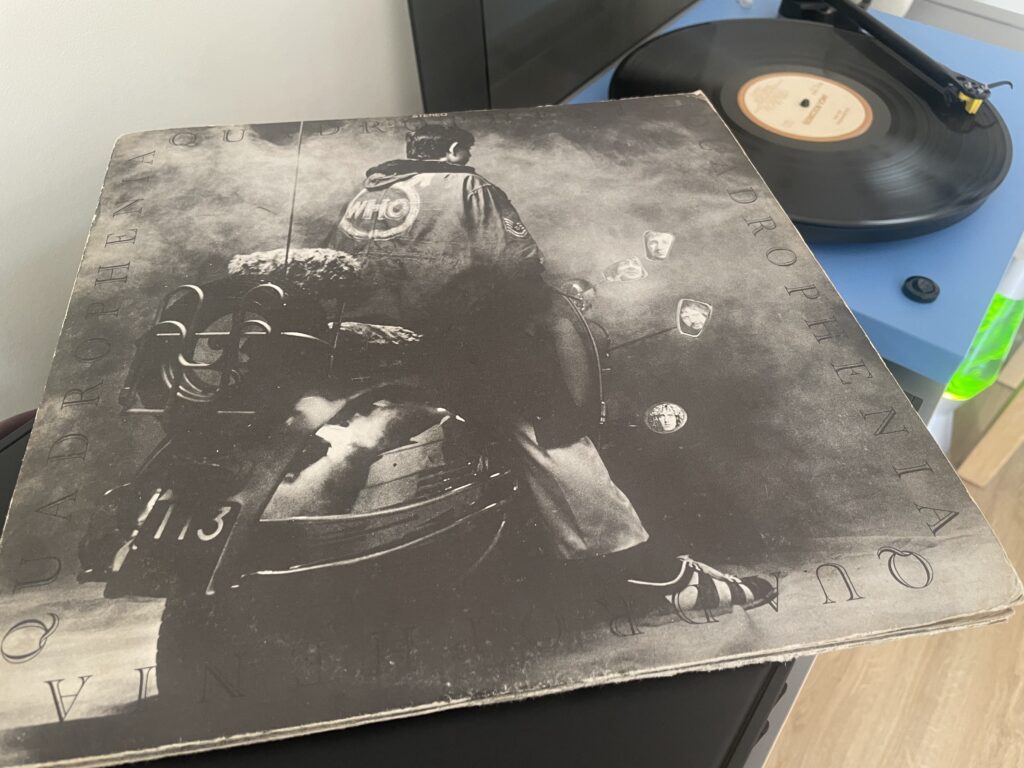
The Who, Quadrophenia. Mod concept double album from 1973.


There is a particular kind of arrogance required to follow a masterpiece with an act of self-demolition, and Pete Townshend has never been short of it. By fifteen minutes into Quadrophenia, the listener has already been drowned, half deafened and abandoned on a rain-lashed beach with nothing but a scooter horn for company. That is precisely the point. This was never going to be a comfortable record, and comfort was never what The Who were selling. What they were selling, in the autumn of 1973, was a working-class boy’s nervous breakdown scored for a rock band that had, by its own reckoning, gone slightly mad trying to make it.

Released as a double album on 26 October 1973 on Track Records, Quadrophenia arrived heavy with expectation. Here was a band fresh from the twin triumphs of Tommy and Who’s Next, the former having invented the rock opera more or less by accident, the latter standing as the tightest, most muscular thing they had ever put on wax. Townshend, never a man to repeat a trick when a bigger one was available, decided the follow-up would be his masterwork: a return to the mod scene that had made The Who in the first place, told through the eyes of a fictional teenager called Jimmy Cooper, and structured around the idea that Jimmy’s cracked personality contained four distinct selves, one for each member of the group. It is a conceit so audacious it could easily have collapsed under its own cleverness. That it mostly doesn’t is the whole story of why this record still matters.

The Concept: A Mirror Cracked Into Four

The title itself is a piece of Townshend wordplay, a splicing of “schizophrenia” with the “quadrophonic” surround sound format the industry was flirting with at the time, itself never quite catching on the way stereo had. But the real meaning sits closer to home. Jimmy is a mod, one of the pilled-up, scooter-riding, sharp-suited kids who had swarmed Brighton and Margate a decade earlier, and his four warring facets are drawn directly from the four members of the band that made him. Daltrey supplies “a tough guy, a helpless dancer”. Entwistle is “a romantic”. Moon, inevitably, is “a bloody lunatic”. Townshend himself settles for “a beggar, a hypocrite”, which tells you rather a lot about how the album’s author saw his own contribution to the story.

Townshend later called it “a sort of musical Clockwork Orange”, and there is something of Alex’s alienation in Jimmy’s arc: a lad chewed up by dead-end work, indifferent parents, a girl who prefers his best mate, and a subculture that promises belonging and delivers only another set of rules to break against. Set explicitly in London and Brighton in 1965, the record trades on the mods and rockers riots that had scandalised middle England the year before, using that moral panic as the backdrop for a story that is really about something much smaller and much more universal: a boy who cannot work out who he is, surrounded by people who claim to know exactly who they are and are almost certainly lying.

What separates Quadrophenia from Tommy is that Townshend was no longer working in symbolism and pinball metaphor. He was writing what he knew. This was his own adolescence, transplanted onto a fictional narrator, full of purple hearts necked on a Brighton-bound train, of humiliating scenes at the family dinner table, of a scooter wrecked in a fit of self-disgust and a final, ambiguous reckoning on a rock out at sea. The record ends not with resolution but with a kind of exhausted clarity, Jimmy stripped of his parka, his pills and his illusions, asking only to be washed clean by something bigger than himself. Whether he lives, dies, or simply grows up is left deliberately unresolved, which is more or less the correct way to end a story about being seventeen.

Production: Chaos in Battersea

The making of Quadrophenia is as much a part of its legend as anything printed on the sleeve. Work began as early as May 1972, but was repeatedly derailed. Entwistle and Daltrey were off making solo records, Moon was distracted by film work, and Townshend himself had a failed multimedia project called Lifehouse still smouldering in the background, its wreckage supplying several of the songs that would eventually surface here. When serious sessions resumed in the summer of 1973, the band’s own new studio, a converted building on Thessaly Road in Battersea nicknamed The Kitchen, was still a building site, plaster dust and all. The solution was to wheel in Ronnie Lane’s Mobile Studio and use it as a makeshift control room while the walls went up around them, which gives you some idea of the seat-of-the-pants energy that runs through the finished record.

Engineering fell to a young American named Ron Nevison, hired more or less by accident and kept on because the band liked what they heard. It was, by his own account, easily the biggest and most technically demanding session he had worked on, and it shows: this is an album stitched together from multi-track synthesiser sequences, sound effects lifted from crashing waves and pouring rain, and a wall of overdubbed brass, all of it performed by Entwistle himself, who by all accounts simply picked up a French horn and got on with it. The band had originally hoped to mix the whole thing in true quadrophonic sound, hence the title, but the format’s technical limitations in 1973 meant the ambition was quietly abandoned in favour of an unusually wide and detailed stereo mix instead. It remains one of the most sonically ambitious rock records of its decade, layered and cinematic in a way few guitar bands were even attempting.

Behind the desk, the record marks a genuine fracture. Kit Lambert, the band’s co-manager and the man who had shaped their sound and their sensibility since the mid-sixties, had drifted into addiction and irrelevance by this point, and his relationship with the group broke down for good during these sessions. He was gone from their day-to-day affairs by the time the album reached the shops, though he retained an executive producer credit as a formality. It is tempting, and probably not wrong, to hear some of the record’s themes of betrayal and abandoned mentors as bleeding directly out of that collapsing relationship. The Who, in other words, made a self-produced record about a boy losing faith in the adults around him while quietly losing faith in one of their own.

There is one more piece of production trivia worth dwelling on, and it says something about how records were actually consumed in 1973 rather than how we imagine they were. The original pressing was what the trade called an auto-coupled release, meaning the two discs were not sequenced the way a listener might expect. Record one carried sides one and four, while record two carried sides two and three, an arrangement that looks like a pressing plant error until you remember the record changer, that now-vanished piece of hi-fi furniture with a fat spindle capable of stacking several LPs at once. Load record one onto the spindle followed by record two on top, and the mechanism would drop and play side one, then side two, in correct running order, without anybody needing to get up. Flip both discs over together and sides three and four would follow in the same fashion. It meant a single owner with a decent changer, or two mates each bringing a copy round, could in theory let the whole eighty-one minute story unfold uninterrupted, an oddly appropriate bit of engineering for a record so preoccupied with continuity and character. It also explains why generations of vinyl collectors, encountering an original Track pressing for the first time and finding sides one and four sharing a disc, have assumed for a moment that they have stumbled on a factory mispress rather than a perfectly deliberate piece of 1973 thinking.

The Personnel: Four Men, Playing Themselves

If Tommy had been Townshend’s story told through the band, Quadrophenia is the band telling Townshend’s story about themselves, and every player rises to the size of the task.

Entwistle’s playing throughout is extraordinary, not least on the opening salvo “The Real Me”, which he has described as essentially a bass solo with vocals attached, and it is hard to disagree. It stands as one of the great recorded bass performances in rock, muscular and melodic at once, and it sets the tone for an album on which “The Ox” is arguably the single most important instrumentalist in the room. His brass arrangements, all performed and overdubbed by himself, give the record its widescreen, almost orchestral quality.

Moon, for his part, delivers what would prove to be his last truly focused studio performance with the band, chaotic and thrilling in equal measure, a man playing as though the kit might escape him at any moment, which by 1973 it very nearly could. Daltrey, so often accused across the band’s catalogue of merely delivering Townshend’s words, finds the role of his career here, particularly on the closing “Love, Reign o’er Me”, where he pushes his voice to a raw, torn extreme that remains one of the definitive vocal performances of the entire classic rock era. And Townshend, credited as sole writer of every note and word on the album, a first and only occurrence in the band’s catalogue, plays guitar with a controlled fury throughout while quietly running the whole ambitious apparatus of synthesisers, orchestration and structure from behind the scenes. He would later call it the best music he had ever written, and on his own instrument’s evidence, it is hard to argue.

The Songs: Seventeen Tracks, One Long Exhale

Across four sides and more than eighty minutes, the record moves with a cinematic patience that rewards, and frankly demands, a single uninterrupted sitting. The opening instrumental collage, “I Am the Sea”, drifts in on surf and gull cries before dissolving into snatches of the four character themes that will recur throughout, “Love, Reign o’er Me”, “Helpless Dancer”, “Bell Boy” and “Doctor Jimmy”, planted here like seeds that will not fully flower for another eighty minutes. It is a device lifted straight from film scoring, and it works.

“The Real Me” then detonates the album proper, all coiled fury and domestic frustration, before the record settles into its narrative stride: the wounded nostalgia of “Cut My Hair”, the desperate pill-popping travelogue of “5:15” as Jimmy rides the train to Brighton, the aching, semi-autobiographical “I’m One”, and the extraordinary “The Rock”, an instrumental piece so densely orchestrated it could stand as a symphonic movement in its own right. “Bell Boy” gives Moon his moment in the narrative spotlight, playing the washed-up former mod hero Ace Face now reduced to fetching towels at a seafront hotel, a piece of very English, very bitter irony about what happens to youth movements once the youth grows up. “Drowned”, written originally as a devotional piece for Meher Baba before being repurposed for Jimmy’s near-suicidal despair, remains one of the rawest, least ornamented things here, and arguably the most purely felt. It all resolves in “Love, Reign o’er Me”, a genuine peak of the entire rock opera form, Daltrey’s voice cracking open over Townshend’s piano and strings in a moment of catharsis that has lost none of its power in fifty years of imitation.

Reception: A Nation Struggling to Keep Up

Critical response on first landing was broadly enthusiastic, if occasionally bewildered by the sheer scale of the thing. Newsweek’s Hubert Saal placed it among rock’s great milestone records. Melody Maker’s Chris Welch called it a masterpiece, the Who at their absolute peak, “sap flowing from the roots of their creation”. Within NME’s own pages the following year, Nigel Rogers went further still, hailing it as the greatest exposition of the rock and roll ethic yet committed to vinyl, a judgement plenty of readers at the time would have thought overblown and which fifty years of hindsight has done nothing to disprove. Rolling Stone’s Lenny Kaye offered the more ambivalent, and in retrospect the more accurate, verdict: The Who at their most symmetrical and most cinematic, and also their most maddening, an album whose ambition occasionally outran its own listenability.

Commercially it did rather better than the reviews suggested it might, going gold on the day of release and platinum within forty-eight hours, eventually reaching number two on both the UK and US album charts, the band’s highest ever placing in America, kept off the top only by Elton John. The touring party that followed was, by every account including Townshend’s own, a genuine disaster. The backing tapes required to reproduce the synthesiser and sound effect parts live were unreliable to the point of sabotage, and the Newcastle date that November ended with Townshend hauling his sound engineer bodily across the mixing desk before smashing his own guitar in fury when the tape sync failed yet again during “5:15”. By February 1974 the band had quietly dropped most of the album from the set. It would be twenty-two years before they attempted it properly again.

Legacy: The Long Afterlife of a Mod Kid

If the initial tour was a wound, the years since have more than healed it. The 1979 film adaptation, directed by Franc Roddam and featuring a young Sting as the doomed Ace Face, arrived at the precise moment of Britain’s mod revival, and did more than perhaps anything else to cement the album’s mythology, dragging the whole story to a new generation of parka-wearing scooter kids who had been in short trousers first time round. Townshend himself has been unambiguous about where it sits in the band’s story, telling NME in 2011 that he had come to regard Quadrophenia as the last truly definitive Who album, the point at which the story, and perhaps the band itself, effectively ended.

It has since taken its place, with little serious argument, among the small handful of rock operas that actually work as records rather than curiosities, name-checked by everyone from Q magazine’s list of the hundred greatest British albums to Rolling Stone’s five hundred greatest albums of all time. The Who returned to it properly in 1996 for a one-off Prince’s Trust performance, then again on a dedicated 2012 to 2013 world tour performing the album in full, and a 2011 Director’s Cut box set unearthed Townshend’s original home demos, revealing just how much careful editing turned a sprawling autobiography into something closer to disciplined cinema.

Fifty years on, what still strikes hardest about Quadrophenia is not its scale, though the scale remains genuinely startling for a band working with 1973 technology in a half-built Battersea studio, but its honesty. This was four men in their late twenties writing about being seventeen and getting it exactly, uncomfortably right: the pills, the parkas, the pack mentality, the sudden lonely comedown on a rain-swept rock when the tribe has scattered and there is nobody left to impress. Jimmy never quite finds himself. Neither, in the end, did the mod movement that spawned him. But the record that tells his story remains one of the very few genuine peaks British rock has ever reached, and it has lost none of its nerve in the telling.

Steve Coulter writes on pop art, punk culture and the music that made them at 45renegade.co.uk.
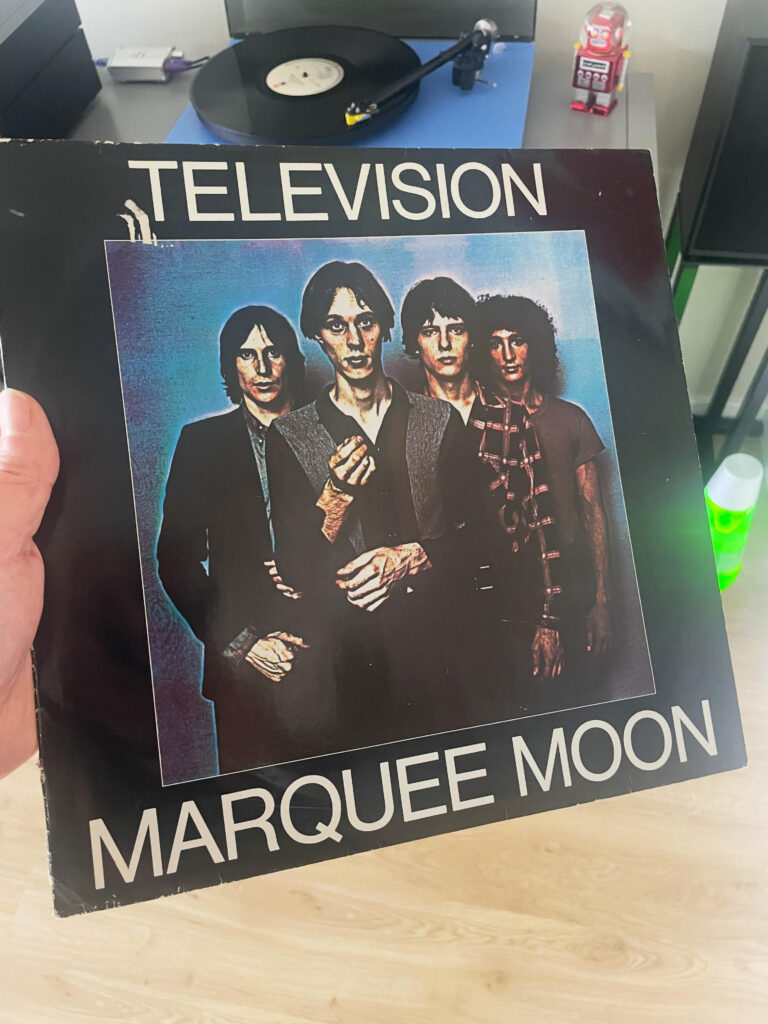
Retrospective: Television – Marquee Moon

New York in the mid to late Seventies was a city eating itself alive. Bankrupt on paper, feral in practice, littered with burnt-out cars, shuttered storefronts and the low-level menace of economic collapse. Out of this came CBGB, a former biker bar on the Bowery whose original promise of roots music curdled almost immediately into something far more interesting. It became a refuge for the literate, the maladjusted and the terminally dissatisfied. Punk did not so much arrive there as coagulate. And among the first bands to understand that this new language could be stretched, warped and interrogated rather than simply shouted was Television.

Tom Verlaine had already been living inside this world for years by the time Marquee Moon appeared in early 1977. Alongside Richard Hell he had escaped New Jersey boredom, bonded over poetry, speed and a shared belief that rock music should aspire to something sharper than stadium heroics. The Neon Boys, their early incarnation, were less a band than a sketchbook. When Hell departed in 1975 to form the Voidoids taking with him the ripped shirts and confrontational nihilism that would become punk’s uniform, Television were freed from the obligation to perform rebellion in quotation marks. What remained was a band increasingly obsessed with structure, tone and the slow burn of ideas unfolding over time.

CBGB became their proving ground. While other groups detonated through short sets like flash-bangs, Television played long, winding songs night after night, refining them in public. Guitar lines evolved incrementally. Tempos breathed. Solos were not indulgences but arguments. By the time Elektra committed them to tape, these songs had been lived inside, paced around, stripped back and rebuilt. This was not punk as rupture but post-punk as concentration.

The first thing that still startles about Marquee Moon is its clarity. In an era obsessed with distortion and speed, Television chose exposure. Verlaine and Richard Lloyd rejected the familiar hierarchy of rhythm and lead, opting instead for two guitars in constant dialogue. Lines coil, overlap and contradict each other. Melodies appear, dissolve, then reappear altered. Verlaine’s tone is all treble edge and nervous elegance, like fluorescent light flickering on wet pavement. Lloyd grounds the music without weighing it down, muscular but articulate. Beneath them, Fred Smith’s bass moves rather than anchors, while Billy Ficca’s drumming borrows from jazz as much as punk, restless, rolling, impatient with straight lines.

Andy Johns’ production deserves credit for knowing when to disappear. Best known for capturing the brute force of Zeppelin and the Stones, here he allows space to remain space. You hear fingers scrape strings, cymbals decay naturally, air move in the room. Nothing is smothered. Nothing is disguised.

The album unfolds like a series of nocturnal walks through the same city seen from different angles. “See No Evil” announces itself with a rush of romantic urgency, its guitars darting ahead of the beat as if chasing something just out of reach. “Venus” reframes desire as motion and uncertainty, its lyric more impression than declaration. “Friction” hums with paranoia, Verlaine’s voice hovering between detachment and barely concealed anxiety, a perfect document of urban overstimulation.

Then there is the title track, still one of the most audacious statements ever made by a band nominally associated with punk. Ten minutes long, refusing any conventional chorus, it unfolds patiently, methodically. The closing guitar passage is not a solo in the heroic sense but a gradual ascent, Verlaine circling a figure, stretching it, worrying at it, until something breaks open. It feels earned rather than delivered. The listener is trusted to stay with it.

That trust is why Marquee Moon continues to endure. It has never belonged comfortably to its moment. While safety pins and sneers quickly dated, this record remained oddly ageless. Its concerns alienation, romantic idealism, intellectual hunger, the solitude of city life still resonate because they were never tied to fashion. Each generation finds it not as an artefact but as an invitation.

Its influence is everywhere yet curiously diffuse. You hear its DNA in post-punk, indie and art rock, in bands who learned that guitars could converse rather than compete. Sonic Youth, R.E.M., The Strokes and countless others absorbed its lessons, but no one has ever really replicated it. That is because its magic lies in a precise convergence of people, place and temperament that cannot be reverse engineered.

Most new wave guitar records chased velocity and attitude. Marquee Moon chased precision and clarity. It demonstrated that intensity did not require volume, that virtuosity did not need flash, and that punk’s most radical gesture might be patience. Television never surpassed it and never needed to. The album stands complete, self-contained, immune to time.

It remains the sound of New York before it was cleaned up, when danger and beauty shared the same bar stool and ideas mattered as much as noise. A record that asks you to listen closely, think longer, and walk home alone replaying its guitar lines like secret diagrams. Not just one of the greatest new wave guitar albums, but one of the rare rock records that feels inevitable, as though it was always there, waiting for the right minds to tune into it.

RETROSPECTIVE: R.E.M.’s Epiphany

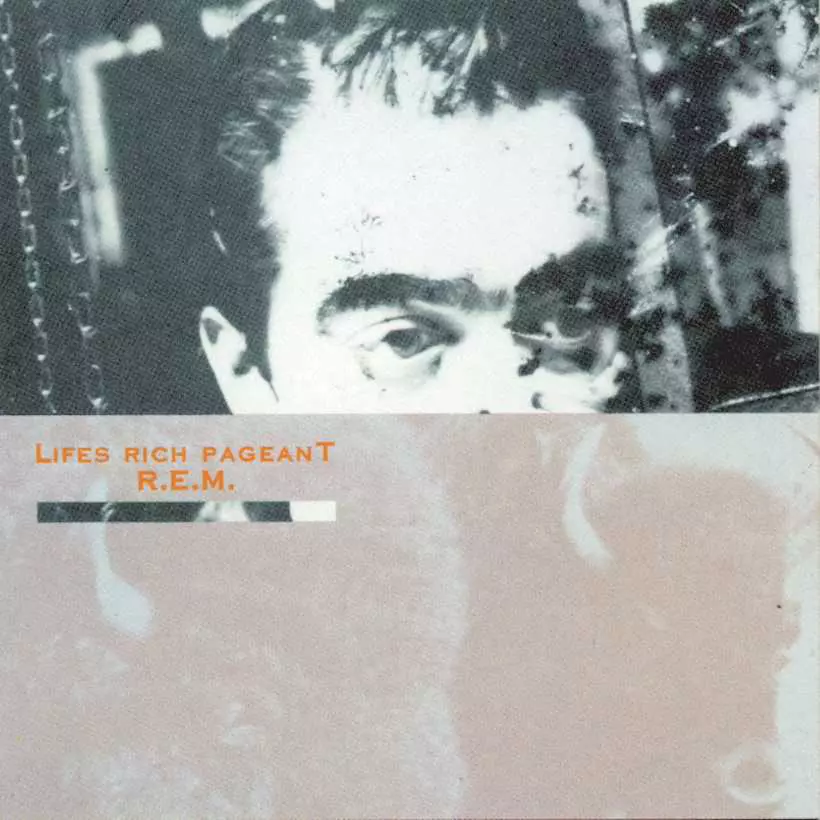
A pivotal moment in R.E.M.’s evolution, Lifes Rich Pageant captures the band stepping out of the shadows and into focus. This retrospective long read examines its place in the R.E.M. canon, the creative risks that reshaped their sound, and why this fierce, principled 1986 album marked the point where conviction, clarity, and power finally aligned to signpost the future.

R.E.M. Lifes Rich Pageant

R.E.M. had already built a cult by the time Lifes Rich Pageant arrived in the summer of 1986, but it was still a fragile thing. College radio fame, earnest fanzine devotion, and a reputation for wilful obscurity are not the same as permanence. The first three albums had sketched a band almost mythic in outline: Michael Stipe’s voice half-buried, lyrics treated like overheard conversations, guitars that chimed rather than cut. They were beloved, but they were also evasive. Lifes Rich Pageant is the moment R.E.M. stopped hiding behind atmosphere and decided to speak plainly, loudly, and with intent.

It is their loudest early record, and that matters. Bringing in Don Gehman, fresh from work with John Mellencamp, was a deliberate act of sabotage against their own mystique. Gehman insisted on clarity, punch, and definition. Peter Buck’s guitar was no longer a shimmering fog but a serrated instrument, pushed forward in the mix. Mike Mills’ bass became a melodic force rather than a polite underpinning. Bill Berry’s drumming, often understated on earlier records, snapped into muscular life. This was R.E.M. discovering the value of impact.

The opening run is still startling. Begin the Begin does not drift in, it kicks the door off its hinges. Stipe’s vocal, for once, is up front and intelligible, full of clipped urgency. These are not cryptic mumblings but rallying cries, political and personal tangled together. The world is wrong, systems are broken, and the band sound newly determined to say so. The shift is not just sonic but philosophical. Where Murmur and Reckoning felt inward and impressionistic, Lifes Rich Pageant looks outward, alert to pollution, imperialism, environmental collapse, and moral fatigue.

Fall on Me remains the record’s moral centre. It is a protest song that never once raises its voice, a masterclass in restraint. The lyric is direct without being didactic, the melody aching without self-pity. It is one of the first moments where Stipe’s political writing finds a universal register, rooted in the body and the family rather than slogans. In retrospect, it lays the groundwork for everything from Green to Automatic for the People.

Cuyahoga extends that environmental concern into something almost elegiac. Rivers catch fire, civilisations poison their own wells, and history repeats itself with grim reliability. Yet the song does not despair. There is still a sense of wonder, a belief that naming the damage is a form of resistance. This balance between anger and hope becomes a defining R.E.M. trait, separating them from the hectoring earnestness that doomed many politically minded bands of the era.

Crucially, Lifes Rich Pageant does not abandon joy. These Days barrels along with almost reckless energy, Mills and Berry driving the song like men possessed. I Believe offers a kind of bruised optimism, a declaration of faith that feels hard-won rather than naive. Even Superman, a cover, serves a purpose. Sung by Mills, it punctures any creeping solemnity and reminds the listener that R.E.M. still understood pop pleasure, still valued humour and lightness amid the seriousness.

Within the R.E.M. canon, this album is the hinge. Everything before it is prelude, everything after it is expansion. Without Lifes Rich Pageant, there is no confidence to make Green, no authority to slow things down on Automatic, no credibility when the band take stadiums by the throat in the late eighties and early nineties. It is the moment they realise they can be both principled and powerful, obscure and accessible, righteous and tuneful.

It is also the album where Michael Stipe steps fully into his role as a frontman. Not a rock god, never that, but a communicator. His lyrics sharpen, his vocals project, and his presence anchors the band’s ambitions. He sounds less like a man whispering secrets and more like someone willing to be overheard.

Nearly four decades on, Lifes Rich Pageant feels less like a transitional record and more like a manifesto. It is R.E.M. announcing what they stand for, sonically and ethically, and proving they can do so without sacrificing complexity or grace. Many bands have a moment where talent hardens into purpose. This is R.E.M.’s, and it still crackles with urgency, intelligence, and the thrilling sound of a group realising exactly how good they can be.

RETROSPECTIVE: Bowie, Standing By The Wall

Revisiting David Bowie’s Heroes decades on, this article explores its Berlin origins, the band behind the album, Brian Eno’s role and whether it stands apart from Low.

David Bowie Heroes Album Retrospective


By the time Heroes emerged in October 1977, Bowie had already disposed of the rulebook. Low had landed like a communiqué from another future, half songs, half atmosphere, a record that seemed to reject the very idea of audience comfort. The temptation has always been to frame Heroes as its louder twin, the one with the anthem, the one that returned Bowie to something approaching recognisable rock form. That reading does the album a disservice. Heroes is not a corrective to Low. It is an expansion, an album that breathes the same air but looks outward rather than inward, shaped by geography, by collaborators, and by a band operating at a rare level of collective intuition.

The setting matters. Hansa Tonstudio, perched within sight of the Berlin Wall, was not simply a studio but a vantage point. The city in 1977 was still scarred, divided, uneasy. Bowie absorbed that atmosphere completely. If Low felt like a psychological evacuation from Los Angeles excess, Heroes feels like Bowie standing still long enough to take in where he had landed. The walls, literal and emotional, are everywhere on this record.

The core band remained unchanged from Low, and that continuity is crucial. Carlos Alomar was once again the spine of the operation, his rhythm guitar style economical, precise, never showy. Alomar’s playing on Heroes is less funky than his work with the plastic soul era Bowie, but his sense of movement underpins everything. Dennis Davis on drums is similarly restrained but vital. His playing has a physical intelligence, knowing when to push and when to pull back, especially on tracks like Beauty and the Beast where tension is built through repetition rather than brute force. George Murray’s bass lines are melodic without drawing attention to themselves, often acting as a bridge between rhythm and texture.

Hovering above and around them is the now legendary pairing of Brian Eno and Tony Visconti. Eno’s influence is often overstated as some sort of ambient fog machine, but his real contribution lies in disruption. His Oblique Strategies cards, his encouragement of chance, his willingness to treat the studio as an instrument all helped Bowie escape habitual thinking. Visconti, meanwhile, grounded the chaos. His production on Heroes is cleaner and more assertive than on Low, particularly on the vocal tracks, but still full of space. The famous gated vocal effect on the title track, achieved by positioning microphones at varying distances that opened only when Bowie sang louder, is a perfect example of technology serving emotion rather than novelty.

The opening track, Beauty and the Beast, announces immediately that this is not a retreat into comfort. Bowie’s vocal is fractured, almost feral, darting between personas. Lyrically, it feels like a continuation of the internal struggle first exposed on Low, but externalised. The city is no longer a metaphor for the mind. It is the stage on which that struggle plays out. Fripp’s guitar slashes through the mix, not as a soloist but as a source of friction, pushing against the rigid rhythm beneath.

Fripp’s presence across the album cannot be overstated. Brought in at the last minute and reportedly completing his parts in a matter of hours, his playing defines the record’s emotional peaks. On Heroes the song, his sustained, soaring lines do not decorate the track, they lift it. The myth around the song often threatens to reduce it to its origin story, Bowie glimpsing Visconti and Antonia Maass kissing by the Wall. What matters more is how the music refuses sentimentality. The lyric never promises permanence, only intensity. We can be heroes, just for one day. It is defiant precisely because it accepts limitation.

Elsewhere on side one, Bowie continues to explore fractured identity and communication. Joe the Lion draws inspiration from performance artist Chris Burden, but it also feels like a self portrait in motion, Bowie throwing himself into the work with no safety net. Sons of the Silent Age is one of the album’s quieter triumphs, its crooning melody undercut by lyrics that hint at repression, at voices denied expression. Blackout closes the side in a rush of nervous energy, all clipped phrases and sudden turns, the sound of a mind overstimulated rather than soothed.

If side one is confrontation, side two is immersion. Like Low, Heroes gives over half its running time to instrumentals, but the mood is different. Where Low often felt like drifting through empty rooms, Heroes feels rooted in place. V-2 Schneider tips its hat to Kraftwerk but refuses pastiche, its groove mechanical yet strangely human. Bowie’s saxophone playing here is deliberately unschooled, cutting through the track like an alarm rather than a melody.

The trio of Sense of Doubt, Moss Garden and Neuköln forms the emotional heart of the album. These are not background pieces. They demand attention. Sense of Doubt is built on a descending piano figure that seems to sink deeper with each repetition, evoking a sense of inevitability. Moss Garden offers a brief illusion of calm, its Eastern inflections suggesting a spiritual escape that never quite arrives. Neuköln is the most unsettling of all, Eno’s treatments and Bowie’s sax combining into a mournful, alien soundscape that captures the loneliness of displacement. Named after a Berlin district known for its immigrant population, it resonates as a study in alienation without a single word being sung.

The closing track, The Secret Life of Arabia, is often treated as a curiosity, but it serves an important function. Its rhythm and melodic energy hint at movement, at travel beyond Berlin, beyond the album’s confines. It suggests that Bowie was already looking ahead, which history confirms. Lodger would soon scatter these ideas across the globe, but Heroes remains anchored, its power drawn from stillness rather than motion.

Over the decades, more details have emerged about the making of Heroes, but none of them diminish its mystery. The speed of the sessions, the reliance on instinct, the willingness to commit to first or second takes all speak to a creative moment that cannot be replicated. Bowie was sober, focused, and surrounded by collaborators who understood when to contribute and when to step back. This was not the sound of a genius imposing his will, but of a band and production team operating as a single organism.

So is Heroes merely a continuation of Low, or does it stand alone. The honest answer is both. It makes little sense without Low, yet it surpasses it in emotional range. Where Low fractures, Heroes reaches. Where Low withdraws, Heroes risks connection. In Bowie’s catalogue, it occupies a rare position. An experimental record with a genuine anthem, an art album that found its way into public consciousness without compromise.

RETROSPECTIVE: London Is Drowning and I Live By The River

Today marks the 45th anniversary of London Calling, The Clash’s groundbreaking double album that redefined punk and reshaped British music. More than just a record, it was a bold statement, mixing genres, politics and raw emotion with a restless energy that still resonates. In this definitive retrospective, I delve into the album’s iconic sleeve, the sprawling diversity of its songs, and the pivotal role played by producer Guy Stevens in crafting a sound both urgent and timeless.

The Clash London Calling Retrospective


By the winter of nineteen seventy nine The Clash were standing at a crossroads that most bands never reach. Punk had given them a voice and a platform, but it was already clear that the narrow version of the movement being sold back to the public would not hold them. London Calling arrived not as a rejection of punk but as an argument with it. An artful double album crammed into a single sleeve, a density made up of ideas and restless energy, it sounded like a band refusing to be boxed in by its own reputation. This was The Clash insisting that urgency did not have to mean limitation, and that rebellion could be rhythmic, melodic and historically aware all at once.

“London Calling is the first of The Clash’s albums that is truly equal in stature to their legend”. Charles Shaar Murray NME 1979.

The sleeve announced that intent before a note was heard. Pennie Smith’s photograph of Paul Simonon mid swing, bass guitar raised and about to be smashed against the stage floor at the Palladium in New York, is still one of the defining images of British music. It is beautifully blurred, caught in motion rather than reverence. Overlaid with the pink and green lettering lifted from Elvis Presley’s debut album, it made a knowing claim on rock and roll history while quietly asserting ownership of it. The decision to house the double vinyl in a single sleeve was driven by CBS insistence the album was a single album but relented to the inclusion of a 12 inch single. Artfully the band added the further nine tracks to the extra vinyl and flipped the 45rpm to 33rpm – the finished ‘double’ album complimented by a “Pay No More Than” hype sticker. So no gatefold excess, the lyrics were printed on the inner sleeves, practical and open, inviting the listener to engage with the words as part of the experience rather than as an accessory.

Musically the record sprawls, but it never drifts. The title track opens like an emergency broadcast, Strummer’s voice riding a sinewy rhythm as images of nuclear anxiety, flooding and social collapse tumble out with the urgency of a last transmission. From there the album refuses to settle into any single identity. Brand New Cadillac barrels through rockabilly with reckless joy. Jimmy Jazz slouches through smoky shadows. Rudie Can’t Fail lifts the mood with warmth and swing, its horns and skank rhythm sounding like celebration as defiance.

What becomes clear as the sides unfold is that this breadth is not a stunt. These styles were absorbed, argued over and lived with. The historically underrated Mick Jones brings melody and pop intelligence, shaping songs that are generous and emotionally direct. One of the album’s most cherished moments, Train in Vain, sits at the very end of Side Four and was a late addition, originally intended to be given away as a free flexi-disc with NME before that plan fell through. The band insisted it be included on the album, but because the sleeves were already printed it was not listed on the cover or lyric sheets and initially appeared as a surprise hidden track etched into the run-off groove. Its immediacy and vulnerability, sung by Jones, with a narrative of love lost, feel like the intimate counterpoint to the political breadth that precedes it.

Joe Strummer’s writing elsewhere on the record grows more impressionistic and humane, trading blunt slogans for scenes, doubts and contradictions. Paul Simonon’s bass is central to the record’s physical pull, and his vocal turn on Guns of Brixton adds a colder, more controlled shade to the palette. Built on a taut reggae rhythm, the song’s sense of unease and inevitability reflects the lived tensions of South London without theatrical exaggeration. “When they knock on your front door, how you gonna come? With your hands on your head or on the trigger of your gun.” – now that is Thatcher’s London Punk ‘1979 style’.

The deeper cuts are where London Calling truly reveals its confidence. Koka Kola disguises its critique of creeping Americanisation beneath a jaunty shuffle, its irony sharpened by how pleasant it sounds. Spanish Bombs is one of Strummer’s finest lyrics, fragmented and poetic, its half-remembered Spanish phrases and images of civil war and tourism colliding into a meditation on distance, memory and solidarity. The Four Horsemen lurches forward with apocalyptic humour, biblical imagery delivered with a grin that barely masks the anxiety beneath. Death or Glory pairs one of Jones’s most immediate melodies with a lyric that quietly punctures the romance of rebellion itself.

Even the stylistic detours serve a purpose. Lover’s Rock leans into reggae’s sensuality without losing tension. Wrong ’Em Boyo tips its hat to ska’s roots with genuine affection, not as nostalgia but as acknowledgement. Each track adds another voice, another rhythm, sketching a map of London as a listening city where cultures collide and converse.

Holding this sprawl together was producer Guy Stevens, a volatile and divisive presence whose background proved crucial. Stevens came from an earlier era, steeped in rhythm and blues and shaped by his work with Mott the Hoople. He believed in feel above all else. Precision bored him. Commitment did not. His behaviour in the studio has become part of the album’s mythology, but beneath the chaos was a clear philosophy. Stevens pushed the band to play as if the songs might fall apart at any moment, to reach for performances that felt dangerous rather than correct.

That approach suits London Calling perfectly. The record breathes. Tempos flex. Instruments bleed into one another. There is space in the sound, even at its densest, and a looseness that gives tracks like Clampdown and Guns of Brixton their physical weight. The tension between band and producer was real, but it was productive, forcing instinct to override caution.

As a production, the album strikes a rare balance. It sounds expansive without being bloated, raw without being thin. The double album format could easily have sunk it, but instead it allows the band to pace the journey, each side carrying its own momentum and mood. By the time Train in Vain fades out, there is a sense of having travelled not just through styles, but through arguments, fears and affirmations.

Decades on, London Calling remains a challenge as much as a classic. It asks whether a band can grow without losing its edge, whether politics and pleasure can coexist, whether history can be acknowledged without becoming a trap. The sleeve still feels perfect. The songs still feel urgent. Guy Stevens’s restless spirit still hums through the grooves. The Clash did not simply make a great double album. They made a statement of intent that continues to sound alive, unresolved and necessary.

RETROSPECTIVE: He Danced Right Out The Womb.

A retrospective look at T. Rex’s Electric Warrior, exploring Marc Bolan’s electric transformation and the album’s lasting influence on glam rock and beyond.


There comes a point in every great pop myth when the curtains part. The star steps forward. Everything suddenly makes sense. For Marc Bolan, Electric Warrior is that moment. It is the glitter-splashed big bang that turned a dreamy folky into the patron saint of teenage stomp. People often compare it to Dylan going electric. Yet Bolan did not provoke outrage. He aimed straight for the nation’s hips and the Top 40 followed.

More than fifty years later the record still feels like a private universe. It is not simply a prototype for glam. It is a fully formed world that predicted the next decade before anyone else had a sniff of it. The swagger of glam, the clipped pulse of proto-punk, the teenage charge of a perfect pop single. All of it sits inside these grooves.

Tony Visconti’s genius production has been praised for decades. Hearing it now, it is striking how modern it remains. The strings glide. The guitars smirk. Even the handclaps sound like part of a secret plot. Visconti later called the album “warm and fat” and it still fits. Everything feels close yet huge, like Bolan is whispering into a microphone wired to the Milky Way. Remasters, reissues and old demos released over the years have only confirmed how deliberate the whole palette was. This was not luck. Bolan and Visconti were shaping a style they already believed would last.

“Get It On (Bang a Gong)” is still the landmark track. It has become so familiar that people forget how sly it was at the time. It is pure strut. Lust boiled into a slogan and delivered with a grin that borders on parody. Later generations absorbed it through adverts, films and compilation CDs. The original still shines brighter. Its low-slung groove feels immortal today. You can hear it in Primal Scream, in the Black Crowes and in the swaggering indie bands of the early 2000s who thought attitude alone might save them.

The deep cuts tell a richer story. “Mambo Sun” shimmers like wet tarmac under streetlights. It is languid, slippery and quietly sensual. It shows how far Bolan had travelled from his earlier, Tolkien-tinged whimsy. “Cosmic Dancer” has aged even better. It is now held up as proof that Bolan was far more than a glittered chancer. Its mix of lullaby and melancholy feels like the doorway to a career he never had the chance to complete. When the home demos surfaced in the nineties and beyond, the song grew even larger. It became a kind of Rosetta Stone for Bolan’s tender side.

The album’s afterlife has been busy. Critics were sniffy in 1971 because British reviewers often mistrust anything that sounds like fun. The reappraisals arrived quickly. By the eighties, whole glam revival movements traced their roots back to this record. By the nineties, everyone from Morrissey to Slash to the Manics cited it as essential listening. After the millennium, more reissues and recovered tapes made the craftsmanship impossible to ignore. Electric Warrior settled into its rightful place as a masterpiece of pop economy. Every track earns its keep.

Looking back now, the whole transformation feels inevitable. Bolan did not abandon his old self in the way Dylan did. He simply stepped into the brighter outline that had always hovered around him – ‘Mod Marc had been dancing since he was twelve’ after all. Electric Warrior is not the tale of an artist changing course. It is the moment he finally matched the sound in his head. Glittering stardom was then a formality.

Half a century later, the record still glows with rare magic. It captures the moment when a pop star stops becoming and finally arrives. Bolan lit the fuse for glam, reshaped the idea of pop charisma and left behind a record that refuses to grow old.

Electric influencer.

RETROSPECTIVE: Where Have They Been? Joy Division, Closer

A detailed retrospective on Joy Division’s devastatingly timeless album Closer, exploring the band’s final and most haunting studio album in all its creative, atmospheric, emotional and historical depth. The eternal question, closer or closer?

Joy Division Closer (1980)


Rarely, an album arrives haunted before you even drop the needle. Closer, released in July 1980 just weeks after Ian Curtis’s death, is the ultimate example. It arrived like a final communiqué, a cold transmission from a place beyond exhaustion. If Unknown Pleasures was the sound of a band discovering the architecture of modern despair, Closer was the completed structure: stark, beautiful, desolate and impossibly refined. It remains one of the most unsettling records ever made, not because of the tragedy that surrounds it, but because of how complete it feels. Four young men, barely out of their early twenties, constructing a monument with the calm precision of veteran craftsmen.

Recorded at Britannia Row Studios in early 1980, Closer was shaped by the same constellation of characters that defined its predecessor. Ian Curtis, Bernard Sumner, Peter Hook and Stephen Morris formed the nucleus, still working under the shadow of Manchester’s derelict industrial gloom. Tony Wilson and Alan Erasmus held Factory together with philosophy, flair and a certain reckless faith. Peter Saville designed the sleeve, this time a funereal photograph of a stone tomb from a Genoan cemetery. And Martin Hannett returned to sculpt the sound, more ghostly, more meticulous, more distant than ever. What they created no longer sounded like post-punk discovering itself. It sounded like something else entirely.

Curtis’s lyrics are the centre of gravity here. Written in short bursts of clarity amid worsening health, collapsing marriage and relentless touring, they possess a startling emotional precision. There is no flailing, no melodrama. Instead, Curtis writes like a man tracing the edges of his own disappearance. “A legacy so far removed” he intones on “Heart and Soul”, a line delivered with such resignation it feels almost weightless. On “Twenty Four Hours” he sounds caught between yearning and surrender, while “Passover” reads like a series of warnings he never expected anyone to hear. Curtis had always been precociously articulate, but on Closer his imagery crystallises. He writes with the concision of a poet and the clarity of someone who knows time is thinning.

Musically, the band had sharpened into an eerie, restrained machine. Hook’s bass leads most of the melodies, mournful but insistent. Sumner’s guitar is sparse, almost pointillist, teasing out glimmers of light through the haze. Morris remains astonishing, turning minimal drum patterns into emotional punctuation. There are moments that hint at what New Order would become, yet nothing here feels transitional. This is a closed circle.

And presiding over it all, Martin Hannett. If his work on Unknown Pleasures turned the band’s rawness into atmosphere, on Closer he goes further, transforming space into an emotional instrument. His production leaves acres of room between the notes. Drums crack like snapped bones in a cathedral. Basslines hover in negative space. Curtis’s voice floats somewhere between the living and the dead. Hannett built these tracks with the attention of a watchmaker, each mechanism ticking in isolation until it formed a whole that feels strangely inevitable.

Side one is almost liturgical. “Atrocity Exhibition” opens with a lurching rhythm and guitars that clatter like loose machinery. It is disorienting, provocative and brilliant. “Isolation” introduces a brittle electronic pulse, as if the band are already stepping into their next form. “Passover” feels like a whispered confession, “Colony” storms with controlled frenzy, and “A Means to an End” ties it all together with one of Hook’s finest basslines.

Side two is something else entirely. It is not a descent so much as a surrender. “Heart and Soul” is spacious, drifting, suspended in its own gravity. “Twenty Four Hours” is devastating, built on one of the band’s most violent dynamic shifts. “The Eternal” might be Joy Division’s most heartbreaking song, Morris’s drum pattern funereal, Sumner’s synths thin and trembling, Curtis sounding utterly alone. And then “Decades”, the closing track, a cold sunrise over ruins. Hook’s bass loops like memory itself while Curtis sings with a calm that chills the spine. It ends not with drama, but with a kind of acceptance.

When Closer arrived, it was instantly framed as a posthumous statement. It is not. It is a fully realised work by a band operating at the peak of their powers. The tragedy does not define it, but it certainly haunts it. Even without hindsight, the emotional gravity is unmistakeable. It is an album made with astonishing clarity by musicians who had no idea it would become a memorial.

Forty-five years on, Closer still stands apart. It is not a companion piece to Unknown Pleasures but a culmination. The purity of its production, the maturity of the writing, the confidence in its restraint. These were four young men building something timeless while their world was falling apart around them.

If Unknown Pleasures is the moment of ignition, Closer is the monument left behind. A cathedral of quiet despair. A masterwork of control, tension and emotional truth.

Enthusiasts return to it not because of its mythology, but because of its craftsmanship. It is immaculate, unsettling, and strangely beautiful. It remains one of the finest records ever to emerge from Britain, and one of the few that still feels like a closed door you can never fully open.

A band at the edge of collapse. A producer at the height of his powers. A label built on belief. And a singer writing with a lucidity that still feels impossible.

Closer endures because it sounds final. And because, in its own stark way, it is. Where have they been?

RETROSPECTIVE – Joy Division Unknown Pleasures

A stark, immersive deep dive into Unknown Pleasures, Joy Division’s 1979 debut that transformed post-punk into something spectral and eternal. Exploring the collision of Ian Curtis’s lyrical brilliance, Martin Hannett’s ghostly production, and Factory Records’ visionary chaos, this retrospective revisits the album that defined modern alienation and still sounds like the future.

Joy Division Unknown Pleasures, the ultimate retrospective review.


Some records don’t just capture a moment. Unknown Pleasures wasn’t merely a debut but a collision of working-class intelligence, creative genius and industrial desolation that turned late-Seventies Manchester into a kind of spiritual proving ground. Released in June 1979, it remains one of those rare works where every element; band, producer, manager, label, sleeve designer and city fuses into perfection. A flashpoint that changed everything.

Joy Division were four awkward young men who didn’t look the part. If the local council office workers put a band together this was it. No poses, no smiles, no pretence. Ian Curtis stood at the centre: pale, intense, eyes fixed somewhere beyond the crowd. Bernard Sumner, all nervous energy, turned thin air into electricity with brittle, searching guitar lines. Peter Hook, with attitude and melody, played bass like lead, as if he’d grown weary of the instrument’s traditional place and decided to reinvent it. Stephen Morris, unflappable and precise, was the human metronome keeping it all from imploding. Together they made music that sounded less performed than conjured.

And yet, at the heart of it all, stood Curtis, not simply the singer, but the reason Unknown Pleasures still feels like revelation. His lyrics weren’t slogans or statements; they were serious literature. Curtis was a working-class intellectual, a devourer of Kafka, Ballard, and Burroughs, a man who could translate alienation into poetry without losing the grit of everyday life. He wrote with eerie precocity, his words carrying the depth of someone twice his age. “Disorder” opens the record with “I’ve been waiting for a guide to come and take me by the hand”, a line that already sounds like a plea from the edge. “She’s Lost Control” was drawn from his encounters at the employment exchange, the story of a woman whose seizures mirrored the illness that would later contribute to his demise. In “New Dawn Fades”, he faces despair with devastating clarity: “A change of speed, a change of style, a change of scene, with no regrets.” Curtis never dramatised his pain; he documented it. Every lyric feels lived, every silence deliberate.

Around him, the band moved with precision. Sumner’s guitar shimmered with nervous energy. Hook’s bass carried the emotional and propulsive pulse. Morris locked everything into place with mechanical rigour. They didn’t just accompany Curtis’s words; they inhabited them, building soundscapes of claustrophobia and strange beauty.

Then came Martin Hannett, the producer who turned Joy Division’s live fury into something spectral. A sonic visionary and a mercurial eccentric, Hannett treated the studio like a laboratory. He recorded breaking glass, lift shafts, and literally empty space, turning silence itself into an instrument. The band wanted raw power*; Hannett delivered atmosphere, detachment, immortality. Hook complained it was too clean, too cold. But Hannett understood that this wasn’t a record about noise, it was about isolation. What he built in Strawberry Studios wasn’t just a mix; it was an environment.

(*for a heavier Joy Division listen to the live side of Still and the BBC John Peel Sessions available on the ‘Best Of’ CD)

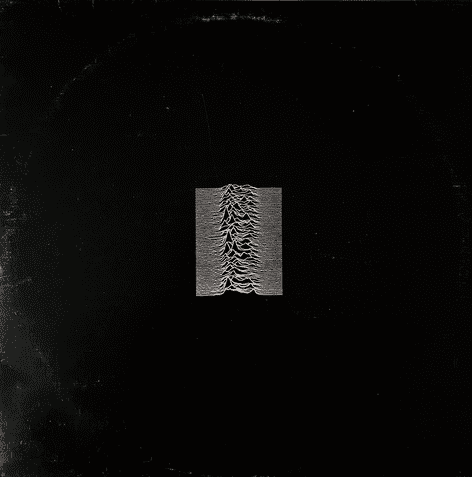
Overseeing it all, Factory Records, Anthony H Wilson’s impossible dream. Tony Wilson was the showman-philosopher-TV presenter and new music advocate, preaching art over commerce. Alan Erasmus his quiet lieutenant, Peter Saville the young graphic designer and aesthetic genius who gave Factory its visual language. Saville’s historic sleeve design for Unknown Pleasures, the white-on-black pulsar from a Cambridge astronomy textbook, became the perfect visual echo of the sound within. No title, no band name, no marketing. Just a transmission from the void. Inspired.

The record unfolds like a descent. “Disorder” rushes in with nervous urgency. “Day of the Lords” trudges through a wasteland. “Insight” floats in eerie calm, as if overheard from another world. “New Dawn Fades” devastates with Hook’s bass in lament, Sumner’s guitar shimmering like fluorescent light. Then side two opens with “She’s Lost Control”, a mechanised tragedy pulsing with inevitability. “Shadowplay” prowls through dim alleyways, “Wilderness” and “Interzone” flicker with punk afterglow before “I Remember Nothing” ends in collapse, static, glass, and Curtis’s voice dissolving into silence.

When it was released, Unknown Pleasures barely registered commercially. Factory’s distribution (like Rough Trade in London) was chaotic, and Manchester’s cultural importance had yet to be mythologised. But those who found it; the lost, the restless, the disillusioned recognised something transcendent. Punk had been about confrontation; Joy Division turned inward and found a new vocabulary for despair. They had created the post punk meisterwerk.

Within just a year, the story turned tragic. Curtis, battling epilepsy and emotional turmoil, took his own life on the eve of the band’s first American tour. Closer followed posthumously an austere requiem with prescient sleeve to match, but Unknown Pleasures remains the genesis, the moment the ordinary became eternal.

It endures because it was never really of its time. Curtis’s lyrics read like prophecy; Hannett’s production sounds perpetually modern. Sumner, Hook and Morris would carry fragments of its brilliance into New Order, but they never recaptured this particular alchemy, the balance of tension and restraint, intellect and instinct, belief and doom.

Unknown Pleasures isn’t just the greatest post-punk album. It’s the blueprint for everything that followed. The hum of fluorescent light in an empty flat. The heartbeat of a city rediscovering its soul. The poetry of disconnection made sacred by four ordinary lads, one visionary producer, and one man’s terrible genius.

Forty-six years on, it still sounds like the future, it still hurts but as Tony Wilson later mused, a record that launched a band responsible for the renaissance and redevelopment of an entire city.

RETROSPECTIVE: We’re Selling England By The Pound

A retrospective of Genesis’ ‘Selling England By The Pound’. The band’s fifth long player from 1973 is a Progressive Rock classic that captured a changing newly decimal Britain through Mellotrons, lawnmower men and Cockney villains. Essential listening for anyone who thinks Prog Rock was all capes and codswallop. Genesis proved you could be both preposterous and profound.


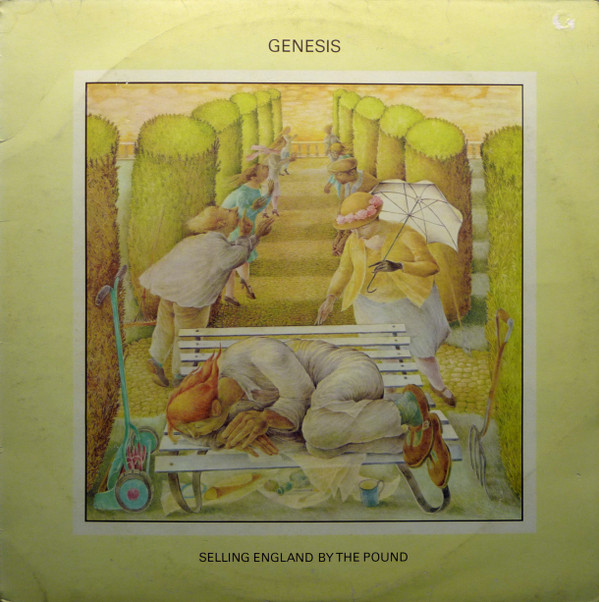
GENESIS: Selling England By The Pound (Charisma) 1973

There was something gloriously, quintessentially English about Genesis that set them apart from the prog rock pack cluttering up the album charts in 1973. Where Yes disappeared up their own cosmic backsides and ELP bludgeoned you with their virtuosity, Peter Gabriel and his merry band of public schoolboys crafted something altogether more peculiar and affecting with this, their fifth album.

Selling England By The Pound arrived at a curious juncture for the band. After the commercial disappointment of Foxtrot failing to break America (despite ‘Supper’s Ready’ being the sort of 23-minute epic that should have had the Yanks weeping into their cornflakes), Genesis regrouped and produced what many consider their defining statement. Recorded at Island Studios with John Burns and the band sharing production duties, this was a record that positively reeked of England in 1973: a country caught between nostalgia for its crumbling past and uncertainty about its increasingly tatty future.

The album opened with ‘Dancing With The Moonlit Knight’, which nicked its central melody from ‘I Know What I Like’ before that song even appeared. Gabriel’s lyrics were stuffed with references to Wimpy Bars, breakfast cereal mascots and Churchill’s England, painting a portrait of a nation flogging off its heritage for American consumer tat. “Can you tell me where my country lies?” he asked, and you suspected he already knew the answer. Tony Banks’ Mellotron swirled around like fog over the Home Counties while Steve Hackett’s guitar work was, as ever, economical but devastating.

‘I Know What I Like (In Your Wardrobe)’ was the obvious single, and it proved a canny choice. Built around Phil Collins’ crisp, almost funky drumming and a nursery rhyme melody, it told the story of a lawnmower man content with his lot. It was Genesis at their most accessible, which wasn’t saying much, but there was real charm in its eccentricity. The promotional film they shot, with Gabriel prancing about in a cloth cap and braces, was either brilliant or barmy. Possibly both.

But it was ‘Firth of Fifth’ that had the musos wetting themselves. Banks’ opening piano passage was genuinely beautiful, all cascading romanticism and melancholy, before the band crashed in with typical Genesis precision. Hackett’s guitar solo in the instrumental section was an absolute belter, soaring and lyrical without ever tipping into tedious showboating. If you needed to convince someone that progressive rock could be genuinely moving rather than just technically accomplished, this was the track to stick on the turntable.

‘More Fool Me’, sung by Collins, was a bit of pleasant fluff really, though his voice had a vulnerability that suited the material. ‘The Battle of Epping Forest’, however, was vintage Gabriel madness: a nine-minute saga about rival gangs of Cockney villains that name-checked half of East London and featured more characters than a Dickens novel. It was exhausting, occasionally bewildering, but never boring. The time signatures flipped about like eels while Gabriel adopted various accents and personas. You either thought it was genius or pretentious twaddle. This writer leaned towards the former.

The album closed with ‘The Cinema Show’ and ‘Aisle of Plenty’, the latter essentially a reprise that bookended the record nicely. ‘The Cinema Show’ was another lengthy piece that referenced T.S. Eliot and featured some of the most intricate playing on the record. Banks’ organ work was particularly fine, while the rhythm section of Collins and Mike Rutherford locked together with the sort of telepathy that only came from years of playing school halls and student unions together.

What was remarkable about Selling England By The Pound was how distinctly British it sounded. This wasn’t blues-rock or heavy metal or glam. It was something altogether stranger: folk melodies colliding with classical pretensions, Edwardian music hall meeting avant-garde rock, all filtered through the sensibilities of five blokes who probably read too much Tolkien at Charterhouse.

Gabriel remained one of rock’s most fascinating frontmen, a genuine oddball who could make theatrical gestures seem vital rather than risible. His lyrics here were his best yet, full of wordplay and social observation, even if they occasionally veered into sixth-form poetry territory. The rest of the band were operating at a level of musicianship that would have been intimidating if it wasn’t in service of actual songs rather than mere technical exercises.

Did this prove to be the album that broke Genesis to a wider audience? Not quite. They were far too weird, too English, too prog for that. But for those willing to enter their peculiar world, Selling England By The Pound was a rich and rewarding experience.

RETROSPECTIVE: Dire Straits’ 1980 Audiophile Delight

A retrospective review of Dire Straits’ 1980 album Making Movies. Knopfler’s technical brilliance meets romantic melancholy in an era that supposedly had no use for either. In my heavily late Seventies NME hack influenced style.


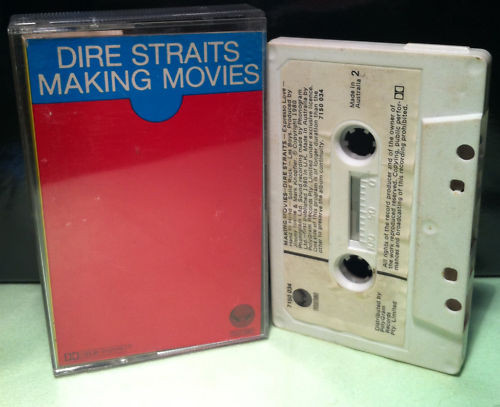
DIRE STRAITS: Making Movies (Vertigo) 1980

There was something deeply suspicious about a band this technically accomplished in 1980. While half of London was still thrashing about in bin liners and safety pins, Mark Knopfler’s lot turned up with an album so pristine, 38 minutes so meticulously crafted, that you half expected to find the corners mitred.

Making Movies arrived eighteen months after their self-titled debut made them improbable millionaires in America, and it was clear they’d been spending the intervening period in expensive studios rather than the back rooms of grotty pubs. Recorded at New York’s Power Station with Jimmy Iovine producing – the man who’d just finished polishing Springsteen’s The River – this was Dire Straits going for broke, or rather, going for more money than they’d already got.

The opening salvo, “Tunnel of Love,” sprawled across eight minutes like some Dylanesque fever dream filtered through a Tyneside accent. It was all fairgrounds and Spanish guitars, with Knopfler’s finger-picked lines circling each other like moths round a sodium lamp. The man played like he was being paid by the note, which he probably was.

“Romeo and Juliet” – which got played to death on Radio 1 – was the sort of thing that had sixth-formers scribbling lyrics in the back of their French textbooks for years. It was wretchedly romantic, all unrequited longing and cinema queues, with Knopfler doing his best to sound like he’d actually had his heart broken rather than just read about it in a Leonard Cohen novel.

But here was the rub: it worked. Despite themselves, despite the almost offensive levels of musicianship on display, despite the fact that punk never happened in their world, Dire Straits crafted something genuinely affecting. “Hand in Hand” swung like prime-era Dylan, while “Les Boys” – a tawdry tale of Parisian transvestites – had the sort of seediness that Bowie used to do before he discovered Switzerland and synthos.

The centrepiece, though, was “Skateaway,” a peculiar bit of New Wave-ish funk about a rollerskating girl cruising through urban decay. It had synthesizers, for God’s sake. Synthesizers! On a Dire Straits record! Pick Withers’ drumming was tighter than a gnat’s chuff, and the whole thing sounded like what might happen if Steely Dan decided to have a go at writing a hit single.

Mark Knopfler remained an enigma wrapped in a headband. His vocals sounded like he was perpetually on the verge of nodding off, yet there was a sly intelligence to his wordplay that elevated this above standard-issue soft rock tedium. He’d clearly listened to a lot of JJ Cale, a lot of Dylan, a lot of those American FM radio staples, and he wasn’t afraid to nick the best bits.

The production was, predictably, immaculate. Every hi-hat shimmer, every bass throb from John Illsley, every keyboard wash from Roy Bittan (on loan from the E Street Band, no less) sat exactly where it should. It was the sonic equivalent of a freshly Hoovered front room with the cushions all plumped up.

Which brought us back to that initial suspicion. In an era when the most exciting music was being made by people who could barely play their instruments, Dire Straits were almost confrontationally competent. They weren’t interested in year zero, in tearing it all down and starting again. They wanted to take you to the pictures, buy you chips on the way home, and maybe have a bit of a cuddle if you were lucky.

And you know what? Sometimes that was enough. Making Movies didn’t change your life or inspire you to form a band in your mate’s garage. But on a rainy Tuesday evening when you were skint and miserable and the world seemed determined to grind you down, it might just have made things seem temporarily bearable.

Which, in 1980, was worth something.