A Commute To New Wave Stardom: The Jam, In The City (1977)

A deep dive retrospective into the debut album from Woking’s finest, The Jam. The politics, their suburban beginnings and the 1977 era of Punk Rock where they made their name with their own played-fast brand of Mod influenced New Wave. What self respecting chart obsessed 14 year old boy didn’t turn their school tie back to front after watching In The City on Top Of The Pops?
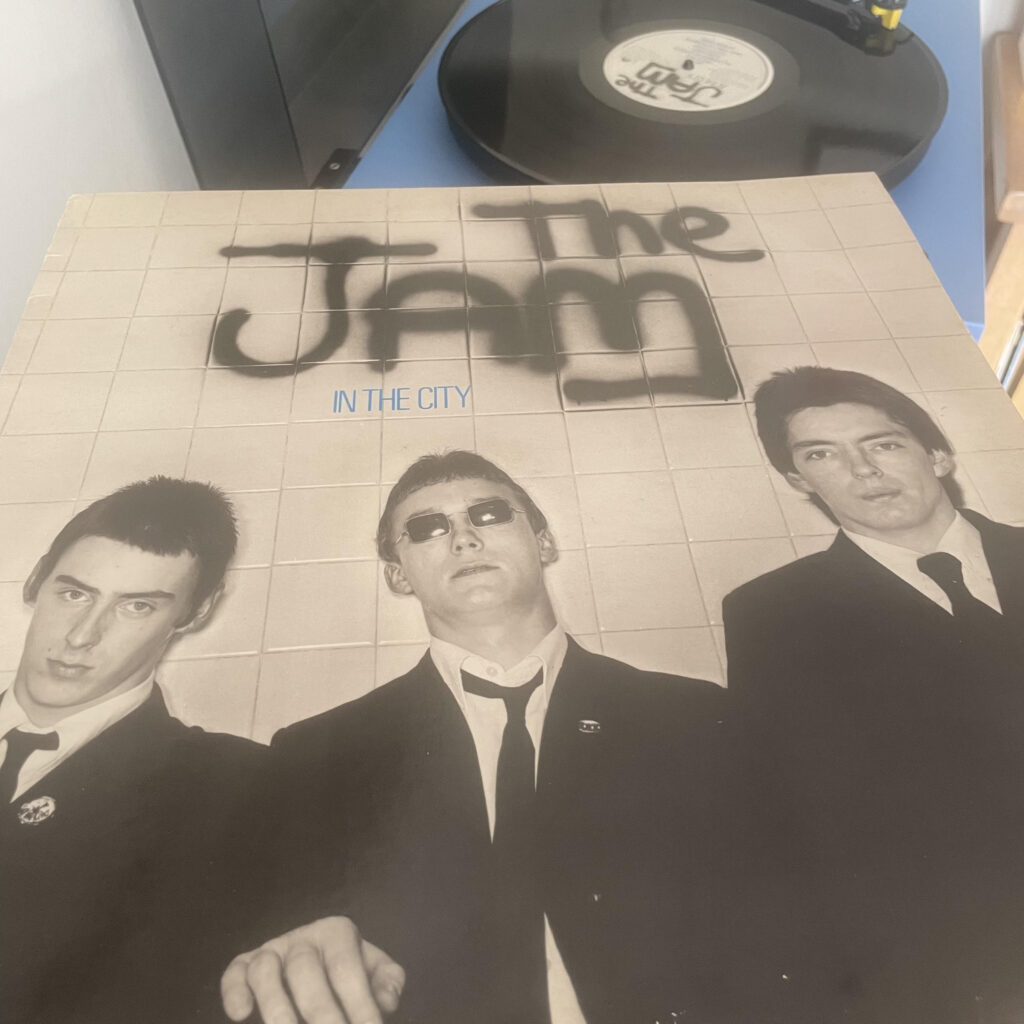
The Jam, In The City. Debut album from 1977. Full retrospective.

Britain, 1976 to 1977

Start with the weather. The summer of 1976 was the hottest anyone alive could remember. Reservoirs shrank, standpipes appeared in the street, and the government appointed a Minister for Drought. Within days of the appointment it rained. That is about as British as a national crisis gets, and it set the tone for a year in which very little went to plan.

Harold Wilson had resigned in the spring and left James Callaghan a country with high inflation, rising unemployment and a currency that kept sliding. By the autumn the Labour government was asking the International Monetary Fund for a loan and accepting the spending cuts that came with it. Unemployment was heading for the one and a half million mark, and school leavers were taking most of the hit. In August the Notting Hill Carnival ended in a riot. The National Front was getting bolder on the street, and the arguments about race that followed spilled into the music press and onto the stage.

For a sixteen-year-old in 1976 the message was plain. The jobs were going, the adults had no answers, and the music on the radio was Abba, Wings and a lot of Elton John. The bands that mattered to teenagers were mostly dinosaurs or exiles. Prog had run out of road. Glam had turned into cabaret. Pub rock was honest and hard-working, and it was also being played by men who looked like your dad.

Then the Sex Pistols swore on teatime television. On 1 December 1976 Bill Grundy invited them onto Thames Television’s Today programme, drew out a few four-letter words, and handed the tabloids a story that ran for weeks. Gigs were cancelled, councils passed bans, and EMI dropped the band within six weeks. In the same period The Damned put out “New Rose”, the first British punk single, and The Clash were rehearsing in a Camden warehouse. By spring 1977 the Silver Jubilee was coming, the Pistols had a single lined up that would make the Queen part of the argument, and punk had become a national row rather than a London fashion.

That is the world In The City was released into. Anyone who tells you it arrived at the start of punk has the dates wrong. It arrived at the moment the record industry finally decided to sign everybody.

Woking, and the boys who came out of it

The Jam did not come from Camden, the King’s Road or the Bromley Contingent. They came from Woking, a Surrey commuter town where people go to escape London and return to it every morning with a season ticket. Paul Weller grew up in a pebbledash semi with his father John, a builder and taxi driver who would become the band’s manager and, for a good few years, its unofficial fifth member and chief disciplinarian.

Weller met Steve Brookes and Dave Waller at school and the first version of the band came together in 1972, when Weller was fourteen. Rick Buckler, another Woking boy, joined on drums. Bruce Foxton arrived around 1973 and took over on bass, later than the others and a couple of years older than Weller. For much of the early period Foxton played lead guitar and Weller played bass. When Brookes left in 1976 the two swapped, and the line-up that would make the record was fixed: Weller on guitar and vocals, Foxton on bass and vocals, Buckler on drums.

What happened between 1972 and 1976 matters more than most punk histories allow. The Jam played for four years before anyone signed them. They did the working men’s clubs of Surrey and, with John Weller pushing the bookings, ventured north to the cabaret circuit, where a group of teenagers doing Motown and Who covers had to win over an audience that had come for the comedian and a plate of chicken and chips. In a 1970s club you either learned to hold a room or you went home. It gave them something the art-school punk bands mostly lacked, which was stamina and a habit of rehearsal. A cassette of their early practice sessions later turned up in Steve Brookes’s book Keeping the Flame, and it shows a young band that was serious about the work well before anybody was paying attention.

What they were listening to

Weller has always been open about it. The starting point was The Who, and specifically the My Generation album, which he found in the early seventies and treated as scripture. From there it ran outward to the Small Faces, The Kinks, early Beatles, Motown and Stax. He bought the clothes and the records and learned the songs. Around 1975 he saw Dr Feelgood, and Wilko Johnson’s fast, choppy, rhythm-and-lead-at-once guitar told him what was possible with one guitar and a very short temper.

None of this was fashionable in 1976. Mod was a memory, and most people under twenty did not care what kind of jacket a Small Face wore in 1966. The Jam looked odd to their own generation, and the punk audience could be hostile to a band in suits playing R&B. That was the tension the debut album carried. It sounded like punk in speed and volume, and looked and behaved like something older.

July 1976, and the trip to town

The turning point is easy to date. On 9 July 1976 Weller went up to London to see the Sex Pistols at the Lyceum, where they were third on a bill headed by the Pretty Things. He knew of them from the music press and wanted a look. He came home changed. Years later he summed it up plainly, saying there was a scene there and he wanted to be part of it. It explains most of the Jam’s next twelve months.

Woking had a stage. London had a scene. Weller started writing quicker, sharper songs about the town he lived in and the one he wanted to reach. He would tell Q magazine in 2011 that “In The City” was “a young man’s song, a suburbanite dreaming of the delights of London”. Read that back slowly, because it is the key to the album. A Londoner did not write about London this way. This came from a lad on the commuter train out of Woking who could not wait to get in.

Other accounts of the song add a further detail. Weller has said he wrote it after seeing the Pistols and The Clash, while in what he calls his Who phase. You can hear both in the record. The urgency belongs to the first two, and the chords and the harmonies belong to Pete Townshend.

Signing

The Jam worked London through the winter. They supported Wire at the Roxy in January 1977, an odd pairing that gives you an idea of how loosely the new bands were being grouped. On 22 January they played the Marquee as support to a group called Bearded Lady. In the audience was Chris Parry, a New Zealander and former drummer with the Auckland band The Fourmyula who had ended up as an A&R man at Polydor. Shane MacGowan, later of The Pogues, had told him to go and look.

Parry signed them within weeks. The terms were not generous. The advance was £6,000, with a royalty of six per cent, and the deal initially covered a single. Polydor soon took up an option that stretched the contract to four years and four albums. That is a lot of album for a band who had not made one. It is also the reason the group were in a studio while their contemporaries were still arguing with lawyers. According to one account, CBS’s chairman Maurice Oberstein phoned John Weller at the last minute with an offer said to be three times Polydor’s. By then Parry already had the band recording, and John Weller declined.

Parry is worth a paragraph of his own. He produced the first two albums alongside Vic Smith, who now goes by Vic Coppersmith-Heaven. He went on to found Fiction Records and sign The Cure. He was also, by most later accounts, the man who understood that the Jam were a pop group at heart and did not need to be pushed into being something angrier.

The sessions

The band cut demos in February, at a small studio in Soho by one account, and these were eventually released as The Polydor Demos in the reissue set. The album itself was recorded in March 1977 at Polydor’s own studio at 17 to 19 Stratford Place, off Oxford Street. It was done fast. Weller was eighteen. He would turn nineteen five days after the record came out.

Bruce Foxton’s memory of the sessions, given to MusicRadar years later, is refreshingly unmythologised. The album was more or less the live set, recorded live and played very quickly. He says you can hear it speeding up as it goes, and he adds that it does not matter, because the excitement was captured. He is right. The record’s biggest flaw and its biggest virtue are the same thing.

A reviewer at Sounds in 1977 wrote that the album sounded rushed, as though the band had been hurled into a studio before they were quite ready. The fairest reply is that they had. The songs were road-tested and the playing was tight. What was missing was time to shape the sound, and the result is a thin, trebly mix in which Buckler’s drums crash around at the front and Foxton’s bass does more of the melodic work than the mix admits. Punk records were being made quickly and cheaply that spring, and the label wanted the single out while the tour was on.

Release

“In The City” came out on 29 April 1977 and reached number 40. It is two minutes nineteen of tremolo guitar, a rolling bassline and a shouted chorus, and it got the group onto Top of the Pops. One retrospective claims the Jam were the first New Wave band to appear on the programme, which I would treat with care because several acts had a claim, but they were certainly among the first.

The album followed on 20 May and reached number 20. The timing tells its own story. The Damned had put out their debut in February. The Clash and The Stranglers released theirs in April, three weeks before the Jam. The Pistols would not get Never Mind the Bollocks out until October. So in May 1977, what the shops had was a run of debut records from London punk bands, and one from Woking that had a Batman theme on it.

The band had also joined The Clash’s White Riot tour from 1 May, though only for part of its run. It put them in front of the biggest punk crowds in the country, and it tied them to the scene in the eyes of the press.

The album

Side one opens with “Art School”, and if you want to understand what the Jam sounded like in the spring of 1977, play the first thirty seconds. It is guitar-led, fast and slightly messy in a way that is obviously intended. The Rickenbacker 330 that Weller played then has a jangle that no punk guitarist wanted, and he plays it like a stick. Foxton’s bass rides underneath. The sound is closer to 1965 than 1977 and much faster than either.

“I’ve Changed My Address” follows and keeps the pace, and then the record slows just enough for a cover of Larry Williams’s “Slow Down”, which The Beatles had also recorded. It is played straight, and you can tell the group regarded it as a favour to the ancestors. “I Got By in Time” is a solid tune that never quite finds the hook you expect from it.

“Away from the Numbers” is the first sign of the writer Weller was about to become. It is about not wanting to be counted, and in the way it moves between sections and leaves room for the bass it points to All Mod Cons rather than back to the pubs of Woking. Ceremony’s retrospective describes it as power chords fused with R&B melodies, and that is close. Side one closes with the theme from Batman, the 1960s television series, written by Neal Hefti. It is a throwaway and it is delivered as a throwaway. It is also a clue. A band at the front of punk who put the Batman theme on their debut are telling you they do not take the rules seriously.

Side two starts with the single. The introduction is Foxton’s bassline, arriving as a fast-moving pulse over which Weller’s guitar cuts in, and then the vocal enters with a lyric about uniformed men and the right to kill, a line that reads oddly now. It sounds like a protest and it works as one, though Weller was eighteen and was not writing a manifesto. The lyric’s real subject is the phrase “the young idea”, which is sung as the chorus and sounds like it came off a badge.

There is a footnote to the song that has become part of Jam folklore. The bass figure resurfaced a few months later on the Sex Pistols’ “Holidays in the Sun”. Weller has told the story of a run-in with Sid Vicious over it, and the accounts of who hit whom vary with the teller. Whatever happened, the resemblance is real, and it is a compliment.

“Sounds from the Street” and “Non-Stop Dancing” keep the momentum going. They are the least distinctive stretch of the album, quick and shouty, and the lyrics circle familiar territory of youth, noise and impatience. “Time for Truth” is the direct political song. Weller lines up the politicians for a kicking and does it in a way that sounds heartfelt and a little naive. It is worth knowing that around this time he told the NME that the band would vote Conservative at the next election. He changed his mind soon enough, and it is a useful reminder that in 1977 no one in the Jam had a settled politics, only a settled dislike of being talked down to.

“Takin’ My Love” shows the R&B and soul roots underneath the speed. “Bricks and Mortar” closes the record with a complaint about redevelopment, the spoiling of old streets by new concrete. It is the closest thing on the album to a preview of the songs he would write about Britain over the next five years, where the target was the whole country and not just the councils.

Twelve tracks, two covers, not much over half an hour. It does not outstay its welcome.

What it does well, and what it doesn’t

The strengths are energy, tunes and precision. The band is tight, and Buckler and Foxton in particular sound like a unit that has spent four years playing in rooms where mistakes are punished. The tunes are better than those on most punk debuts. The vocal is confident. Weller is a much more musical singer than the Pistols’ Johnny Rotten or The Clash’s Joe Strummer, and the harmonies with Foxton have a pop quality that was rare in the scene.

The weaknesses are equally clear. The production is thin. Some of the songs are filler, and one or two are pastiche. The lyrics are teenage in a way that Weller himself outgrew within twelve months. Most tellingly, the album shows a band still working out whether it is a punk group with mod tastes or a mod group with punk pace. The Who influence is so strong in places that some listeners at the time heard a tribute act, and the charge was not entirely unfair. It was a limited way of hearing it. A tribute band does not usually write “Away from the Numbers” or take an album to number 20.

Later views

Time has been kind to the record without turning it into a masterpiece. Fans tend to place it below All Mod Cons, Setting Sons and Sound Affects, which is where it belongs. Pitchfork reviewed it as part of the reissue programme. The 40th anniversary box set, 1977, was released in October 2017 and collected the album, its follow-up, the February demos, live recordings and the Peel sessions.

The band members have looked back on it with varying degrees of fondness. Foxton remains proud of it and talks warmly about the thrill of hearing the single in his local pub. He has also pointed out that the record company and the audience wanted a repeat, and that the group were already moving toward ballads and acoustic guitars when they made the next single, “All Around the World”. That single went to number 13 in July. The second album, This Is the Modern World, followed in November, only six months after the first and widely thought of as the rushed one.

Rick Buckler died on 17 February 2025. In later life he felt that Weller had been given too much of the credit for the band’s catalogue at the expense of the rhythm section. Listen to the record and the point is easy to accept. The drums on “In The City” do the work of pulling the whole thing forward, and Foxton’s bass is an equal partner. In 1977 they were the best rhythm section in the new bands, and they still sound like it.

Verdict

In The City is not the finest Jam album, and it is not a punk record in the way Never Mind the Bollocks or The Clash is. It is a small-town group taking its chance and taking it well. There are perhaps five genuinely excellent songs. There is a great single. There is a set of musicians who could play, and a teenager who was about to learn to write.

The best way to hear it is as a document of one moment: the spring of 1977, when the guitars were loud, the government was on its knees, and a lad from Woking with a Rickenbacker and a good haircut looked at the city on the horizon and decided to catch the train. It sounds like someone who has not been let down yet. Within two years he would be writing about buses, tube stations and the ordinary cruelty of British life, and the music would be far better. This record is where the lad from the suburbs starts.

Play it loud like you’re packed into the 100 Club for half an hour.

POP CULTURE: The Proto-Punk Who Sparked London’s Seditionaries

Malcolm McLaren and Vivienne Westwood’s mid-1970s New York encounter with polymath Richard Hell, the New York Dolls and the CBGB scene reshaped British music, feeding directly into Seditionaries, punk rock, the Sex Pistols and the confrontational style that defined 1976–77.

The punk provocateurs Malcolm McLaren and Vivienne Westwood’s time in New York in 1974–75 was brief, but it was decisive. They arrived in a city that was fraying at the edges, financially broken and culturally fertile, and they treated it less as a destination than as a raid. What they encountered downtown was not simply music or fashion, but a way of assembling identity from debris. It was a lesson they would carry back to London and weaponise.

New York at that moment was defined by a ragged glamour. Clothes were cheap, borrowed, stolen or simply falling apart. The New York Dolls embodied this most theatrically, collapsing glam rock’s lipstick excess into something louche and desperate. Their women’s dresses, platform boots and smeared makeup looked less like fantasy and more like survival. McLaren was drawn to them precisely because they treated image as confrontation. He briefly managed the band, dressed them, and attempted to frame them as a kind of moving scandal. Although the relationship was short-lived and commercially unsuccessful, it sharpened his understanding of how style could precede sound.

More influential still was Richard Hell. If the Dolls represented decadent collapse, Hell represented refusal. His look, assembled rather than designed, became one of punk’s most enduring visual templates. Torn T-shirts held together with safety-pins, hair hacked short and spiked by accident rather than design, trousers ripped at the knee not for effect but because they had given up. Hell’s clothes were not costumes, they were statements of indifference, and that indifference was the point. He did not dress to shock so much as to signal disengagement from polish, aspiration or glamour. McLaren saw immediately that this look was infinitely reproducible and deeply symbolic. You did not need money, training or permission to look like Richard Hell. You only needed nerve.

The music around CBGB reinforced this. Bands played fast, loud and with minimal technique. The Ramones reduced rock to its skeleton, Television stretched it nervously, and Hell’s own bands treated lyrics as fragments rather than sermons. The common thread was an amateur ethic that felt closer to art-school provocation than rock professionalism. McLaren absorbed this wholesale. He was less interested in fidelity than in effect. What mattered was how quickly an idea could be communicated, worn, photographed and copied.

When McLaren and Westwood returned to London, the King’s Road shop became the site where these ideas were translated. By 1974 it was trading as SEX, and it already specialised in provocation, fetish references and sexual frankness. But the New York influence sharpened its focus. The clothes became rougher, more aggressive, and more deliberately unfinished. Westwood began turning garments into arguments. Rips were left visible. Pins were exposed. Slogans were confrontational rather than decorative. This was not nostalgia or homage. It was adaptation.

By 1976 the shop had evolved again, this time into Seditionaries. The name itself signalled intent. Seditionaries crystallised what punk looked like at the moment it broke into public consciousness. Bondage trousers, destroyed knitwear, obscene or political graphics, tartan subverted into something hostile rather than heritage. The lineage from New York was clear. Richard Hell’s torn shirts reappeared, reworked and intensified. The Dolls’ theatricality was stripped of camp and replaced with menace. What had been downtown nonchalance became London antagonism.

Seditionaries did not merely sell clothes. It defined a uniform. This was crucial. Punk’s power lay in its immediacy and recognisability. The clothes could be assembled cheaply, but the Westwood versions carried authority. They were prototypes, templates for replication. Teenagers across Britain copied them with bin bags, razors and marker pens. The look travelled faster than the music.

The Sex Pistols emerged directly from this environment. McLaren’s genius intervention was assembling the band as a Situationist art statement as much as a musical unit. The Situationists were a mid-century art movement made up of artists, writers and political agitators and based in Paris. Their mission was nothing less than the complete transformation of everyday life through carefully engineered provocations designed to expose the empty spectacle of consumer capitalism.  McLaren’s vision for the band was to embody this. John Lydon, later Rotten was recruited because he was not only intelligent and well read but also looked right. His genuine alienation and sneering confrontational vocal delivery was totally on spec. The Pistols wore Seditionaries clothes because they were made for them. The band became the shop’s loudest advertisement, and the shop became the band’s ideological bunker. The Pistols did not invent punk style. They broadcast it. Also in a musical style unlike the atypical New York-New Wave-CBGBs bands. Their sound is more attributable to Detroit, Michigan’s Iggy Pop and MC5, British Glam Rock riffs from Bowie’s ‘Spiders From Mars’ and the original Pistols bassist and primary musical songwriter Glen Matlock was influenced by Sixties bands like The Kinks, The Who and Small Faces.

What McLaren had learned in New York was that chaos could be curated. Richard Hell had demonstrated that refusal could be worn on the body. The Dolls had shown that scandal could be staged. Westwood provided the craft, intelligence and historical literacy to turn these influences into garments that felt inevitable rather than borrowed. Seditionaries was not a copy of New York. It was a distillation, filtered through British class anxiety, boredom and anger.

In the years that followed, arguments over credit and authorship would harden. It is well documented that Hell is begrudging of the duos’ appropriation of his style. McLaren was accused of manipulation, Westwood was elevated to designer-genius status, and the American roots of punk style were sometimes obscured by nationalist mythology. But the chain remains visible. From downtown Manhattan thrift-store wreckage to King’s Road sedition, the same ideas recur: clothes as provocation, music as delivery system, style as a form of speech.

The New York visit did not invent punk, but it gave McLaren and Westwood a grammar. They returned with a sense that culture could be assembled quickly, aggressively and in public. Seditionaries was the proof of concept. Punk, as it appeared in 1976 and 1977, wore its influences openly, ripped and repurposed. It looked the way it did because someone had seen Richard Hell and understood immediately that the future of style lay not in polish, but in refusal.

RETROSPECTIVE: He Danced Right Out The Womb.

A retrospective look at T. Rex’s Electric Warrior, exploring Marc Bolan’s electric transformation and the album’s lasting influence on glam rock and beyond.


There comes a point in every great pop myth when the curtains part. The star steps forward. Everything suddenly makes sense. For Marc Bolan, Electric Warrior is that moment. It is the glitter-splashed big bang that turned a dreamy folky into the patron saint of teenage stomp. People often compare it to Dylan going electric. Yet Bolan did not provoke outrage. He aimed straight for the nation’s hips and the Top 40 followed.

More than fifty years later the record still feels like a private universe. It is not simply a prototype for glam. It is a fully formed world that predicted the next decade before anyone else had a sniff of it. The swagger of glam, the clipped pulse of proto-punk, the teenage charge of a perfect pop single. All of it sits inside these grooves.

Tony Visconti’s genius production has been praised for decades. Hearing it now, it is striking how modern it remains. The strings glide. The guitars smirk. Even the handclaps sound like part of a secret plot. Visconti later called the album “warm and fat” and it still fits. Everything feels close yet huge, like Bolan is whispering into a microphone wired to the Milky Way. Remasters, reissues and old demos released over the years have only confirmed how deliberate the whole palette was. This was not luck. Bolan and Visconti were shaping a style they already believed would last.

“Get It On (Bang a Gong)” is still the landmark track. It has become so familiar that people forget how sly it was at the time. It is pure strut. Lust boiled into a slogan and delivered with a grin that borders on parody. Later generations absorbed it through adverts, films and compilation CDs. The original still shines brighter. Its low-slung groove feels immortal today. You can hear it in Primal Scream, in the Black Crowes and in the swaggering indie bands of the early 2000s who thought attitude alone might save them.

The deep cuts tell a richer story. “Mambo Sun” shimmers like wet tarmac under streetlights. It is languid, slippery and quietly sensual. It shows how far Bolan had travelled from his earlier, Tolkien-tinged whimsy. “Cosmic Dancer” has aged even better. It is now held up as proof that Bolan was far more than a glittered chancer. Its mix of lullaby and melancholy feels like the doorway to a career he never had the chance to complete. When the home demos surfaced in the nineties and beyond, the song grew even larger. It became a kind of Rosetta Stone for Bolan’s tender side.

The album’s afterlife has been busy. Critics were sniffy in 1971 because British reviewers often mistrust anything that sounds like fun. The reappraisals arrived quickly. By the eighties, whole glam revival movements traced their roots back to this record. By the nineties, everyone from Morrissey to Slash to the Manics cited it as essential listening. After the millennium, more reissues and recovered tapes made the craftsmanship impossible to ignore. Electric Warrior settled into its rightful place as a masterpiece of pop economy. Every track earns its keep.

Looking back now, the whole transformation feels inevitable. Bolan did not abandon his old self in the way Dylan did. He simply stepped into the brighter outline that had always hovered around him – ‘Mod Marc had been dancing since he was twelve’ after all. Electric Warrior is not the tale of an artist changing course. It is the moment he finally matched the sound in his head. Glittering stardom was then a formality.

Half a century later, the record still glows with rare magic. It captures the moment when a pop star stops becoming and finally arrives. Bolan lit the fuse for glam, reshaped the idea of pop charisma and left behind a record that refuses to grow old.

Electric influencer.

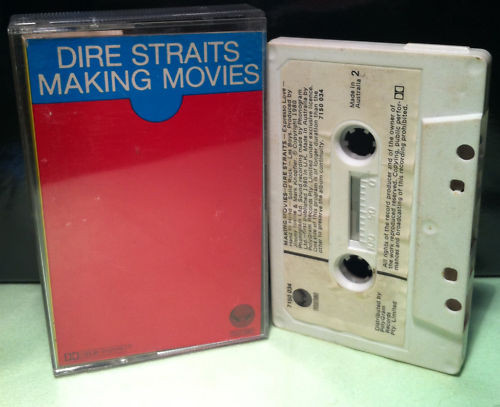
RETROSPECTIVE: Dire Straits’ 1980 Audiophile Delight

A retrospective review of Dire Straits’ 1980 album Making Movies. Knopfler’s technical brilliance meets romantic melancholy in an era that supposedly had no use for either. In my heavily late Seventies NME hack influenced style.


DIRE STRAITS: Making Movies (Vertigo) 1980

There was something deeply suspicious about a band this technically accomplished in 1980. While half of London was still thrashing about in bin liners and safety pins, Mark Knopfler’s lot turned up with an album so pristine, 38 minutes so meticulously crafted, that you half expected to find the corners mitred.

Making Movies arrived eighteen months after their self-titled debut made them improbable millionaires in America, and it was clear they’d been spending the intervening period in expensive studios rather than the back rooms of grotty pubs. Recorded at New York’s Power Station with Jimmy Iovine producing – the man who’d just finished polishing Springsteen’s The River – this was Dire Straits going for broke, or rather, going for more money than they’d already got.

The opening salvo, “Tunnel of Love,” sprawled across eight minutes like some Dylanesque fever dream filtered through a Tyneside accent. It was all fairgrounds and Spanish guitars, with Knopfler’s finger-picked lines circling each other like moths round a sodium lamp. The man played like he was being paid by the note, which he probably was.

“Romeo and Juliet” – which got played to death on Radio 1 – was the sort of thing that had sixth-formers scribbling lyrics in the back of their French textbooks for years. It was wretchedly romantic, all unrequited longing and cinema queues, with Knopfler doing his best to sound like he’d actually had his heart broken rather than just read about it in a Leonard Cohen novel.

But here was the rub: it worked. Despite themselves, despite the almost offensive levels of musicianship on display, despite the fact that punk never happened in their world, Dire Straits crafted something genuinely affecting. “Hand in Hand” swung like prime-era Dylan, while “Les Boys” – a tawdry tale of Parisian transvestites – had the sort of seediness that Bowie used to do before he discovered Switzerland and synthos.

The centrepiece, though, was “Skateaway,” a peculiar bit of New Wave-ish funk about a rollerskating girl cruising through urban decay. It had synthesizers, for God’s sake. Synthesizers! On a Dire Straits record! Pick Withers’ drumming was tighter than a gnat’s chuff, and the whole thing sounded like what might happen if Steely Dan decided to have a go at writing a hit single.

Mark Knopfler remained an enigma wrapped in a headband. His vocals sounded like he was perpetually on the verge of nodding off, yet there was a sly intelligence to his wordplay that elevated this above standard-issue soft rock tedium. He’d clearly listened to a lot of JJ Cale, a lot of Dylan, a lot of those American FM radio staples, and he wasn’t afraid to nick the best bits.

The production was, predictably, immaculate. Every hi-hat shimmer, every bass throb from John Illsley, every keyboard wash from Roy Bittan (on loan from the E Street Band, no less) sat exactly where it should. It was the sonic equivalent of a freshly Hoovered front room with the cushions all plumped up.

Which brought us back to that initial suspicion. In an era when the most exciting music was being made by people who could barely play their instruments, Dire Straits were almost confrontationally competent. They weren’t interested in year zero, in tearing it all down and starting again. They wanted to take you to the pictures, buy you chips on the way home, and maybe have a bit of a cuddle if you were lucky.

And you know what? Sometimes that was enough. Making Movies didn’t change your life or inspire you to form a band in your mate’s garage. But on a rainy Tuesday evening when you were skint and miserable and the world seemed determined to grind you down, it might just have made things seem temporarily bearable.

Which, in 1980, was worth something.

RETROSPECTIVE: The Thin White Duke’s Disappearing Act

Bowie’s Low nearly half a century on.


In the pantheon of rock’s great reinventions, few albums have aged as gracefully, or as mysteriously as David Bowie’s Low. Released in January 1977 to widespread bewilderment and commercial indifference, this curious hybrid of fractured pop songs and ambient soundscapes now appears, from our 2025 vantage point, to be one of the most prophetic statements in popular music’s history.

The conventional narrative surrounding ‘Low’ has always centred on geography and biography: Bowie fleeing Los Angeles and its pharmaceutical temptations for the disciplined clarity of divided Berlin, collaborating with the electronic music pioneer Brian Eno to create something entirely new. Yet recent archival research has complicated this neat story considerably. Much of the album’s foundational work actually took place at the Château d’Hérouville studios in France, months before Bowie’s Berlin sojourn began in earnest. The geographical mythology, it transpires, was partly retrospective construction, though no less meaningful for that.

What emerges most clearly, nearly half a century on, is how ‘Low’ functions as both ending and beginning. It represents the final flowering of the rhythmic obsessions that had driven Bowie through his American soul period, yet subjects those same impulses to a process of systematic deconstruction that would influence popular music for decades to come. The rhythm section of Dennis Davis and George Murray, veterans of ‘Young Americans’ and ‘Station to Station’, found themselves playing against type – their customary precision dissolved into something more impressionistic, more concerned with atmosphere than with groove.

The Brian Eno collaboration proved transformative in ways that have become clearer with time. Eno’s methodology, the famous “Oblique Strategies” cards, his insistence on removing conventional guitar solos, his suggestion that Carlos Alomar play rhythm parts without chord progressions, represented a systematic assault on rock orthodoxy. The results were songs that barely qualified as songs at all: “Breaking Glass” distils two minutes of nervous energy into treated percussion and fractured vocals, whilst “What in the World” transforms romantic yearning into something that might have been transmitted from outer space.

The album’s bipartite structure – seven relatively orthodox pop songs followed by four extended instrumental pieces – baffled RCA’s marketing department and contributed to its commercial failure in America. From today’s perspective, however, this division appears remarkably prescient. The instrumental suite that occupies ‘Low’ s second side anticipates much of what we now recognise as ambient music, electronic composition, and even certain aspects of contemporary hip-hop production. These are not songs to be sung along with but environments to be inhabited.

Recent scholarship has illuminated the extent to which these instrumentals drew from Bowie’s direct observation of Berlin’s divided landscape. “Warszawa”, despite its Polish title, was inspired by a fragment of Eastern European folk music encountered during train travel, yet the wordless vocal improvisations that crown the piece were shaped by Bowie’s response to the city’s displaced populations. The recent revelation that much of the composition employed a Chamberlin keyboard loaded with authentic folk samples adds another layer to its haunting effectiveness.

“Art Decade”, the album’s most austere moment, benefits enormously from contextualisation within Berlin’s cultural and physical landscape. The title references both artistic periods and the literal decay Bowie witnessed in the city’s bombed-out quarters. The track’s processed saxophone, actually Bowie himself, electronically treated beyond recognition – creates a soundtrack for urban desolation that prefigures everything from post-punk’s architectural obsessions to contemporary electronic music’s fascination with industrial decay.

Perhaps most remarkably, ‘Low’ anticipated many of the anxieties that characterise our current cultural moment. The paranoia that suffuses tracks such as “Always Crashing in the Same Car” was attributed at the time to pharmaceutical excess, yet it reads today as remarkably prescient about our surveillance-saturated digital existence. The isolation and disconnection that runs through the album’s emotional landscape prefigures our contemporary struggles with technology-mediated relationships and algorithmic social control.

The album’s commercial disappointment, number three in Britain, invisible in America – now appears less like failure than validation. Records of this ambition and difficulty are not intended for mass consumption; they are designed to influence everything that follows. And the influence has been extraordinary: the template ‘Low’ established can be traced through post-punk, new wave, ambient house, and contemporary art-pop. Its innovations have become so thoroughly absorbed into popular music’s vocabulary that they no longer sound revolutionary – the ultimate mark of success.

What continues to astonish is how genuinely futuristic much of Low remains. The drum sound that producer Tony Visconti achieved by positioning microphones in a stairwell – compressed, gated, artificially enhanced – established the template for 1980s pop production. Yet it originated here, in service of compositions that had no commercial ambitions whatsoever. Similarly, the harmonic treatments applied to Bowie’s vocals created textures that sound alien even today.

Recent discoveries in the Bowie estate’s archives have only confirmed ‘Low’s status as a masterpiece of studio technique. Alternate mixes recently made available reveal the extraordinary care that went into every sonic decision. The stripped-back version of “Sound and Vision” demonstrates how much archaeological work underpinned the finished product – every element feels essential, irreducible, the result of countless hours of experimentation distilled into perfect miniatures.

‘Low’ endures because it solved a problem most popular artists never recognise: how to maintain visibility whilst achieving genuine artistic invisibility. Bowie created his most personal statement by becoming deliberately less human. The electronic processing, the ambient diversions, the systematic removal of conventional rock signifiers – these represent methods of artistic evacuation, ways of escaping the personality cult that threatened to consume him.

From our current perspective, with knowledge of everything that followed – the completion of the Berlin trilogy, the commercial rehabilitation, the decades of recycling past innovations – ‘Low’ appears as Bowie’s most courageous artistic statement. It represents the sound of a major popular artist refusing the safety of established success, choosing instead to venture into genuinely uncharted musical territory.

The album concludes with “Subterraneans”, originally conceived as music for The Man Who Fell to Earth, and the piece provides an apt metaphor for the entire enterprise. It is the sound of something recognisably human being processed through alien technology, emerging transformed but not destroyed. Nearly fifty years after its creation, this remains the most accurate description of what ‘Low’ achieved – and why it continues to matter.

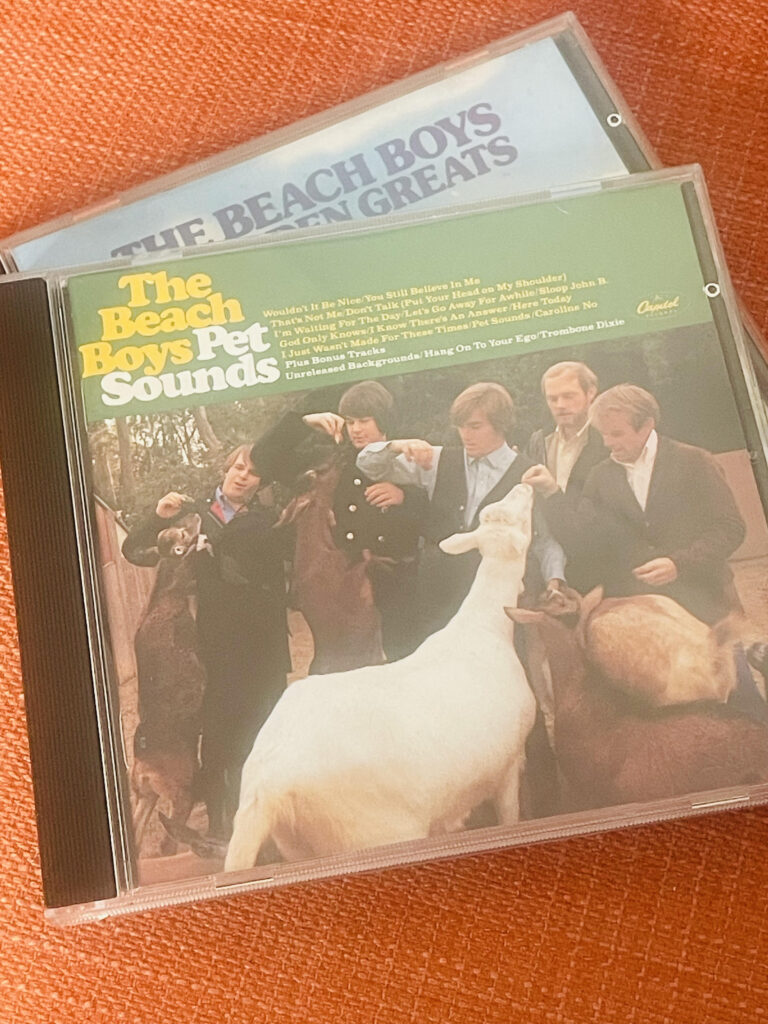
RETROSPECTIVE: The Beautiful Madness Of Pet Sounds

From surf music to sonic revolution: why Pet Sounds remains pop’s most extraordinary achievement and Brian Wilson’s last coherent masterpiece.


At the passing of the musically creative genius Brian Wilson, I’ve written this sixth decade reappraisal of The Beach Boys album Pet Sounds as a meditation on one of music’s most extraordinary creative achievements. A work that represents both the culmination of years of obsessive craft development and the sound of consciousness chemically expanded beyond conventional limits.

From a technical, production and arrangement perspective Pet Sounds – compared to literally everything produced beforehand anywhere is like comparing a Chevy Bel Air with a Saturn 5 rocket plus Apollo orbiter and lander. But this quantum leap didn’t emerge from nowhere. Wilson had been methodically building towards this moment since 1962, spending obsessive hours in Gold Star Studios, studying Phil Spector’s wall of sound techniques firsthand. By the time of “I Get Around,” he’d already developed an uncanny ability to hear individual instruments within dense arrangements and was experimenting with unconventional microphone placement that suggested an intuitive understanding of acoustic space.

Between 1963-1965, Wilson systematically expanded his musical vocabulary in ways that would prove crucial to Pet Sounds’ revolutionary impact. His harmonic progression from basic surf progressions to the complex jazz-influenced arrangements of “California Girls” and “Help Me Rhonda” shows us his systematic musical development. Wilson was absorbing Bach, studying Four Freshmen arrangements, and incorporating diminished chords and unexpected modulations. Simultaneously, he was cataloguing an increasingly exotic instrumental palette – harpsichord on “When I Grow Up,” orchestral arrangements on “The Warmth of the Sun,” and unusual percussion combinations that would later bloom into Pet Sounds’ bicycle bells, dog whistles, and Coca-Cola bottles.

Perhaps most significantly, Wilson’s vocal arrangements grew increasingly complex through albums like “Today!” and “Summer Days.” He was developing techniques for recording his own voice multiple times to create impossible harmonies, essentially turning himself into a one-man choir. This technical mastery meant that when his consciousness expanded, he had the tools to translate internal complexity into actual sound.

The emotional development running parallel to this technical growth was equally crucial. Wilson’s evolution from teenage surf fantasies to the adult anxieties about love, isolation, and belonging that permeate Pet Sounds wasn’t simply chemical revelation – it was the natural progression of a sensitive artist confronting the complexities of the human condition.

Substitute liquid hydrogen mixed with oxygen and a lit match with LSD and a musical genius and you’ll get Wouldn’t It Be Nice and God Only Knows here, and later Good Vibrations – his unique sounding music incredibly recorded on limiting four track equipment. It famously shook Paul McCartney to up his game and Bob Dylan has since remarked “Brian recorded Pet Sounds with four tracks, nobody else could record it with one hundred”.

Listen to Pet Sounds now, knowing what we know about Wilson’s lysergic acid adventures, and those otherworldly arrangements make perfect sense. Of course “God Only Knows” sounds like it was transmitted from heaven to Wilson’s rewired consciousness while operating on a papal frequency the rest of us can’t even tune into. But the genius wasn’t that Wilson was taking drugs – the entire suburb of Laurel Canyon was tripping in ‘66. The genius was that he was disciplined enough, focused enough, and talented enough to document his pharmaceutical journey with obsessive precision, using a toolkit of techniques he’d spent four years perfecting.

“I Just Wasn’t Made for These Times” we thought it was teenage alienation set to music. That maybe a prophetic autobiography from someone who’d already glimpsed his own future. The Theremin isn’t just an exotic instrument; it’s the faraway sound of Wilson’s cognition misfiring – in real time, beautiful but disturbing. But Wilson had been experimenting with unconventional instrumentation for years – this wasn’t random psychedelic inspiration but the culmination of systematic sound exploration.

The production techniques he described as derivative of Phil Spector and revolutionary in ‘66 now reveal themselves as the work of someone literally on another level. Wilson wasn’t just multi-tracking vocals he was seemingly attempting to capture the sound of multiple personalities having a conversation inside his head. Yet this vocal architecture built upon years of development – turning himself into a one-man choir through techniques he’d been perfecting since the early Beach Boys recordings.

Those impossibly complex arrangements on tracks like “Wouldn’t It Be Nice” aren’t showing off; they’re the musical equivalent of someone trying to make real something only he could hear in his imagination in ways difficult or impossible for lesser mortals to comprehend. But they’re also the work of someone who’d spent years absorbing Bach, studying the ‘Four Freshmen’ arrangements, and incorporating jazz harmonies that as mentioned most pop musicians couldn’t even hear, let alone execute.

What’s terrifying and brilliant is how Wilson managed to harness his disintegrating mental state and turn it into art. The drugs that were slowly destroying his grip on reality were simultaneously opening doorways to musical territories that simply don’t exist for the chemically unenhanced, a musical Doors Of Perception and where, see Aldous Huxley, heaven eventually becomes hell. Every overdub, every bizarre instrumental choice, every impossible vocal arrangement was Wilson obsessively following his rewired neural pathways to their logical conclusion – but using a musical vocabulary he’d been building methodically for years.

“Pet Sounds” the instrumental also makes more sense when viewed through this lens – it’s the sound of Wilson’s mind trying to process information through a consciousness that’s been chemically recalibrated. Those conversations between saxophone and percussion aren’t random; they’re Wilson translating internal dialogues that were becoming increasingly complex as his brain chemistry shifted, but executed with the instrumental sophistication he’d been developing since his earliest studio experiments.

Most people who’ve ingested that much LSD, in greater quantities than Syd Barrett, a similarly progressive British musical casualty and founding member of Pink Floyd, can barely tie their shoelaces, let alone orchestrate 40-piece arrangements that still sound futuristic. Wilson could do this because he’d already built the technical foundation – the chemicals didn’t create his abilities, they liberated them from conventional constraints.

But here’s the truly heartbreaking bit – we can now hear Pet Sounds as Wilson’s last completely coherent statement before the drugs and the pressure and the sheer weight of his own vision crushed him. Every perfect detail, every impossibly beautiful moment, every note that shouldn’t work but does – it’s all evidence of a mind operating at peak capacity whilst simultaneously consuming itself.

The comparative commercial failure in the America of 1966 was simply because the market wasn’t ready for avant-garde popular music made by someone now playing piano 24/7 seated in a sandbox. They wanted surf music from those nice clean-cut boys; what they got was the sound of now unkempt, long haired and bearded genius having a nervous breakdown in slow motion set to beautiful melodies. Remember that alongside the pressure generated creatively there’s financial pressure from Capitol who are ploughing dollars into the project. Yet another stress that’s under appreciated and rarely mentioned. Yes the total cost of a project might be oft quoted but not the absorption often by one sensitive creative person.

Wilson’s story since Pet Sounds – the breakdown, the bedroom years, the pills, the decline – only makes this album more precious. It’s the sound of someone touching something spiritual whilst burning up in the atmosphere of their own obsession. He gave us a glimpse of what’s possible when infinite talent meets unlimited chemical enhancement, and then paid the price for that glimpse with his sanity. Like many in era he flew close to the sun paid for it.

Pet Sounds isn’t just one of the greatest pop albums ever made – it’s a document of human consciousness pushed to its absolute limits and somehow managing to create beauty instead of chaos. Wilson took drugs that would have turned most people insane and used them to access musical dimensions that don’t exist for the rest of us. But he could only do this because he’d spent years building the technical and emotional vocabulary necessary to translate the untranslatable.

Now years later, Pet Sounds stands as both monument and warning – proof that sometimes genius requires madness, but also that madness without the foundation of obsessive craft development produces only chaos. Wilson’s achievement was combining systematic musical development with chemical consciousness expansion, creating something that transcended both.

Essential, heartbreaking, still beyond the comprehension of the majority. In era? Conpletely out there.

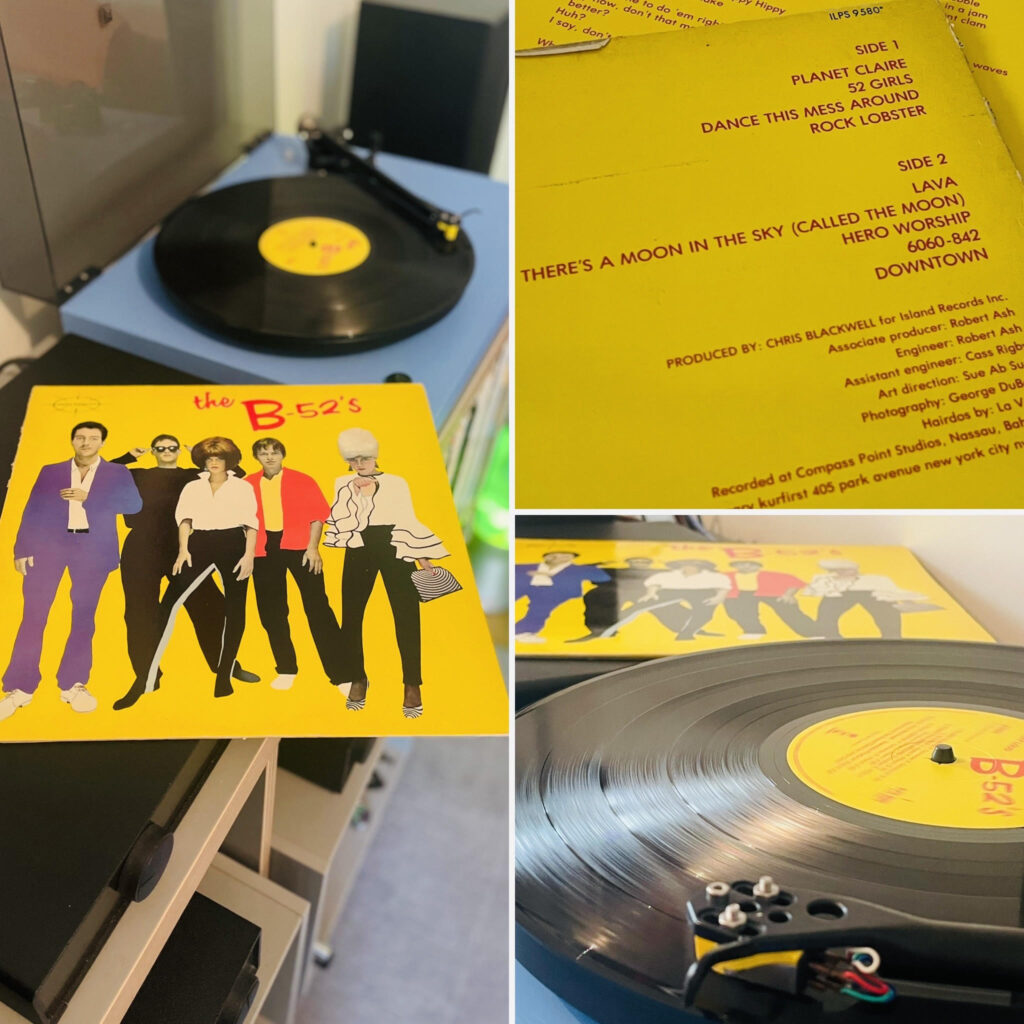
RETROSPECTIVE: The B-52’s – S/T (1979) It’s Joy As Rebellion

Picture this, it’s ’79 – punk’s getting philosophical and Seventies disco is wheezing waiting for it’s Eighties inhaler. Then five exuberant nutters from Athens, Georgia rock up to dance this mess around a bit.

The B-52's Self Titled Debut Album From 1979 Retro Reviewed


I realised while thinking about the ‘next one’ that being a punk, new wave, indie and nowadays classic rock fan there’s not exactly much joy in my album racks. A few disco era, the Bee Gees’ Saturday Night Fever soundtrack is mostly upbeat even if the film is grittier than you’d expect.

So running my finger along the spines and out slides this bright yellow pop art cut and paste thing by Sue Ab Surd (get it?) that sounds exactly like it looks. Joyful but odd in equal measure and totally new wave – because what other genre would have them? Art Brut now included music.

Nearly half a century on, and the B-52’s debut still sounds like it was made by visitors from Planet Claire where everything’s inclusive and brilliant all the time. What we’ve learned in the intervening decades is that this wasn’t just a great teenage party record – it was the moment American rock music remembered it was allowed to smile.

Back in ‘79, punk was getting all serious and art-school, chart disco was dying on its arse, and new wave was formed sixth formers in skinny ties looking miserable. Then along came five lunatics from Athens (Georgia) – with beehive hairdos, ‘a ‘thrift store’ look before Molly Ringwald and the audacity to suggest that rock music could be simultaneously completely mental and absolutely brilliant.

The genius of it is clearer now than ever. While their contemporaries were desperately trying to be cool, the B-52’s had stumbled onto something much more powerful – they were trying to be joyful. And joy, as it turns out, is infectious.

Fred Schneider’s vocal approach was nothing short of revolutionary, though nobody realised it at the time. That Schrechgesang ‘speak-sing’ delivery that seemed bonkers in ‘79 basically invented alternative rock vocals. Indie frontman like Michael Stipe channelled a bit of Fred’s fearless weirdness. The man gave permission for rock singers to stop being frontmen and be themselves.

“Rock Lobster” once destined for the bizarre list alongside Telephone Man and Oh Superman! has revealed itself to be pure genius – a seven-minute masterclass in how to build tension, create atmosphere, “Rock lobster, down, down” and anyone that way inclined lose their mind on a dance floor. please listen to it now. It’s f***ing crazed. As the closer for side one it’s perfect, you cannot wait to hear side two. Chapeau Chris Blackwell and B-52’s.

Fun fact; Cindy Wilson’s screaming vocals, reminiscent of Yoko Ono (with the mic left on) and the album’s playful nature directly inspired John Lennon to come out of retirement to write and record Double Fantasy. That tells you everything about its power. If it was good enough to get a Beatle excited about music again, it’s worth attention. It’s hot lava!

But here’s what’s become most apparent with time, this wasn’t just novelty nonsense. The B-52’s were proper musicians creating genuinely innovative sounds. Kate Pierson and Cindy Wilson’s vocal interplay was decades ahead of its time, creating templates that alt-rock new wave bands like the Go-Go’s would follow. Ricky Wilson’s guitar, jangly alien-surf-rock, created a sound that would dominate US college rock for the next two decades.

The Athens connection looks even more significant now. That vibrant and bustling college town also produced R.E.M. and literally dozens of lesser known US indie bands. But the B-52’s got there first, proving that stateside you didn’t need to be in New York or LA to create something world-changing. All you needed was great imagination, a sense of humour, and no shame.

What’s remarkable is how modern this record still sounds. You could play “Planet Claire” today and it sounds fresh, unaffected by fashion and super upbeat. It exists outside of time, belonging to no particular era because this album created its own entire universe.

The album’s influence on fashion, art, and general cultural weirdness is immeasurable. The B-52’s made it acceptable to be fun and outrageous. Note fun. They proved that style and substance weren’t exclusive, that you could be completely over the top and still create lasting art. This is Drag Race T-40 years, no B-52’s no Scissor Sisters, maybe for a few coming out became easier and every person who’s ever teased their hair into an impossible shape owes them a drink.

Looking back, the production by Chris Blackwell is inspired. A clean, spacious mix that lets every mad element breathe – it was the perfect sonic setting for controlled chaos. While punk records were deliberately aggressive and new wave was often formulaic and sometimes saved by power pop, the B-52’s found the sweet spot where everything was clear, punchy, and completely alive. Over the next decade other US alternative bands like R.E.M applied the jangly guitar courtesy of Peter Buck and clean uncluttered mixes, Sonic Youth particularly on Daydream Nation that clarity and chaos evident here and The Go-Gos who applied similar vocal interplay, there are also similarities with Talking Heads although these are simultaneous with Brian Eno at the controls until 1981.

A then revolutionary feminist angle has only become more apparent with age. In an era when women in rock were still fighting for basic recognition, Kate and Cindy weren’t just singers – they were equal creative partners, their voices driving the songs as much as any instrument. They presented a model where gender was irrelevant; all that mattered was bringing their energy.

What’s most impressive about revisiting this album now is how it’s aged like fine wine whilst somehow getting more relevant. In our current era of manufactured authenticity and focus-grouped strategy, there’s something deeply inspiring about the B-52’s’ complete commitment to their own beautiful madness. They had a vision, admittedly involving lobsters, aliens, and enough Harmony [insert any US hair spray for local readers] to punch a hole in the ozone and they pursued it with utter conviction.

The ripple effects are still being felt. Is too much to say that without the band and this album, there’s no US college rock explosion or indie revolution, no acceptance that American rock could be colourful and strange. Kurt Cobain in those big white sunglasses. The B-52’s didn’t just make a great debut – they rewrote the rules.

Forty-six years on, “The B-52’s” debut album remains the sound of pure possibility, proof again from these retrospective reviews and research (also for my book Art Pop / Pop Art) that the best art comes from the margins, from people who care more about creating something wonderful than following the rules. It’s a record that gets better with age, revealing new layers of genius with each listen. I’ve loved playing it again.

In a world that often feels like it’s forgotten how to have fun, the B-52’s debut stands as a reminder that sometimes the most revolutionary thing you can do is refuse to take yourself too seriously. They created music that was so purely themselves that it transcended trends, genres, and decades.

Still essential. Still mental. Still absolutely bloody brilliant. 6060-842!

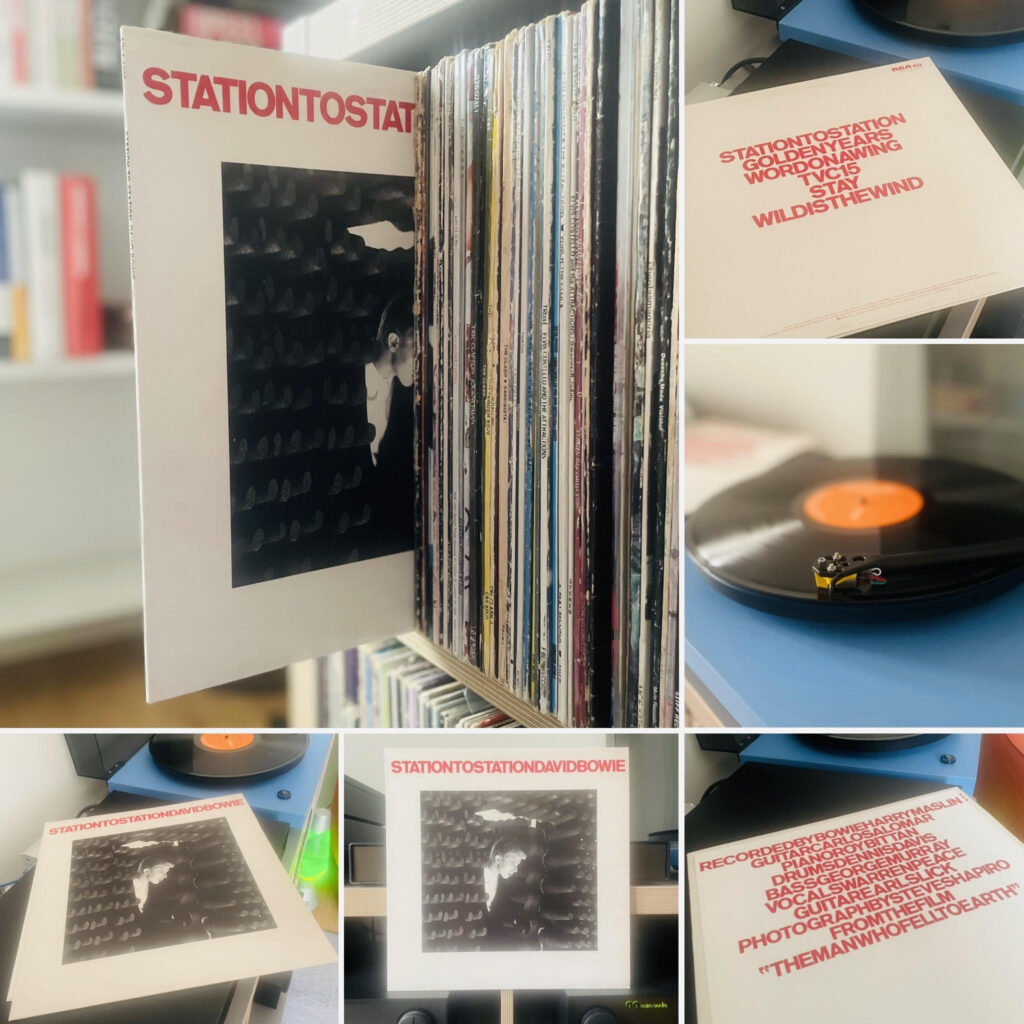
RETROSPECTIVE: Bowie’sStationTo StationWithNoDartsInLovers’Eyes

Time takes a Bowie album… and spawns the definitive retrospective.


It’s time for a Bowie Retrospective. After Young Americans, this is his trans-Atlantic mid-Seventies masterpiece signposting the genius redux on the horizon.

Nearly fifty years hence, Station To Station remains David Bowie’s most perplexing achievement, neither his most revolutionary nor his most accessible, but certainly his most necessary. Released in January 1976, it occupies that peculiar position in an artist’s canon where personal crisis, manic depression and artistic clarity converge with inspired precision. That Bowie himself claims to remember virtually nothing of its creation only deepens the mystery: how does one’s most cohesive statement emerge from complete psychological fragmentation? Or does it? It’s common knowledge people often have little or no recollection of bipolar episodes, and Seventies’ Bowie (Class A aside) is textbook manic episode creativity. But I digress.

The album functions as a fulcrum upon which Bowie’s entire career pivots, the moment when the glitter-encrusted showman shed his sequined skin and at this time alien contacts, to reveal something altogether more unsettling beneath. Six tracks, just six, yet each one a movement in what amounts to a symphony of identity crisis. This is Bowie as musical Dr. Jekyll, conducting experiments upon his own psyche with the detached fascination of a laboratory technician.

Musically, Station To Station represents Bowie’s most successful synthesis of seemingly incompatible elements. The Philadelphia soul he’d absorbed during his Young Americans period, that white British art-school graduate slumming it in the City of Brotherly Love (Brother Lee Love I only just got it during research) collides head-on with the mechanical metronomic precision of European electronic music. It shouldn’t work, this marriage of American warmth and Teutonic coldness, yet somehow it births something entirely new.

Earl Slick’s guitar work deserves particular attention. Gone are the bluesy histrionics and Sixties influences that had characterised Bowie’s previous guitar heroes; instead, Slick delivers lines that cut like scalpels, each note placed with obsessive precision. Listen to his work on “Stay”, those slashing chords that punctuate the verses aren’t mere rock posturing but architectural elements, supporting the song’s claustrophobic emotional weight. It’s guitar playing as urban planning, all sharp angles and deliberate omissions. The track itself embodies the album’s central tension: a seemingly straightforward rocker that reveals layers of unease beneath its propulsive surface. Bowie’s vocal alternates between desperate pleading and detached observation, while the band locks into a groove that feels simultaneously urgent and mechanical, the sound of someone running in place, trapped by their own momentum.

The rhythm section of Dennis Davis and George Murray provides the album’s mechanical heartbeat, a pulse that feels simultaneously human and robotic. Their work on the title track’s opening section transforms a simple 4/4 into something approaching industrial music, three years before Throbbing Gristle made such sounds esoterically fashionable. This is the rhythm of assembly lines and commuter trains, the metronomic beat of modern alienation. But “Station To Station” functions as more than mere sonic experimentation it’s a ten-minute manifesto of identity dissolution. The track’s structure mirrors its lyrical journey from European mysticism to American soul, with Bowie literally traveling from one musical station to another. The opening’s stark, almost ritualistic atmosphere gives way to the gospel-influenced finale, yet something essential remains lost in translation. The Duke emerges not as synthesis but as absence, the negative space between stations where no trains stop. Thankfully the Trilogy confirms he bought a return ticket.

Lyrically, Bowie constructs a peculiar theology that borrows from Nietzsche, Cambridge educated bisexual Aleister Crowley, the Kabbalah’s occultism, Judeo-Christianity and his infamous cocaine, milk and peppers fuelled paranoia. It’s a sort of spiritual algebra where traditional religious symbols are multiplied by pharmaceutical insight and divided by sexual desperation. If a Rock Star could be thus – gender confusion? The results don’t always make sense indeed, they’re not supposed to. This is the sound of a mind in free fall, grasping at mystical straws.

“TVC 15” transforms what might have been a simple paranoid episode into a peculiar love song addressed to a television set, the kind of domestic surrealism that would later mark Talking Heads’ best work. Yet where David Byrne would approach such material with Asperger’s detachment, Bowie invests it with genuine longing. The Duke may be emotionally vacant, but he’s not entirely dead inside.

It’s “Word On A Wing,” however, that provides the album’s most naked moment. Disguised as a love song but functioning as a prayer, it finds Bowie reaching towards something approaching grace. His vocal performance here, multi-tracked harmonies that create a choir of Bowies, each one seeking salvation in a slightly different key, represents perhaps his most vulnerable moment on record. The Duke’s marble facade cracks just enough to reveal the frightened human beneath.

The album’s visual identity proves equally calculated. That stark red-black-and-white cover avec an iconic still from Nicolas Roeg’s The Man Who Fell To Earth captures something essential about both album and era. Here is Bowie mid-stride, embodying alien detachment that defined the star mid-Seventies. The bold, minimalist typography strips away baroque excess, replacing it with corporate authority. This is alienation made manifest through graphic design, the Duke as extraterrestrial advertising executive smack bang in the peak Fifth Avenue heyday. And a lovely futuristic font style it is and stylistically redeployed here.

The synchronicity between album and film feels almost too neat, yet it works. Thomas Jerome Newton, Bowie’s gin-soaked alien entrepreneur, shares the Duke’s emotional remove and otherworldly perspective. Both exist as commentaries on American excess, observers rather than participants in the society they critique. That both emerged from the same period of pharmaceutical dissolution creates a multimedia meditation on identity and exile that feels genuinely prophetic.

Yet Station To Station is not without its limitations. The album’s brevity at barely 38 minutes is cruel to fans. Similarly, the album’s obsessive perfectionism occasionally works against it. Every element serves the whole, certainly, but sometimes one craves the messy humanity of Diamond Dogs’ unguarded moments. The Duke’s emotional detachment, while conceptually fascinating, can feel genuinely cold, a frigid barrier between artist and audience that even Bowie’s considerable charisma cannot entirely overcome. There’s a warmth in “Golden Years” that’s residual from the previous Young Americans album but different enough to spawn it’s own Bowie-generation, a stunning inclusion and single release that almost makes up for any deficiencies. We’re not going near the infamous salute and flirtation with the far right or any misunderstandings, but they exist so merit this mention.

The cover of “Wild Is The Wind” succeeds brilliantly as vocal performance but fails to entirely justify its inclusion. While Bowie’s voice stretches towards notes that seem almost beyond reach, a man grasping for salvation it remains unclear what this particular song adds to the album’s overarching narrative. It’s beautiful certainly, and would we be without it (a non-album single?) but beautiful in a way that feels slightly disconnected from the Duke’s particular path right then .

What makes Station To Station essential is not its perfection but its necessity. This is Bowie’s ‘Exile on Main St.’ an album born from extremity that transcends its circumstances. Where other artists might have been consumed by such personal turmoil, Bowie channelled it into his most disciplined statement. The cocaine psychosis that nearly destroyed him instead crystallised into diamond-hard brilliance.

The album’s influence can be traced through decades of post-punk anxiety, from Joy Division’s mechanical depression to The Prodigy’s electro-dance-punk hybrid. The Thin White Duke’s aesthetic all sharp suits and sharper cheekbone became a shorthand for alienated glamour, reimagined via the New Romantic Blitz Club Bowie Nights while the music’s marriage of warmth and coldness prefigured everything from New Order to Bloc Party.

Yet its true achievement lies in its function as an artistic Ground Zero. This is Bowie burning down his house to see what survives the flames, and discovering that what emerges from the ashes (to ashes) is something genuinely new. The Duke may be dead, but his ghost haunts everything Bowie would subsequently create, a reminder that sometimes the most profound art emerges not from comfort but from the desperate need to survive one’s own worst impulses or embedded periodic psychopathy.

Station To Station endures as proof that artistic necessity and personal crisis can produce results that transcend both. It’s neither Bowie’s most adventurous work nor his most commercially successful, but it may be his most honest and human, a document of a mind at war with itself, achieving temporary ceasefire through the discipline of writing and playing. In its now frozen perfection, it captures something essential about the terror of an artist in free fall, creating masterpieces from a wreckage of his own making.

#nowplaying Golden Years whap whap.

RETROSPECTIVE: Lennon’s Lost Weekend

John Lennon's Lost Weekend. At home in Beverly Hills.


Eighteen Months of Madness in the Heart of Hollywood. The ex-Beatle’s wildest period yet – sex, booze, and Rock’n’Roll excess that nearly destroyed a legend.

Right, so you think you know John Lennon? The peaceful Beatle, the ‘Bed-In’ revolutionary, the bloke who gave us “Imagine”? Well, think again, because between October 1973 and early 1975, our John went completely barmy in Los Angeles – and we do mean completely. They’re calling it his “Lost Weekend,” though at eighteen months, it’s more like a lost year and a half.

It all started when Yoko threw him out of their Dakota apartment. Yes, you heard right – she actually booted him out, told him to go find himself or some such psychological bollocks. “Go away and have your midlife crisis somewhere else,” was apparently the gist of it. So off trots Lennon to La-La Land with May Pang, Yoko’s 23-year-old assistant, who’d been hand-picked by Mrs Lennon herself to keep an eye on her wayward husband.

What followed was a period of such spectacular debauchery that even Keith Moon would’ve raised an eyebrow. Lennon, aged 33 and supposedly a reformed character, promptly went completely off the rails in the most American way possible.

First stop was a beach house in Santa Monica that quickly became legendary for all the wrong reasons. Lennon surrounded himself with a motley crew of musicians, hangers-on, and fellow piss heads who turned the place into something resembling a Rock’n’Roll commune crossed with a rehabilitation centre – except nobody was trying to get clean.

The core gang included Harry Nilsson (already well on his way to drinking himself to death), Ringo Starr (taking a break from his own marriage difficulties), Keith Moon (just because), and a rotating cast of session musicians, groupies, and general wastrels. They called themselves “The Hollywood Vampires” – which tells you everything you need to know about their priorities.

Days would start around noon with cocaine and brandy, move on to more serious drinking by mid-afternoon, and end with everyone unconscious in various compromising positions around dawn. Lennon, who’d supposedly given up the hard stuff years earlier, was necking everything he could get his hands on – whisky, vodka, tequila, you name it. The man who once sang about peace and love was now starting fights in nightclubs and getting thrown out of venues across Los Angeles.

The nadir came in March 1974 at the Troubadour club, where Lennon and Nilsson had gone to catch an Ann Peebles show. Both absolutely legless, they proceeded to heckle the poor woman throughout her set. When staff tried to quiet them down, Lennon apparently shouted something unrepeatable about the management’s parentage and stormed off to the toilets.

But here’s where it gets properly weird – instead of using the gents, our revolutionary hero decided to relieve himself in a cupboard, emerging with a sanitary towel stuck to his forehead like some demented tribal marking. The press had a field day, of course. “BEATLE JOHN’S TOILET SCANDAL” screamed the headlines, and suddenly the man who’d once been the most respected musician in the world was reduced to a laughing stock.

The incident became symbolic of everything wrong with Lennon’s LA period. Here was a bloke who’d written some of the most important songs of the decade, reduced to pissing in cupboards and wearing feminine hygiene products as headgear. It was pathetic, really.

Amazingly, amidst all this chaos, Lennon was still trying to make music. The problem was, he was too pissed most of the time to do it properly. Recording sessions for what would become “Walls and Bridges” were exercises in frustration, with Lennon turning up hours late, completely bladdered, and unable to remember lyrics he’d written the day before.

Producer Jack Douglas later described the sessions as “like trying to record with a very talented ghost who kept disappearing.” Lennon would start a take, wander off mid-song, and return hours later having forgotten what they were working on. It’s a miracle the album turned out as well as it did.

The saving grace was May Pang, who somehow managed to keep some semblance of order in the chaos. Twenty years younger than Lennon and completely out of her depth, she nevertheless became his anchor during this period. She’d drag him out of bars, clean him up for recording sessions, and generally prevent him from killing himself through sheer stupidity.

If you want to know how mental things got, consider this: Lennon thought it would be a brilliant idea to record an album of Rock’n’Roll covers with Phil Spector producing. Yes, that Phil Spector – the gun-toting maniac who was already showing signs of the complete breakdown that would later land him in prison for murder.

The sessions, held at various LA studios throughout 1974, were legendary for their dysfunction. Spector would turn up armed (literally), paranoid, and completely controlling. Lennon, meanwhile, was usually drunk and belligerent. The two would spend hours arguing about arrangements while session musicians sat around collecting overtime pay.

One session ended with Spector firing a gun in the studio and then disappearing with the master tapes, leaving Lennon with nothing to show for weeks of work. It was like something out of a Martin Scorsese film, except it was real life and nobody was laughing.

The thing is, beneath all the chaos and self-destruction, you could sense Lennon was actually quite miserable. This wasn’t the joyful excess of a rock star living it up – this was the desperate flailing of a man who’d lost his way completely.

Friends from the period describe him as paranoid, lonely, and increasingly aware that he was making a complete tit of himself. The press coverage was universally awful, his music was suffering, and worst of all, he was alienating himself from the son he claimed to love more than anything.

Julian was still back in England with Cynthia, and Lennon’s contact with the boy was sporadic at best. When he did ring, he was often too drunk to hold a proper conversation. It’s heartbreaking, really – here was a man who’d sung about love and peace, completely unable to maintain relationships with the people who mattered most to him.

The long and winding road back… By late 1974, even Lennon’s legendary constitution was showing signs of wear. He’d put on weight, looked terrible in photos, and was developing a reputation as one of Hollywood’s most unreliable talents. Studio executives were starting to avoid him, club owners were banning him, and his behaviour was becoming genuinely concerning to those around him.

The wake-up call came when he collapsed during a recording session, apparently from exhaustion and alcohol poisoning. Rushed to hospital, he spent several days recovering while doctors told him in no uncertain terms that his lifestyle was unsustainable.

It was then that May Pang apparently sat him down for a serious conversation about his future. According to those close to the situation, she basically told him he could continue on his current path and probably die, or he could sort himself out and try to salvage something from the wreckage of his life.

The irony is that throughout this entire period, Lennon was in regular contact with Yoko back in New York. She’d ring him every few days, ostensibly to check on his wellbeing but apparently also to monitor his behaviour. Some cynics suggest the whole “Lost Weekend” was orchestrated by Yoko from the beginning – a way of letting Lennon get all his middle-aged rebellion out of his system while keeping him on a very long leash.

Whether that’s true or not, by early 1975 it was clear that Lennon was ready to return to New York and his wife. The LA experiment had run its course, leaving behind a trail of damaged relationships, wasted opportunities, and some genuinely questionable musical decisions.

But here’s the thing – as much as the Lost Weekend period was a disaster in human terms, it also produced some of Lennon’s most honest and vulnerable music. “Walls and Bridges” contains some genuinely affecting songs about loneliness and regret, while the eventually completed “Rock’n’Roll” album, despite its troubled genesis, showed Lennon reconnecting with his musical roots in ways that would influence his later work.

So what do we make of John Lennon’s Lost Weekend? Was it a necessary period of self-exploration, or just eighteen months of expensive self-indulgence? The truth, as usual, probably lies somewhere in between.

On one hand, it’s hard to have much sympathy for a millionaire rock star whose idea of finding himself involves drinking himself senseless in beach houses while his assistant-turned-girlfriend cleans up after him. The whole thing reeks of middle-class privilege and self-pity taken to absurd extremes.

On the other hand, there’s something genuinely tragic about watching one of the most important artists of his generation lose himself so completely. Lennon’s music had always been about honesty and emotional truth, and in some perverse way, his LA breakdown was probably the most honest thing he’d done in years.

The period also demonstrated something important about the nature of creativity and self-destruction in rock music. While the myth of the tortured artist is largely bollocks, there’s no denying that some of our greatest musicians have produced their most powerful work while falling apart personally. Lennon’s Lost Weekend wasn’t pleasant to witness, but it was undeniably real in a way that his more controlled periods sometimes weren’t.

Perhaps most importantly, it showed that even John Lennon – the man who’d helped change popular music forever – was still fundamentally human, still capable of making spectacular mistakes and learning from them. The fact that he eventually sorted himself out, returned to New York, and spent his final years as a devoted father and husband suggests that the Lost Weekend, for all its chaos, might have been a necessary part of his journey.

Whether it was worth eighteen months of madness is another question entirely. But then again, that’s Rock’n’Roll for you – never simple, never clean, and never quite what you expect from the outside.

Whatever gets you thru the night eh?

*The author wishes to acknowledge that this piece is based on publicly available information and interviews from the period, and that some details remain disputed by those involved.

#nowplaying John Lennon – Walls and Bridges (1974)

RETROSPECTIVE: Crowded House – Together Alone


Sonic Youth.

Thirty-two years on, and Together Alone still sounds like nothing else in the Crowded House catalogue. What seemed like a bewildering left turn in 1993 now reveals itself as the band’s most prescient work, a record that anticipated the alt-rock soul-searching of the late nineties whilst remaining utterly, defiantly itself. Neil Finn’s mob wandered off into the spiritual wilderness armed with nothing but a fistful of melodies and Martin Glover’s sonic wizardry, and what they dragged back from the void was this peculiar, haunting beast that sounds like it was recorded in some ancient Maori temple with the ghosts of a thousand ancestors whispering sweet harmonies into the mixing desk.

History has been kind to Together Alone. What critics initially dismissed as commercial suicide now reads as artistic bravery of the highest order. The title, which once seemed like undergraduate philosophising, now carries genuine weight, this is music for our atomised age, for contemplating connection and disconnection whilst doom scrolling at 3am, wondering where it all went wrong and why the notifications never stop.

The genius of Youth’s production has aged magnificently. The man who gave us Killing Joke’s industrial nightmares somehow coaxed sounds out of Finn and company that still shimmer and breathe like living things decades later. Gone were the pristine pop perfections of their earlier work, replaced by something altogether more organic and mysterious. Listen now and you can hear the DNA of everything from Radiohead’s OK Computer to Bon Iver’s falsetto folk, Youth was crafting the sound of millennial melancholy years before anyone knew what to call it. The drums sound like they’re echoing through cathedral spaces, the guitars drift in and out of focus like half-remembered dreams, and Finn’s voice floats above it all with an otherworldly detachment that’s genuinely unsettling.

The opening salvo sets the tone perfectly a rolling, hypnotic rhythm that builds into something approaching transcendence before dissolving into the ether. It’s pop music, Jim, but not as we know it. This is Crowded House wrestling with their demons in public, and Youth has given them the sonic palette to paint their neuroses in glorious Technicolor.

Finn’s songwriting has taken a decidedly introspective turn. Where once he dealt in universal truths wrapped in sugar-sweet melodies, here he’s digging deeper into the psyche, exploring themes of isolation, connection, and the peculiar melancholy that comes with success. The man sounds genuinely troubled, and it suits him.

The production shines brightest on the album’s more experimental moments. Youth has layered in all manner of mysterious sounds, backwards vocals, found sounds, studio trickery that would make Kevin Shields weep with envy. Yet it never feels gimmicky or overwrought. Every sonic flourish serves the songs, adding depth and texture without overwhelming Finn’s essentially human songwriting.

That said, Together Alone isn’t without its problems. At times, the band seem so determined to avoid their pop past that they forget what made them special in the first place. A few tracks meander when they should soar, and the overall mood is so consistently downbeat that you occasionally long for the simple joy of their earlier work. ‘Why are you listening to that depressing music?’ it is not, but it can be downbeat.

But these are minor quibbles with what history has revealed to be an essential record. Crowded House risked everything to make something genuinely personal and challenging, and Youth gave them the sonic framework to create what now stands as their most influential work. It wasn’t their biggest seller, but it was their boldest statement the record that proved they were artists first, hit-makers second.

In our current age of manufactured vulnerability and algorithmic angst, Together Alone stands as proof that real emotional complexity can’t be coded or commodified. It’s a grower, this one and the kind of record that reveals new secrets with each listen, the kind that soundtracks both Instagram stories and genuine moments of crisis in equal measure.

Three decades later, Martin Glover’s achievement becomes even clearer. He took New Zealand’s finest export and helped them create their masterpiece, a record that sounds more relevant now than it did then. The kids discovering it on Spotify don’t know they’re listening to the future of indie rock, circa 1993. Seems like Youth may not be wasted on the young after all.