RETROSPECTIVE: Pixies Cactus. Deranged Desert Confessions

This visceral dissection of the Pixies’ “Cactus” explores how Black Francis and Kim Deal transformed enforced separation into hypnotic art, with Steve Albini’s unforgiving production capturing every grain of dust and moment of claustrophobic desperation. From Deal’s lurking bass line to Francis’s cement-floor confessions, discover how this standout track from Surfer Rosa became a masterclass in making the deeply disturbing sound utterly conversational.


Black Francis has always been a twisted romantic, but “Cactus” – a standout track from the Pixies’ 1988 debut Surfer Rosa – finds him at his most beautifully deranged, crafting what amounts to a love letter from purgatory, set to the band’s most hypnotically sparse arrangement.

The musical architecture is deliberately claustrophobic, built around Kim Deal’s bass line that doesn’t so much groove as lurk. It’s a serpentine thing, all dusty menace and barely suppressed tension, creating the perfect sonic equivalent of that aged cement floor Francis keeps banging on about. You can practically hear the fine grey dust settling between the notes, taste the grit in every pause.

Structurally, this isn’t a song so much as a confessional booth with a backbeat. The Pixies strip everything down to its barest components – Francis’s parched distant vocals, Deal’s ghostly harmonies, and just enough instrumentation to keep the whole thing from collapsing under the weight of its own obsession. David Lovering’s drums are at the front and jarring, whilst the guitar work remains deliberately understated, all jangling chords that shimmer like Joshua Tree mirages.

But it’s the vocal interplay that transforms this from mere musical voyeurism into something genuinely unsettling. This is Francis and Deal as the ultimate dysfunctional duet – he’s the imprisoned narrator pleading from his concrete cell, she’s the distant object of desire, her voice floating in and out like radio static from the outside world. When Deal echoes his confessions, it’s unclear whether she’s offering comfort or mockery, complicity or judgment.

The lyrical content reads like evidence from a particularly disturbing court case. Francis isn’t just separated from his beloved; he’s been systematically isolated, reduced to fantasising about botanical transformation whilst begging for her “dirty dress” – not clean clothes, mind you, but something stained with her reality. It’s the ultimate fetishisation of absence, the sort of request that makes perfect sense when you’re slowly suffocating on dust and desperation.

That cactus metaphor becomes brilliantly twisted in this context – he wants to be the beautiful bloom emerging from the most forsaken conditions, the shocking pink flower against the grey industrial decay. She’s his unreachable desert rose, flowering freely whilst he’s trapped in his crumbling concrete purgatory, breathing dust and pleading for fabric scraps like some sort of textile vampire.

The genius lies in how the Pixies make this enforced separation sound almost… romantic? The way Deal’s bass undulates beneath Francis’s confessions creates a hypnotic, narcotic effect that draws you into his madness. You find yourself nodding along to what are essentially the ramblings of someone who’s been driven half-insane by isolation and desire.

Enter Steve Albini, the sonic sadist who’s never met a comfortable sound he couldn’t make deeply unsettling. His production on “Cactus” is a masterclass in controlled brutality – every element recorded with the sort of unforgiving clarity that makes you feel like you’re trapped in that concrete room alongside Francis. Albini’s genius lies in his refusal to pretty things up; instead, he captures every uncomfortable detail with surgical precision. The way he’s miked Deal’s bass makes it sound like it’s emanating from the walls themselves, all room tone and industrial hum. Francis’s vocals are recorded so intimately you can hear the dust catching in his throat, the slight rasp that suggests he’s been breathing that concrete powder for hours.

This isn’t the polished sheen of major label production – it’s the sound of someone slowly going mad in real time, captured with documentary-like fidelity. Albini understands that the Pixies’ power comes from their contradictions, so he emphasises the contrast between the song’s spare arrangement and its emotional intensity. The echo isn’t artificial reverb but actual room sound – those institutional walls bouncing Francis’s confessions back at him like an acoustic prison. Every space between notes feels pregnant with unspoken desperation, every silence loaded with the weight of enforced separation. What makes this collaboration so essential is how Albini’s aesthetic – that unflinching commitment to sonic honesty – perfectly complements the Pixies’ emotional brutality. He’s not interested in making things comfortable for the listener; like Francis trapped on his cement floor, Albini wants you to feel every grain of dust, every moment of claustrophobic desperation.

What elevates “Cactus” above mere shock tactics is its restraint. Francis doesn’t scream his perversions like some metal headcase – he croons them like lounge standards, making the deeply disturbing sound utterly conversational. It’s three minutes of audio therapy for anyone who’s ever been trapped by circumstances beyond their control, reduced to making impossible requests of impossible people.

Kim Deal’s contribution cannot be overstated – she’s not just providing backing vocals but acting as the song’s conscience, its connection to the outside world. When she harmonises with Francis’s cement-floor confessions, it’s as if she’s bearing witness to his psychological unravelling, making her complicit in whatever’s happening in that fevered brain of his.

“Cactus” is ultimately a Pixies’ masterclass in making the deeply weird sound utterly normal, the sort of song that reveals new layers of unsettling detail with each listen. It’s pop music for people whose idea of romance involves enforced separation and uncomfortable furniture. The result is a recording that sounds simultaneously intimate and alienating, like eavesdropping on someone’s breakdown through concrete walls.

Brilliant, really. And more than a bit disturbing.

RETROSPECTIVE: Mind Bomb. A Frighteningly Accurate Crystal Ball

Matt Johnson’s most urgent statement burns with uncomfortable relevance in our divided age.

Thirty-six years on from its release, The The’s third long-player stands as one of the most unnervingly prophetic albums of the late Eighties. While other bands were content to fiddle with samplers and worry about their haircuts, Matt Johnson already losing his was constructing a sonic manifesto that would prove to be a roadmap to our current cultural crisis.

The The Mind Bomb Retrospective Album Review High Quality Writing


Mind Bomb arrived in 1989 as the Berlin Wall crumbled and history supposedly ended (as Francis Fukuyama would famously argue), yet Johnson’s vision was one of perpetual conflict, religious fundamentalism, and the corrosive power of media manipulation. The album’s opening salvo, “Good Morning Beautiful”, sets the tone with its caustic examination of morning television culture, but it’s the relentless “Armageddon Days Are Here (Again)” that truly captures the album’s apocalyptic zeitgeist. Johnson’s lyrics about holy wars and the clash between East and West read like tomorrow’s headlines, not yesterday’s paranoia.

The absolutely top drawer production, helmed by Johnson himself with assistance from Warne Livesey, is a masterclass in controlled chaos. Multi-layered sampling, aggressive compression, and strategic use of space create a sound that is both claustrophobic and expansive, matching the album’s themes of global anxiety. The sonic palette ranges from the industrial clatter of “The Violence of Truth” to the tender vulnerability of “Kingdom of Rain”. Every snare hit feels like a hammer blow, every guitar line a barely contained scream.

Johnny Marr’s contributions cannot be overstated. Fresh from The Smiths’ acrimonious split, the guitarist brings a neurotic intensity to tracks like “Gravitate to Me” and “Beyond Love”. His playing here is less about the jangly romanticism of his previous band and more about channelling pure anxiety into six-string fury. The interplay between Marr’s guitar work and Johnson’s programmed rhythms creates a tension that never quite resolves, keeping the listener perpetually on edge.

Sinéad O’Connor’s appearance on “Kingdom of Rain” provides the album’s most emotionally devastating moment. Her voice, already a weapon of considerable power, oscillates between consoling whisper and wounded wail, embodying the song’s spiritual uncertainty. The track’s exploration of spiritual searching feels particularly resonant in our current age of cultural confusion, where traditional certainties have dissolved into competing narratives and alternative facts.

The album’s political content has aged with disturbing accuracy. “Armageddon Days” speaks of religious extremism and cultural conflict with a clarity that seems almost supernatural. Johnson’s warnings about the rise of fundamentalism, both Christian and Islamic, have proved grimly prescient. The line “Islam is rising, the Christians mobilising” could have been written yesterday, not in 1989. The song’s examination of how religious fervour can be weaponised for political ends has only become more relevant as we’ve witnessed the rise of authoritarian movements wrapped in religious rhetoric.

“The Beat(en) Generation” offers a scathing critique of Eighties materialism that feels equally relevant in our current age of social media narcissism and conspicuous consumption. Johnson’s voice, never conventionally attractive but always emotionally honest, delivers lines about spiritual emptiness with the fervour of a street preacher. The song’s examination of how capitalism hollows out authentic human connection has only become more pressing as we’ve become increasingly atomised and digitally mediated.

The album’s sonic adventurousness hasn’t dated either. The use of samples, field recordings, and electronic manipulation creates a sound world that feels both of its time and timeless. Tracks like “The Violence of Truth” build from minimal beginnings into towering walls of sound that mirror the album’s themes of escalating conflict and social breakdown.

Perhaps most remarkably, Mind Bomb’s pessimism feels less like Eighties angst and more like prophetic realism. Johnson’s vision of a world torn apart by religious extremism, media manipulation, and cultural confusion has largely come to pass. The album’s subtitle, “Armageddon Days Are Here (Again)”, suggests a cyclical view of history where each generation faces its own version of the apocalypse. In our current moment, with democratic institutions under stress and authoritarian movements on the rise, Johnson’s warnings feel less like artistic exaggeration and more like uncomfortable truth.

The album’s enduring power lies not just in its prescience but in its refusal to offer easy answers. Johnson doesn’t provide solutions to the problems he diagnoses; instead, he forces the listener to confront the uncomfortable realities of modern existence. In an age of increasing polarisation and cultural splintering, Mind Bomb remains a vital document of how it feels to live through the collapse of consensus reality.

Mind Bomb deserves recognition not just as a remarkable album but as a crucial historical document. It captures the exact moment when the post-war consensus began to fracture, when the Iron Curtain ‘certainties’ of the Cold War gave way to the complexities of religious and cultural conflict. That Johnson managed to channel this historical moment into something so musically compelling is testament to his vision as both artist and prophet.

In our current moment of global crisis, Mind Bomb feels less like a relic of the past and more like a survival guide for the present. It’s an album that grows more relevant with each passing year, a dark mirror reflecting our own divided times back at us with very uncomfortable clarity.

RETROSPECTIVE: In Every Dream Home a Heartache. Parasocial Pop Art.

In the summer of 1973, as glam rock reached its sequinned peak and Britain grappled with economic uncertainty, Roxy Music released what may be their most uncomfortable masterpiece. Buried in the grooves of their second album For Your Pleasure, “In Every Dream Home a Heartache” presented listeners with six minutes of deeply unsettling art rock that most dismissed as typical avant-garde provocation from Bryan Ferry’s art school collective.

Half a century later, the song reads less like artistic statement and more like prophetic warning. What once seemed like an abstract meditation on consumer culture and artificial desire now feels like a documentary of our current moment, an age where human connection is increasingly mediated by technology, where intimacy can be purchased through subscription services, and where the line between authentic and artificial relationship has all but dissolved.


Five decades on, this remains Roxy Music’s most unsettling masterpiece – a six-minute fever dream that anticipated our current relationship with technology, materialism and artificial intimacy with frightening prescience. Arch art school glam rock posturing in 1973 now reads like a prophecy.

Ferry’s tale of romantic obsession with an inflatable doll has only grown more relevant in our age of OnlyFans, dating apps and parasocial relationships. The song’s exploration of commodity fetishism – literally making love to a consumer product – feels less like provocative art school trope and more like documentary realism in 2025. We’re all having relationships with objects now, aren’t we? The machines know the real us better than our friends.

The track’s structural audacity remains breathtaking. A cycling four chord progression led by a ‘cinema organ’ style Farfisa part, the song creates an unsettling foundation that mirrors its psychological terrain. Manzanera’s treated guitar lines snake through Eno’s synthesiser washes like electricity through circuitry, while Chris Thomas’s production – not Eno’s, as often misattributed – captures every whispered confession and orchestral climax with surgical precision.

Thomas, fresh from work with later The Beatles (White Album) and Pink Floyd (DSOTM), understood how to balance Roxy’s avant-garde impulses with their pop sensibilities. His production allows the song to build from intimate murmur to full orchestral delirium, mirroring the psychological trajectory of its narrator’s delusion. After the lyrical conclusion “I blew up your body/but you blew my mind!”, the song climaxes with an extended instrumental section, with the lead taken by guitarist Phil Manzanera – a moment where musical chaos perfectly embodies a psychological breakdown.

The song emerged from a specific cultural crucible: post-swinging sixties Britain, where the optimism of the previous decade had curdled into something more complex and cynical. By 1973, the utopian promises of the consumer society were revealing their hollow core, and Roxy Music – art school graduates steeped in Pop Art theory – were uniquely positioned to dissect this disillusionment.

Ferry’s lyrics don’t just describe commodity fetishism; they inhabit it completely. His delivery oscillates between tender vulnerability and creepy obsession, creating a character study that’s simultaneously sympathetic and deeply disturbing. Lines like “I bought you mail order/My plain wrapper baby” transform consumer language into intimate confession, while “Immortal and life-size/My breath is inside you” elevates plastic fantasy into genuine pathos.

This track sits at the absolute heart of the Roxy canon – more adventurous than the later smooth soul period, more emotionally complex than the debut’s art rock exercises. It bridges the gap between “Virginia Plain”’s pop art collage and “More Than This”’s new romantic melancholy, establishing a template that would prove enormously influential.

The band pioneered more musically sophisticated elements of glam rock, significantly influencing early English punk music, and provided a model for many new wave acts while innovating elements of electronic composition. The DNA of “In Every Dream Home a Heartache” can be traced through decades of subsequent music. The band’s influence ran particularly deep among bands associated with the New Wave movement of the late 70s and early 80s, especially “New Romantic” acts such as Spandau Ballet and Ultravox. The song’s fusion of art school conceptualism with emotional immediacy provided a roadmap for bands seeking to marry intellectual ambition with visceral impact.

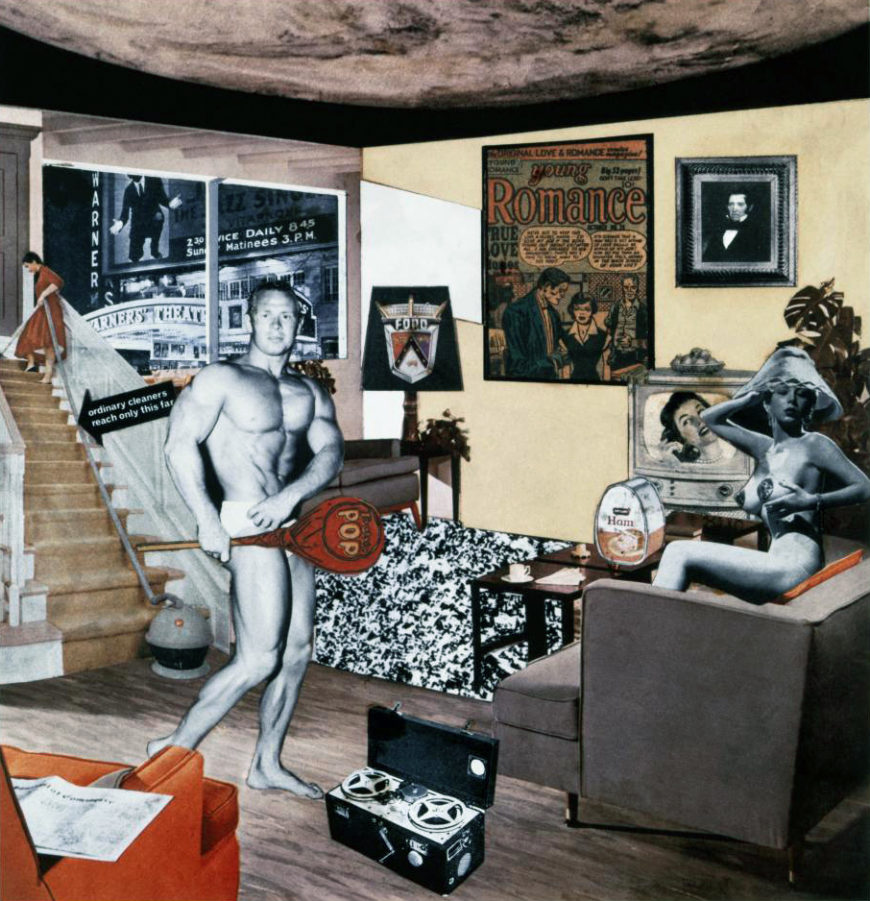
The Pop Artist and Ferry tutor / mentor Richard Hamilton connection runs deeper than surface Pop Art references. Like Hamilton’s domestic interiors in his work ‘Just what is it that makes today’s homes so different, so appealing?’ Ferry presents consumer paradise as psychological prison. The dream home becomes nightmare, the perfect woman becomes plastic fantasy. But where Hamilton maintained ironic distance, Ferry commits fully to his character’s delusion, making the critique more devastating through total emotional investment.

The song functions as both artwork and psychological case study, examining how capitalism doesn’t just sell us products but entire emotional frameworks. In 1973, this felt like avant-garde provocation. Today, it reads like anthropological field notes from our current reality.

“In Every Dream Home a Heartache” anticipated not just our technological predicament but our emotional one. In an era of AI companions, virtual relationships, and increasing social isolation, Ferry’s exploration of artificial intimacy feels less like satire and more like documentary. The song’s central question – what happens when human connection becomes another consumer product? – has never been more relevant.

Essential. Prophetic. Still deeply creepy.

RETROSPECTIVE: The Beautiful Madness Of Pet Sounds

From surf music to sonic revolution: why Pet Sounds remains pop’s most extraordinary achievement and Brian Wilson’s last coherent masterpiece.


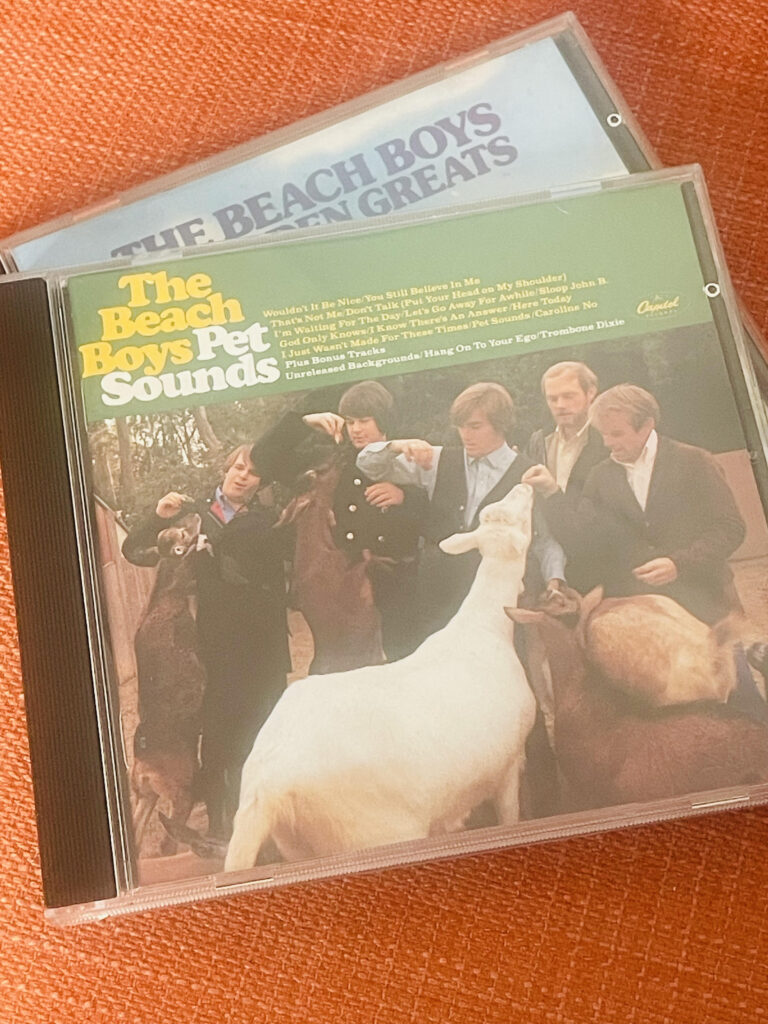
At the passing of the musically creative genius Brian Wilson, I’ve written this sixth decade reappraisal of The Beach Boys album Pet Sounds as a meditation on one of music’s most extraordinary creative achievements. A work that represents both the culmination of years of obsessive craft development and the sound of consciousness chemically expanded beyond conventional limits.

From a technical, production and arrangement perspective Pet Sounds – compared to literally everything produced beforehand anywhere is like comparing a Chevy Bel Air with a Saturn 5 rocket plus Apollo orbiter and lander. But this quantum leap didn’t emerge from nowhere. Wilson had been methodically building towards this moment since 1962, spending obsessive hours in Gold Star Studios, studying Phil Spector’s wall of sound techniques firsthand. By the time of “I Get Around,” he’d already developed an uncanny ability to hear individual instruments within dense arrangements and was experimenting with unconventional microphone placement that suggested an intuitive understanding of acoustic space.

Between 1963-1965, Wilson systematically expanded his musical vocabulary in ways that would prove crucial to Pet Sounds’ revolutionary impact. His harmonic progression from basic surf progressions to the complex jazz-influenced arrangements of “California Girls” and “Help Me Rhonda” shows us his systematic musical development. Wilson was absorbing Bach, studying Four Freshmen arrangements, and incorporating diminished chords and unexpected modulations. Simultaneously, he was cataloguing an increasingly exotic instrumental palette – harpsichord on “When I Grow Up,” orchestral arrangements on “The Warmth of the Sun,” and unusual percussion combinations that would later bloom into Pet Sounds’ bicycle bells, dog whistles, and Coca-Cola bottles.

Perhaps most significantly, Wilson’s vocal arrangements grew increasingly complex through albums like “Today!” and “Summer Days.” He was developing techniques for recording his own voice multiple times to create impossible harmonies, essentially turning himself into a one-man choir. This technical mastery meant that when his consciousness expanded, he had the tools to translate internal complexity into actual sound.

The emotional development running parallel to this technical growth was equally crucial. Wilson’s evolution from teenage surf fantasies to the adult anxieties about love, isolation, and belonging that permeate Pet Sounds wasn’t simply chemical revelation – it was the natural progression of a sensitive artist confronting the complexities of the human condition.

Substitute liquid hydrogen mixed with oxygen and a lit match with LSD and a musical genius and you’ll get Wouldn’t It Be Nice and God Only Knows here, and later Good Vibrations – his unique sounding music incredibly recorded on limiting four track equipment. It famously shook Paul McCartney to up his game and Bob Dylan has since remarked “Brian recorded Pet Sounds with four tracks, nobody else could record it with one hundred”.

Listen to Pet Sounds now, knowing what we know about Wilson’s lysergic acid adventures, and those otherworldly arrangements make perfect sense. Of course “God Only Knows” sounds like it was transmitted from heaven to Wilson’s rewired consciousness while operating on a papal frequency the rest of us can’t even tune into. But the genius wasn’t that Wilson was taking drugs – the entire suburb of Laurel Canyon was tripping in ‘66. The genius was that he was disciplined enough, focused enough, and talented enough to document his pharmaceutical journey with obsessive precision, using a toolkit of techniques he’d spent four years perfecting.

“I Just Wasn’t Made for These Times” we thought it was teenage alienation set to music. That maybe a prophetic autobiography from someone who’d already glimpsed his own future. The Theremin isn’t just an exotic instrument; it’s the faraway sound of Wilson’s cognition misfiring – in real time, beautiful but disturbing. But Wilson had been experimenting with unconventional instrumentation for years – this wasn’t random psychedelic inspiration but the culmination of systematic sound exploration.

The production techniques he described as derivative of Phil Spector and revolutionary in ‘66 now reveal themselves as the work of someone literally on another level. Wilson wasn’t just multi-tracking vocals he was seemingly attempting to capture the sound of multiple personalities having a conversation inside his head. Yet this vocal architecture built upon years of development – turning himself into a one-man choir through techniques he’d been perfecting since the early Beach Boys recordings.

Those impossibly complex arrangements on tracks like “Wouldn’t It Be Nice” aren’t showing off; they’re the musical equivalent of someone trying to make real something only he could hear in his imagination in ways difficult or impossible for lesser mortals to comprehend. But they’re also the work of someone who’d spent years absorbing Bach, studying the ‘Four Freshmen’ arrangements, and incorporating jazz harmonies that as mentioned most pop musicians couldn’t even hear, let alone execute.

What’s terrifying and brilliant is how Wilson managed to harness his disintegrating mental state and turn it into art. The drugs that were slowly destroying his grip on reality were simultaneously opening doorways to musical territories that simply don’t exist for the chemically unenhanced, a musical Doors Of Perception and where, see Aldous Huxley, heaven eventually becomes hell. Every overdub, every bizarre instrumental choice, every impossible vocal arrangement was Wilson obsessively following his rewired neural pathways to their logical conclusion – but using a musical vocabulary he’d been building methodically for years.

“Pet Sounds” the instrumental also makes more sense when viewed through this lens – it’s the sound of Wilson’s mind trying to process information through a consciousness that’s been chemically recalibrated. Those conversations between saxophone and percussion aren’t random; they’re Wilson translating internal dialogues that were becoming increasingly complex as his brain chemistry shifted, but executed with the instrumental sophistication he’d been developing since his earliest studio experiments.

Most people who’ve ingested that much LSD, in greater quantities than Syd Barrett, a similarly progressive British musical casualty and founding member of Pink Floyd, can barely tie their shoelaces, let alone orchestrate 40-piece arrangements that still sound futuristic. Wilson could do this because he’d already built the technical foundation – the chemicals didn’t create his abilities, they liberated them from conventional constraints.

But here’s the truly heartbreaking bit – we can now hear Pet Sounds as Wilson’s last completely coherent statement before the drugs and the pressure and the sheer weight of his own vision crushed him. Every perfect detail, every impossibly beautiful moment, every note that shouldn’t work but does – it’s all evidence of a mind operating at peak capacity whilst simultaneously consuming itself.

The comparative commercial failure in the America of 1966 was simply because the market wasn’t ready for avant-garde popular music made by someone now playing piano 24/7 seated in a sandbox. They wanted surf music from those nice clean-cut boys; what they got was the sound of now unkempt, long haired and bearded genius having a nervous breakdown in slow motion set to beautiful melodies. Remember that alongside the pressure generated creatively there’s financial pressure from Capitol who are ploughing dollars into the project. Yet another stress that’s under appreciated and rarely mentioned. Yes the total cost of a project might be oft quoted but not the absorption often by one sensitive creative person.

Wilson’s story since Pet Sounds – the breakdown, the bedroom years, the pills, the decline – only makes this album more precious. It’s the sound of someone touching something spiritual whilst burning up in the atmosphere of their own obsession. He gave us a glimpse of what’s possible when infinite talent meets unlimited chemical enhancement, and then paid the price for that glimpse with his sanity. Like many in era he flew close to the sun paid for it.

Pet Sounds isn’t just one of the greatest pop albums ever made – it’s a document of human consciousness pushed to its absolute limits and somehow managing to create beauty instead of chaos. Wilson took drugs that would have turned most people insane and used them to access musical dimensions that don’t exist for the rest of us. But he could only do this because he’d spent years building the technical and emotional vocabulary necessary to translate the untranslatable.

Now years later, Pet Sounds stands as both monument and warning – proof that sometimes genius requires madness, but also that madness without the foundation of obsessive craft development produces only chaos. Wilson’s achievement was combining systematic musical development with chemical consciousness expansion, creating something that transcended both.

Essential, heartbreaking, still beyond the comprehension of the majority. In era? Conpletely out there.

RETROSPECTIVE: The Cure Pornography. Read The Health Warning

Four decades on, Robert Smith’s darkest hour remains a towering monolith of despair

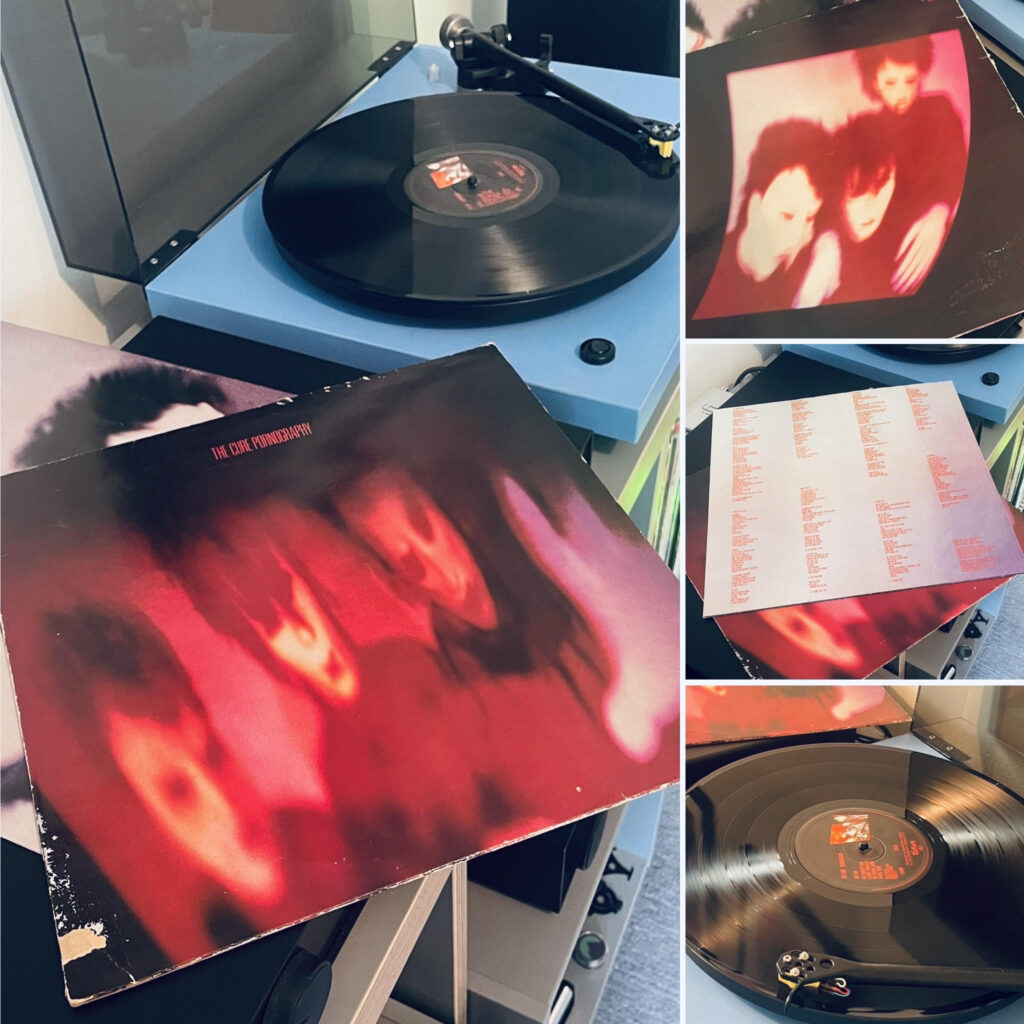
The Cure Pornography Retro Review

The year is 1982. A pre-Falklands War Thatcher’s Britain is strangling itself, unemployment queues stretch round the block, at RAK studios – the production home of Mickie Most… a mentally exhausted The Cure trio including an actually suicidal Robert Smith are busy raiding the local off-licence and dropping LSD while constructing Pornography. An album set to be a valedictory, instead the fourth of many but in retrospect the most unforgiving album in their catalogue. This is not a weeping song, it’s a weeping album of relentless despair deep in the trenches. I’m trying to think of more angst ridden vinyl before this, Leonard Cohen? he doesn’t touch the sides.

To pin down Pornography’s genre is like trying to nail jelly to the wall blindfolded. Is it goth? Well, it certainly helped birth the movement, though Smith and co. were likely too busy drowning in their own existential mire to notice they were creating a blueprint for a thousand even paler imitators. Post-punk seems closer to the mark, the album shares DNA with the abrasive experimentation of Wire and the introverted intensity of Joy Division, yet it possesses a peculiar self aware grandiosity that sometimes flirts with progressive rock’s theatrical impulses.

The opener, “One Hundred Years,” remains one of the most genuinely unsettling pieces of music committed to vinyl as confirmed by a thousand other reviews over the decades. Simon Gallup’s bass doesn’t so much play as it lurches, each note feeling like a death rattle echoing through a Victorian mausoleum. Lol Tolhurst’s drums don’t keep time, they mark the countdown to apocalypse with Swiss precision. Over it all, Smith’s open but discordant guitar work writhes and contorts like something in its final death throes, whilst his vocals deliver pronouncements of doom with the authority of a biblical prophet having a particularly bad day, ‘Stroking your hair while the patriots are shot’. Cheery.

Smith’s lyrics here read like dispatches from a post-nuclear wasteland, all “caressing an old man” and visions of flesh rotting in slow motion. “It doesn’t matter if we all die,” he intones with the casual indifference of someone reading the shipping forecast, before launching into imagery that makes JG Ballard’s crash fetishists seem positively life-affirming. The repeated invocation of “ambition” becomes less a call to achievement than a bitter mockery of human striving in the face of inevitable decay. It’s dystopian poetry delivered with the matter-of-fact brutality that only someone contemporaneously truly acquainted with despair could muster.

The album’s themes are hardly subtle. Death, execution, decay, sexual obsession, and psychological collapse aren’t just lyrical preoccupations here, they’re the very fabric from which the music is woven. The title track itself is a gruelling eight-minute descent into total madness.

What’s remarkable, and this is an album that has needed the space of time to fully appreciate – but listening back now, is how individual virtuosity serves the album’s suffocating atmosphere rather than showing off for its own sake. A polar opposite of prog. Gallup’s bass playing is masterful, his lines on “The Hanging Garden” provide both melodic anchor and rhythmic propulsion whilst never losing sight of the song’s essential bleakness. Lol Tolhurst, soon to eschew drums for keyboards, proves his worth with drumming that’s both primitive and sophisticated, knowing precisely when to pummel and when to restrain.

You’re drawn into the narrative so deeply that by the time The Hanging Garden begins the assumption is hung as in executed, then you think well, The Hanging Gardens of Babylon were decorative – but by the end you’re covering your face as the animals die. Oh well.

Pornography exists in its own ecosystem, hermetically sealed from the outside world. It’s an album that doesn’t court your affection so much as dare you to spend time in its company. The fact that it spawned a thousand goth clubs and launched a million black-clad disciples is almost beside the point, this is music that transcends subcultural boundaries through sheer force of vision.

Four decades later, as Britain – indeed the world once again finds itself wrestling with its demons, Pornography sounds less like a relic of its time and more like a prophetic statement. It remains The Cure’s most uncompromising work, a 43-minute journey into the abyss that somehow manages to be simultaneously utterly miserable and strangely life-affirming. A album that could leave you with a thousand yard stare. Give me your eyes that I might see, a blind man kissing my hand.

Essential listening, but if you’ve just begun a course of anti-depressants read the side effects first. 

RETROSPECTIVE: The Discomforting Virtuosity Of The Stranglers Prescient Masterpiece

The Stranglers’ genre-defying third album Black and White.

The album’s greatest achievement, visible only in retrospect, is how it managed to bridge multiple worlds simultaneously. It’s European art-rock disguised as British punk, progressive complexity wrapped in new wave accessibility, academic sophistication delivered with street-level aggression. This wasn’t difficult third album confusion, it was cultural synthesis of the highest order.

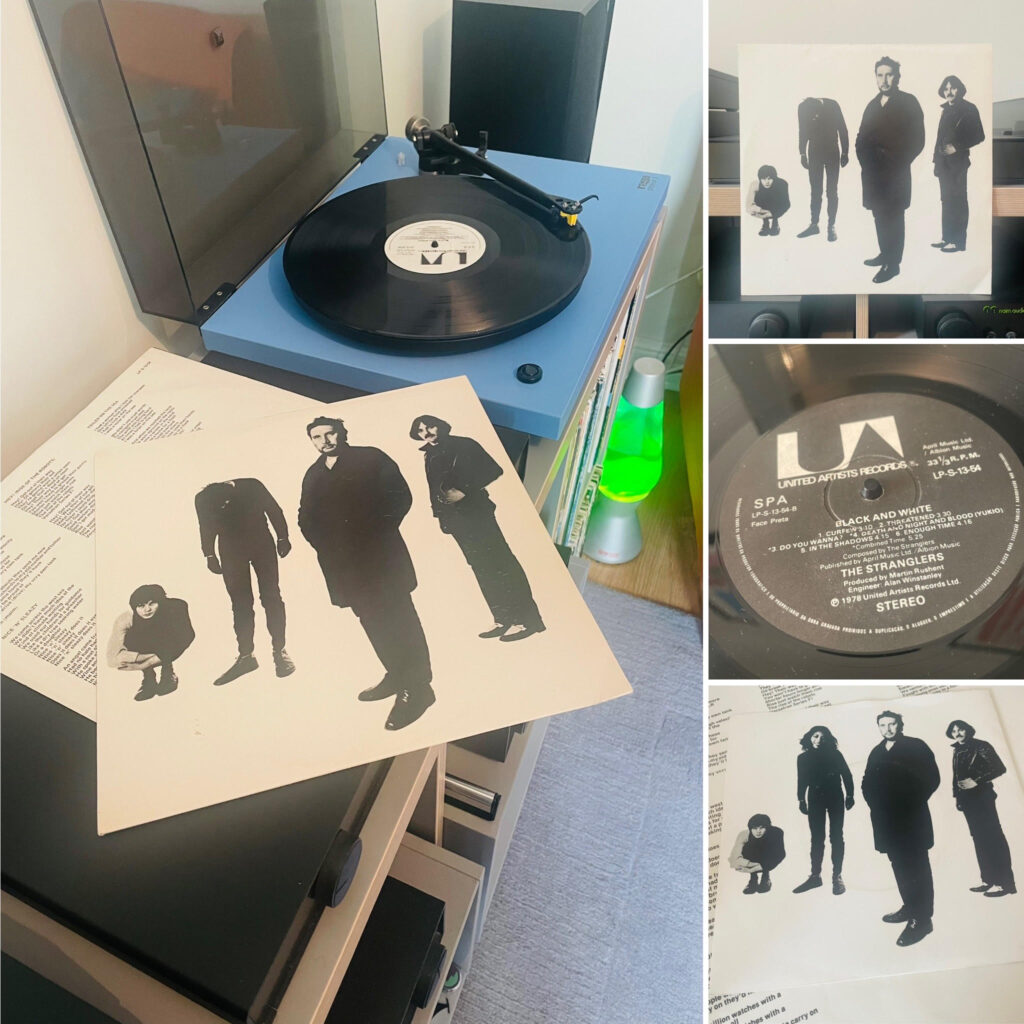
The Stranglers Black and White - Their post-punk defining third album.


The Stranglers in their original line-up have always been an awkward bunch to pin down. Too clever by half for the three-chord merchants, too hard for the art school crowd, and now, nearly five decades later, it’s clear that with Black and White, they were mapping out musical territory that the rest of us are still catching up to. This third LP finds Hugh Cornwell and his merry band of misanthropes wandering off into uncharted territory.

Make no mistake about it, this was never your standard punk fare, and time has only made that more obvious. The album’s position in their canon is rather like that of The Beatles’ Sgt. Pepper or Bowie’s Low – it’s when the band stopped being what people expected and took a hard fork and became something else entirely. Where Rattus Norvegicus and No More Heroes could still be filed under “angry young men with guitars,” Black and White reveals The Stranglers as something far more prescient: a band of genuine musical ability who understood that punk’s three-chord limitations were a creative dead end. Dave Greenfield’s keyboards, which seemed so alien to punk orthodoxy in 1978, now sound like a direct line to everything from Joy Division’s atmospheric menace to Depeche Mode’s electronic romanticism.

The album’s opener sets a tone that, viewed from today’s perspective, feels remarkably contemporary. There’s a European sensibility at work here that becomes more significant when you consider Cornwell’s academic background, his time pursuing doctoral studies in Sweden had clearly broadened his musical horizons beyond the parochial concerns of British punk. This is music that breathes Continental air, influenced as much by krautrock and European art movements as by the Ramones or The Sex Pistols. It’s telling that while their punk contemporaries were busy becoming parodies of themselves, The Stranglers were quietly absorbing influences from across the North Sea. “Let me tell you about Sweden!”

The musical sophistication that seemed so controversial at the time now appears as the album’s greatest strength. Jean-Jacques Burnel’s bass doesn’t just anchor these songs; it prowls through them with a melodic complexity that prefigures the art-rock basslines of bands like Radiohead. His French background, combined with Cornwell’s Scandinavian academic experience, created a cultural perspective that was uniquely European within the context of British punk, something that seemed like pretension in 1978 but reads as genuine cosmopolitanism today.

Which brings us to the question of genre, now settled by history’s verdict. This wasn’t punk, it was post-punk before the term existed, nascent yet to be defined new wave, and death and night and blood darkwave a full decade before any Goths claimed it. The progressive rock DNA in instrumental passages and influences that so scandalised the Peaches punk faithful in 1978 now seem like natural evolution rather than betrayal. There’s art-rock sensibilities that align them more to Bryan Ferry’s Roxy Music than Brian James’ era The Damned. When viewed alongside the career trajectories of contemporaries who stayed “pure,” The Stranglers’ willingness to embrace musical sophistication looks like wisdom rather than sell-out.

The pre-Stranglers ice-cream selling Jet Black’s drumming is phenomenal and displays the kind of precision that made contemporaries envious and now sounds like a masterclass in restraint and power. His technical ability, which punk doctrine suggested was somehow inauthentic, has aged far better than the amateur enthusiasm of many of his contemporaries. This was always about more than attitude, it was about creating something genuinely new from the wreckage of rock orthodoxy.

The production, courtesy of Martin Rushent, has aged remarkably well. That claustrophobic intensity, the sense of menace lurking in the spaces between notes, a kind of negative space threat, points directly towards the atmospheric post-punk that would dominate the early eighties. Rushent understood what The Stranglers were reaching for, a sound that was simultaneously ancient and futuristic, rooted in European classical traditions but pointing towards electronic possibilities.

The European influences run deeper than mere musical technique. Cornwell’s academic sojourn in Sweden exposed him to Nordic social democratic thinking, Scandinavian cultural pessimism, and a Continental intellectual tradition that was light-years removed from punk’s British working-class romanticism. You can hear it in the album’s lyrical sophistication, its philosophical undertones, its refusal to offer simple answers to complex questions. This wasn’t just rebellion, it was critique, informed by a broader cultural perspective than most British bands or songwriters could muster.

Lyrically, the album now reads as remarkably prescient social commentary rather than simple provocation. The themes of dystopian late stage capitalism, existential threat, social breakdown and cultural exhaustion that seemed left field shocking in 1978 now feel like accurate prophecy. The Stranglers weren’t just chronicling the decline of British society, they were anticipating the cultural fragmentation and the rise and fall of the Internet and social media that would define the following decades.

The album’s greatest achievement, visible only in retrospect, is how it managed to bridge multiple worlds simultaneously. It’s European art-rock disguised as British punk, progressive complexity wrapped in new wave accessibility, academic sophistication delivered with street-level aggression. This wasn’t difficult third album confusion, it was cultural synthesis of the highest order.

Looking back across the landscape of late-seventies music, Black and White now appears as one of the most innovative albums of its era. While The Clash were already retreating into reggae and rockabilly nostalgia and The Sex Pistols had combusted spectacularly, The Stranglers were quietly creating a template for alternative music that would influence generations of musicians. From the atmospheric post-punk of Joy Division to the electronic experimentation of Kraftwerk’s British disciples, the DNA of Black and White can be traced through decades of innovative music.

In the end, history has vindicated The Stranglers’ refusal to stay within punk’s narrow confines. What seemed like betrayal in 1978 now looks like vision, a recognition that musical progress required synthesis rather than purity, sophistication rather than simplicity, European cosmopolitanism rather than parochial nationalism. Hugh Cornwell’s Swedish academic experience, Jean-Jacques Burnel’s French cultural background, and the band’s collective refusal to be constrained by British musical traditions created something genuinely unique in the landscape of late-seventies music.

Black and White remains uncomfortable listening, but for different reasons now. In an era of algorithmic predictability and focus-grouped lo-fi rebellion, there’s something genuinely subversive about music that refuses easy categorisation. The Stranglers were always outsiders, even within punk’s supposedly inclusive chaos. With Black and White, they staked out territory so far from any mainstream that it took many decades to recognise its importance. Uncomfortable listening for uncomfortable times, which is exactly as it should be, and exactly why it matters more today than ever. What’s that in the shadows?

#NowPlaying – The Stranglers – Toiler On The Sea

RETROSPECTIVE: Lennon’s Lost Weekend

John Lennon's Lost Weekend. At home in Beverly Hills.


Eighteen Months of Madness in the Heart of Hollywood. The ex-Beatle’s wildest period yet – sex, booze, and Rock’n’Roll excess that nearly destroyed a legend.

Right, so you think you know John Lennon? The peaceful Beatle, the ‘Bed-In’ revolutionary, the bloke who gave us “Imagine”? Well, think again, because between October 1973 and early 1975, our John went completely barmy in Los Angeles – and we do mean completely. They’re calling it his “Lost Weekend,” though at eighteen months, it’s more like a lost year and a half.

It all started when Yoko threw him out of their Dakota apartment. Yes, you heard right – she actually booted him out, told him to go find himself or some such psychological bollocks. “Go away and have your midlife crisis somewhere else,” was apparently the gist of it. So off trots Lennon to La-La Land with May Pang, Yoko’s 23-year-old assistant, who’d been hand-picked by Mrs Lennon herself to keep an eye on her wayward husband.

What followed was a period of such spectacular debauchery that even Keith Moon would’ve raised an eyebrow. Lennon, aged 33 and supposedly a reformed character, promptly went completely off the rails in the most American way possible.

First stop was a beach house in Santa Monica that quickly became legendary for all the wrong reasons. Lennon surrounded himself with a motley crew of musicians, hangers-on, and fellow piss heads who turned the place into something resembling a Rock’n’Roll commune crossed with a rehabilitation centre – except nobody was trying to get clean.

The core gang included Harry Nilsson (already well on his way to drinking himself to death), Ringo Starr (taking a break from his own marriage difficulties), Keith Moon (just because), and a rotating cast of session musicians, groupies, and general wastrels. They called themselves “The Hollywood Vampires” – which tells you everything you need to know about their priorities.

Days would start around noon with cocaine and brandy, move on to more serious drinking by mid-afternoon, and end with everyone unconscious in various compromising positions around dawn. Lennon, who’d supposedly given up the hard stuff years earlier, was necking everything he could get his hands on – whisky, vodka, tequila, you name it. The man who once sang about peace and love was now starting fights in nightclubs and getting thrown out of venues across Los Angeles.

The nadir came in March 1974 at the Troubadour club, where Lennon and Nilsson had gone to catch an Ann Peebles show. Both absolutely legless, they proceeded to heckle the poor woman throughout her set. When staff tried to quiet them down, Lennon apparently shouted something unrepeatable about the management’s parentage and stormed off to the toilets.

But here’s where it gets properly weird – instead of using the gents, our revolutionary hero decided to relieve himself in a cupboard, emerging with a sanitary towel stuck to his forehead like some demented tribal marking. The press had a field day, of course. “BEATLE JOHN’S TOILET SCANDAL” screamed the headlines, and suddenly the man who’d once been the most respected musician in the world was reduced to a laughing stock.

The incident became symbolic of everything wrong with Lennon’s LA period. Here was a bloke who’d written some of the most important songs of the decade, reduced to pissing in cupboards and wearing feminine hygiene products as headgear. It was pathetic, really.

Amazingly, amidst all this chaos, Lennon was still trying to make music. The problem was, he was too pissed most of the time to do it properly. Recording sessions for what would become “Walls and Bridges” were exercises in frustration, with Lennon turning up hours late, completely bladdered, and unable to remember lyrics he’d written the day before.

Producer Jack Douglas later described the sessions as “like trying to record with a very talented ghost who kept disappearing.” Lennon would start a take, wander off mid-song, and return hours later having forgotten what they were working on. It’s a miracle the album turned out as well as it did.

The saving grace was May Pang, who somehow managed to keep some semblance of order in the chaos. Twenty years younger than Lennon and completely out of her depth, she nevertheless became his anchor during this period. She’d drag him out of bars, clean him up for recording sessions, and generally prevent him from killing himself through sheer stupidity.

If you want to know how mental things got, consider this: Lennon thought it would be a brilliant idea to record an album of Rock’n’Roll covers with Phil Spector producing. Yes, that Phil Spector – the gun-toting maniac who was already showing signs of the complete breakdown that would later land him in prison for murder.

The sessions, held at various LA studios throughout 1974, were legendary for their dysfunction. Spector would turn up armed (literally), paranoid, and completely controlling. Lennon, meanwhile, was usually drunk and belligerent. The two would spend hours arguing about arrangements while session musicians sat around collecting overtime pay.

One session ended with Spector firing a gun in the studio and then disappearing with the master tapes, leaving Lennon with nothing to show for weeks of work. It was like something out of a Martin Scorsese film, except it was real life and nobody was laughing.

The thing is, beneath all the chaos and self-destruction, you could sense Lennon was actually quite miserable. This wasn’t the joyful excess of a rock star living it up – this was the desperate flailing of a man who’d lost his way completely.

Friends from the period describe him as paranoid, lonely, and increasingly aware that he was making a complete tit of himself. The press coverage was universally awful, his music was suffering, and worst of all, he was alienating himself from the son he claimed to love more than anything.

Julian was still back in England with Cynthia, and Lennon’s contact with the boy was sporadic at best. When he did ring, he was often too drunk to hold a proper conversation. It’s heartbreaking, really – here was a man who’d sung about love and peace, completely unable to maintain relationships with the people who mattered most to him.

The long and winding road back… By late 1974, even Lennon’s legendary constitution was showing signs of wear. He’d put on weight, looked terrible in photos, and was developing a reputation as one of Hollywood’s most unreliable talents. Studio executives were starting to avoid him, club owners were banning him, and his behaviour was becoming genuinely concerning to those around him.

The wake-up call came when he collapsed during a recording session, apparently from exhaustion and alcohol poisoning. Rushed to hospital, he spent several days recovering while doctors told him in no uncertain terms that his lifestyle was unsustainable.

It was then that May Pang apparently sat him down for a serious conversation about his future. According to those close to the situation, she basically told him he could continue on his current path and probably die, or he could sort himself out and try to salvage something from the wreckage of his life.

The irony is that throughout this entire period, Lennon was in regular contact with Yoko back in New York. She’d ring him every few days, ostensibly to check on his wellbeing but apparently also to monitor his behaviour. Some cynics suggest the whole “Lost Weekend” was orchestrated by Yoko from the beginning – a way of letting Lennon get all his middle-aged rebellion out of his system while keeping him on a very long leash.

Whether that’s true or not, by early 1975 it was clear that Lennon was ready to return to New York and his wife. The LA experiment had run its course, leaving behind a trail of damaged relationships, wasted opportunities, and some genuinely questionable musical decisions.

But here’s the thing – as much as the Lost Weekend period was a disaster in human terms, it also produced some of Lennon’s most honest and vulnerable music. “Walls and Bridges” contains some genuinely affecting songs about loneliness and regret, while the eventually completed “Rock’n’Roll” album, despite its troubled genesis, showed Lennon reconnecting with his musical roots in ways that would influence his later work.

So what do we make of John Lennon’s Lost Weekend? Was it a necessary period of self-exploration, or just eighteen months of expensive self-indulgence? The truth, as usual, probably lies somewhere in between.

On one hand, it’s hard to have much sympathy for a millionaire rock star whose idea of finding himself involves drinking himself senseless in beach houses while his assistant-turned-girlfriend cleans up after him. The whole thing reeks of middle-class privilege and self-pity taken to absurd extremes.

On the other hand, there’s something genuinely tragic about watching one of the most important artists of his generation lose himself so completely. Lennon’s music had always been about honesty and emotional truth, and in some perverse way, his LA breakdown was probably the most honest thing he’d done in years.

The period also demonstrated something important about the nature of creativity and self-destruction in rock music. While the myth of the tortured artist is largely bollocks, there’s no denying that some of our greatest musicians have produced their most powerful work while falling apart personally. Lennon’s Lost Weekend wasn’t pleasant to witness, but it was undeniably real in a way that his more controlled periods sometimes weren’t.

Perhaps most importantly, it showed that even John Lennon – the man who’d helped change popular music forever – was still fundamentally human, still capable of making spectacular mistakes and learning from them. The fact that he eventually sorted himself out, returned to New York, and spent his final years as a devoted father and husband suggests that the Lost Weekend, for all its chaos, might have been a necessary part of his journey.

Whether it was worth eighteen months of madness is another question entirely. But then again, that’s Rock’n’Roll for you – never simple, never clean, and never quite what you expect from the outside.

Whatever gets you thru the night eh?

*The author wishes to acknowledge that this piece is based on publicly available information and interviews from the period, and that some details remain disputed by those involved.

#nowplaying John Lennon – Walls and Bridges (1974)

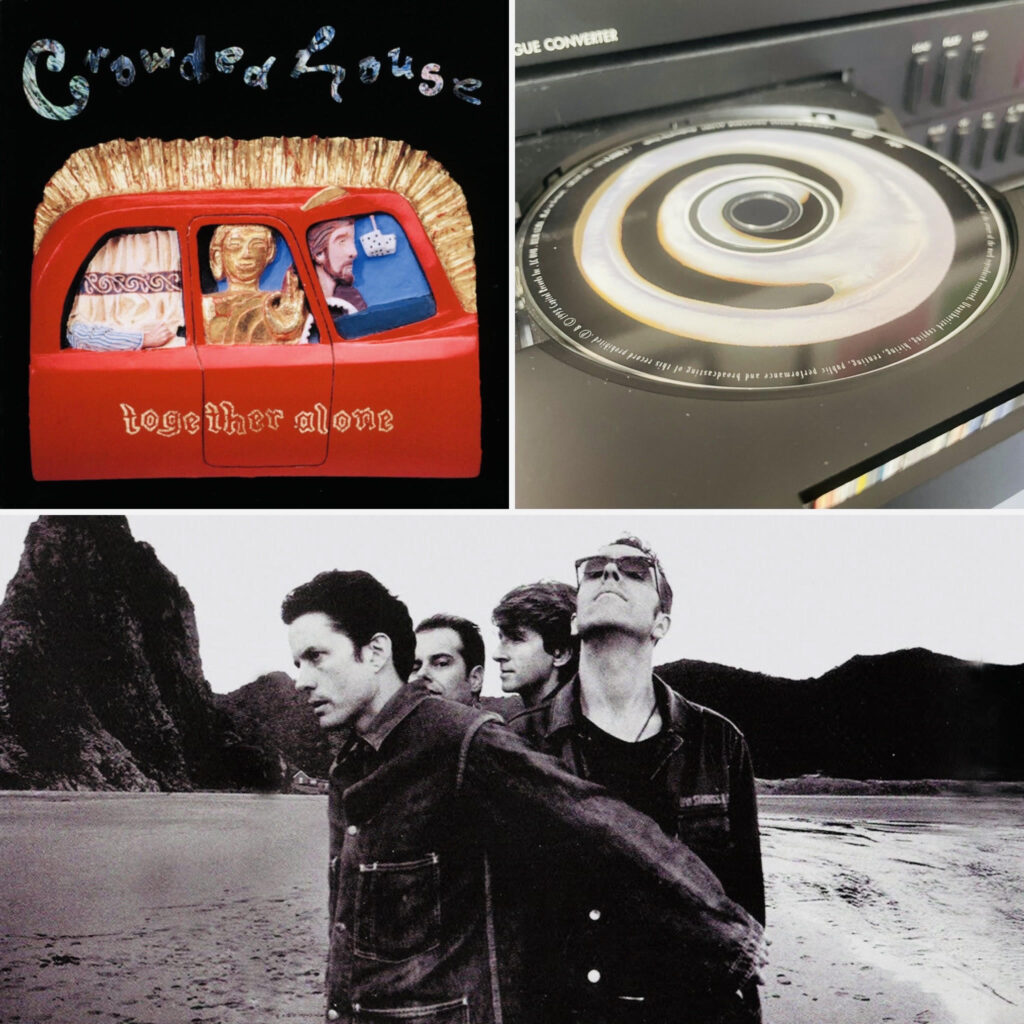
RETROSPECTIVE: Crowded House – Together Alone


Sonic Youth.

Thirty-two years on, and Together Alone still sounds like nothing else in the Crowded House catalogue. What seemed like a bewildering left turn in 1993 now reveals itself as the band’s most prescient work, a record that anticipated the alt-rock soul-searching of the late nineties whilst remaining utterly, defiantly itself. Neil Finn’s mob wandered off into the spiritual wilderness armed with nothing but a fistful of melodies and Martin Glover’s sonic wizardry, and what they dragged back from the void was this peculiar, haunting beast that sounds like it was recorded in some ancient Maori temple with the ghosts of a thousand ancestors whispering sweet harmonies into the mixing desk.

History has been kind to Together Alone. What critics initially dismissed as commercial suicide now reads as artistic bravery of the highest order. The title, which once seemed like undergraduate philosophising, now carries genuine weight, this is music for our atomised age, for contemplating connection and disconnection whilst doom scrolling at 3am, wondering where it all went wrong and why the notifications never stop.

The genius of Youth’s production has aged magnificently. The man who gave us Killing Joke’s industrial nightmares somehow coaxed sounds out of Finn and company that still shimmer and breathe like living things decades later. Gone were the pristine pop perfections of their earlier work, replaced by something altogether more organic and mysterious. Listen now and you can hear the DNA of everything from Radiohead’s OK Computer to Bon Iver’s falsetto folk, Youth was crafting the sound of millennial melancholy years before anyone knew what to call it. The drums sound like they’re echoing through cathedral spaces, the guitars drift in and out of focus like half-remembered dreams, and Finn’s voice floats above it all with an otherworldly detachment that’s genuinely unsettling.

The opening salvo sets the tone perfectly a rolling, hypnotic rhythm that builds into something approaching transcendence before dissolving into the ether. It’s pop music, Jim, but not as we know it. This is Crowded House wrestling with their demons in public, and Youth has given them the sonic palette to paint their neuroses in glorious Technicolor.

Finn’s songwriting has taken a decidedly introspective turn. Where once he dealt in universal truths wrapped in sugar-sweet melodies, here he’s digging deeper into the psyche, exploring themes of isolation, connection, and the peculiar melancholy that comes with success. The man sounds genuinely troubled, and it suits him.

The production shines brightest on the album’s more experimental moments. Youth has layered in all manner of mysterious sounds, backwards vocals, found sounds, studio trickery that would make Kevin Shields weep with envy. Yet it never feels gimmicky or overwrought. Every sonic flourish serves the songs, adding depth and texture without overwhelming Finn’s essentially human songwriting.

That said, Together Alone isn’t without its problems. At times, the band seem so determined to avoid their pop past that they forget what made them special in the first place. A few tracks meander when they should soar, and the overall mood is so consistently downbeat that you occasionally long for the simple joy of their earlier work. ‘Why are you listening to that depressing music?’ it is not, but it can be downbeat.

But these are minor quibbles with what history has revealed to be an essential record. Crowded House risked everything to make something genuinely personal and challenging, and Youth gave them the sonic framework to create what now stands as their most influential work. It wasn’t their biggest seller, but it was their boldest statement the record that proved they were artists first, hit-makers second.

In our current age of manufactured vulnerability and algorithmic angst, Together Alone stands as proof that real emotional complexity can’t be coded or commodified. It’s a grower, this one and the kind of record that reveals new secrets with each listen, the kind that soundtracks both Instagram stories and genuine moments of crisis in equal measure.

Three decades later, Martin Glover’s achievement becomes even clearer. He took New Zealand’s finest export and helped them create their masterpiece, a record that sounds more relevant now than it did then. The kids discovering it on Spotify don’t know they’re listening to the future of indie rock, circa 1993. Seems like Youth may not be wasted on the young after all.

ART POP / POP ART: Brian Eno & Tom Phillips

Or ‘Two Brain’ Brian Eno’s Art School Daydreaming

In the pantheon of rock’s cerebral mavericks, Brian Peter George Jean-Baptiste de la Salle Eno AKA Brian Eno or just plain Eno stands as our premier egghead-in-residence, the boffin who turned knob-twiddling into an art form, and made the recording studio a canvas rather than a mere tool. While lesser mortals bang away at their instruments with workmanlike dedication, Eno approaches music as just another colour on his palette.

The roots of Eno’s glorious dilettantism lie not in the cramped smoky clubs of London but in the rarefied air of art school conceptualism. Before he became the feather-boa’d synth wizard of Roxy Music, before he produced landmark albums for everyone from Talking Heads to U2, before he invented ambient music while flat on his back after being walloped by a taxi, young Brian was just another paint-splattered art student at Ipswich’s Suffolk College, soaking up ideas that would later transform rock music.

“Art school didn’t teach me how to paint, it taught me how to think about why I might want to paint in the first place.” – Brian Eno.

This intellectual approach, questioning the very foundations of why we make art became the cornerstone of his musical methodology, a perpetual askance glance at rock’s tedious conventions.

At Ipswich, Eno fell under the spell of teacher and mentor Tom Phillips, a walking encyclopedia of avant-garde approaches whose influence on our hero cannot be overstated. Phillips; painter, composer, translator, and all-round Renaissance gadabout introduced the young Eno to the work of John Cage, to the mind-bending possibilities of chance operations and indeterminacy. Phillips’ own masterwork, “A Humument,” in which he transformed a Victorian novel into a series of visual poems by painting over the text, leaving selected words visible, demonstrated how one might create new meaning by obscuring the old, a strategy Eno would later deploy in his oblique collaborations with David Bowie.

“Tom showed me that art wasn’t about technical skill, it was about context, about framing experiences.” This revelation liberated the technically limited Eno, allowing him to approach music as conceptual art rather than a craft to be mastered. When he later joined Roxy Music, he proudly proclaimed his musical illiteracy as a virtue rather than a handicap.

The conceptual art movement that dominated British art schools in the late ’60s provided Eno with his intellectual toolkit. Here was an approach that valued ideas over execution, process over product, and systems over virtuosity, catnip for a mind as restlessly curious as Eno’s. From conceptualism came his fascination with self-generating systems, with setting up musical experiments and then stepping back to see what might happen. His famous Oblique Strategies cards (created with artist Peter Schmidt) with those cryptic injunctions like “Honour thy error as a hidden intention” or “Emphasise differences” are pure conceptual art, placing process above outcome.

While most rock musicians have historically treated their art school past as a brief bohemian holiday before getting down to the serious business of power chords and stadium tours, Eno has remained defiantly committed to the art school perspective. His collaborative approach, turning musicians into components in his sonic experiments derives directly from the workshop methodologies of art school. When he produced Talking Heads’ “Remain in Light,” he was essentially running the band through a series of conceptual exercises, treating David Byrne and company as materials rather than auteurs.

Even Eno’s celebrated ambient works, gossamer soundscapes made for the comedown room, can be traced back to the “expanded cinema” experiments he witnessed as an art student. These multimedia environments, combining film, light shows, and sound, were attempts to create immersive experiences rather than discrete works of art. When Eno later described ambient music as being “as ignorable as it is interesting,” he was channeling the art school notion that art need not demand attention but might instead modify an environment.

What separates Eno from the legions of other art school graduates who’ve strayed into rock’s territory is his ability to translate rarefied conceptual approaches into works that connect emotionally. His productions for U2 may have been informed by systems thinking and process art, but they also made the Irish bombast merchants sound bloody enormous. His solo works might be exercises in cybernetic theory, but they’re also strangely moving, capturing melancholy and wonder in their abstract washes.

In an age when rock has largely abandoned its art school flirtations in favour of earnest authenticity or technical showboating, Eno remains our most eloquent reminder that popular music can be a laboratory for ideas as well as emotions. The art school influence that formed him, that combination of intellectual rigour and playful experimentation continues to inform his work, whether he’s producing pop stars or creating video installations.

As we face another decade of dreary singer-songwriters emoting over acoustic guitars, we need Eno’s art school sensibility more than ever. With Eno, thinking about music can be as revolutionary as playing it.

Brian Eno attended Ipswich Art School, Winchester College of Art 1964-66 & 1966-69.

Art Pop / Pop Art: a study of the influences of art school, famous artists and movements on pop and rock music. Those institutions where failure is motivation, where the eccentric and pretentious emerge into the fascinating space where art and music meet.

ART POP / POP ART: Brit Pop & The YBAs

Or How The ‘Young British Artists’ Shaped Brit Pop’s Visual Punch

In the crestfallen capital of post-Thatcher Britain, a gang of art school chancers were regurgitating ideas from Duchamp, the Sixties pop artists and sculptors and flogging them to Charles Saatchi. Simultaneously a surge of British Indie and alternative sounding guitar bands were getting more airplay on the radio, particularly the BBC under the reformational stewardship of Matthew Bannister who had recruited a number of new DJs like Steve Lamacq and Jo Wylie to reboot Radio One in an edgier style.

What nobody predicted was how the parallel universes of art and pop would once again collide to create the defining visual grammar of 90s British music.

The romance began, as these things often do, in a pub. The Groucho Club, to be precise, where Damien Hirst, not yet the multi-millionaire formaldehyde merchant fell in with Alex James and the Blur contingent. Before long, Hirst was directing their “Country House” video: a technicolor romp through English eccentricity that matched the band’s own savage pastiche of national identity.

But it was Hirst’s work for The Fat of the Land that truly codified the YBA-pop connection. That fluorescent green crab on The Prodigy’s 1997 album wasn’t just a cover it was a declaration of intent. Like Liam Howlett’s sonic assaults, Hirst’s visual sensibility took the familiar and made it menacing. Both operated in the sweet spot between attraction and repulsion. Both understood that England’s green and pleasant land had mutated into something altogether more radioactive.

If Hirst brought biological horror to pop’s visual palette, Julian Opie brought clinical detachment. His now-iconic portraits of Blur for their “Best Of” compilation reduced the band to cartoon glyphs a style later ripped off by every advertising agency with a MacBook and a deadline.

“I wanted something that looked like it could be a road sign” – Julian Opie.

What he delivered was the perfect visual metaphor for Britpop itself: simplified, bold, immediately recognisable, yet somehow hollow at its core.

The genius of Opie’s approach wasn’t lost on other acts. When Pulp needed artwork that captured their own arch commentary on British life, they turned to Blue Source and Peter Saville designers who shared the YBA knack for elevating the everyday to art status without sacrificing its essential seediness.

The cross-pollination went beyond album covers. Rachel Whiteread’s concrete casts of negative spaces found their musical equivalent in Radiohead’s OK Computer both capturing the uncanny valley between the familiar and the alienating. Meanwhile, Gavin Turk’s bronze sculptures disguised as trash bags offered a perfect visual companion to Elastica’s brief, brilliant dissection of post-punk’s cadaver.

What united the YBAs and their musical counterparts wasn’t just postcodes or drug dealers. It was attitude, that peculiarly British talent for elevating amateurism to high concept. Both scenes took working-class signifiers, ran them through an art school mangle, and sold them back to the middle classes as an authentic experience.

The Britpop bands, like the YBAs, understood that in post-Empire Britain, nostalgia was the most profitable natural resource. Both mined it ruthlessly while pretending to critique it. Both ended up with Turner Prizes, front covers, and country houses. Both eventually collapsed under the stellar weight of their own contradictions.

If art is about preservation, then the YBA-Britpop alliance succeeded wildly. While the music industry was still trying to shift plastic discs, artists like Sam Taylor-Wood (who would later direct videos for The Pet Shop Boys and feature films about John Lennon) and Tracey Emin (whose neon scrawls would adorn countless indie venues later London train stations) were already thinking about legacy.

The ultimate YBA contribution to British music wasn’t aesthetic but commercial, they taught bands that provocation plus self-mythologising equals longevity. When Albarn and Hirst finally opened their short-lived restaurant Pharmacy in Notting Hill, it wasn’t just a business venture but a perfect symbol: both scenes had transformed from rebellion to institution, from outsider art to investment opportunity.

Two decades on, as YBA works fetch stratospheric sums at auction, the true legacy emerges. What seemed like a movement was really just a moment when Britain briefly convinced itself that its cultural decline could be repackaged as ironic ascendancy. The artwork remains, like Hirst’s shark, suspended in time not quite dead, not quite alive, but impossible to ignore.

Art Pop / Pop Art: a study of the influences of art school, famous artists and movements on pop and rock music. Those institutions where failure is motivation, where the eccentric and pretentious emerge into the fascinating space where art and music meet.