RETROSPECTIVE: Where Have They Been? Joy Division, Closer

A detailed retrospective on Joy Division’s devastatingly timeless album Closer, exploring the band’s final and most haunting studio album in all its creative, atmospheric, emotional and historical depth. The eternal question, closer or closer?

Joy Division Closer (1980)


Rarely, an album arrives haunted before you even drop the needle. Closer, released in July 1980 just weeks after Ian Curtis’s death, is the ultimate example. It arrived like a final communiqué, a cold transmission from a place beyond exhaustion. If Unknown Pleasures was the sound of a band discovering the architecture of modern despair, Closer was the completed structure: stark, beautiful, desolate and impossibly refined. It remains one of the most unsettling records ever made, not because of the tragedy that surrounds it, but because of how complete it feels. Four young men, barely out of their early twenties, constructing a monument with the calm precision of veteran craftsmen.

Recorded at Britannia Row Studios in early 1980, Closer was shaped by the same constellation of characters that defined its predecessor. Ian Curtis, Bernard Sumner, Peter Hook and Stephen Morris formed the nucleus, still working under the shadow of Manchester’s derelict industrial gloom. Tony Wilson and Alan Erasmus held Factory together with philosophy, flair and a certain reckless faith. Peter Saville designed the sleeve, this time a funereal photograph of a stone tomb from a Genoan cemetery. And Martin Hannett returned to sculpt the sound, more ghostly, more meticulous, more distant than ever. What they created no longer sounded like post-punk discovering itself. It sounded like something else entirely.

Curtis’s lyrics are the centre of gravity here. Written in short bursts of clarity amid worsening health, collapsing marriage and relentless touring, they possess a startling emotional precision. There is no flailing, no melodrama. Instead, Curtis writes like a man tracing the edges of his own disappearance. “A legacy so far removed” he intones on “Heart and Soul”, a line delivered with such resignation it feels almost weightless. On “Twenty Four Hours” he sounds caught between yearning and surrender, while “Passover” reads like a series of warnings he never expected anyone to hear. Curtis had always been precociously articulate, but on Closer his imagery crystallises. He writes with the concision of a poet and the clarity of someone who knows time is thinning.

Musically, the band had sharpened into an eerie, restrained machine. Hook’s bass leads most of the melodies, mournful but insistent. Sumner’s guitar is sparse, almost pointillist, teasing out glimmers of light through the haze. Morris remains astonishing, turning minimal drum patterns into emotional punctuation. There are moments that hint at what New Order would become, yet nothing here feels transitional. This is a closed circle.

And presiding over it all, Martin Hannett. If his work on Unknown Pleasures turned the band’s rawness into atmosphere, on Closer he goes further, transforming space into an emotional instrument. His production leaves acres of room between the notes. Drums crack like snapped bones in a cathedral. Basslines hover in negative space. Curtis’s voice floats somewhere between the living and the dead. Hannett built these tracks with the attention of a watchmaker, each mechanism ticking in isolation until it formed a whole that feels strangely inevitable.

Side one is almost liturgical. “Atrocity Exhibition” opens with a lurching rhythm and guitars that clatter like loose machinery. It is disorienting, provocative and brilliant. “Isolation” introduces a brittle electronic pulse, as if the band are already stepping into their next form. “Passover” feels like a whispered confession, “Colony” storms with controlled frenzy, and “A Means to an End” ties it all together with one of Hook’s finest basslines.

Side two is something else entirely. It is not a descent so much as a surrender. “Heart and Soul” is spacious, drifting, suspended in its own gravity. “Twenty Four Hours” is devastating, built on one of the band’s most violent dynamic shifts. “The Eternal” might be Joy Division’s most heartbreaking song, Morris’s drum pattern funereal, Sumner’s synths thin and trembling, Curtis sounding utterly alone. And then “Decades”, the closing track, a cold sunrise over ruins. Hook’s bass loops like memory itself while Curtis sings with a calm that chills the spine. It ends not with drama, but with a kind of acceptance.

When Closer arrived, it was instantly framed as a posthumous statement. It is not. It is a fully realised work by a band operating at the peak of their powers. The tragedy does not define it, but it certainly haunts it. Even without hindsight, the emotional gravity is unmistakeable. It is an album made with astonishing clarity by musicians who had no idea it would become a memorial.

Forty-five years on, Closer still stands apart. It is not a companion piece to Unknown Pleasures but a culmination. The purity of its production, the maturity of the writing, the confidence in its restraint. These were four young men building something timeless while their world was falling apart around them.

If Unknown Pleasures is the moment of ignition, Closer is the monument left behind. A cathedral of quiet despair. A masterwork of control, tension and emotional truth.

Enthusiasts return to it not because of its mythology, but because of its craftsmanship. It is immaculate, unsettling, and strangely beautiful. It remains one of the finest records ever to emerge from Britain, and one of the few that still feels like a closed door you can never fully open.

A band at the edge of collapse. A producer at the height of his powers. A label built on belief. And a singer writing with a lucidity that still feels impossible.

Closer endures because it sounds final. And because, in its own stark way, it is. Where have they been?

RETROSPECTIVE – Joy Division Unknown Pleasures

A stark, immersive deep dive into Unknown Pleasures, Joy Division’s 1979 debut that transformed post-punk into something spectral and eternal. Exploring the collision of Ian Curtis’s lyrical brilliance, Martin Hannett’s ghostly production, and Factory Records’ visionary chaos, this retrospective revisits the album that defined modern alienation and still sounds like the future.

Joy Division Unknown Pleasures, the ultimate retrospective review.


Some records don’t just capture a moment. Unknown Pleasures wasn’t merely a debut but a collision of working-class intelligence, creative genius and industrial desolation that turned late-Seventies Manchester into a kind of spiritual proving ground. Released in June 1979, it remains one of those rare works where every element; band, producer, manager, label, sleeve designer and city fuses into perfection. A flashpoint that changed everything.

Joy Division were four awkward young men who didn’t look the part. If the local council office workers put a band together this was it. No poses, no smiles, no pretence. Ian Curtis stood at the centre: pale, intense, eyes fixed somewhere beyond the crowd. Bernard Sumner, all nervous energy, turned thin air into electricity with brittle, searching guitar lines. Peter Hook, with attitude and melody, played bass like lead, as if he’d grown weary of the instrument’s traditional place and decided to reinvent it. Stephen Morris, unflappable and precise, was the human metronome keeping it all from imploding. Together they made music that sounded less performed than conjured.

And yet, at the heart of it all, stood Curtis, not simply the singer, but the reason Unknown Pleasures still feels like revelation. His lyrics weren’t slogans or statements; they were serious literature. Curtis was a working-class intellectual, a devourer of Kafka, Ballard, and Burroughs, a man who could translate alienation into poetry without losing the grit of everyday life. He wrote with eerie precocity, his words carrying the depth of someone twice his age. “Disorder” opens the record with “I’ve been waiting for a guide to come and take me by the hand”, a line that already sounds like a plea from the edge. “She’s Lost Control” was drawn from his encounters at the employment exchange, the story of a woman whose seizures mirrored the illness that would later contribute to his demise. In “New Dawn Fades”, he faces despair with devastating clarity: “A change of speed, a change of style, a change of scene, with no regrets.” Curtis never dramatised his pain; he documented it. Every lyric feels lived, every silence deliberate.

Around him, the band moved with precision. Sumner’s guitar shimmered with nervous energy. Hook’s bass carried the emotional and propulsive pulse. Morris locked everything into place with mechanical rigour. They didn’t just accompany Curtis’s words; they inhabited them, building soundscapes of claustrophobia and strange beauty.

Then came Martin Hannett, the producer who turned Joy Division’s live fury into something spectral. A sonic visionary and a mercurial eccentric, Hannett treated the studio like a laboratory. He recorded breaking glass, lift shafts, and literally empty space, turning silence itself into an instrument. The band wanted raw power*; Hannett delivered atmosphere, detachment, immortality. Hook complained it was too clean, too cold. But Hannett understood that this wasn’t a record about noise, it was about isolation. What he built in Strawberry Studios wasn’t just a mix; it was an environment.

(*for a heavier Joy Division listen to the live side of Still and the BBC John Peel Sessions available on the ‘Best Of’ CD)

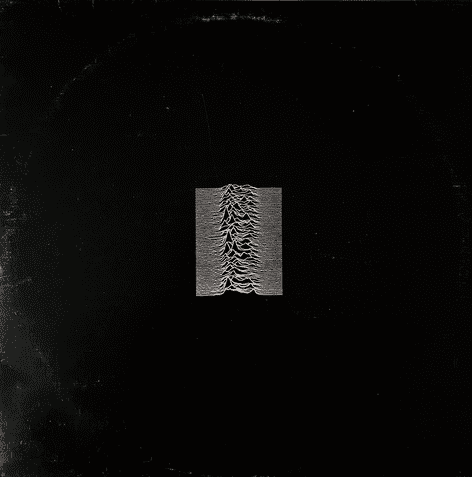
Overseeing it all, Factory Records, Anthony H Wilson’s impossible dream. Tony Wilson was the showman-philosopher-TV presenter and new music advocate, preaching art over commerce. Alan Erasmus his quiet lieutenant, Peter Saville the young graphic designer and aesthetic genius who gave Factory its visual language. Saville’s historic sleeve design for Unknown Pleasures, the white-on-black pulsar from a Cambridge astronomy textbook, became the perfect visual echo of the sound within. No title, no band name, no marketing. Just a transmission from the void. Inspired.

The record unfolds like a descent. “Disorder” rushes in with nervous urgency. “Day of the Lords” trudges through a wasteland. “Insight” floats in eerie calm, as if overheard from another world. “New Dawn Fades” devastates with Hook’s bass in lament, Sumner’s guitar shimmering like fluorescent light. Then side two opens with “She’s Lost Control”, a mechanised tragedy pulsing with inevitability. “Shadowplay” prowls through dim alleyways, “Wilderness” and “Interzone” flicker with punk afterglow before “I Remember Nothing” ends in collapse, static, glass, and Curtis’s voice dissolving into silence.

When it was released, Unknown Pleasures barely registered commercially. Factory’s distribution (like Rough Trade in London) was chaotic, and Manchester’s cultural importance had yet to be mythologised. But those who found it; the lost, the restless, the disillusioned recognised something transcendent. Punk had been about confrontation; Joy Division turned inward and found a new vocabulary for despair. They had created the post punk meisterwerk.

Within just a year, the story turned tragic. Curtis, battling epilepsy and emotional turmoil, took his own life on the eve of the band’s first American tour. Closer followed posthumously an austere requiem with prescient sleeve to match, but Unknown Pleasures remains the genesis, the moment the ordinary became eternal.

It endures because it was never really of its time. Curtis’s lyrics read like prophecy; Hannett’s production sounds perpetually modern. Sumner, Hook and Morris would carry fragments of its brilliance into New Order, but they never recaptured this particular alchemy, the balance of tension and restraint, intellect and instinct, belief and doom.

Unknown Pleasures isn’t just the greatest post-punk album. It’s the blueprint for everything that followed. The hum of fluorescent light in an empty flat. The heartbeat of a city rediscovering its soul. The poetry of disconnection made sacred by four ordinary lads, one visionary producer, and one man’s terrible genius.

Forty-six years on, it still sounds like the future, it still hurts but as Tony Wilson later mused, a record that launched a band responsible for the renaissance and redevelopment of an entire city.

RETROSPECTIVE: We’re Selling England By The Pound

A retrospective of Genesis’ ‘Selling England By The Pound’. The band’s fifth long player from 1973 is a Progressive Rock classic that captured a changing newly decimal Britain through Mellotrons, lawnmower men and Cockney villains. Essential listening for anyone who thinks Prog Rock was all capes and codswallop. Genesis proved you could be both preposterous and profound.


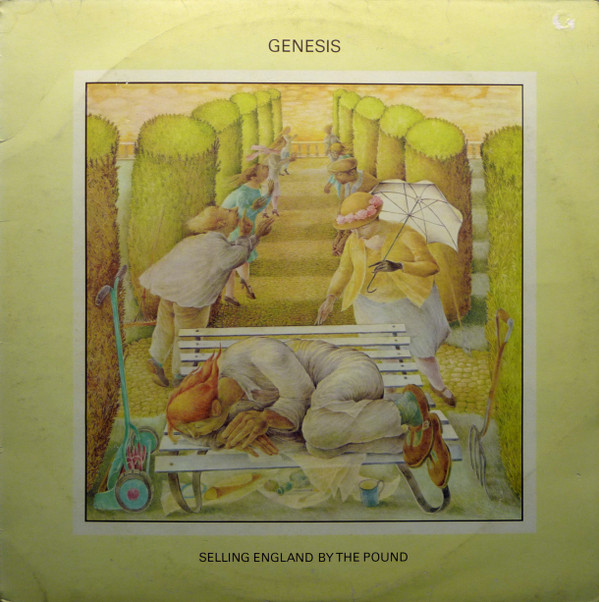
GENESIS: Selling England By The Pound (Charisma) 1973

There was something gloriously, quintessentially English about Genesis that set them apart from the prog rock pack cluttering up the album charts in 1973. Where Yes disappeared up their own cosmic backsides and ELP bludgeoned you with their virtuosity, Peter Gabriel and his merry band of public schoolboys crafted something altogether more peculiar and affecting with this, their fifth album.

Selling England By The Pound arrived at a curious juncture for the band. After the commercial disappointment of Foxtrot failing to break America (despite ‘Supper’s Ready’ being the sort of 23-minute epic that should have had the Yanks weeping into their cornflakes), Genesis regrouped and produced what many consider their defining statement. Recorded at Island Studios with John Burns and the band sharing production duties, this was a record that positively reeked of England in 1973: a country caught between nostalgia for its crumbling past and uncertainty about its increasingly tatty future.

The album opened with ‘Dancing With The Moonlit Knight’, which nicked its central melody from ‘I Know What I Like’ before that song even appeared. Gabriel’s lyrics were stuffed with references to Wimpy Bars, breakfast cereal mascots and Churchill’s England, painting a portrait of a nation flogging off its heritage for American consumer tat. “Can you tell me where my country lies?” he asked, and you suspected he already knew the answer. Tony Banks’ Mellotron swirled around like fog over the Home Counties while Steve Hackett’s guitar work was, as ever, economical but devastating.

‘I Know What I Like (In Your Wardrobe)’ was the obvious single, and it proved a canny choice. Built around Phil Collins’ crisp, almost funky drumming and a nursery rhyme melody, it told the story of a lawnmower man content with his lot. It was Genesis at their most accessible, which wasn’t saying much, but there was real charm in its eccentricity. The promotional film they shot, with Gabriel prancing about in a cloth cap and braces, was either brilliant or barmy. Possibly both.

But it was ‘Firth of Fifth’ that had the musos wetting themselves. Banks’ opening piano passage was genuinely beautiful, all cascading romanticism and melancholy, before the band crashed in with typical Genesis precision. Hackett’s guitar solo in the instrumental section was an absolute belter, soaring and lyrical without ever tipping into tedious showboating. If you needed to convince someone that progressive rock could be genuinely moving rather than just technically accomplished, this was the track to stick on the turntable.

‘More Fool Me’, sung by Collins, was a bit of pleasant fluff really, though his voice had a vulnerability that suited the material. ‘The Battle of Epping Forest’, however, was vintage Gabriel madness: a nine-minute saga about rival gangs of Cockney villains that name-checked half of East London and featured more characters than a Dickens novel. It was exhausting, occasionally bewildering, but never boring. The time signatures flipped about like eels while Gabriel adopted various accents and personas. You either thought it was genius or pretentious twaddle. This writer leaned towards the former.

The album closed with ‘The Cinema Show’ and ‘Aisle of Plenty’, the latter essentially a reprise that bookended the record nicely. ‘The Cinema Show’ was another lengthy piece that referenced T.S. Eliot and featured some of the most intricate playing on the record. Banks’ organ work was particularly fine, while the rhythm section of Collins and Mike Rutherford locked together with the sort of telepathy that only came from years of playing school halls and student unions together.

What was remarkable about Selling England By The Pound was how distinctly British it sounded. This wasn’t blues-rock or heavy metal or glam. It was something altogether stranger: folk melodies colliding with classical pretensions, Edwardian music hall meeting avant-garde rock, all filtered through the sensibilities of five blokes who probably read too much Tolkien at Charterhouse.

Gabriel remained one of rock’s most fascinating frontmen, a genuine oddball who could make theatrical gestures seem vital rather than risible. His lyrics here were his best yet, full of wordplay and social observation, even if they occasionally veered into sixth-form poetry territory. The rest of the band were operating at a level of musicianship that would have been intimidating if it wasn’t in service of actual songs rather than mere technical exercises.

Did this prove to be the album that broke Genesis to a wider audience? Not quite. They were far too weird, too English, too prog for that. But for those willing to enter their peculiar world, Selling England By The Pound was a rich and rewarding experience.

RETROSPECTIVE: Dire Straits’ 1980 Audiophile Delight

A retrospective review of Dire Straits’ 1980 album Making Movies. Knopfler’s technical brilliance meets romantic melancholy in an era that supposedly had no use for either. In my heavily late Seventies NME hack influenced style.


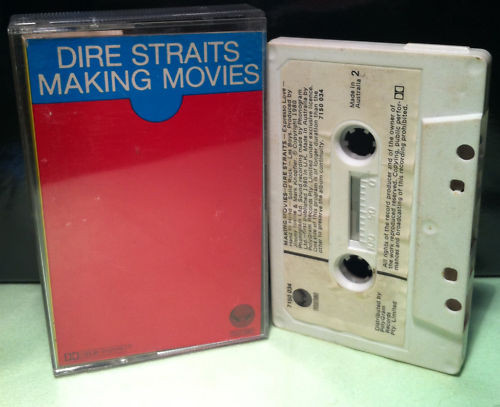
DIRE STRAITS: Making Movies (Vertigo) 1980

There was something deeply suspicious about a band this technically accomplished in 1980. While half of London was still thrashing about in bin liners and safety pins, Mark Knopfler’s lot turned up with an album so pristine, 38 minutes so meticulously crafted, that you half expected to find the corners mitred.

Making Movies arrived eighteen months after their self-titled debut made them improbable millionaires in America, and it was clear they’d been spending the intervening period in expensive studios rather than the back rooms of grotty pubs. Recorded at New York’s Power Station with Jimmy Iovine producing – the man who’d just finished polishing Springsteen’s The River – this was Dire Straits going for broke, or rather, going for more money than they’d already got.

The opening salvo, “Tunnel of Love,” sprawled across eight minutes like some Dylanesque fever dream filtered through a Tyneside accent. It was all fairgrounds and Spanish guitars, with Knopfler’s finger-picked lines circling each other like moths round a sodium lamp. The man played like he was being paid by the note, which he probably was.

“Romeo and Juliet” – which got played to death on Radio 1 – was the sort of thing that had sixth-formers scribbling lyrics in the back of their French textbooks for years. It was wretchedly romantic, all unrequited longing and cinema queues, with Knopfler doing his best to sound like he’d actually had his heart broken rather than just read about it in a Leonard Cohen novel.

But here was the rub: it worked. Despite themselves, despite the almost offensive levels of musicianship on display, despite the fact that punk never happened in their world, Dire Straits crafted something genuinely affecting. “Hand in Hand” swung like prime-era Dylan, while “Les Boys” – a tawdry tale of Parisian transvestites – had the sort of seediness that Bowie used to do before he discovered Switzerland and synthos.

The centrepiece, though, was “Skateaway,” a peculiar bit of New Wave-ish funk about a rollerskating girl cruising through urban decay. It had synthesizers, for God’s sake. Synthesizers! On a Dire Straits record! Pick Withers’ drumming was tighter than a gnat’s chuff, and the whole thing sounded like what might happen if Steely Dan decided to have a go at writing a hit single.

Mark Knopfler remained an enigma wrapped in a headband. His vocals sounded like he was perpetually on the verge of nodding off, yet there was a sly intelligence to his wordplay that elevated this above standard-issue soft rock tedium. He’d clearly listened to a lot of JJ Cale, a lot of Dylan, a lot of those American FM radio staples, and he wasn’t afraid to nick the best bits.

The production was, predictably, immaculate. Every hi-hat shimmer, every bass throb from John Illsley, every keyboard wash from Roy Bittan (on loan from the E Street Band, no less) sat exactly where it should. It was the sonic equivalent of a freshly Hoovered front room with the cushions all plumped up.

Which brought us back to that initial suspicion. In an era when the most exciting music was being made by people who could barely play their instruments, Dire Straits were almost confrontationally competent. They weren’t interested in year zero, in tearing it all down and starting again. They wanted to take you to the pictures, buy you chips on the way home, and maybe have a bit of a cuddle if you were lucky.

And you know what? Sometimes that was enough. Making Movies didn’t change your life or inspire you to form a band in your mate’s garage. But on a rainy Tuesday evening when you were skint and miserable and the world seemed determined to grind you down, it might just have made things seem temporarily bearable.

Which, in 1980, was worth something.

RETROSPECTIVE: Sex Pistols’ Punk Detonation

Nearly fifty years after its release, the Sex Pistols’ incendiary debut remains punk’s perfect storm, a molotov cocktail of working-class rage, musical brilliance, and media manipulation that changed British culture forever….


The album that didn’t just break rules – it obliterated the rulebook

Never Mind the Bollocks didn’t just land in 1977, it crashed through the plate-glass window of British society and sprayed the drawing room with cultural shrapnel. Nearly fifty years on, it still snarls like a kicked dog. In a landscape now wallpapered with playlist-core, TikTok hooks and sanitised rebellion-by-subscription, Bollocks feels like a holy relic from a time when music had the power to make the establishment sweat.

The Pistols weren’t a band in the traditional sense. They were a detonation. The result of a chemical reaction in the King’s Road boutique Sex, where Malcolm McLaren, part art school agitator, part snake-oil messiah set out to manufacture a British answer to the Ramones. What he ended up with was something far more combustible: four working-class lads with nothing to lose, contempt for the sacred, and just enough talent to weaponise it.

It was John Lydon, not McLaren, who gave the Pistols their real teeth. That infamous audition, Lydon miming Alice Cooper in a torn “I Hate Pink Floyd” T-shirt wasn’t an audition at all. It was a warning. And from the moment he snarled into a mic, Rotten was born. Not a singer in the usual sense, but a frontman who could turn a howl into a manifesto. His was a voice shaped by failed systems and boarded-up futures. You believed him not because he told the truth, but because he believed his own bile. And in a cultural moment drowning in fakes, that was radical.

His lyrics didn’t sermonise like The Clash or cartoon like the Ramones—they targeted. They named names. “The fascist regime.” “The tourists.” “The Queen.” This wasn’t abstract anger. This was brutalist literary wit, honed on council estates and spat back at a country that had turned its back on him.

Behind Rotten, the band were better than they ever get credit for. Steve Jones’ guitar work was pure sledgehammer pinched from Ronnie Wood’s toolkit and stripped of all bluesy indulgence. Paul Cook held it all together with dead-eyed discipline. And then there was Glen Matlock, the band’s melodic spine, the one who actually wrote songs. Before McLaren booted him out for liking the Beatles (the horror) in fairness his mum and dad weren’t too keen on his band membership either – Matlock laid the foundation for nearly every track that matters. Sid might’ve looked the part, but Glen sounded it.

And that brings us to Sid Vicious: the icon who couldn’t play. The most famous non-musician in music history. He brought nothing to the table musically, less than nothing, in fact but gave the tabloids something they couldn’t resist: a photogenic train wreck in safety pins and blood. He turned the band from agitators into tabloid currency, and McLaren milked every drop of it. Sid was myth in motion. His tragic end, overdosing after allegedly stabbing Nancy Spungen, would become punk’s dark parable. The image devoured the music.

But Never Mind the Bollocks is no chaotic mess. It’s a tight, brutal record, shaped by Chris Thomas, a producer fresh from Floyd’s palaces of sound, now neck-deep in spit and swearing. It shouldn’t have worked. But it did. It worked because the songs were solid, the delivery vicious, and the band at least for one special moment, utterly focused.

“Anarchy in the UK” starts with a leer and explodes into a full-throttle riot. “Pretty Vacant” is practically power pop under the sneer. And “Bodies”? Still disturbing, still necessary a razor blade of a song about abortion, trauma, and madness that no one today would dare touch.

And then there’s Art School McLaren’s marketing sorcery. Every cancelled gig, every court case, every playground rumour was stoked by him. The infamous Bill Grundy interview, the Jubilee boat stunt, contracts signed outside Buckingham Palace it was all punk as performance art. The Pistols were slashed, banned, burned, boycotted. Which, of course, meant they sold more records than God.

But you can’t sustain that level of heat. The 1978 U.S. tour, an mis-booked shambles by design saw Sid out of his mind, the band disintegrating, and Rotten fed up with being a performing monkey for the media circus. At Winterland in San Francisco, he looked out at the crowd and delivered the perfect punk epitaph: “Ever get the feeling you’ve been cheated?”

That line still echoes because it summed it all up; the manipulation, the disillusionment, the raw, ugly brilliance of it all. The Pistols didn’t burn out so much as combust in real time. And what followed, Sid’s death, McLaren’s myth-making, Lydon’s post-punk messiah rebirth in Public Image Ltd wasn’t an epilogue but a necessary failing forward.

Lydon, to his credit, didn’t retreat into parody. PiL pushed boundaries most punk bands wouldn’t touch; dub, experimentalism, post-punk minimalism. It didn’t make headlines, but it made art. Meanwhile, the world turned the Pistols into a brand. Punk became a T-shirt slogan, rebellion a marketing brief. Rotten became John Lydon again, appearing on butter ads and talk shows, but Bollocks remained.

And that’s the point. You can license the image, sell the nostalgia, but you can’t fake what this album captured. Never Mind the Bollocks is a time capsule filled with rage, wit, and electricity. It’s the sound of a band and a country on the brink. Could something like this happen today? Not a chance. The algorithms wouldn’t allow it. The PR team would step in. The snarl would be filtered and auto-tuned.

But that’s why this record matters more than ever. It reminds us that music can scare people. That songs can shake the foundations of the establishment. That sometimes, four angry kids with guitars can tell the world exactly where to stick it and be heard.

Never Mind the Bollocks isn’t just a punk album. It’s a battering ram through the front door of British culture. Nearly fifty years on, drop the needle and hear it again: that beautiful unrepeatable roar of latent energy stored in the opening chords of Holidays In The Sun.

COMMENTARY: The Conscience Of Generations

From the trenches of Spain to TikTok activism: How each generation finds its own way to fight injustice. I take a look at what defines moral courage across nearly a century of activism.

The photographs are fading now, fresh faces, serious beneath berets, holding rifles they barely knew how to use – ‘but if they could shoot rabbits they could shoot fascists’. They were clerks and miners, teachers and labourers, probably born around the time of World War One and united by nothing more than a conviction that fascism had to be stopped. In the winter of 1936, they kissed their wives and girlfriends goodbye at Victoria Station and caught the boat train to Paris, then walked across the Pyrenees to join a war that wasn’t theirs.

Ninety years later, their grandchildren are hunched over smartphones and laptops, typing furiously. Organising boycotts of Israeli goods, coordinating with activists in Manchester and Glasgow through encrypted messaging apps. Their enemy is different, their methods transformed, but the impulse, that peculiar British inability to mind one’s own business when faced with injustice, remains precisely the same.

This is the paradox of moral courage: it appears constant across generations, yet manifests in forms so different that each age struggles to recognise virtue in its predecessors or descendants. The young man boarding the train to Spain in 1937 and the student sharing TikTok videos about Gaza today are separated by everything except the essential thing: the refusal to be a bystander.

The Weight of History

The Spain volunteers were products of their time in ways they barely understood. They had grown up on tales of The Great War, that ghastly demonstration of what happened when good men did nothing whilst imperialism organised itself a war machine prepared to send tens of thousands to their deaths for twenty yards of Flanders. The unemployment queues of the twenties and thirties had given them first-hand experience of how political decisions destroyed ordinary lives. When Hitler began his march across Europe, they possessed a clarity of vision that seems almost enviable today.

It was a simple decision, Fascism was visibly, unmistakably evil. The choice was binary: fight or surrender civilisation itself.

Their media diet reinforced this clarity. The Left Book Club, founded by Victor Gollancz in 1936, distributed serious political analysis to tens of thousands of subscribers. These weren’t soundbites or slogans, but hefty volumes that provided comprehensive frameworks for understanding the world. Members read Orwell’s “The Road to Wigan Pier” and Edgar Snow’s “Red Star Over China” with the same intensity that previous generations had reserved for scripture.

The Communist Party of Great Britain, despite its relatively small membership, provided intellectual structure for much of the anti-fascist movement. Party members attended evening classes in Marxist theory, studied the writings of Lenin and Stalin, and engaged in lengthy debates about the contradictions and solutions dialectical materialism. It was serious, systematic, and utterly certain of its moral foundation.

This certainty came at a cost. The volunteers who returned from Spain, barely half of those who went, found themselves isolated in a society that preferred to forget their sacrifice. The government had banned participation; employers dismissed them as troublemakers; families often disowned them. They had acted on their convictions and paid the price.

The Television Generation

By the 1960s, everything had changed. Television brought warfare into British sitting rooms with an immediacy that print could never achieve. The Vietnam War, though fought 8,000 miles away, became as real as the evening news. Young people watched napalm falling on villages and made their moral calculations accordingly.

But television also fragmented attention. The Spain volunteers had spent years preparing for their moment of choice, reading widely and thinking deeply. The sixties activist might encounter a crisis on Tuesday evening news and be marching against it by Saturday afternoon. The intensity was different, more diffuse but potentially more democratic.

The Campaign for Nuclear Disarmament demonstrated this new model perfectly. Founded in 1958, it brought together people across traditional political divides, vicars and communists, housewives and students, united by a single issue rather than a comprehensive ideology. The annual march from Aldershot to London became a ritual of moral witness, drawing tens of thousands who might never have joined a political party.

“We weren’t trying to overthrow capitalism,” recalls Canon John Collins, an English-American priest, activist, and one of CND’s founders. “We were simply trying to prevent the incineration of humanity. It was a more modest ambition, but in its way equally urgent.”

The anti-apartheid movement perfected this approach over the following decades. Beginning in the early sixties, it combined traditional tactics, boycotts, protests, lobbying, with innovative approaches that made distant injustice personal and immediate. The boycott of South African goods meant that every shopping trip became a political choice. The campaign against sporting contacts meant that cricket and rugby matches became sites of moral conflict.

This movement also pioneered the use of celebrity endorsement. The 1988 Wembley Stadium tribute concert for Nelson Mandela reached a global audience of 600 million people, using entertainment to advance political goals. It was a technique that would become standard practice for later campaigns, but still revolutionary at the time.

The Digital Natives

Walk through any university campus today and you’ll find young people who carry the world’s suffering in their pockets. Their iPhones buzz with updates from Gaza, Myanmar, and Ukraine. They receive real-time footage of air strikes and refugee camps, police violence and peaceful protests. The question is not whether they know about global injustice, they’re drowning in it, but how they can possibly respond to such overwhelming information.

Previous generations had the luxury of ignorance, today’s students know more about global crises than foreign correspondents did thirty years ago. But knowledge without power can be paralysing.

The response has been to develop new forms of engagement that previous generations struggle to recognise as political action. Hashtag campaigns can generate millions of posts within hours. Online fundraising ‘crowdfunding’ can raise substantial sums for distant causes. Viral videos can shift public opinion more rapidly than years of traditional campaigning.

The #MeToo movement demonstrated the power of these new tools. Beginning with a simple hashtag, it created a global conversation about sexual harassment that achieved swift legislative changes and cultural shifts across dozens of countries. The climate activism organised through social media has brought millions of young people onto the streets in coordinated global protests.

Yet digital activism faces unique challenges. The rapid news cycle means that even severe crises can replaced in the news and disappear from public attention within days. This can be manipulated by senior management of media organisations in favour of their own political affiliations. The personalisation of social media means that activists often speak primarily to those who already agree with them – an echo chamber. The volume of information can lead to compassion fatigue, where audiences become numb to repeated exposure to suffering – it becomes less painful to scroll on by.

The Palestine Question

Nothing illustrates these challenges more clearly than contemporary activism around Palestine and specifically Gaza. Social media platforms enable rapid sharing of information and imagery from the territory, creating immediate and highly emotional connections between British audiences and distant suffering. Young people encounter footage of destroyed homes and dead or severely injured women and children with an immediacy that traditional media could never achieve. Traditional media older generations might recognise is perpetually behind the curve now.

The movement has achieved remarkable success in shifting public opinion, particularly among younger demographics. Polls consistently show that 18-34 year olds are more likely to support Palestinian rights than their parents’ or grandparent’s generation. This shift has occurred largely through peer-to-peer education disseminated via social media platforms.

Digital tools have also enabled new forms of economic pressure. Some activist movements use apps to help consumers identify targeted products, whilst campaigns against particular companies can generate thousands of emails and social media posts within hours. University students have occupied buildings and demanded divestment from Israeli companies, echoing the tactics used against apartheid South Africa – specifically contra to government policy causing an authoritarian shift in the rules around assembly and organising protest.

But the digital nature of much contemporary activism also creates vulnerabilities. Online harassment can be severe and persistent. Employers increasingly monitor social media activity. The Israeli (also Russian and Chinese) government has developed sophisticated techniques for countering digital campaigns, including the use of artificial intelligence to generate pro-Israeli content. Just this week the Israeli-supporting US Government has severely sanctioned Francesca Albanese, the UN Special Rapporteur on the Occupied Palestinian Territory, a pro bono lawyer employed officially by the United Nations to report on the abuse of human rights and contraventions of international law. The contradiction is stark, they host an internationally wanted world leader while sanctioning a person working for free trying to protect innocent civilians. This is not unique to modern democracies, the UK proscribes civil disobedience organisations, both human rights and climate, arresting peacefully protesting grandmothers while simultaneously hosting murderous former ISIS leaders. Geopolitics, hard and soft power work in mysterious ways.

The surveillance tools are more powerful as are the forces arrayed against change. Young activists today face surveillance and repression that previous generations couldn’t imagine.

The Persistence of Conscience

Despite these challenges, certain constants persist across generations. Each era produces individuals willing to sacrifice personal comfort for abstract principles. The 1930s volunteer who risked death in Spain, the 1980s activist who spent weekends outside the South African embassy, and the contemporary campaigner who faces online harassment for posting about Gaza all demonstrate the same fundamental impulse: the refusal to remain passive in the face of injustice.

The forms of engagement have multiplied rather than simply evolved. Today’s most effective activists often combine traditional tactics with digital tools. They might use social media to organise, but still attend physical protests. They might share information online, but also donate money and contact elected representatives.

Take Greta Thunberg, who began her climate activism with the most traditional gesture imaginable, a solitary protest outside the Swedish parliament. Yet her message spread globally through social media, inspiring millions of young people to stage their own protests. The combination of personal witness and digital amplification created a movement that achieved more in two years than traditional environmental groups had managed in decades. The cost to her personally, years of targeted abuse and harassment as she expands her activism from climate to human rights – recently her own courage and fame protecting those around her.

The Measure of Moral Courage

The temptation is always to romanticise past forms of engagement whilst dismissing contemporary ones. The Spain volunteers have achieved heroic status in progressive mythology, whilst today’s digital activists are often dismissed as “slacktivists” who mistake online participation for real engagement.

This misses the essential point. The British volunteers to Spain were no more inherently virtuous than today’s activists; they simply operated within different constraints and opportunities. They faced a clear enemy at a time when physical courage was the obvious response. Today’s activists face more widespread threats in a world where information warfare is often more important than physical confrontation.

The measure of any generation’s moral response to international crises should not be whether they replicate the actions of their predecessors, but whether they fully utilise the tools and opportunities available to them. By this standard, contemporary British activism, from the climate movement to international solidarity campaigns, demonstrates both the persistence of moral concern and the creativity required to address global challenges in an interconnected world.

The man who walked across the Pyrenees to fight fascism and the student who organises boycotts through Instagram are part of the same tradition. They have recognised that injustice anywhere threatens justice everywhere, and they have refused to be bystanders. The methods change, but the conscience remains constant.

Perhaps that is enough. Perhaps that is everything.

PS. If you are reading in the U.K. I suggest switching to Channel 4 News.

RETROSPECTIVE: The Art Punk Blueprint Of Chairs Missing

Nearly half a century after its release to a mixed response from fans and music writers , Wire’s ‘Chairs Missing’ continues to sound like a transmission from the future. While punk’s original fury has long since fossilised into museum pieces, this extraordinary second album remains as sharp, relevant and bewildering as the day it emerged from London’s art-school underground in 1978. No more punk of Pink Flag, synthesisers, atmospheric production and intricate arrangements had the hardcore punks scratching their heads.

What makes an album endure when so many of its contemporaries have faded into historical curiosity? How did four unassuming blokes in sensible jumpers manage to create a blueprint that’s still being copied today? And why does ‘Chairs Missing’ sound more modern than records released last week?

In this retrospective, I explore how Wire’s clinical precision, ruthless economy and gift for subversive melody created something that transcended its punk origins to become one of the most influential albums in rock history. From the metronomic menace of ‘Practice Makes Perfect’ to the gorgeous brevity of ‘Outdoor Miner’, ‘Chairs Missing’ didn’t just predict the future of guitar music – it wrote the instruction manual.


Looking back from our vantage point nearly half a century on, it’s almost impossible to overstate just how thoroughly Wire’s ‘Chairs Missing’ rewrote the rulebook. Released in that feverish summer of ’78 when punk was busy eating itself and disco was conquering the globe, this magnificent second album stands as the moment when four art-school oddities from London quietly laid the foundations for post-punk, alternative rock and about a dozen other genres that didn’t even have names yet.

What’s most striking today is how startlingly modern it still sounds. While the Sex Pistols’ once-revolutionary racket now feels like historical tourism (if you’re interested there is an actual Punk Tour of London), ‘Chairs Missing’ could have been recorded last Thursday. The clinical precision of ‘Practice Makes Perfect’, with its metronomic pulse and Colin Newman’s clipped vocals, created a template that bands are still copying today, whether they know it or not.

Wire’s great trick was ruthless economy. Nothing wasted, everything measured, not an ounce of fat or self-indulgence. When they emerged from the punk scene, they ditched the bondage trousers and safety pins while keeping the urgency and directness. To this unruly mix they added something genuinely new, a cool, analytical intelligence that treated the studio as a sterile surface lab and pop music as an experiment worth conducting properly.

‘I Am The Fly’ still buzzes with menace, Newman’s proclamation that he’s “the fly in the ointment” serving as the perfect manifesto for a band who were always happiest disrupting expectations. They were provocateurs, but never pranksters because there was too much serious intent behind those deadpan expressions.

The album’s great revelation was how Wire embraced melody without sacrificing their edge. ‘Outdoor Miner’ remains one of the most perfectly constructed pop songs of the era, its fabulous hooks and harmonies smuggled in inside a deceptively simple arrangement. At under two minutes, it demonstrated Wire’s other great talent, knowing exactly when to end a song. No three-minute pop formula for this lot, no siree.

‘Heartbeat’, once merely impressive, now sounds positively prophetic, its pulsing electronic textures and detached vocal style laying groundwork for everything from Joy Division to LCD Soundsystem. When Newman asks “How many heartbeats will there be?”, he’s not just confronting mortality but questioning the very mechanics of existentialism heady stuff for a time when most guitar bands were still bellowing about getting pissed or laid, or even being let out at all.

What’s become clearer with each passing decade is how ‘Chairs Missing’ represented a road map for what intelligent guitar music could be, cerebral without being pretentious, experimental without disappearing up its own backside and genuinely challenging without being unlistenable. In their forensic deconstruction of rock conventions, Wire created something far more durable than the three chord thash and bash of contemporaries.

The influence is simply everywhere: from R.E.M. to Radiohead, Elastica and Interpol, even Blur – they all owe some debt to Wire’s clinical brilliance. Even younger bands today, with their angular guitars and oblique lyrics, are still dipping into the well that Wire dug with ‘Chairs Missing’.

Nearly fifty years on, this remains the sound of a band operating with absolute clarity of purpose, creating music that existed entirely on its own terms whether that was jagged or etherial. While countless landmark albums from the period have aged like milk left out of the fridge, ‘Chairs Missing’ stands pristine and untarnished, still bewildering, still thrilling, still essential and still played.

Not bad for a bunch of art-school refugees who looked like mildly rogue bank clerks – which of course was also relatable to anyone making do outside of the Seditionaries clique.

RETROSPECTIVE: Mind Bomb. A Frighteningly Accurate Crystal Ball

Matt Johnson’s most urgent statement burns with uncomfortable relevance in our divided age.

Thirty-six years on from its release, The The’s third long-player stands as one of the most unnervingly prophetic albums of the late Eighties. While other bands were content to fiddle with samplers and worry about their haircuts, Matt Johnson already losing his was constructing a sonic manifesto that would prove to be a roadmap to our current cultural crisis.

The The Mind Bomb Retrospective Album Review High Quality Writing


Mind Bomb arrived in 1989 as the Berlin Wall crumbled and history supposedly ended (as Francis Fukuyama would famously argue), yet Johnson’s vision was one of perpetual conflict, religious fundamentalism, and the corrosive power of media manipulation. The album’s opening salvo, “Good Morning Beautiful”, sets the tone with its caustic examination of morning television culture, but it’s the relentless “Armageddon Days Are Here (Again)” that truly captures the album’s apocalyptic zeitgeist. Johnson’s lyrics about holy wars and the clash between East and West read like tomorrow’s headlines, not yesterday’s paranoia.

The absolutely top drawer production, helmed by Johnson himself with assistance from Warne Livesey, is a masterclass in controlled chaos. Multi-layered sampling, aggressive compression, and strategic use of space create a sound that is both claustrophobic and expansive, matching the album’s themes of global anxiety. The sonic palette ranges from the industrial clatter of “The Violence of Truth” to the tender vulnerability of “Kingdom of Rain”. Every snare hit feels like a hammer blow, every guitar line a barely contained scream.

Johnny Marr’s contributions cannot be overstated. Fresh from The Smiths’ acrimonious split, the guitarist brings a neurotic intensity to tracks like “Gravitate to Me” and “Beyond Love”. His playing here is less about the jangly romanticism of his previous band and more about channelling pure anxiety into six-string fury. The interplay between Marr’s guitar work and Johnson’s programmed rhythms creates a tension that never quite resolves, keeping the listener perpetually on edge.

Sinéad O’Connor’s appearance on “Kingdom of Rain” provides the album’s most emotionally devastating moment. Her voice, already a weapon of considerable power, oscillates between consoling whisper and wounded wail, embodying the song’s spiritual uncertainty. The track’s exploration of spiritual searching feels particularly resonant in our current age of cultural confusion, where traditional certainties have dissolved into competing narratives and alternative facts.

The album’s political content has aged with disturbing accuracy. “Armageddon Days” speaks of religious extremism and cultural conflict with a clarity that seems almost supernatural. Johnson’s warnings about the rise of fundamentalism, both Christian and Islamic, have proved grimly prescient. The line “Islam is rising, the Christians mobilising” could have been written yesterday, not in 1989. The song’s examination of how religious fervour can be weaponised for political ends has only become more relevant as we’ve witnessed the rise of authoritarian movements wrapped in religious rhetoric.

“The Beat(en) Generation” offers a scathing critique of Eighties materialism that feels equally relevant in our current age of social media narcissism and conspicuous consumption. Johnson’s voice, never conventionally attractive but always emotionally honest, delivers lines about spiritual emptiness with the fervour of a street preacher. The song’s examination of how capitalism hollows out authentic human connection has only become more pressing as we’ve become increasingly atomised and digitally mediated.

The album’s sonic adventurousness hasn’t dated either. The use of samples, field recordings, and electronic manipulation creates a sound world that feels both of its time and timeless. Tracks like “The Violence of Truth” build from minimal beginnings into towering walls of sound that mirror the album’s themes of escalating conflict and social breakdown.

Perhaps most remarkably, Mind Bomb’s pessimism feels less like Eighties angst and more like prophetic realism. Johnson’s vision of a world torn apart by religious extremism, media manipulation, and cultural confusion has largely come to pass. The album’s subtitle, “Armageddon Days Are Here (Again)”, suggests a cyclical view of history where each generation faces its own version of the apocalypse. In our current moment, with democratic institutions under stress and authoritarian movements on the rise, Johnson’s warnings feel less like artistic exaggeration and more like uncomfortable truth.

The album’s enduring power lies not just in its prescience but in its refusal to offer easy answers. Johnson doesn’t provide solutions to the problems he diagnoses; instead, he forces the listener to confront the uncomfortable realities of modern existence. In an age of increasing polarisation and cultural splintering, Mind Bomb remains a vital document of how it feels to live through the collapse of consensus reality.

Mind Bomb deserves recognition not just as a remarkable album but as a crucial historical document. It captures the exact moment when the post-war consensus began to fracture, when the Iron Curtain ‘certainties’ of the Cold War gave way to the complexities of religious and cultural conflict. That Johnson managed to channel this historical moment into something so musically compelling is testament to his vision as both artist and prophet.

In our current moment of global crisis, Mind Bomb feels less like a relic of the past and more like a survival guide for the present. It’s an album that grows more relevant with each passing year, a dark mirror reflecting our own divided times back at us with very uncomfortable clarity.

RETROSPECTIVE: In Every Dream Home a Heartache. Parasocial Pop Art.

In the summer of 1973, as glam rock reached its sequinned peak and Britain grappled with economic uncertainty, Roxy Music released what may be their most uncomfortable masterpiece. Buried in the grooves of their second album For Your Pleasure, “In Every Dream Home a Heartache” presented listeners with six minutes of deeply unsettling art rock that most dismissed as typical avant-garde provocation from Bryan Ferry’s art school collective.

Half a century later, the song reads less like artistic statement and more like prophetic warning. What once seemed like an abstract meditation on consumer culture and artificial desire now feels like a documentary of our current moment, an age where human connection is increasingly mediated by technology, where intimacy can be purchased through subscription services, and where the line between authentic and artificial relationship has all but dissolved.


Five decades on, this remains Roxy Music’s most unsettling masterpiece – a six-minute fever dream that anticipated our current relationship with technology, materialism and artificial intimacy with frightening prescience. Arch art school glam rock posturing in 1973 now reads like a prophecy.

Ferry’s tale of romantic obsession with an inflatable doll has only grown more relevant in our age of OnlyFans, dating apps and parasocial relationships. The song’s exploration of commodity fetishism – literally making love to a consumer product – feels less like provocative art school trope and more like documentary realism in 2025. We’re all having relationships with objects now, aren’t we? The machines know the real us better than our friends.

The track’s structural audacity remains breathtaking. A cycling four chord progression led by a ‘cinema organ’ style Farfisa part, the song creates an unsettling foundation that mirrors its psychological terrain. Manzanera’s treated guitar lines snake through Eno’s synthesiser washes like electricity through circuitry, while Chris Thomas’s production – not Eno’s, as often misattributed – captures every whispered confession and orchestral climax with surgical precision.

Thomas, fresh from work with later The Beatles (White Album) and Pink Floyd (DSOTM), understood how to balance Roxy’s avant-garde impulses with their pop sensibilities. His production allows the song to build from intimate murmur to full orchestral delirium, mirroring the psychological trajectory of its narrator’s delusion. After the lyrical conclusion “I blew up your body/but you blew my mind!”, the song climaxes with an extended instrumental section, with the lead taken by guitarist Phil Manzanera – a moment where musical chaos perfectly embodies a psychological breakdown.

The song emerged from a specific cultural crucible: post-swinging sixties Britain, where the optimism of the previous decade had curdled into something more complex and cynical. By 1973, the utopian promises of the consumer society were revealing their hollow core, and Roxy Music – art school graduates steeped in Pop Art theory – were uniquely positioned to dissect this disillusionment.

Ferry’s lyrics don’t just describe commodity fetishism; they inhabit it completely. His delivery oscillates between tender vulnerability and creepy obsession, creating a character study that’s simultaneously sympathetic and deeply disturbing. Lines like “I bought you mail order/My plain wrapper baby” transform consumer language into intimate confession, while “Immortal and life-size/My breath is inside you” elevates plastic fantasy into genuine pathos.

This track sits at the absolute heart of the Roxy canon – more adventurous than the later smooth soul period, more emotionally complex than the debut’s art rock exercises. It bridges the gap between “Virginia Plain”’s pop art collage and “More Than This”’s new romantic melancholy, establishing a template that would prove enormously influential.

The band pioneered more musically sophisticated elements of glam rock, significantly influencing early English punk music, and provided a model for many new wave acts while innovating elements of electronic composition. The DNA of “In Every Dream Home a Heartache” can be traced through decades of subsequent music. The band’s influence ran particularly deep among bands associated with the New Wave movement of the late 70s and early 80s, especially “New Romantic” acts such as Spandau Ballet and Ultravox. The song’s fusion of art school conceptualism with emotional immediacy provided a roadmap for bands seeking to marry intellectual ambition with visceral impact.

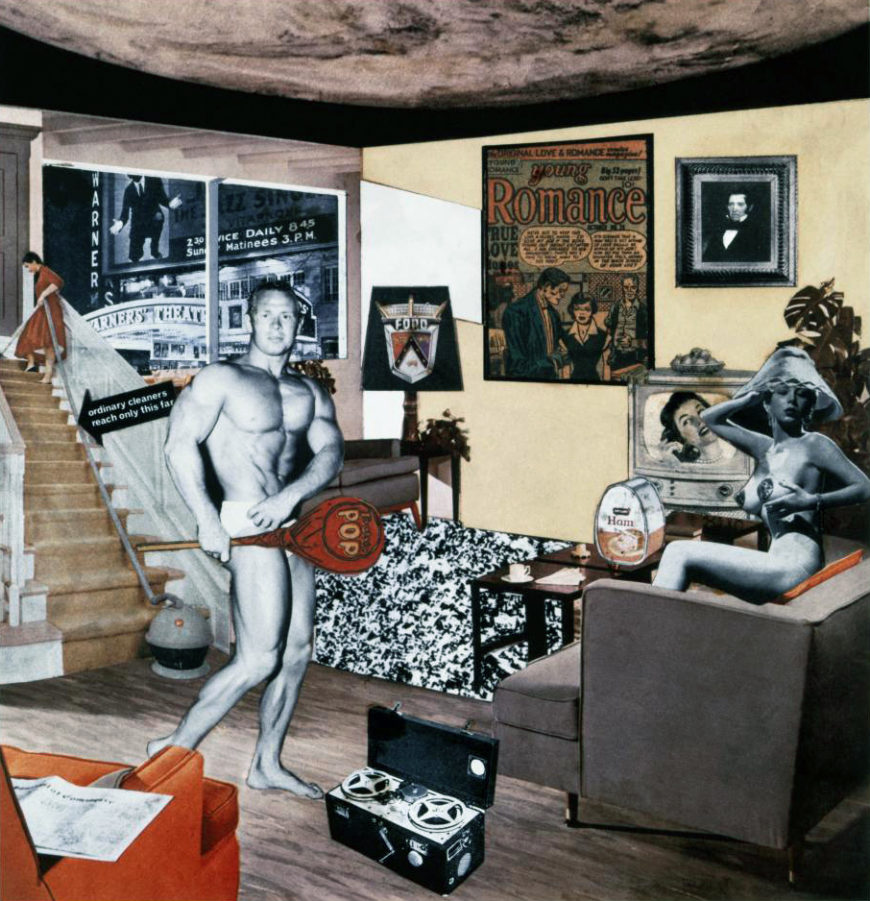
The Pop Artist and Ferry tutor / mentor Richard Hamilton connection runs deeper than surface Pop Art references. Like Hamilton’s domestic interiors in his work ‘Just what is it that makes today’s homes so different, so appealing?’ Ferry presents consumer paradise as psychological prison. The dream home becomes nightmare, the perfect woman becomes plastic fantasy. But where Hamilton maintained ironic distance, Ferry commits fully to his character’s delusion, making the critique more devastating through total emotional investment.

The song functions as both artwork and psychological case study, examining how capitalism doesn’t just sell us products but entire emotional frameworks. In 1973, this felt like avant-garde provocation. Today, it reads like anthropological field notes from our current reality.

“In Every Dream Home a Heartache” anticipated not just our technological predicament but our emotional one. In an era of AI companions, virtual relationships, and increasing social isolation, Ferry’s exploration of artificial intimacy feels less like satire and more like documentary. The song’s central question – what happens when human connection becomes another consumer product? – has never been more relevant.

Essential. Prophetic. Still deeply creepy.

RETROSPECTIVE: Joe Strummer’s Culture Clash Single

The Clash’s Reggae Revolution Examined. Just two years into the Seventies British punk era, this is no three-chord thrash. A brave, culturally and politically insightful brilliant record that asked questions the scene wasn’t ready to answer.

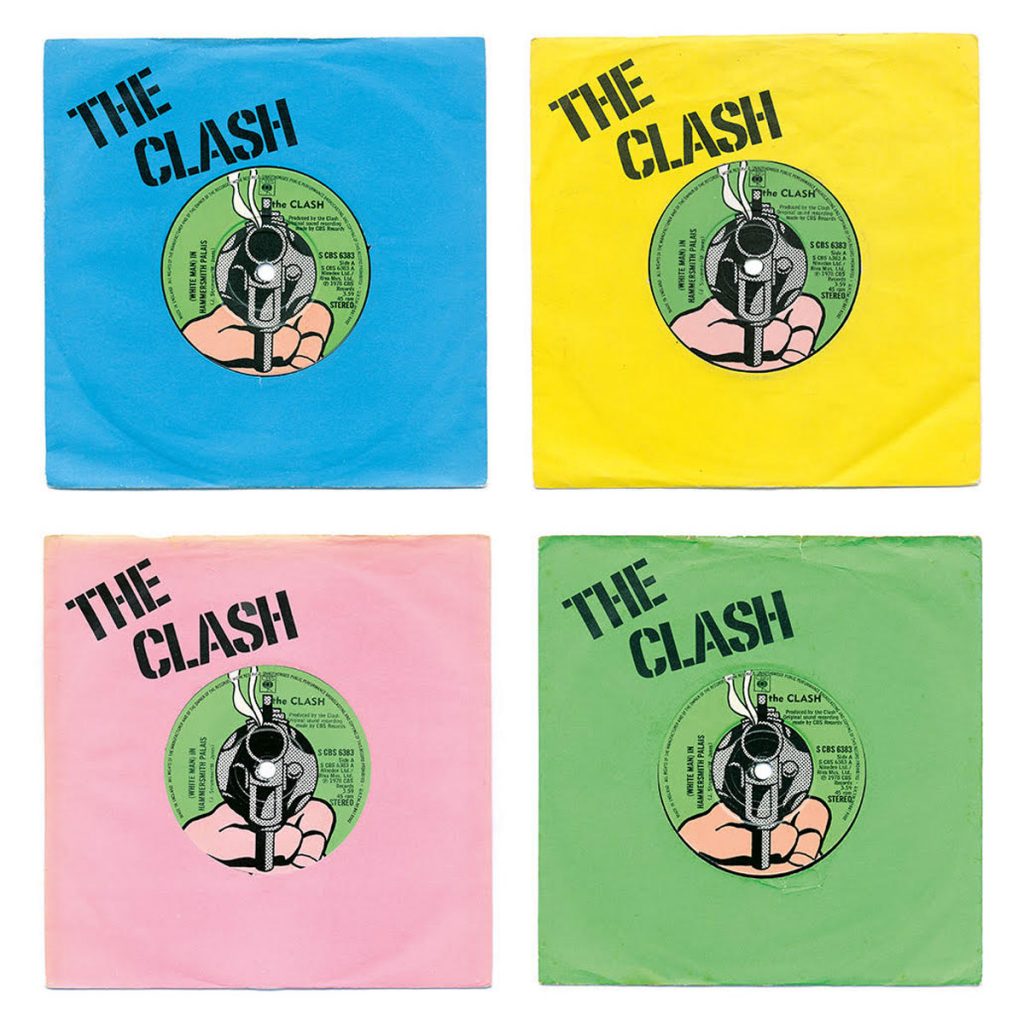
Four Colour The Clash White Man In Hammersmith Palais


Many years on from its release, Joe Strummer and Mick Jones’ most pointed cultural critique still cuts like a razor through the pretensions of punk’s supposed solidarity. ‘Seventy Eight’s “White Man In Hammersmith Palais” wasn’t just The Clash dipping their toes into reggae waters, it was a full-blooded dive into the contradictions of being white, privately educated (or art school) punks singing about revolution whilst signed to a major label.

The genesis of this track lies in Strummer and Don Letts’ pilgrimage to see Jamaican acts like Dillinger, Leroy Smart, and Delroy Wilson (the ‘Smooth Operator’) at the famous West London venue in early 1978. What they witnessed wasn’t the cultural communion Strummer expected, but a stark reminder of his own position as an outsider looking in. The resulting song became punk’s most honest examination of cultural tourism and political posturing.

Musically, it’s The Clash at their most adventurous pre-London Calling. The always under appreciated Topper Headon’s ska beat is perfect, not a ham-fisted attempt but a genuine understanding of reggae’s rhythmic subtleties. Mick Jones’ guitar work walks the tightrope between punk urgency and reggae’s more spacious approach, whilst Simonon’s bass provides the crucial foundation that makes the whole thing swing rather than simply thrash.

But it’s Strummer’s lyrical dissection of the disappointment of that night in the lightweight way the bands presented – plus the culture clash South London zeitgeist that elevates this from mere genre experiment to the essential punk document it has become. His observations about fashion victims “too busy fighting for a good place under the lighting’ and weekend revolutionaries were aimed squarely at punk’s emerging orthodoxies and not for the first time. That fabulous line about ‘turning rebellion into money’ and the hollowness of sloganeering hit closer to home than many wanted to admit. This wasn’t The Clash having a go at the establishment this was them turning the mirror on themselves and their scene, one now infiltrated by the Far Right.

The single’s commercial failure at the time, it barely scraped in, seems almost inevitable in hindsight. A huge fork in the road that was too reggae for the punk purists, too punk for the Rastas, and too uncomfortable for those who preferred their politics less complicated including anti-violence, wealth distribution, unity. Lyrically Strummer is really kicking off. Radio programmers didn’t know what to do with it, and neither did much of the press initially. This ain’t no White Riot redux.

Urban mythology has built up around the track over the years. Some claim Strummer wrote it in a fit of disgust after seeing Far Right punks and skinheads doing Nazi salutes at the Palais gig, though those who were there aren’t convinced of that. Others insist it was a direct response to criticism from Jamaican musicians about white bands appropriating reggae. The truth, as usual, is probably more mundane: four young men trying to make sense of their place in a musical and political landscape that was shifting beneath their feet.

What’s undeniable is the track’s influence on what followed. Without “White Man,” there’s no London Calling album, no “Rudie Can’t Fail,” no bridging of punk and reggae under the influence of Letts’, and that became one of The Clash’s defining characteristics. It opened doors not just for The Clash but forother bands who realised that punk’s year zero mentality was creative suicide and a punky reggae party might be route one for them too.

The production, handled by the band and Sandy Pearlman is sparse without being minimal, allowing each element space to breathe whilst maintaining punk’s essential urgency. The decision to keep Strummer’s vocals relatively low in the mix was inspired it forces you to lean in and listen rather than simply absorb. I’ve got four copies and I dread to think how many times my white ears have heard it. It’s impossible to get bored with.

Looking back, “White Man In Hammersmith Palais” stands as perhaps The Clash’s most prescient moment. Its questions about authenticity, appropriation, and the commodification of rebellion feel more relevant now than they did in 1978. ‘If Adolph Hitler flew in today, they’d send a limousine anyway’ they’d also get his opinion of this week’s Nazi atrocity. In an era when punk has been thoroughly sanitised and packaged for consumption, Strummer’s uncomfortable truths about the music industry are prophetic.

The Clash would go on to greater commercial success, but they never again achieved quite this level of self-awareness. “White Man” remains their most honest song, a moment when they looked in the mirror and didn’t like everything they saw, but had the courage to share that reflection with the world.