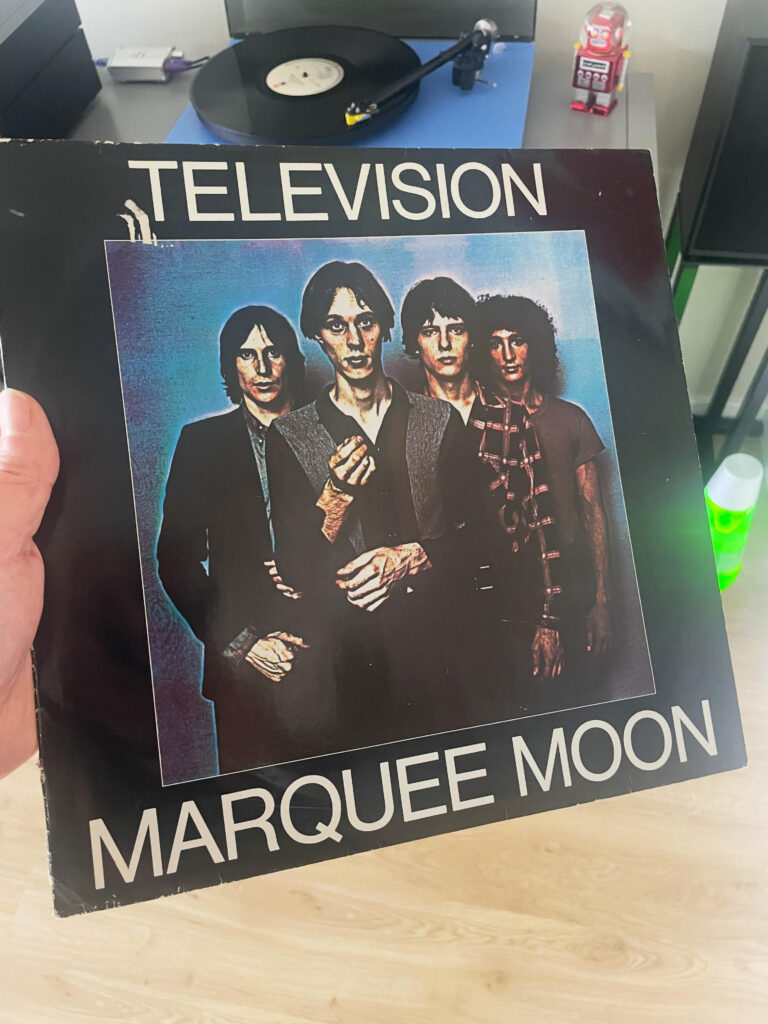
Retrospective: Television – Marquee Moon

New York in the mid to late Seventies was a city eating itself alive. Bankrupt on paper, feral in practice, littered with burnt-out cars, shuttered storefronts and the low-level menace of economic collapse. Out of this came CBGB, a former biker bar on the Bowery whose original promise of roots music curdled almost immediately into something far more interesting. It became a refuge for the literate, the maladjusted and the terminally dissatisfied. Punk did not so much arrive there as coagulate. And among the first bands to understand that this new language could be stretched, warped and interrogated rather than simply shouted was Television.

Tom Verlaine had already been living inside this world for years by the time Marquee Moon appeared in early 1977. Alongside Richard Hell he had escaped New Jersey boredom, bonded over poetry, speed and a shared belief that rock music should aspire to something sharper than stadium heroics. The Neon Boys, their early incarnation, were less a band than a sketchbook. When Hell departed in 1975 to form the Voidoids taking with him the ripped shirts and confrontational nihilism that would become punk’s uniform, Television were freed from the obligation to perform rebellion in quotation marks. What remained was a band increasingly obsessed with structure, tone and the slow burn of ideas unfolding over time.

CBGB became their proving ground. While other groups detonated through short sets like flash-bangs, Television played long, winding songs night after night, refining them in public. Guitar lines evolved incrementally. Tempos breathed. Solos were not indulgences but arguments. By the time Elektra committed them to tape, these songs had been lived inside, paced around, stripped back and rebuilt. This was not punk as rupture but post-punk as concentration.

The first thing that still startles about Marquee Moon is its clarity. In an era obsessed with distortion and speed, Television chose exposure. Verlaine and Richard Lloyd rejected the familiar hierarchy of rhythm and lead, opting instead for two guitars in constant dialogue. Lines coil, overlap and contradict each other. Melodies appear, dissolve, then reappear altered. Verlaine’s tone is all treble edge and nervous elegance, like fluorescent light flickering on wet pavement. Lloyd grounds the music without weighing it down, muscular but articulate. Beneath them, Fred Smith’s bass moves rather than anchors, while Billy Ficca’s drumming borrows from jazz as much as punk, restless, rolling, impatient with straight lines.

Andy Johns’ production deserves credit for knowing when to disappear. Best known for capturing the brute force of Zeppelin and the Stones, here he allows space to remain space. You hear fingers scrape strings, cymbals decay naturally, air move in the room. Nothing is smothered. Nothing is disguised.

The album unfolds like a series of nocturnal walks through the same city seen from different angles. “See No Evil” announces itself with a rush of romantic urgency, its guitars darting ahead of the beat as if chasing something just out of reach. “Venus” reframes desire as motion and uncertainty, its lyric more impression than declaration. “Friction” hums with paranoia, Verlaine’s voice hovering between detachment and barely concealed anxiety, a perfect document of urban overstimulation.

Then there is the title track, still one of the most audacious statements ever made by a band nominally associated with punk. Ten minutes long, refusing any conventional chorus, it unfolds patiently, methodically. The closing guitar passage is not a solo in the heroic sense but a gradual ascent, Verlaine circling a figure, stretching it, worrying at it, until something breaks open. It feels earned rather than delivered. The listener is trusted to stay with it.

That trust is why Marquee Moon continues to endure. It has never belonged comfortably to its moment. While safety pins and sneers quickly dated, this record remained oddly ageless. Its concerns alienation, romantic idealism, intellectual hunger, the solitude of city life still resonate because they were never tied to fashion. Each generation finds it not as an artefact but as an invitation.

Its influence is everywhere yet curiously diffuse. You hear its DNA in post-punk, indie and art rock, in bands who learned that guitars could converse rather than compete. Sonic Youth, R.E.M., The Strokes and countless others absorbed its lessons, but no one has ever really replicated it. That is because its magic lies in a precise convergence of people, place and temperament that cannot be reverse engineered.

Most new wave guitar records chased velocity and attitude. Marquee Moon chased precision and clarity. It demonstrated that intensity did not require volume, that virtuosity did not need flash, and that punk’s most radical gesture might be patience. Television never surpassed it and never needed to. The album stands complete, self-contained, immune to time.

It remains the sound of New York before it was cleaned up, when danger and beauty shared the same bar stool and ideas mattered as much as noise. A record that asks you to listen closely, think longer, and walk home alone replaying its guitar lines like secret diagrams. Not just one of the greatest new wave guitar albums, but one of the rare rock records that feels inevitable, as though it was always there, waiting for the right minds to tune into it.

Opinion: Damnatio Memoriae To You Two

The Romans believed you could kill a man twice: once with a knife, and once with a chisel. Damnatio memoriae was the final insult – the attempt to erase a disgraced leader not just from power, but from history itself. Names scraped from stone. Faces smashed out of marble. A bureaucratic fantasy that if you removed the image, the damage would politely follow it into oblivion.

It never did.

Which is worth remembering when people fantasise about a future where Donald Trump or Nigel Farage are somehow airbrushed out of the record, as if history might do us the courtesy of forgetting its own mistakes. They won’t be erased. They’ll be preserved, not as heroes, but as warnings.

Rome’s condemned emperors weren’t nobodies. They were reminders of moments when the system broke down, when spectacle replaced competence and grievance became governance. That’s why the Senate went after their memory so aggressively: not because they were insignificant, but because they were awkward. Proof that power had slipped the leash.

Trump and Farage sit in that same uncomfortable space. Not great statesmen, not master strategists, just opportunists who learned how to monetise anger in an era of economic erosion and cultural exhaustion. They didn’t invent the decay; they surfed it, grinning, while institutions buckled beneath them.

Like those defaced Roman busts, their absence would tell a louder story than their presence ever could. You don’t explain the early 21st century without explaining how democratic systems proved so pliable, how media ecosystems rewarded provocation over truth, how resentment was sold as authenticity and bought in bulk.

History doesn’t forget figures like this. It labels them. Contextualises them. Pins them to the page with a quiet but devastating caption: this is what happens when inequality deepens, trust collapses, and politics becomes theatre. The real memorial isn’t a statue, it’s the wreckage left behind. Fractured discourse. Weakened norms. A lingering sense that the rules are optional if you shout loudly enough.

So no damnatio memoriae here. No chisels, no erasure. Just the long, cold afterlife of being remembered as a cautionary tale, the kind future generations study not with admiration, but with disbelief that it was ever allowed to happen at all.

OPINION: The 51st State Thought Experiment

Britain becoming the 51st state is fantasy. Britain choosing to behave like one is not. This what-if examination explores how a pro-US Reform government could radically reshape the economy, science and social contract by embracing American models rather than apologising for them.


The fantasy is not that Britain becomes the 51st state of America. The fantasy is that Britain can continue as it is – adrift from Europe and with a tenuous US trade agreement. The more plausible future is less dramatic and far more unsettling: a sovereign Britain that keeps the Crown, the pound and its sense of self, but quietly reorganises its economy and institutions around an American centre of gravity.

A pro-US Reform government would not ask for stars on the flag. It would do something more radical and more realistic. It would ask whether Britain’s post-war settlement, its economic etiquette and its suspicion of ambition are still fit for a century shaped by American power, capital and technology.

The 51st state thought experiment matters not because it might happen, but because it exposes what would change if Britain stopped pretending it was something other than what it already is: a mid-sized, high-talent, under-leveraged economy living inside an American system without admitting it.

Britain already inhabits an American world. Its security is guaranteed by American military power. Its technology sector is fuelled by American capital. Its cultural output is measured against American benchmarks, even when it pretends to resist them. What Britain lacks is not independence, but honesty.

A Reform government aligned with the United States would frame this not as submission, but as realism. Growth before comfort. Scale before sentiment. Outcomes before process. Britain would remain sovereign, but it would stop behaving as though sovereignty meant insulation from global gravity.

This would mark the end of Britain’s long habit of moralising its own inertia. The language would change. Decline would no longer be described as dignity. Stagnation would no longer be defended as fairness. Alignment would become a choice, not an embarrassment.

The central economic shift would be philosophical. Growth would cease to be treated as a happy accident and start being treated as a moral obligation. Labour markets would be loosened. Planning laws would be stripped back in the name of speed. Capital would be welcomed without apology. Failure would be tolerated rather than stigmatised.

The results would look uncomfortably American. More volatility. More visible inequality. More upside for those prepared to move quickly and take risk. Regions that adapt would accelerate. Regions that do not would fall further behind.

This would be defended as an end to managed decline. Britain has spent decades spreading stagnation evenly and calling it social justice. A pro-US Reform government would argue that fairness without growth is simply decay with better manners.

In this Britain, personal wealth would stop being something that required apology. Equity would matter more than salary. Ownership would matter more than tenure. The cultural suspicion of ambition would be quietly retired.

This would produce more millionaires and more discomfort. Britain’s class system has always existed, but it prefers to operate in soft focus. An American-style economic reboot would sharpen the image. Winners would be obvious. So would those left behind.

The political wager would be that aspiration matters more than equality, and that people tolerate inequality better than they tolerate the sense that nothing ever improves.

Britain’s strongest case for alignment lies in science and technology. This is not a declining sector, nor a fragile one. Britain is already a serious force in artificial intelligence, life sciences, quantum computing, climate tech and fintech. Its problem is not ideas, but scale.

A pro-US Reform government would align regulation, funding and research priorities with the American innovation system. Capital would move more freely. Defence and dual-use research would be expanded. Universities would be treated less as heritage institutions and more as strategic assets.

The effect would be immediate. Fewer startups selling early to Silicon Valley. More companies scaling at home. London, Cambridge, Oxford, Manchester and Edinburgh operating as an integrated research and innovation corridor plugged directly into American capital and compute.

The cost would be autonomy. Britain would risk becoming a research engine for American priorities rather than a global rule-setter in its own right. But the counter-argument would be blunt. Ideas without scale are just exports waiting to happen.

The NHS would survive a Reform reboot, but it would lose its untouchable status. A hybrid system would emerge, closer to American reality than European idealism. Public provision would remain a floor, not a ceiling. Private care would be normalised rather than whispered about. Insurance-style supplementation would spread quietly.

Outcomes would improve for those with money and worsen for those without resilience. Access would speed up. Anxiety would rise. But the system would become more honest about what it can and cannot provide.

The Reform case would be unapologetic. A healthcare system that functions primarily as a moral symbol is not a functioning system.

Education would be reframed as strategic infrastructure. Elite universities would be celebrated rather than apologised for. Fees would be defended as investment. Student debt would be normalised. Skills pipelines would be aligned ruthlessly with technology, defence, engineering and energy.

Inequality would arrive earlier, but ceilings would rise. Britain would stop pretending that universal sameness produces excellence, and start admitting that outcomes depend on concentration of resources and intent.

The most disruptive change would be cultural. Politics would become louder, faster and more confrontational. Consensus would be treated as delay. Consultation would be seen as obstruction. Media would grow more polarised, more performative and more American.

Britain would lose some of its quiet decency and gain a sense of direction. Whether that trade is worth making depends on how much one values calm over momentum.

Would this Britain work? Economically, almost certainly. Technologically, very likely. Socially, only if Britain accepts that equality of outcome is no longer the organising principle.

This is the truth buried inside the 51st state thought experiment. Britain does not need to become American. It needs to decide whether it still believes in growth, ambition and power, or whether it prefers decline that feels fair.

A pro-US Reform government would not be asking Britain to surrender its identity. It would be asking whether that identity has become a comfortable excuse for underperformance. The future on offer is not annexation. It is acceleration.

The real question is not whether Britain could survive behaving more like America. It is whether it can survive continuing to pretend it is not already living in America’s world.

OPINION: Art Punk & The Dismissal Of Punk Orthodoxy

Art punk was the moment punk stopped congratulating itself and started asking harder questions. Emerging in the late Seventies as a dismissal of punk orthodoxy and refusal to let that rebellion calcify into costume. It channelled punk’s energy through conceptual art, minimalism, electronics and a deep suspicion of rock mythology. Bands on both sides of the Atlantic treated punk less as a sound than as a method, stripping it down, warping it and, in some cases, dismantling it altogether. What followed was music that alienated as often as it thrilled, and in doing so quietly reshaped everything that came after.


Art punk was never a genre anyone involved bothered to name at the time. Like most labels that later harden into received wisdom, it was applied by critics trying to explain why certain Seventies punk records sounded wilfully strange, emotionally evasive and intellectually awkward compared to the pub-brawl version of punk that nostalgia prefers to freeze-frame. Punk, in the familiar story, was about demolition, a righteous zero hour where rock was burned down and rebuilt from instinct alone. Art punk accepted the need for destruction, then immediately started asking what else might be salvaged from the wreckage. Ideas, for one. Doubt, irony, formal experiment, the suspicion that rock music might actually benefit from thinking too hard about itself.

The distinction was not technical ability or even experimentation for its own sake, but intent. Art punk distrusted punk’s own emerging clichés almost as much as it despised the bloated theatrics of Seventies rock. It had no interest in authenticity as sweat or sincerity, seeing both as just another costume. Instead, it treated rock as a medium to be dismantled, reframed and occasionally mocked. Songs could be cut short, stretched into abstraction or reduced to repetition. Lyrics might read like fragments, slogans or private jokes at the listener’s expense. Performance itself became a problem to be solved, often by draining it of charisma altogether.

New York provided the first sustained proof that punk did not have to mean bluntness. Television looked like a rock band but behaved like a literary salon with amplifiers. Their long, spiralling guitar lines owed more to jazz, poetry and restraint than to punk’s scorched-earth economy. Marquee Moon remains a provocation precisely because it refuses easy allegiance. It is neither punk-as-slogan nor rock-as-spectacle, but something cool, elevated and faintly aloof, a record that suggested punk might be a framework rather than a rulebook.

Talking Heads took a different route, draining punk of romance and replacing it with tension. Early Talking Heads records sound like anxiety formalised, clipped rhythms and minimal figures supporting lyrics obsessed with alienation, systems and self-surveillance. Borrowing freely from Dada, conceptual art and pop anthropology, they treated the modern city as both subject and laboratory. Punk here was no longer about escape but about exposure, about making the listener sit with their own discomfort.

If Talking Heads intellectualised punk, Suicide obliterated its remaining assumptions. Drum machines, primitive synthesisers and confrontational repetition stripped rock to its barest, most threatening elements. Suicide were not interested in scenes, solidarity or even approval. Their music functioned like an endurance test, daring audiences to confront boredom, menace and emotional void. In retrospect, they feel less like a punk band than a warning about where punk might end up if it followed its own logic to the extreme.

That logic became even more unstable in the American Midwest. Pere Ubu sounded like industrial collapse rendered as art. Drawing on musique concrète, free jazz and an atmosphere of civic decay, they made punk that felt genuinely alien. The Modern Dance was not a refinement of punk but a mutation, proving that the form could absorb noise, abstraction and paranoia without becoming polite. It is no accident that later British post-punk musicians treated Pere Ubu less as peers than as evidence that almost anything was possible.

Conceptual control reached its most explicit form with Devo, who turned the band into a piece of performance art. Their theory of de-evolution, identical uniforms and mechanical rhythms drained rock of humanist pretence. Devo’s satire was not playful but forensic, exposing the stupidity and conformity beneath American optimism. Punk, for them, was simply the most efficient delivery system for bad news.

In Britain, art punk arrived not as an opening statement but as punk’s second thought. Once the safety pins were commodified and the outrage routinised, bands began interrogating what punk could still do. Wire understood earlier than most that punk’s real weapon was not speed or volume but reduction. Pink Flag treated songs as raw material, slogans rather than statements. What followed was even more radical: a steady erasure of punk itself in favour of electronics, abstraction and distance. Wire did not betray punk. They completed it, then moved on.

Magazine offered a more overtly literary escape route. Howard Devoto replaced punk’s blunt nihilism with modernist unease, his lyrics circling alienation, desire and power rather than simply rejecting everything in sight. The music incorporated keyboards and art-rock structures without lapsing into comfort. Magazine mattered because they insisted that punk intelligence did not have to disguise itself as rage.

If some of this still looked like rock music, Throbbing Gristle arrived to ensure that nobody in the U.K. at least felt safe confusing art punk with entertainment. Emerging directly from the performance art collective COUM Transmissions, Throbbing Gristle treated sound as material and provocation as principle. Tape loops, electronics, transgression and deliberate moral discomfort replaced songs altogether. Their work sits at the outer edge of art punk, but it is essential, because it demonstrates the endgame of punk taken seriously as an artistic idea rather than a style. Once you accept that anything can be questioned, you eventually question whether music needs to behave like music at all.

The influences that shaped these bands rarely pointed backwards. Minimalism suggested repetition without payoff. Krautrock offered propulsion without blues heritage. In praise of negative space Dub revealed space and absence as compositional tools. Conceptual art legitimised irony, framing and emotional detachment. Above all, art punk rejected sincerity as a moral virtue. Authenticity, as rock had defined it, was exposed as another sentimental fiction.

What makes art punk still matter is how badly it fits with the way punk is now remembered. Contemporary punk nostalgia prefers leather jackets, simple narratives and the comforting lie that rebellion can be endlessly replayed without consequence. Art punk tells a harsher truth. It says that punk only mattered when it refused to behave, when it alienated its audience, when it dismantled its own myths faster than the market could package them. Very little of that spirit survives in a culture that treats punk as heritage branding.

Art punk was not about saving punk. It was about proving that punk was disposable. That once its job was done, the only honest response was to push it somewhere uncomfortable and leave it there. The real scandal is not that punk ended, but that so much of what followed pretended it never asked these questions at all.

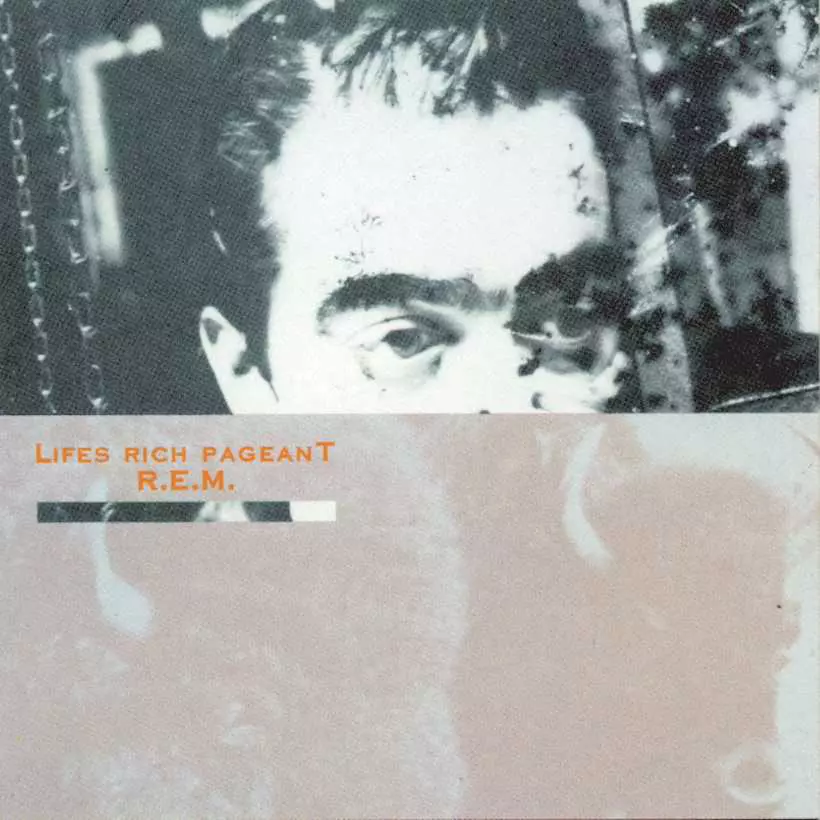
RETROSPECTIVE: R.E.M.’s Epiphany

A pivotal moment in R.E.M.’s evolution, Lifes Rich Pageant captures the band stepping out of the shadows and into focus. This retrospective long read examines its place in the R.E.M. canon, the creative risks that reshaped their sound, and why this fierce, principled 1986 album marked the point where conviction, clarity, and power finally aligned to signpost the future.

R.E.M. Lifes Rich Pageant

R.E.M. had already built a cult by the time Lifes Rich Pageant arrived in the summer of 1986, but it was still a fragile thing. College radio fame, earnest fanzine devotion, and a reputation for wilful obscurity are not the same as permanence. The first three albums had sketched a band almost mythic in outline: Michael Stipe’s voice half-buried, lyrics treated like overheard conversations, guitars that chimed rather than cut. They were beloved, but they were also evasive. Lifes Rich Pageant is the moment R.E.M. stopped hiding behind atmosphere and decided to speak plainly, loudly, and with intent.

It is their loudest early record, and that matters. Bringing in Don Gehman, fresh from work with John Mellencamp, was a deliberate act of sabotage against their own mystique. Gehman insisted on clarity, punch, and definition. Peter Buck’s guitar was no longer a shimmering fog but a serrated instrument, pushed forward in the mix. Mike Mills’ bass became a melodic force rather than a polite underpinning. Bill Berry’s drumming, often understated on earlier records, snapped into muscular life. This was R.E.M. discovering the value of impact.

The opening run is still startling. Begin the Begin does not drift in, it kicks the door off its hinges. Stipe’s vocal, for once, is up front and intelligible, full of clipped urgency. These are not cryptic mumblings but rallying cries, political and personal tangled together. The world is wrong, systems are broken, and the band sound newly determined to say so. The shift is not just sonic but philosophical. Where Murmur and Reckoning felt inward and impressionistic, Lifes Rich Pageant looks outward, alert to pollution, imperialism, environmental collapse, and moral fatigue.

Fall on Me remains the record’s moral centre. It is a protest song that never once raises its voice, a masterclass in restraint. The lyric is direct without being didactic, the melody aching without self-pity. It is one of the first moments where Stipe’s political writing finds a universal register, rooted in the body and the family rather than slogans. In retrospect, it lays the groundwork for everything from Green to Automatic for the People.

Cuyahoga extends that environmental concern into something almost elegiac. Rivers catch fire, civilisations poison their own wells, and history repeats itself with grim reliability. Yet the song does not despair. There is still a sense of wonder, a belief that naming the damage is a form of resistance. This balance between anger and hope becomes a defining R.E.M. trait, separating them from the hectoring earnestness that doomed many politically minded bands of the era.

Crucially, Lifes Rich Pageant does not abandon joy. These Days barrels along with almost reckless energy, Mills and Berry driving the song like men possessed. I Believe offers a kind of bruised optimism, a declaration of faith that feels hard-won rather than naive. Even Superman, a cover, serves a purpose. Sung by Mills, it punctures any creeping solemnity and reminds the listener that R.E.M. still understood pop pleasure, still valued humour and lightness amid the seriousness.

Within the R.E.M. canon, this album is the hinge. Everything before it is prelude, everything after it is expansion. Without Lifes Rich Pageant, there is no confidence to make Green, no authority to slow things down on Automatic, no credibility when the band take stadiums by the throat in the late eighties and early nineties. It is the moment they realise they can be both principled and powerful, obscure and accessible, righteous and tuneful.

It is also the album where Michael Stipe steps fully into his role as a frontman. Not a rock god, never that, but a communicator. His lyrics sharpen, his vocals project, and his presence anchors the band’s ambitions. He sounds less like a man whispering secrets and more like someone willing to be overheard.

Nearly four decades on, Lifes Rich Pageant feels less like a transitional record and more like a manifesto. It is R.E.M. announcing what they stand for, sonically and ethically, and proving they can do so without sacrificing complexity or grace. Many bands have a moment where talent hardens into purpose. This is R.E.M.’s, and it still crackles with urgency, intelligence, and the thrilling sound of a group realising exactly how good they can be.

CURRENT AFFAIRS: USA Rogue State? Part 2

Following the events of January 3rd a continuation piece from my article USA Rogue State? February 2025.

USA: Rogue State? (Part 2) – A New Precedent

The great conflicts of our time still loom. Ukraine grinds on, the Baltic states remain taut, and Taiwan sits under permanent pressure. Yet America’s sudden strike on Venezuela suggests something else is shifting first: the way power is exercised, and the ease with which it is now justified.

The world has not tipped into open war. Not yet.

Ukraine grinds on. The Baltic states remain tense but intact. The Taiwan Strait is still defined more by naval choreography than gunfire. The much-trailed great-power collisions remain, for now, on the horizon. But something else has moved, quieter perhaps, and more corrosive.

The overnight American strike on Venezuela, unilateral and justified after the fact, is not the opening act of global conflict. It is something subtler and potentially more dangerous: a precedent in search of a doctrine.

Washington insists this was exceptional. A sui generis response to criminality, corruption and national collapse. That argument would be more persuasive were it not the standard preamble to almost every intervention of the past three decades. Exceptionalism, after all, has form.

What unsettles is not simply that the United States acted, but how easily it did so, and how thin the legal and diplomatic scaffolding appeared to be. There was no UN mandate. No coalition patiently assembled. No serious attempt to clothe the operation in the rituals of multilateral consent. This was not Iraq redux. There was no effort to persuade the world. There was merely an announcement that it had been done.

For America’s adversaries, this is not hypocrisy newly discovered. Moscow and Beijing have long dismissed the so-called rules-based order as a euphemism for American latitude. But the Venezuelan operation offers them something more useful than rhetoric. Evidence.

Russia, already at war in Europe, will draw a bitter but clarifying lesson. Allies, however loyal, are expendable when they cease to be useful or defensible. Venezuela was a geopolitical bauble: oil-rich, symbolically defiant, but strategically indefensible from Moscow’s perspective. Its removal does not weaken Russia militarily, but it further narrows the map of places where Russian power can plausibly shelter its friends.

This matters not because Venezuela was ever decisive to Russia’s fortunes, but because it represented something Moscow increasingly lacks: the ability to project influence beyond its immediate neighbourhood. One by one, those outposts are disappearing. The loss tightens Russia’s isolation at precisely the moment it can least afford it.

China’s calculation is quieter, but potentially more consequential.

Beijing does not depend on Venezuelan oil to function. It has diversified too carefully for that. But Venezuela has been useful precisely because it lay outside American influence, a supplier insulated from Washington’s leverage, sanctions and electoral mood swings. Energy security is not merely about volume. It is about options.

A Venezuela governed from Washington, or by a government whose survival depends upon Washington, removes one of those options. Oil that once flowed eastward under long-term arrangements may now be repriced, redirected, or simply discouraged. No announcement is required. Markets, like diplomats, understand power when they see it.

None of this proves motive. It does not need to. Geopolitics rarely operates on confession. The point is consequence. The removal of Maduro does not merely tidy up a regional problem. It reshapes the strategic environment in which Russia and China already feel increasingly hemmed in.

For the Baltic states, the lesson is more ambiguous. On the one hand, the operation demonstrates that American power remains overwhelming and decisively usable. On the other, it underlines an uncomfortable truth: US force is increasingly discretionary. It is deployed where Washington wills, not where treaties alone demand. Deterrence depends not only on capability, but on predictability, and predictability is precisely what has been weakened.

China, watching from Beijing, will be less interested in Venezuela itself than in the method. Taiwan is not Caracas. The military, economic and reputational costs of a move across the Strait are of a different order altogether. But the Venezuelan strike sharpens two competing instincts within Chinese strategic thinking.

The first is urgency: act before American resolve hardens further. The second is caution: note how swiftly international opinion curdles when sovereignty is breached without consent.

Beijing’s preferred posture remains pressure without ignition. Encirclement without invasion. Venezuela does not alter that calculus overnight, but it adds a volatile data point to an already unstable equation.

What Ukraine, the Baltics and Taiwan share is that they are already priced into global risk. Markets, militaries and ministries have learned to live with them. Venezuela was different precisely because it was unexpected. It did not emerge from slow escalation or a frozen conflict thawing. It arrived fully formed, announced as fait accompli.

This is why the episode matters beyond Latin America. It suggests a United States increasingly comfortable with post-hoc justification, less concerned with international buy-in, and more willing to test how far its power can be exercised before resistance coheres. That is not rogue behaviour in the cartoon sense, but it is a form of strategic unilateralism that corrodes the very norms Washington claims to uphold.

Supporters will argue that the outcome justifies the method. That a malign regime has been removed. That oil markets will stabilise. That a long-suffering population may yet glimpse reform. All of this may prove true. But outcomes do not erase precedents. They entrench them.

The question, then, is not whether America is a rogue state. The term remains too blunt, too loaded, too performative. The better question is whether the United States is becoming a situational state, one that applies law, restraint and multilateralism when convenient, and dispenses with them when speed or advantage beckons.

History suggests this is not a sustainable posture. Empires can ignore rules only while they write them. The moment others begin to improvise in response, the system fractures.

The great conflicts remain on the horizon. But Venezuela reminds us that the road towards them may not be paved with grand confrontations or red-line speeches. It may instead be littered with smaller, sharper acts, each justified, each exceptional, each making the next one easier.

And that, more than any tank column or missile test, is what should give us pause.


Next. Will a rogue USA look North?

Venezuela will not be the template. It will be the permission. Once permission is granted, the question is no longer where America will act next, but how those closest in Canada and Greenland will recognise the moment when alignment begins to feel like absorption. In his peculiar way Trump has asked nicely, we are beginning to see that this USA will simply take what doesn’t capitulate easily.

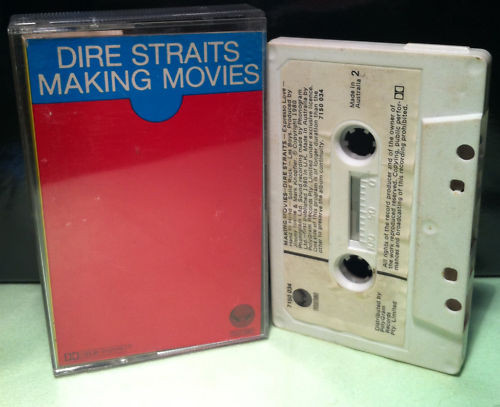
RETROSPECTIVE: Dire Straits’ 1980 Audiophile Delight

A retrospective review of Dire Straits’ 1980 album Making Movies. Knopfler’s technical brilliance meets romantic melancholy in an era that supposedly had no use for either. In my heavily late Seventies NME hack influenced style.


DIRE STRAITS: Making Movies (Vertigo) 1980

There was something deeply suspicious about a band this technically accomplished in 1980. While half of London was still thrashing about in bin liners and safety pins, Mark Knopfler’s lot turned up with an album so pristine, 38 minutes so meticulously crafted, that you half expected to find the corners mitred.

Making Movies arrived eighteen months after their self-titled debut made them improbable millionaires in America, and it was clear they’d been spending the intervening period in expensive studios rather than the back rooms of grotty pubs. Recorded at New York’s Power Station with Jimmy Iovine producing – the man who’d just finished polishing Springsteen’s The River – this was Dire Straits going for broke, or rather, going for more money than they’d already got.

The opening salvo, “Tunnel of Love,” sprawled across eight minutes like some Dylanesque fever dream filtered through a Tyneside accent. It was all fairgrounds and Spanish guitars, with Knopfler’s finger-picked lines circling each other like moths round a sodium lamp. The man played like he was being paid by the note, which he probably was.

“Romeo and Juliet” – which got played to death on Radio 1 – was the sort of thing that had sixth-formers scribbling lyrics in the back of their French textbooks for years. It was wretchedly romantic, all unrequited longing and cinema queues, with Knopfler doing his best to sound like he’d actually had his heart broken rather than just read about it in a Leonard Cohen novel.

But here was the rub: it worked. Despite themselves, despite the almost offensive levels of musicianship on display, despite the fact that punk never happened in their world, Dire Straits crafted something genuinely affecting. “Hand in Hand” swung like prime-era Dylan, while “Les Boys” – a tawdry tale of Parisian transvestites – had the sort of seediness that Bowie used to do before he discovered Switzerland and synthos.

The centrepiece, though, was “Skateaway,” a peculiar bit of New Wave-ish funk about a rollerskating girl cruising through urban decay. It had synthesizers, for God’s sake. Synthesizers! On a Dire Straits record! Pick Withers’ drumming was tighter than a gnat’s chuff, and the whole thing sounded like what might happen if Steely Dan decided to have a go at writing a hit single.

Mark Knopfler remained an enigma wrapped in a headband. His vocals sounded like he was perpetually on the verge of nodding off, yet there was a sly intelligence to his wordplay that elevated this above standard-issue soft rock tedium. He’d clearly listened to a lot of JJ Cale, a lot of Dylan, a lot of those American FM radio staples, and he wasn’t afraid to nick the best bits.

The production was, predictably, immaculate. Every hi-hat shimmer, every bass throb from John Illsley, every keyboard wash from Roy Bittan (on loan from the E Street Band, no less) sat exactly where it should. It was the sonic equivalent of a freshly Hoovered front room with the cushions all plumped up.

Which brought us back to that initial suspicion. In an era when the most exciting music was being made by people who could barely play their instruments, Dire Straits were almost confrontationally competent. They weren’t interested in year zero, in tearing it all down and starting again. They wanted to take you to the pictures, buy you chips on the way home, and maybe have a bit of a cuddle if you were lucky.

And you know what? Sometimes that was enough. Making Movies didn’t change your life or inspire you to form a band in your mate’s garage. But on a rainy Tuesday evening when you were skint and miserable and the world seemed determined to grind you down, it might just have made things seem temporarily bearable.

Which, in 1980, was worth something.

RETROSPECTIVE: Talking Heads – Remain In Light 1980

Some records arrive like a whisper and fade, others crash in like an avalanche and leave you stumbling in their wake. Remain in Light is one of the latter, a slab of paranoia, rhythm, and obsession that still sounds as unmoored and visionary in 2025 as it did in 1980. Forty-five years on, the album hums with the intensity of four New Yorkers trying to rethink the world, their identities, and what a pop record could do. It is both human and alien, cerebral and primal, art-school gone feral. Listening now, you realise Talking Heads did not so much make an album as invent a language for disorientation.

Part One: The Sleeve

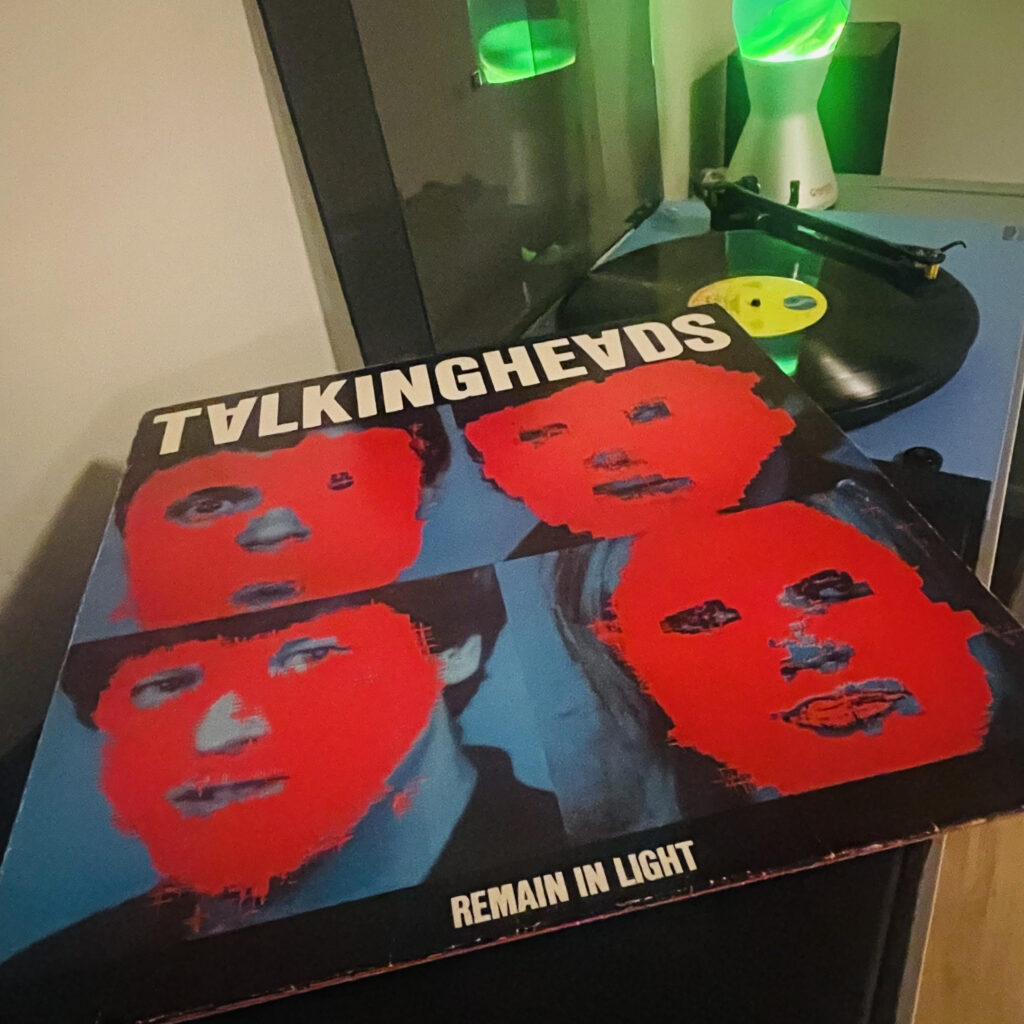
Pick up the sleeve and your first impression is confusion masquerading as design. Four faces, distorted and layered, hover in red, black, and white, a simulacrum of identity rendered through early MIT image-processing technology. The work of Tibor Kalman and M&Co, it feels both robotic and living. Your eyes register familiar features, only to be immediately unmoored. Tina Weymouth’s fascination with African masks, refracted through digital manipulation, turns the human face into a machine’s suggestion. It is uncanny, a whisper of the postmodern anxiety that would haunt the next four decades of visual culture.

Every detail matters. The typography is sharp and arresting, suggesting urgency without screaming. Fighter-bomber Avenger silhouettes and ghostly abstractions hover in the margins, hinting at violence, both literal and psychic. The design does not complement the music so much as anticipate it, a visual prelude to the interlocking chaos within. In 1980, it was a statement that identity was mutable, mediated, and constantly under negotiation. Today, that’s the norm.

Kalman’s brilliance was in making technological imperfection a part of the aesthetic. The faces are corrupted, glitched, degraded – human error filtered through a machine. This is not a record cover; it is a manifesto. By the time you slide the vinyl from its jacket, you are already prepared for disorientation. What follows is not just music, it is an ecosystem, a carefully constructed labyrinth designed to engage both body and mind.

Part Two: The Music & Legacy

Recording began at Compass Point Studios in Nassau, a sun-soaked bunker that would become a crucible for genius and frustration alike. The band was joined by Brian Eno, the unofficial fifth Head, whose influence was less about notes than architecture. He arrived with a philosophy: treat the studio as an instrument, treat chaos as composition, and do not flinch at failure. The sessions were famously intense. The band worked long, bewildering hours, layering loops, polyrhythms, and improvisations until something miraculous emerged from the mess.

The foundation was African-inspired polyrhythms, specifically the hypnotic grooves of Fela Kuti. This was not mere imitation; it was a translation of complex rhythmic systems into a New York art-rock vocabulary. Each instrument moves independently, a conversation of contradictions. Drums and percussion interlock but never collide, basslines snake around vocal hooks, and guitars oscillate between melody and texture. Adrian Belew’s guitar is both nervous and ecstatic, Jon Hassell’s trumpet drifts like a mirage, and Eno’s synthesizer textures shimmer in the spaces between. The record is dense yet breathable, controlled yet chaotic, deliberate yet accidental.

Byrne’s vocals are equally layered, a collage of obsessions and idiosyncrasies. He borrows from hip-hop cadences, ritualistic chant, and fragmented narrative, creating a delivery that is more incantation than song. The lyrics often circle existential dread with playful detachment. In “Born Under Punches”, Byrne’s voice is manic and fractured, a protagonist grappling with information overload and identity crisis. “Crosseyed and Painless” is a sermon on anxiety, paranoia, and social collapse, delivered with sharp wit and relentless rhythm.

The album’s architecture is deliberate. The first side, buoyed by kinetic energy, draws you into the labyrinth. “The Great Curve” is an ecstatic frenzy, the band locked in an ecstatic groove that simultaneously propels and destabilises. By the time “Once in a Lifetime” arrives, you are primed for reflection. The song balances existential inquiry with dance floor immediacy, Byrne pondering selfhood and entropy against a backdrop of hypnotic repetition. It is both absurd and devastatingly human.

Side two darkens the palette. “Houses in Motion” jitters with post-industrial dread, a cityscape of anxiety rendered in sound. “Seen and Not Seen” drifts toward abstraction, its protagonist dissolving into observation, a meditation on presence, absence, and perception. “Listening Wind” introduces political undercurrents, a commentary on global turbulence and American complacency filtered through dense polyrhythms and hypnotic motifs. The album closes with “The Overload”, a spectral transmission that hints at collapse and transcendence simultaneously.

The genius of Remain in Light lies in its simultaneity. It is both academic and visceral, cerebral and bodily. It occupies a transitional space where intellect and instinct cohabit uneasily but beautifully. The recording process itself becomes audible: the tape loops, studio experimentation, and improvisational layering are part of the listening experience. You hear the struggle, the trial and error, the moments of panic and revelation. This is music as architecture, as experiment, as living organism.

Culturally, the album is a negotiation of influence. The band’s engagement with African rhythms is complex, filtered through Western ears and art-school sensibility. It raises questions about appropriation, translation, and homage, but the resulting work is undeniably original. It is a fusion of ideas and sounds that challenges the listener to reconsider boundaries, genres, and expectations. The record is not just a reflection of its time, it is a critique of it, questioning identity, technology, and the very notion of pop music as a commodity.

The legacy of Remain in Light is vast. Upon release, it charted modestly, yet critics recognised its audacity. The album influenced generations of musicians, from the electronic experiments of the eighties to the worldbeat experiments of later decades. It bridged punk’s urgency with funk’s elasticity, art-school conceptualism with dancefloor immediacy. Touring the album proved difficult; the complexity and intensity of the arrangements tested the band to their limits. Yet the recordings themselves endure, a testament to ambition, collaboration, and the willingness to confront chaos head-on.

Listening today, the album resonates with a prescience that is uncanny. Byrne’s exploration of selfhood, Eno’s textural interventions, the band’s rhythmic sophistication all speak to an era increasingly dominated by technology and mediated experience. Forty-five years on, the music still feels urgent, still unsettles and energises in equal measure. It is a record that rewards repeated engagement, revealing new facets with each listen. The textures, the contradictions, the obsessive layering, all retain their power to unsettle and illuminate.

In retrospect, Remain in Light is not just an album. It is a blueprint for artistic ambition, a testament to the potential of collaboration and the thrill of experimentation. It embodies the tension between accessibility and difficulty, dance and reflection, humour and despair. Its enduring influence is evident not only in the artists who followed but in the ways it continues to challenge contemporary listeners. The record is a meditation on identity, perception, and creativity itself, an exploration that remains vital and uncontainable.

Four decades on, the album hums with life, refusing to settle into nostalgia or canonisation. It is human, machine, ritual, and meditation all at once. The visual and sonic languages it employs remain radical; the ideas embedded in its grooves still resonate. Talking Heads, at their apex, were not content with simple pop. They sought transformation, and in Remain in Light they achieved it. 

Listening now, the record still demands attention. It insists on engagement, on immersion. The faces on the sleeve, the fractured rhythms, the cascading vocals – all converge to create an experience that is simultaneously exhilarating and disorienting. It is, as ever, a record that challenges, delights, and confounds.

Remain in Light remains a masterpiece because it continues to operate on multiple planes. It is art, it is music, it is philosophy, and it is ritual. It occupies a space that few albums dare to enter, and fewer still manage to navigate successfully. Forty-five years later, it retains its power, its strangeness, and its brilliance. Talking Heads created not just an album but a living organism, one that still breathes, pulses, and disrupts.

For those willing to engage fully, it remains an astonishing journey, a record that refuses to be tamed, a testament to what happens when intelligence, curiosity, and obsession collide. Remain in Light is not simply listened to. It is experienced, interrogated, and felt. It is, in every sense, timeless.

RETROSPECTIVE: Pixies Cactus. Deranged Desert Confessions

This visceral dissection of the Pixies’ “Cactus” explores how Black Francis and Kim Deal transformed enforced separation into hypnotic art, with Steve Albini’s unforgiving production capturing every grain of dust and moment of claustrophobic desperation. From Deal’s lurking bass line to Francis’s cement-floor confessions, discover how this standout track from Surfer Rosa became a masterclass in making the deeply disturbing sound utterly conversational.


Black Francis has always been a twisted romantic, but “Cactus” – a standout track from the Pixies’ 1988 debut Surfer Rosa – finds him at his most beautifully deranged, crafting what amounts to a love letter from purgatory, set to the band’s most hypnotically sparse arrangement.

The musical architecture is deliberately claustrophobic, built around Kim Deal’s bass line that doesn’t so much groove as lurk. It’s a serpentine thing, all dusty menace and barely suppressed tension, creating the perfect sonic equivalent of that aged cement floor Francis keeps banging on about. You can practically hear the fine grey dust settling between the notes, taste the grit in every pause.

Structurally, this isn’t a song so much as a confessional booth with a backbeat. The Pixies strip everything down to its barest components – Francis’s parched distant vocals, Deal’s ghostly harmonies, and just enough instrumentation to keep the whole thing from collapsing under the weight of its own obsession. David Lovering’s drums are at the front and jarring, whilst the guitar work remains deliberately understated, all jangling chords that shimmer like Joshua Tree mirages.

But it’s the vocal interplay that transforms this from mere musical voyeurism into something genuinely unsettling. This is Francis and Deal as the ultimate dysfunctional duet – he’s the imprisoned narrator pleading from his concrete cell, she’s the distant object of desire, her voice floating in and out like radio static from the outside world. When Deal echoes his confessions, it’s unclear whether she’s offering comfort or mockery, complicity or judgment.

The lyrical content reads like evidence from a particularly disturbing court case. Francis isn’t just separated from his beloved; he’s been systematically isolated, reduced to fantasising about botanical transformation whilst begging for her “dirty dress” – not clean clothes, mind you, but something stained with her reality. It’s the ultimate fetishisation of absence, the sort of request that makes perfect sense when you’re slowly suffocating on dust and desperation.

That cactus metaphor becomes brilliantly twisted in this context – he wants to be the beautiful bloom emerging from the most forsaken conditions, the shocking pink flower against the grey industrial decay. She’s his unreachable desert rose, flowering freely whilst he’s trapped in his crumbling concrete purgatory, breathing dust and pleading for fabric scraps like some sort of textile vampire.

The genius lies in how the Pixies make this enforced separation sound almost… romantic? The way Deal’s bass undulates beneath Francis’s confessions creates a hypnotic, narcotic effect that draws you into his madness. You find yourself nodding along to what are essentially the ramblings of someone who’s been driven half-insane by isolation and desire.

Enter Steve Albini, the sonic sadist who’s never met a comfortable sound he couldn’t make deeply unsettling. His production on “Cactus” is a masterclass in controlled brutality – every element recorded with the sort of unforgiving clarity that makes you feel like you’re trapped in that concrete room alongside Francis. Albini’s genius lies in his refusal to pretty things up; instead, he captures every uncomfortable detail with surgical precision. The way he’s miked Deal’s bass makes it sound like it’s emanating from the walls themselves, all room tone and industrial hum. Francis’s vocals are recorded so intimately you can hear the dust catching in his throat, the slight rasp that suggests he’s been breathing that concrete powder for hours.

This isn’t the polished sheen of major label production – it’s the sound of someone slowly going mad in real time, captured with documentary-like fidelity. Albini understands that the Pixies’ power comes from their contradictions, so he emphasises the contrast between the song’s spare arrangement and its emotional intensity. The echo isn’t artificial reverb but actual room sound – those institutional walls bouncing Francis’s confessions back at him like an acoustic prison. Every space between notes feels pregnant with unspoken desperation, every silence loaded with the weight of enforced separation. What makes this collaboration so essential is how Albini’s aesthetic – that unflinching commitment to sonic honesty – perfectly complements the Pixies’ emotional brutality. He’s not interested in making things comfortable for the listener; like Francis trapped on his cement floor, Albini wants you to feel every grain of dust, every moment of claustrophobic desperation.

What elevates “Cactus” above mere shock tactics is its restraint. Francis doesn’t scream his perversions like some metal headcase – he croons them like lounge standards, making the deeply disturbing sound utterly conversational. It’s three minutes of audio therapy for anyone who’s ever been trapped by circumstances beyond their control, reduced to making impossible requests of impossible people.

Kim Deal’s contribution cannot be overstated – she’s not just providing backing vocals but acting as the song’s conscience, its connection to the outside world. When she harmonises with Francis’s cement-floor confessions, it’s as if she’s bearing witness to his psychological unravelling, making her complicit in whatever’s happening in that fevered brain of his.

“Cactus” is ultimately a Pixies’ masterclass in making the deeply weird sound utterly normal, the sort of song that reveals new layers of unsettling detail with each listen. It’s pop music for people whose idea of romance involves enforced separation and uncomfortable furniture. The result is a recording that sounds simultaneously intimate and alienating, like eavesdropping on someone’s breakdown through concrete walls.

Brilliant, really. And more than a bit disturbing.

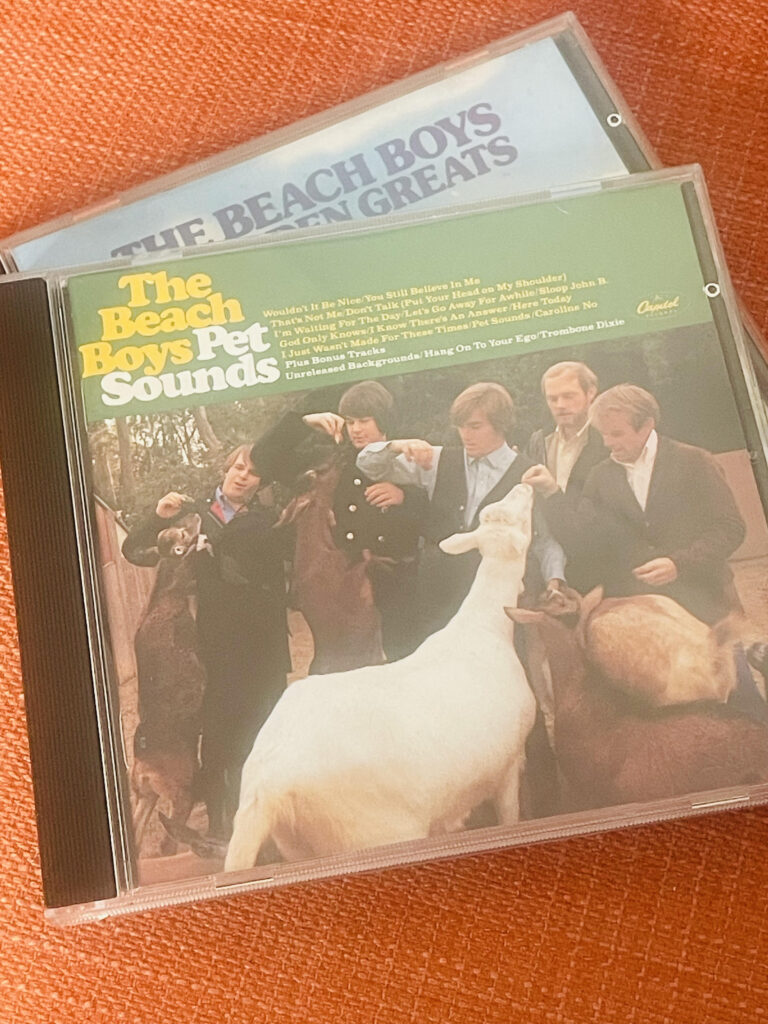
RETROSPECTIVE: The Beautiful Madness Of Pet Sounds

From surf music to sonic revolution: why Pet Sounds remains pop’s most extraordinary achievement and Brian Wilson’s last coherent masterpiece.


At the passing of the musically creative genius Brian Wilson, I’ve written this sixth decade reappraisal of The Beach Boys album Pet Sounds as a meditation on one of music’s most extraordinary creative achievements. A work that represents both the culmination of years of obsessive craft development and the sound of consciousness chemically expanded beyond conventional limits.

From a technical, production and arrangement perspective Pet Sounds – compared to literally everything produced beforehand anywhere is like comparing a Chevy Bel Air with a Saturn 5 rocket plus Apollo orbiter and lander. But this quantum leap didn’t emerge from nowhere. Wilson had been methodically building towards this moment since 1962, spending obsessive hours in Gold Star Studios, studying Phil Spector’s wall of sound techniques firsthand. By the time of “I Get Around,” he’d already developed an uncanny ability to hear individual instruments within dense arrangements and was experimenting with unconventional microphone placement that suggested an intuitive understanding of acoustic space.

Between 1963-1965, Wilson systematically expanded his musical vocabulary in ways that would prove crucial to Pet Sounds’ revolutionary impact. His harmonic progression from basic surf progressions to the complex jazz-influenced arrangements of “California Girls” and “Help Me Rhonda” shows us his systematic musical development. Wilson was absorbing Bach, studying Four Freshmen arrangements, and incorporating diminished chords and unexpected modulations. Simultaneously, he was cataloguing an increasingly exotic instrumental palette – harpsichord on “When I Grow Up,” orchestral arrangements on “The Warmth of the Sun,” and unusual percussion combinations that would later bloom into Pet Sounds’ bicycle bells, dog whistles, and Coca-Cola bottles.

Perhaps most significantly, Wilson’s vocal arrangements grew increasingly complex through albums like “Today!” and “Summer Days.” He was developing techniques for recording his own voice multiple times to create impossible harmonies, essentially turning himself into a one-man choir. This technical mastery meant that when his consciousness expanded, he had the tools to translate internal complexity into actual sound.

The emotional development running parallel to this technical growth was equally crucial. Wilson’s evolution from teenage surf fantasies to the adult anxieties about love, isolation, and belonging that permeate Pet Sounds wasn’t simply chemical revelation – it was the natural progression of a sensitive artist confronting the complexities of the human condition.

Substitute liquid hydrogen mixed with oxygen and a lit match with LSD and a musical genius and you’ll get Wouldn’t It Be Nice and God Only Knows here, and later Good Vibrations – his unique sounding music incredibly recorded on limiting four track equipment. It famously shook Paul McCartney to up his game and Bob Dylan has since remarked “Brian recorded Pet Sounds with four tracks, nobody else could record it with one hundred”.

Listen to Pet Sounds now, knowing what we know about Wilson’s lysergic acid adventures, and those otherworldly arrangements make perfect sense. Of course “God Only Knows” sounds like it was transmitted from heaven to Wilson’s rewired consciousness while operating on a papal frequency the rest of us can’t even tune into. But the genius wasn’t that Wilson was taking drugs – the entire suburb of Laurel Canyon was tripping in ‘66. The genius was that he was disciplined enough, focused enough, and talented enough to document his pharmaceutical journey with obsessive precision, using a toolkit of techniques he’d spent four years perfecting.

“I Just Wasn’t Made for These Times” we thought it was teenage alienation set to music. That maybe a prophetic autobiography from someone who’d already glimpsed his own future. The Theremin isn’t just an exotic instrument; it’s the faraway sound of Wilson’s cognition misfiring – in real time, beautiful but disturbing. But Wilson had been experimenting with unconventional instrumentation for years – this wasn’t random psychedelic inspiration but the culmination of systematic sound exploration.

The production techniques he described as derivative of Phil Spector and revolutionary in ‘66 now reveal themselves as the work of someone literally on another level. Wilson wasn’t just multi-tracking vocals he was seemingly attempting to capture the sound of multiple personalities having a conversation inside his head. Yet this vocal architecture built upon years of development – turning himself into a one-man choir through techniques he’d been perfecting since the early Beach Boys recordings.

Those impossibly complex arrangements on tracks like “Wouldn’t It Be Nice” aren’t showing off; they’re the musical equivalent of someone trying to make real something only he could hear in his imagination in ways difficult or impossible for lesser mortals to comprehend. But they’re also the work of someone who’d spent years absorbing Bach, studying the ‘Four Freshmen’ arrangements, and incorporating jazz harmonies that as mentioned most pop musicians couldn’t even hear, let alone execute.

What’s terrifying and brilliant is how Wilson managed to harness his disintegrating mental state and turn it into art. The drugs that were slowly destroying his grip on reality were simultaneously opening doorways to musical territories that simply don’t exist for the chemically unenhanced, a musical Doors Of Perception and where, see Aldous Huxley, heaven eventually becomes hell. Every overdub, every bizarre instrumental choice, every impossible vocal arrangement was Wilson obsessively following his rewired neural pathways to their logical conclusion – but using a musical vocabulary he’d been building methodically for years.

“Pet Sounds” the instrumental also makes more sense when viewed through this lens – it’s the sound of Wilson’s mind trying to process information through a consciousness that’s been chemically recalibrated. Those conversations between saxophone and percussion aren’t random; they’re Wilson translating internal dialogues that were becoming increasingly complex as his brain chemistry shifted, but executed with the instrumental sophistication he’d been developing since his earliest studio experiments.

Most people who’ve ingested that much LSD, in greater quantities than Syd Barrett, a similarly progressive British musical casualty and founding member of Pink Floyd, can barely tie their shoelaces, let alone orchestrate 40-piece arrangements that still sound futuristic. Wilson could do this because he’d already built the technical foundation – the chemicals didn’t create his abilities, they liberated them from conventional constraints.

But here’s the truly heartbreaking bit – we can now hear Pet Sounds as Wilson’s last completely coherent statement before the drugs and the pressure and the sheer weight of his own vision crushed him. Every perfect detail, every impossibly beautiful moment, every note that shouldn’t work but does – it’s all evidence of a mind operating at peak capacity whilst simultaneously consuming itself.

The comparative commercial failure in the America of 1966 was simply because the market wasn’t ready for avant-garde popular music made by someone now playing piano 24/7 seated in a sandbox. They wanted surf music from those nice clean-cut boys; what they got was the sound of now unkempt, long haired and bearded genius having a nervous breakdown in slow motion set to beautiful melodies. Remember that alongside the pressure generated creatively there’s financial pressure from Capitol who are ploughing dollars into the project. Yet another stress that’s under appreciated and rarely mentioned. Yes the total cost of a project might be oft quoted but not the absorption often by one sensitive creative person.

Wilson’s story since Pet Sounds – the breakdown, the bedroom years, the pills, the decline – only makes this album more precious. It’s the sound of someone touching something spiritual whilst burning up in the atmosphere of their own obsession. He gave us a glimpse of what’s possible when infinite talent meets unlimited chemical enhancement, and then paid the price for that glimpse with his sanity. Like many in era he flew close to the sun paid for it.

Pet Sounds isn’t just one of the greatest pop albums ever made – it’s a document of human consciousness pushed to its absolute limits and somehow managing to create beauty instead of chaos. Wilson took drugs that would have turned most people insane and used them to access musical dimensions that don’t exist for the rest of us. But he could only do this because he’d spent years building the technical and emotional vocabulary necessary to translate the untranslatable.

Now years later, Pet Sounds stands as both monument and warning – proof that sometimes genius requires madness, but also that madness without the foundation of obsessive craft development produces only chaos. Wilson’s achievement was combining systematic musical development with chemical consciousness expansion, creating something that transcended both.

Essential, heartbreaking, still beyond the comprehension of the majority. In era? Conpletely out there.