LITERARY REVIEW: Ian Curtis, Post Punk’s Poet.

Ian Curtis is routinely described as a singular figure in post-punk, yet the language used to discuss his work rarely escapes mythology. His lyrics are invoked as evidence of torment, prophecy or doomed authenticity, framed almost exclusively through biography rather than method. What is missing from much of the commentary is a sustained examination of how the writing actually works, its sources, its discipline, its formal intelligence. Curtis was not merely a vessel for darkness but a writer engaged with literary traditions that extend well beyond rock music, and his song lyrics reward the kind of close reading usually reserved for poets on the page. This essay approaches his work not as legend or lament, but as literature: constructed, deliberate, and deserving of serious critical attention.
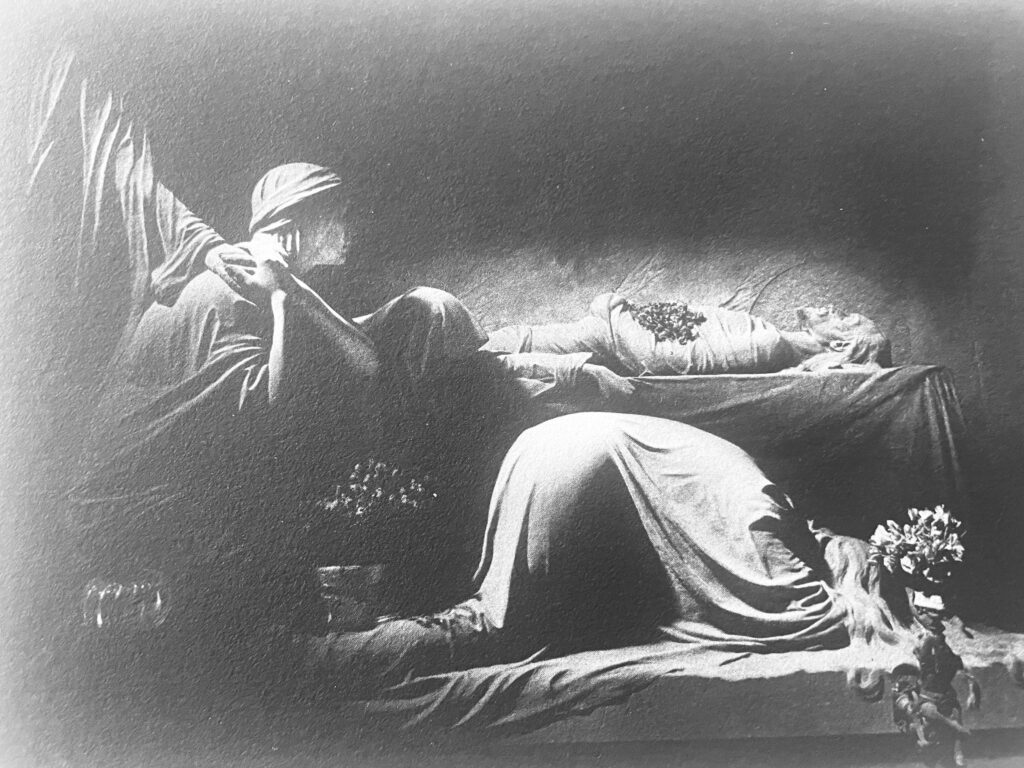

Ian Curtis Post Punk Poet Joy Division


Ian Curtis and the Literary Intelligence of Joy Division

Ian Curtis never called himself a poet, and nothing in his work suggests an interest in that designation. Yet his lyrics for Joy Division display a literary intelligence rare not only in post-punk but in popular music more broadly. Where many contemporaries relied on provocation, manifesto or abstraction-as-attitude, Curtis wrote with a precision that suggests sustained engagement with language as a moral and psychological instrument. His words do not posture; they observe, diagnose and endure. Stripped of melody and arrangement, they continue to function as texts. That endurance is the mark of literature, not accident.

Curtis’s writing does not emerge from rock tradition so much as runs adjacent to it. Its lineage lies elsewhere: modernism’s fractured consciousness, expressionism’s emotional extremity, confessional poetry’s refusal of discretion, symbolism’s reliance on implication rather than declaration. These influences are not decorative. They structure the work at the level of syntax, imagery and omission.

The modernist inheritance is clearest in Curtis’s handling of fragmentation. Like T.S. Eliot, he constructs meaning through discontinuity rather than narrative development. Decades, Joy Division’s closing statement, is exemplary. The opening question, “Where have they been?” is not addressed to a listener but suspended in space, unanswered. What follows is a series of temporal dislocations: “We waited too long / Through the slackened seas / And the years have gone.” The verbs slide between past and present, action and stasis. Nothing happens, yet everything has already happened. The effect is not despair but exhaustion, a consciousness worn thin by duration itself.

This is not mere mood. Curtis understands time as pressure. His characters are not alienated in the abstract; they are eroded. Like Eliot’s city dwellers, they are trapped within systems that outlast and outscale them. Manchester’s post-industrial landscape is not a backdrop but a condition, present in the songs as corridors, factories, streets without destination. The environment does not oppress through spectacle but through repetition.

German expressionism offers a second key. Curtis was drawn to Weimar-era art for its insistence that psychological truth mattered more than realism. Expressionist distortion exaggerates form to make interior states visible. Curtis achieves something similar through restraint rather than excess. She’s Lost Control is written with clinical detachment, the language stripped of emotive cues. The seizure is described, not interpreted. That refusal of commentary amplifies the horror. We are not told what to feel; we are placed inside a system that cannot accommodate vulnerability.

Expressionist poetry deals in absolutes; guilt, decay, transcendence, annihilation. Curtis’s lyrics operate in the same register. There is little moderation. Emotional states are terminal. In Heart and Soul, the repetition of the title phrase functions less as affirmation than erosion, each return diminishing its meaning until language itself appears to fail. This is not confession but exposure, an anatomy rather than a diary.

The confessional poets provide another point of contact, though Curtis is more disciplined than the term suggests. Sylvia Plath, Anne Sexton and Robert Lowell broke with lyric decorum by writing directly about mental illness and death, yet their power lay in clarity rather than self-dramatisation. Curtis shares that discipline. New Dawn Fades is often read retrospectively as prophecy, but its strength lies in how carefully it avoids spectacle. “A loaded gun won’t set you free” is not a cry for help but a statement of limits. Violence, even self-directed, offers no transcendence. The lyric denies release even as it gestures toward it.

Similarly, Isolation gains its force from direct address stripped of metaphor. “Mother, I tried, please believe me.” The line is devastating precisely because it refuses poetic camouflage. There is no symbol to interpret, no image to decode. It reads like testimony, not performance. As with Plath, the private becomes legible because it is not aestheticised beyond necessity.

Curtis’s debt to symbolism complicates this clarity. The French symbolists believed poetry should suggest rather than explain, building meaning through resonance rather than statement. Atmosphere is perhaps the purest example of Curtis working in this mode. The song is built almost entirely on repetition and instruction: “Walk in silence / Don’t walk away, in silence.” The meaning never settles. Is silence protective or fatal? Is walking away an act of survival or abandonment? Curtis refuses to decide. The lyric functions as an environment rather than an argument, its ambiguity sustained rather than resolved.

This method distinguishes Curtis from many of his peers. He was not interested in narrative confession or social reportage. His lyrics build psychological architecture that mirrors Martin Hannett’s production: reverberant, enclosed, distant. Language and sound operate as parallel systems. Words do not explain the music; they inhabit it.

Importantly, this seriousness was not accidental. Curtis read constantly; Kafka, Ballard, Burroughs, Dostoevsky, and wrote with discipline. He revised. He understood rhythm and weight. He avoided cliché not out of aesthetic snobbery but because cliché collapses meaning into familiarity. Silence mattered as much as statement. What is omitted carries as much force as what is declared.

There are limits to Curtis’s range. His emotional palette is narrow, his imagery recurrent. One could argue that his work risks monotony when detached from Joy Division’s musical context. But limitation is not the same as weakness. Within his chosen territory; alienation, control, collapse, Curtis achieved a density and coherence rare in popular songwriting.

Rock criticism has often struggled to engage with writing that demands close reading. Curtis’s lyrics are frequently treated as artefacts of biography rather than texts in their own right, framed by his death rather than his method. That approach diminishes the work. These songs reward analysis because they are constructed, not merely felt.

If Curtis had written for the page rather than the stage, his work would invite comparison with late-twentieth-century poets concerned with urban modernity and psychological fracture. That he chose the microphone does not invalidate the seriousness of the writing; it merely situates it differently. His lyrics occupy an unstable space between literature and performance, resistant to easy categorisation.

Ian Curtis did not invent post-punk’s darkness. He articulated it. Drawing on modernism’s fragmentation, expressionism’s extremity, confessionalism’s clarity and symbolism’s atmosphere, he synthesised a language capable of bearing emotional weight without collapse. His work remains rigorous, economical and unsentimental.

The songs endure not because of tragedy but because of craft. They read as poems because they were written with a poet’s attention to language, its pressure, its limits, its failures. Curtis understood that words could not save you, but they could tell the truth about why they wouldn’t. That, finally, is his literary achievement.

Ian Curtis 1956-1980.

CURRENT AFFAIRS: USA Rogue State? Part 3

Trump is not the architect of America’s new posture. He is the solvent that dissolves the restraints which once contained it.


The Technate Turns North

For decades, the northern flank of the Western alliance was treated as geopolitical furniture. Solid, dependable, and largely ignored. Canada was the polite neighbour. Greenland the distant outpost. The Arctic an abstraction, invoked mostly by climate scientists and defence white papers, its strategic relevance filed away for a later date.

That later date has arrived.

If the American strike on Venezuela marked a shift in how power is exercised, then the north is where the consequences may be felt most quietly and most profoundly. Not through invasion or formal coercion, but through something more contemporary and harder to contest: reclassification. Territories are no longer judged primarily by sovereignty or history, but by function. By what they provide, how quickly, and with how little friction.

This shift is often misunderstood because it is too easily reduced to personality. The temptation is to read recent American behaviour solely through the temperament of its president: impatient, unsubtle, dismissive of process and restraint. Yet personality alone does not explain what is happening. It merely accelerates it.

The United States is not reverting to empire in the old sense. It does not seek colonies, flags or formal annexation. It seeks optimisation. Supply chains that cannot be interrupted. Energy flows that cannot be leveraged by rivals. Security corridors that remain under American control. Technological advantage preserved at speed. In such a system, sovereignty is not abolished. It is conditional.

This is the emerging logic of what might be called the Technate of America. Power is exercised less through diplomacy than through infrastructure, logistics, data and security necessity. Borders remain on maps, but matter less than access. Alliances remain intact, but only so long as they do not obstruct momentum.

Trump’s place within this system is often misread. He is neither its architect nor its aberration. He is its solvent.

Where previous administrations layered power with language, Trump strips it bare. Where restraint once required explanation, assertion now suffices. He does not patiently build systems. He dissolves the assumptions that once constrained them. By acting first and justifying later, he lowers the political and psychological cost of unilateralism for those who follow. What he breaks publicly, others normalise quietly.

Venezuela was not significant simply because of what was done, but because of how little effort was made to dress it up. Once the taboo is broken without apology, it does not need to be broken again. The system adjusts.

Seen through that lens, the north looks less stable than it once did.

Canada is not a target. It is something more awkward. It is an ally that increasingly slows things down.

The United States depends on Canada more than it often admits. Critical minerals essential to advanced manufacturing and defence. Vast freshwater reserves. Energy infrastructure. Arctic access. Integrated air defence through NORAD. The northern border is not merely long. It is strategically dense.

Yet Canada remains a sovereign democracy with its own constraints. Environmental regulation. Indigenous land rights. Parliamentary scrutiny. Decisions that take time. From Ottawa’s perspective, these are features of legitimacy. From a technocratic security mindset in Washington, they increasingly resemble delay.

The tension is not ideological. It is procedural.

Trump’s impatience sharpens this fault line. He does not view Canadian sovereignty as something to be negotiated delicately, but as friction to be managed. Not through force, but through assumption. Projects framed as urgent move ahead. Timelines are compressed. Canadian consent becomes implicit rather than explicit.

The danger is not coercion. It is bypass.

Decisions taken in Washington are implemented through markets, defence frameworks, corporate investment and emergency alignment. Ottawa is informed, rarely consulted, never formally overruled, but increasingly irrelevant. Sovereignty erodes not through confrontation, but through attrition.

The Arctic intensifies this dynamic. As ice retreats, abstraction gives way to urgency. Shipping lanes, undersea cables, surveillance systems and missile defence shift from long-term planning to operational concern. Canada insists the Northwest Passage is internal waters. The United States treats it as an international strait. This disagreement has existed for decades. What has changed is pace.

In a technate, pace wins.

If Canada is the complication, Greenland is the test case.

Greenland is small, sparsely populated and strategically immense. It sits astride Arctic approaches, hosts critical American military infrastructure, and contains significant mineral reserves. It is geographically North American, politically European, and increasingly global. It is also semi-detached from its sovereign authority, governing most domestic affairs while Denmark retains responsibility for defence and foreign policy.

That arrangement functioned when interest was low and time abundant. Neither condition applies now.

Climate change has turned Greenland from periphery into prize. As ice melts, access improves. As access improves, competition follows. Rare earth independence from China has shifted from aspiration to operational requirement. Missile defence and early warning systems grow more valuable as polar routes shorten.

Here, Trump’s lack of subtlety becomes revealing rather than disqualifying.

He did not seek to deepen influence quietly. He attempted to buy the territory outright. The proposal failed and was widely mocked, then quickly forgotten. It should not have been. What mattered was not the failure, but the framing. Greenland was approached not as a partner, nor even as an ally’s responsibility, but as an asset.

Once spoken aloud, that logic does not disappear.

In the post-Venezuela landscape, the question is no longer whether such thinking exists, but how it might be operationalised without spectacle. No troops are required. No rupture with Copenhagen. All that is needed is an expanded security responsibility, framed as protection or shared interest. Investment deepens. Military presence normalises. Decision-making migrates. Denmark objects politely. Washington proceeds. NATO looks away.

This is not invasion. It is reclassification.

Greenland becomes less Danish not because Denmark is forced out, but because it cannot keep up.

Trump is often dismissed as too erratic to sustain doctrine. That misses the point. He does not sustain it. He clears the ground for it. By removing restraint, he allows bureaucratic, military and economic systems to operate with fewer inhibitions. Others supply the patience. The system supplies continuity.

This is how the Technate advances. Not elegantly, but effectively.

The great conflicts remain elsewhere. Ukraine bleeds. Taiwan waits. The Baltic states watch. These are the theatres that command attention and rhetoric.

Yet the more revealing shifts may occur far from the noise. In infrastructure plans, defence memoranda, investment flows and security assumptions. In the slow northern turn of a power that no longer feels obliged to explain itself.

Canada and Greenland are not predictions. They are indicators.

Venezuela did not announce a doctrine. It demonstrated permission.

And once permission exists, the most consequential changes rarely occur where resistance is strongest. They occur where resistance is least expected.

The north has long been treated as stable by default. It may yet prove to be the first place where stability is quietly redefined.


Next. Do the events of January 3rd and the likelihood of a ‘Technate USA’ looking north demand a re-evaluation of Trump as a leader and the Trump 2.0 administration?

CURRENT AFFAIRS: USA Rogue State? Part 2

Following the events of January 3rd a continuation piece from my article USA Rogue State? February 2025.

USA: Rogue State? (Part 2) – A New Precedent

The great conflicts of our time still loom. Ukraine grinds on, the Baltic states remain taut, and Taiwan sits under permanent pressure. Yet America’s sudden strike on Venezuela suggests something else is shifting first: the way power is exercised, and the ease with which it is now justified.

The world has not tipped into open war. Not yet.

Ukraine grinds on. The Baltic states remain tense but intact. The Taiwan Strait is still defined more by naval choreography than gunfire. The much-trailed great-power collisions remain, for now, on the horizon. But something else has moved, quieter perhaps, and more corrosive.

The overnight American strike on Venezuela, unilateral and justified after the fact, is not the opening act of global conflict. It is something subtler and potentially more dangerous: a precedent in search of a doctrine.

Washington insists this was exceptional. A sui generis response to criminality, corruption and national collapse. That argument would be more persuasive were it not the standard preamble to almost every intervention of the past three decades. Exceptionalism, after all, has form.

What unsettles is not simply that the United States acted, but how easily it did so, and how thin the legal and diplomatic scaffolding appeared to be. There was no UN mandate. No coalition patiently assembled. No serious attempt to clothe the operation in the rituals of multilateral consent. This was not Iraq redux. There was no effort to persuade the world. There was merely an announcement that it had been done.

For America’s adversaries, this is not hypocrisy newly discovered. Moscow and Beijing have long dismissed the so-called rules-based order as a euphemism for American latitude. But the Venezuelan operation offers them something more useful than rhetoric. Evidence.

Russia, already at war in Europe, will draw a bitter but clarifying lesson. Allies, however loyal, are expendable when they cease to be useful or defensible. Venezuela was a geopolitical bauble: oil-rich, symbolically defiant, but strategically indefensible from Moscow’s perspective. Its removal does not weaken Russia militarily, but it further narrows the map of places where Russian power can plausibly shelter its friends.

This matters not because Venezuela was ever decisive to Russia’s fortunes, but because it represented something Moscow increasingly lacks: the ability to project influence beyond its immediate neighbourhood. One by one, those outposts are disappearing. The loss tightens Russia’s isolation at precisely the moment it can least afford it.

China’s calculation is quieter, but potentially more consequential.

Beijing does not depend on Venezuelan oil to function. It has diversified too carefully for that. But Venezuela has been useful precisely because it lay outside American influence, a supplier insulated from Washington’s leverage, sanctions and electoral mood swings. Energy security is not merely about volume. It is about options.

A Venezuela governed from Washington, or by a government whose survival depends upon Washington, removes one of those options. Oil that once flowed eastward under long-term arrangements may now be repriced, redirected, or simply discouraged. No announcement is required. Markets, like diplomats, understand power when they see it.

None of this proves motive. It does not need to. Geopolitics rarely operates on confession. The point is consequence. The removal of Maduro does not merely tidy up a regional problem. It reshapes the strategic environment in which Russia and China already feel increasingly hemmed in.

For the Baltic states, the lesson is more ambiguous. On the one hand, the operation demonstrates that American power remains overwhelming and decisively usable. On the other, it underlines an uncomfortable truth: US force is increasingly discretionary. It is deployed where Washington wills, not where treaties alone demand. Deterrence depends not only on capability, but on predictability, and predictability is precisely what has been weakened.

China, watching from Beijing, will be less interested in Venezuela itself than in the method. Taiwan is not Caracas. The military, economic and reputational costs of a move across the Strait are of a different order altogether. But the Venezuelan strike sharpens two competing instincts within Chinese strategic thinking.

The first is urgency: act before American resolve hardens further. The second is caution: note how swiftly international opinion curdles when sovereignty is breached without consent.

Beijing’s preferred posture remains pressure without ignition. Encirclement without invasion. Venezuela does not alter that calculus overnight, but it adds a volatile data point to an already unstable equation.

What Ukraine, the Baltics and Taiwan share is that they are already priced into global risk. Markets, militaries and ministries have learned to live with them. Venezuela was different precisely because it was unexpected. It did not emerge from slow escalation or a frozen conflict thawing. It arrived fully formed, announced as fait accompli.

This is why the episode matters beyond Latin America. It suggests a United States increasingly comfortable with post-hoc justification, less concerned with international buy-in, and more willing to test how far its power can be exercised before resistance coheres. That is not rogue behaviour in the cartoon sense, but it is a form of strategic unilateralism that corrodes the very norms Washington claims to uphold.

Supporters will argue that the outcome justifies the method. That a malign regime has been removed. That oil markets will stabilise. That a long-suffering population may yet glimpse reform. All of this may prove true. But outcomes do not erase precedents. They entrench them.

The question, then, is not whether America is a rogue state. The term remains too blunt, too loaded, too performative. The better question is whether the United States is becoming a situational state, one that applies law, restraint and multilateralism when convenient, and dispenses with them when speed or advantage beckons.

History suggests this is not a sustainable posture. Empires can ignore rules only while they write them. The moment others begin to improvise in response, the system fractures.

The great conflicts remain on the horizon. But Venezuela reminds us that the road towards them may not be paved with grand confrontations or red-line speeches. It may instead be littered with smaller, sharper acts, each justified, each exceptional, each making the next one easier.

And that, more than any tank column or missile test, is what should give us pause.


Next. Will a rogue USA look North?

Venezuela will not be the template. It will be the permission. Once permission is granted, the question is no longer where America will act next, but how those closest in Canada and Greenland will recognise the moment when alignment begins to feel like absorption. In his peculiar way Trump has asked nicely, we are beginning to see that this USA will simply take what doesn’t capitulate easily.

POP CULTURE: The Proto-Punk Who Sparked London’s Seditionaries

Malcolm McLaren and Vivienne Westwood’s mid-1970s New York encounter with polymath Richard Hell, the New York Dolls and the CBGB scene reshaped British music, feeding directly into Seditionaries, punk rock, the Sex Pistols and the confrontational style that defined 1976–77.

The punk provocateurs Malcolm McLaren and Vivienne Westwood’s time in New York in 1974–75 was brief, but it was decisive. They arrived in a city that was fraying at the edges, financially broken and culturally fertile, and they treated it less as a destination than as a raid. What they encountered downtown was not simply music or fashion, but a way of assembling identity from debris. It was a lesson they would carry back to London and weaponise.

New York at that moment was defined by a ragged glamour. Clothes were cheap, borrowed, stolen or simply falling apart. The New York Dolls embodied this most theatrically, collapsing glam rock’s lipstick excess into something louche and desperate. Their women’s dresses, platform boots and smeared makeup looked less like fantasy and more like survival. McLaren was drawn to them precisely because they treated image as confrontation. He briefly managed the band, dressed them, and attempted to frame them as a kind of moving scandal. Although the relationship was short-lived and commercially unsuccessful, it sharpened his understanding of how style could precede sound.

More influential still was Richard Hell. If the Dolls represented decadent collapse, Hell represented refusal. His look, assembled rather than designed, became one of punk’s most enduring visual templates. Torn T-shirts held together with safety-pins, hair hacked short and spiked by accident rather than design, trousers ripped at the knee not for effect but because they had given up. Hell’s clothes were not costumes, they were statements of indifference, and that indifference was the point. He did not dress to shock so much as to signal disengagement from polish, aspiration or glamour. McLaren saw immediately that this look was infinitely reproducible and deeply symbolic. You did not need money, training or permission to look like Richard Hell. You only needed nerve.

The music around CBGB reinforced this. Bands played fast, loud and with minimal technique. The Ramones reduced rock to its skeleton, Television stretched it nervously, and Hell’s own bands treated lyrics as fragments rather than sermons. The common thread was an amateur ethic that felt closer to art-school provocation than rock professionalism. McLaren absorbed this wholesale. He was less interested in fidelity than in effect. What mattered was how quickly an idea could be communicated, worn, photographed and copied.

When McLaren and Westwood returned to London, the King’s Road shop became the site where these ideas were translated. By 1974 it was trading as SEX, and it already specialised in provocation, fetish references and sexual frankness. But the New York influence sharpened its focus. The clothes became rougher, more aggressive, and more deliberately unfinished. Westwood began turning garments into arguments. Rips were left visible. Pins were exposed. Slogans were confrontational rather than decorative. This was not nostalgia or homage. It was adaptation.

By 1976 the shop had evolved again, this time into Seditionaries. The name itself signalled intent. Seditionaries crystallised what punk looked like at the moment it broke into public consciousness. Bondage trousers, destroyed knitwear, obscene or political graphics, tartan subverted into something hostile rather than heritage. The lineage from New York was clear. Richard Hell’s torn shirts reappeared, reworked and intensified. The Dolls’ theatricality was stripped of camp and replaced with menace. What had been downtown nonchalance became London antagonism.

Seditionaries did not merely sell clothes. It defined a uniform. This was crucial. Punk’s power lay in its immediacy and recognisability. The clothes could be assembled cheaply, but the Westwood versions carried authority. They were prototypes, templates for replication. Teenagers across Britain copied them with bin bags, razors and marker pens. The look travelled faster than the music.

The Sex Pistols emerged directly from this environment. McLaren’s genius intervention was assembling the band as a Situationist art statement as much as a musical unit. The Situationists were a mid-century art movement made up of artists, writers and political agitators and based in Paris. Their mission was nothing less than the complete transformation of everyday life through carefully engineered provocations designed to expose the empty spectacle of consumer capitalism.  McLaren’s vision for the band was to embody this. John Lydon, later Rotten was recruited because he was not only intelligent and well read but also looked right. His genuine alienation and sneering confrontational vocal delivery was totally on spec. The Pistols wore Seditionaries clothes because they were made for them. The band became the shop’s loudest advertisement, and the shop became the band’s ideological bunker. The Pistols did not invent punk style. They broadcast it. Also in a musical style unlike the atypical New York-New Wave-CBGBs bands. Their sound is more attributable to Detroit, Michigan’s Iggy Pop and MC5, British Glam Rock riffs from Bowie’s ‘Spiders From Mars’ and the original Pistols bassist and primary musical songwriter Glen Matlock was influenced by Sixties bands like The Kinks, The Who and Small Faces.

What McLaren had learned in New York was that chaos could be curated. Richard Hell had demonstrated that refusal could be worn on the body. The Dolls had shown that scandal could be staged. Westwood provided the craft, intelligence and historical literacy to turn these influences into garments that felt inevitable rather than borrowed. Seditionaries was not a copy of New York. It was a distillation, filtered through British class anxiety, boredom and anger.

In the years that followed, arguments over credit and authorship would harden. It is well documented that Hell is begrudging of the duos’ appropriation of his style. McLaren was accused of manipulation, Westwood was elevated to designer-genius status, and the American roots of punk style were sometimes obscured by nationalist mythology. But the chain remains visible. From downtown Manhattan thrift-store wreckage to King’s Road sedition, the same ideas recur: clothes as provocation, music as delivery system, style as a form of speech.

The New York visit did not invent punk, but it gave McLaren and Westwood a grammar. They returned with a sense that culture could be assembled quickly, aggressively and in public. Seditionaries was the proof of concept. Punk, as it appeared in 1976 and 1977, wore its influences openly, ripped and repurposed. It looked the way it did because someone had seen Richard Hell and understood immediately that the future of style lay not in polish, but in refusal.

RETROSPECTIVE: London Is Drowning and I Live By The River

Today marks the 45th anniversary of London Calling, The Clash’s groundbreaking double album that redefined punk and reshaped British music. More than just a record, it was a bold statement, mixing genres, politics and raw emotion with a restless energy that still resonates. In this definitive retrospective, I delve into the album’s iconic sleeve, the sprawling diversity of its songs, and the pivotal role played by producer Guy Stevens in crafting a sound both urgent and timeless.

The Clash London Calling Retrospective


By the winter of nineteen seventy nine The Clash were standing at a crossroads that most bands never reach. Punk had given them a voice and a platform, but it was already clear that the narrow version of the movement being sold back to the public would not hold them. London Calling arrived not as a rejection of punk but as an argument with it. An artful double album crammed into a single sleeve, a density made up of ideas and restless energy, it sounded like a band refusing to be boxed in by its own reputation. This was The Clash insisting that urgency did not have to mean limitation, and that rebellion could be rhythmic, melodic and historically aware all at once.

“London Calling is the first of The Clash’s albums that is truly equal in stature to their legend”. Charles Shaar Murray NME 1979.

The sleeve announced that intent before a note was heard. Pennie Smith’s photograph of Paul Simonon mid swing, bass guitar raised and about to be smashed against the stage floor at the Palladium in New York, is still one of the defining images of British music. It is beautifully blurred, caught in motion rather than reverence. Overlaid with the pink and green lettering lifted from Elvis Presley’s debut album, it made a knowing claim on rock and roll history while quietly asserting ownership of it. The decision to house the double vinyl in a single sleeve was driven by CBS insistence the album was a single album but relented to the inclusion of a 12 inch single. Artfully the band added the further nine tracks to the extra vinyl and flipped the 45rpm to 33rpm – the finished ‘double’ album complimented by a “Pay No More Than” hype sticker. So no gatefold excess, the lyrics were printed on the inner sleeves, practical and open, inviting the listener to engage with the words as part of the experience rather than as an accessory.

Musically the record sprawls, but it never drifts. The title track opens like an emergency broadcast, Strummer’s voice riding a sinewy rhythm as images of nuclear anxiety, flooding and social collapse tumble out with the urgency of a last transmission. From there the album refuses to settle into any single identity. Brand New Cadillac barrels through rockabilly with reckless joy. Jimmy Jazz slouches through smoky shadows. Rudie Can’t Fail lifts the mood with warmth and swing, its horns and skank rhythm sounding like celebration as defiance.

What becomes clear as the sides unfold is that this breadth is not a stunt. These styles were absorbed, argued over and lived with. The historically underrated Mick Jones brings melody and pop intelligence, shaping songs that are generous and emotionally direct. One of the album’s most cherished moments, Train in Vain, sits at the very end of Side Four and was a late addition, originally intended to be given away as a free flexi-disc with NME before that plan fell through. The band insisted it be included on the album, but because the sleeves were already printed it was not listed on the cover or lyric sheets and initially appeared as a surprise hidden track etched into the run-off groove. Its immediacy and vulnerability, sung by Jones, with a narrative of love lost, feel like the intimate counterpoint to the political breadth that precedes it.

Joe Strummer’s writing elsewhere on the record grows more impressionistic and humane, trading blunt slogans for scenes, doubts and contradictions. Paul Simonon’s bass is central to the record’s physical pull, and his vocal turn on Guns of Brixton adds a colder, more controlled shade to the palette. Built on a taut reggae rhythm, the song’s sense of unease and inevitability reflects the lived tensions of South London without theatrical exaggeration. “When they knock on your front door, how you gonna come? With your hands on your head or on the trigger of your gun.” – now that is Thatcher’s London Punk ‘1979 style’.

The deeper cuts are where London Calling truly reveals its confidence. Koka Kola disguises its critique of creeping Americanisation beneath a jaunty shuffle, its irony sharpened by how pleasant it sounds. Spanish Bombs is one of Strummer’s finest lyrics, fragmented and poetic, its half-remembered Spanish phrases and images of civil war and tourism colliding into a meditation on distance, memory and solidarity. The Four Horsemen lurches forward with apocalyptic humour, biblical imagery delivered with a grin that barely masks the anxiety beneath. Death or Glory pairs one of Jones’s most immediate melodies with a lyric that quietly punctures the romance of rebellion itself.

Even the stylistic detours serve a purpose. Lover’s Rock leans into reggae’s sensuality without losing tension. Wrong ’Em Boyo tips its hat to ska’s roots with genuine affection, not as nostalgia but as acknowledgement. Each track adds another voice, another rhythm, sketching a map of London as a listening city where cultures collide and converse.

Holding this sprawl together was producer Guy Stevens, a volatile and divisive presence whose background proved crucial. Stevens came from an earlier era, steeped in rhythm and blues and shaped by his work with Mott the Hoople. He believed in feel above all else. Precision bored him. Commitment did not. His behaviour in the studio has become part of the album’s mythology, but beneath the chaos was a clear philosophy. Stevens pushed the band to play as if the songs might fall apart at any moment, to reach for performances that felt dangerous rather than correct.

That approach suits London Calling perfectly. The record breathes. Tempos flex. Instruments bleed into one another. There is space in the sound, even at its densest, and a looseness that gives tracks like Clampdown and Guns of Brixton their physical weight. The tension between band and producer was real, but it was productive, forcing instinct to override caution.

As a production, the album strikes a rare balance. It sounds expansive without being bloated, raw without being thin. The double album format could easily have sunk it, but instead it allows the band to pace the journey, each side carrying its own momentum and mood. By the time Train in Vain fades out, there is a sense of having travelled not just through styles, but through arguments, fears and affirmations.

Decades on, London Calling remains a challenge as much as a classic. It asks whether a band can grow without losing its edge, whether politics and pleasure can coexist, whether history can be acknowledged without becoming a trap. The sleeve still feels perfect. The songs still feel urgent. Guy Stevens’s restless spirit still hums through the grooves. The Clash did not simply make a great double album. They made a statement of intent that continues to sound alive, unresolved and necessary.

RETROSPECTIVE: Thirty Minutes Of Mayhem. Damned Damned Damned

A retrospective look at The Damned’s 1976 debut Damned Damned Damned, exploring its raw punk impact, riotous sleeve photography and lasting legacy in British music history.

The Damned debut album from 1976.

The Damned crashed into 1976 like a brick through a Woolworths window. Their debut, Damned Damned Damned, was the first British punk LP that truly meant business. While others in the class of 76 mooted revolution, The Damned simply plugged in, bashed it out and left the wreckage where it fell.

Captain Sensible’s guitar is jagged and loud. Brian James’ riffs sound like they were dragged straight from a petrol soaked rehearsal room. Rat Scabies plays as if the kit has personally insulted him. Dave Vanian croons through the chaos with that odd (and enduring) mix of horror film charm and rock ’n’ roll sneer. It was equally messy, sharp and exciting.

“New Rose” remains the lightning strike. It was the first British punk single to hit the shops and it still tears out of the speakers… “Is she really going out with him?”. “Neat Neat Neat” speeds along with a bass line that seems permanently on the edge of collapse. “Born to Kill” and “Fan Club” show they had more depth than the cartoon horror look suggested. Compared to the art-school cool of some of their peers, The Damned sounded like blokes who simply wanted to play faster and louder than everyone else and didn’t care what you thought.

The decades since have added even more shine to the story. The band ended up outlasting nearly every punk rock group they were once lumped in with. While others imploded or retreated into myth, these lads carried on through countless line-up changes, resurrections and strange detours. From goth phases to psychedelic experiments, their legacy stretches far beyond this debut. Yet fans and critics always return to Damned Damned Damned as the moment punk hit tape with no filter.

The sleeve jumped out of the racks in its day. You could spot it from across the shop floor. That Brian Griffin photograph of the band splattered in cream pies looked nothing like the punk imagery doing the rounds. It was chaotic and cheeky, like a food fight in a youth club. The rough black border and the bold caps font gave it a low budget feel, yet it had real intent behind it. Stiff Records always liked sleeves that poked fun at rock seriousness and this one did it perfectly. The original release mistakenly added an Eddie and the Hotrods group pic on the reverse (now collectable) or was it a mistake? Until a reprint was ready Stiff added a sticker ‘Erratum – apologies blah blah blah”, but was that a little cash from chaos before that term was coined by the competition? You’re even wealthier if you own the sleeve with the cellophane near-obliteration of The Damned cover for those Seventies shops whose sensibilities may have been offended.

The story behind the money shot only added to the charm. The band thought it would be a quick prank. Instead the shoot descended into real mayhem, with arguments, laughter and cream everywhere. You can see it in the image. It is not staged rebellion. It is four lads caught mid racket. For fans flicking through racks in 1977, that sleeve was a promise. Buy this and you will get noise, mischief and a band who do not take themselves too seriously. It still works today. ‘Made to be played loud at low volume’, it sez so on the label

The album still feels alive. It captures a time before punk had any rules, before the press boxed it in, before major labels tried to polish it. By modern standards the record is rough. That roughness is its charm. It is the sound of four musicians in a hurry, playing like the whole world is about to shut their gig down.

Looking back almost fifty years later, Damned Damned Damned remains a blast. It is not a museum piece – although the sleeve is now peak-zeitgeist. It is not a nostalgia trip. It is a reminder that British punk began with noise, risk and instinct rather than theory. The Damned were first out of the traps and they made sure no one forgot it.

RETROSPECTIVE: He Danced Right Out The Womb.

A retrospective look at T. Rex’s Electric Warrior, exploring Marc Bolan’s electric transformation and the album’s lasting influence on glam rock and beyond.


There comes a point in every great pop myth when the curtains part. The star steps forward. Everything suddenly makes sense. For Marc Bolan, Electric Warrior is that moment. It is the glitter-splashed big bang that turned a dreamy folky into the patron saint of teenage stomp. People often compare it to Dylan going electric. Yet Bolan did not provoke outrage. He aimed straight for the nation’s hips and the Top 40 followed.

More than fifty years later the record still feels like a private universe. It is not simply a prototype for glam. It is a fully formed world that predicted the next decade before anyone else had a sniff of it. The swagger of glam, the clipped pulse of proto-punk, the teenage charge of a perfect pop single. All of it sits inside these grooves.

Tony Visconti’s genius production has been praised for decades. Hearing it now, it is striking how modern it remains. The strings glide. The guitars smirk. Even the handclaps sound like part of a secret plot. Visconti later called the album “warm and fat” and it still fits. Everything feels close yet huge, like Bolan is whispering into a microphone wired to the Milky Way. Remasters, reissues and old demos released over the years have only confirmed how deliberate the whole palette was. This was not luck. Bolan and Visconti were shaping a style they already believed would last.

“Get It On (Bang a Gong)” is still the landmark track. It has become so familiar that people forget how sly it was at the time. It is pure strut. Lust boiled into a slogan and delivered with a grin that borders on parody. Later generations absorbed it through adverts, films and compilation CDs. The original still shines brighter. Its low-slung groove feels immortal today. You can hear it in Primal Scream, in the Black Crowes and in the swaggering indie bands of the early 2000s who thought attitude alone might save them.

The deep cuts tell a richer story. “Mambo Sun” shimmers like wet tarmac under streetlights. It is languid, slippery and quietly sensual. It shows how far Bolan had travelled from his earlier, Tolkien-tinged whimsy. “Cosmic Dancer” has aged even better. It is now held up as proof that Bolan was far more than a glittered chancer. Its mix of lullaby and melancholy feels like the doorway to a career he never had the chance to complete. When the home demos surfaced in the nineties and beyond, the song grew even larger. It became a kind of Rosetta Stone for Bolan’s tender side.

The album’s afterlife has been busy. Critics were sniffy in 1971 because British reviewers often mistrust anything that sounds like fun. The reappraisals arrived quickly. By the eighties, whole glam revival movements traced their roots back to this record. By the nineties, everyone from Morrissey to Slash to the Manics cited it as essential listening. After the millennium, more reissues and recovered tapes made the craftsmanship impossible to ignore. Electric Warrior settled into its rightful place as a masterpiece of pop economy. Every track earns its keep.

Looking back now, the whole transformation feels inevitable. Bolan did not abandon his old self in the way Dylan did. He simply stepped into the brighter outline that had always hovered around him – ‘Mod Marc had been dancing since he was twelve’ after all. Electric Warrior is not the tale of an artist changing course. It is the moment he finally matched the sound in his head. Glittering stardom was then a formality.

Half a century later, the record still glows with rare magic. It captures the moment when a pop star stops becoming and finally arrives. Bolan lit the fuse for glam, reshaped the idea of pop charisma and left behind a record that refuses to grow old.

Electric influencer.

RETROSPECTIVE: What’s Henri Fantin-Latour Got To Do With It?

New Order – Power, Corruption & Lies: A Retrospective Review

The Sleeve That Rewrote the Rules

Before a note of Power, Corruption & Lies reaches the ears, the eye is confronted with Peter Saville’s sleeve, a design that has gathered its own mythology over the passing decades. At first glance it is simply a reproduction of Henri Fantin-Latour’s 1890 still life of roses, delicate and faintly melancholic, a far cry from the cold geometry Factory Records had become known for. Yet the real twist lies in the seemingly innocuous coloured blocks that sit in the corner like a quiet rebuke to conventional typography. Long regarded by fans as a form of visual poetry, the blocks were eventually revealed to be Saville’s attempt at a coded alphabet, a kind of secret linguistic handshake that gave the record an air of clandestine modernity.

What has emerged through later interviews is just how mischievous the whole thing was. Saville had been increasingly bored with the constraints of standard lettering, so he set about devising a system that would let him “write” the band’s name and album title without actually writing anything at all. Factory, in characteristically perverse fashion, embraced the idea. The result was a jacket that felt like a puzzle box, a Victorian painting interrupted by a futuristic key, a design that made no immediate sense yet seemed perfectly in step with New Order’s own uncertain transition from the gloom of their past into something more colourful and unpredictable.

Over time the sleeve has come to be seen as a statement of intent. It suggested that this was not merely another post-punk artefact, but a curious hybrid of heritage and innovation. It also set the tone for countless later designers who treated album packaging as a riddle rather than a label. Even now it retains that rare magic, the sense of being both timeless and ahead of its time, a piece of art that hinted, long before the music began, that New Order were about to reinvent themselves.

New Order Power Corruption and Lies by Peter Saville and Henri Fantin-Latour


The Music That Reprogrammed The Band

History tends to sand down the sharp edges of even the most tumultuous bands, but in the case of New Order’s Power, Corruption & Lies, the decades have only sharpened its silhouette. It remains an album perched squarely on the fault line between grief and reinvention, the moment Bernard Sumner, Peter Hook, Stephen Morris and Gillian Gilbert turned their backs on the monochrome shadows of Joy Division and stepped, blinking, into a brash new technicolour world, although one still streaked with dread.

Now with more than forty years of hindsight and a small library’s worth of scholarship behind it, the album feels less like a second album (I detest sophomore) release and more like a manifesto. The lingering presence of Ian Curtis haunted Movement, but here the ghosts do not dictate terms; they merely observe. The record opens not with a funereal echo from the Factory corridors, but with “Age of Consent”, a bright, jangling rush of liberation that still carries a nervous quiver beneath its surface. Sumner’s vocal, tentative and slightly frayed, sounds like someone learning to speak again. Hook’s bass, by contrast, strides forward with the immodest confidence of a man who knows he is holding the melodic centre of gravity.

What modern listeners can appreciate, thanks to years of interviews and excavated studio notes, is just how bare-bones their toolkit really was. The band were teaching themselves synthesisers on the fly; Gillian Gilbert in particular has since recalled how she pieced together melodies with a mixture of curiosity and blind faith. Stephen Morris was programming early drum machines in ways their manufacturers had never intended. One later admitted he genuinely had no idea how Morris coaxed certain patterns out of the Oberheim DMX without the casing overheating. The album’s mechanical pulse, so crisp and self-assured to contemporary ears, was in fact held together by the sheer nerve of four people who barely knew if the circuitry would hold until the final mix.

“Blue Monday” inevitably casts a long shadow whenever the PCL era is mentioned, though it technically sits outside the album. But it was the PCL sessions, along with the band’s growing fascination with the dancefloor, that birthed it. Factory archivists unearthed, years later, a handwritten note from designer Peter Saville estimating how many copies the label would need to sell just to break even, owing to the sleeve’s notoriously expensive die-cut floppy-disc design. They underestimated wildly. The single became a commercial leviathan, and its success dragged Power, Corruption & Lies along behind it like a passenger stumbling onto the last train home.

The album’s mid-section still feels like a crystallisation of New Order’s internal tug-of-war. There is the icy romanticism of “Your Silent Face” (with Sumner’s now-infamous “Why don’t you piss off?”), the post-punk scaffolding that creaks through “Ultraviolence”, and the synth-pop shimmer of “Leave Me Alone”, a track that sounds like two elevated hands reaching simultaneously for joy and resignation. Critics have long debated whether PCL is the moment New Order shed their Joy Division skin or merely learned to live with the seams showing, but in truth it is both, a record that understands transformation not as an erasure but as an accumulation.

One of the more intriguing details unearthed in the years since comes from engineer Michael Johnson, who revealed in a 2010 retrospective that the band often worked in near-total silence between takes, communicating in nods and half-gestures. “It was like watching people rebuild a house they did not remember demolishing,” he said. That sense of fragile reconstruction thrums from the record’s core. Despite its reputation as the dawn of New Order’s dance era, PCL is an album built on restraint, with spaces left open, lines left hanging, and machines nudged into emotional service.

Today, Power, Corruption & Lies stands as the first true statement of what New Order were capable of when freed from both tragedy’s grip and expectation’s weight. It is a record that neither rages nor mourns, but simply moves forward, quietly radical, defiantly awkward and utterly singular. The decades have clarified its position in the canon, not as a footnote to Joy Division and not merely as a stepping stone to the superclub-friendly New Order of the 1990s, but as a work of invention from a band still learning how to be itself.

And like the best of New Order’s output, it remains a reminder that sometimes the future begins not with a bang but with a hesitant synth line, a guiding bass melody, and four people trying to find their footing on the other side of loss.

RETROSPECTIVE: The Bunnymen’s Great Leap Forward.

A retrospective on Echo and the Bunnymen’s Heaven Up Here, exploring the album’s epic scale, the band’s evolution from their debut, the charged atmosphere of their 1981 era and the bold creative leap that set them apart from their Liverpool contemporaries. A critical look at how the record became a windswept landmark of early eighties post-punk and the defining moment in the Bunnymen’s ascent.

Echo and the Bunnymen Heaven Up Here

By 1981 Echo and the Bunnymen had already outgrown the tag of Liverpool’s next big thing. The city was awash with bands skulking through basement venues and chasing the last echoes of post-punk, yet the Bunnymen always felt slightly apart from the scrum. They were part of the scene but never defined by it. Where other groups favoured jagged swagger or nervy pop, the Bunnymen carried themselves with a chilly grandeur, as if they had been imported from some vast, wind-stripped plateau rather than the banks of the Mersey.

Crocodiles had won them attention and a clutch of admirers but there was a sense, even then, that the band were bracing for something larger. They wanted scale. They wanted to escape the cramped rooms and conventional expectations that could easily have boxed them in. Heaven Up Here is the sound of that escape, recorded in Rockfield Studios in Wales where the weather and landscape matched the band’s mood. The sessions, monastic by all accounts, the group shutting themselves away and drawing out a sharper, more elemental version of their sound.

From the first moments of Show of Strength, you can hear that shift. The song doesn’t ease itself in but storms the gates, every instrument sounding taut and ready for impact. Les Pattinson had grown into an astonishingly melodic bassist by this point. His lines on the debut were confident. Here they are commanding. Pete de Freitas, the fated, youngest and in many ways the quietest member, drives the entire record with a precision that never loses its human edge. His drumming on Heaven Up Here explains why the band were so protective of him. He had that rare gift of making a rhythm feel both anchored and restless, a pulse that pushes the band into braver territory.

Will Sergeant is the architect of the album’s vast spaces. Critics often latch on to guitarists who fill every second with notes. Sergeant did the opposite. He left gaps, held back, let certain chords ring until they seemed to glow in the mix. On Over the Wall, his playing becomes a kind of topography, mapping out the contours of an imagined coastline. He had already shown flashes of this approach on Crocodiles but here he fully embraced it, giving the record its sense of scale without resorting to bombast.

Ian McCulloch, meanwhile, had grown into the frontman he always hinted he might become. There is confidence in his voice on Heaven Up Here but it is not a swaggering confidence. It’s something more guarded. He sounds like a man making sense of a world that is shifting under his feet. His lyrics during this era often veered into impressionistic fragments, the kind that prioritised atmosphere over narrative, yet they land with surprising clarity. On A Promise, there is a tension between the romantic and the resigned. All My Colours feels like the inside of a fever dream, equal parts yearning and disorientation.

Crucially, Heaven Up Here is a record shaped not only by ambition but by discipline. The band were not chasing complexity for its own sake. They were chiselling away at their own ideas, stripping the songs of anything superfluous. The result is an album that feels both lean and expansive, intimate yet immense. There is nothing indulgent in it. Nothing that feels tacked on. Every track serves the larger landscape the band were building.

The Liverpool environment of the time also left its mark. The city was in economic decline and cultural flux, yet bursting with creative energy. The Bunnymen were surrounded by other rising acts the best piloted by others of The Crucial Three; Wah!, The Teardrop Explodes, A Flock of Seagulls, but while some chased pop brightness or flamboyance, the Bunnymen were drawn to something more elemental. They carried with them a strand of romantic fatalism that owed as much to windswept beaches and night bus rides across Merseyside as it did to their musical influences.

Sergeant’s fondness for Led Zeppelin often surprises people until they actually listen to Heaven Up Here with that in mind. Not the bluster or blues rock, but the sense of dynamic tension, the interplay between hush and detonation, the way space is used as effectively as noise. The leap from Crocodiles to Heaven Up Here mirrors, in its own way, the leap Zeppelin made from their debut to Led Zeppelin II. A sudden widening of scope. A feeling that the band have discovered their engine and decided to rev the bollocks off it.

You could draw parallels with Joy Division’s shift from Unknown Pleasures to Closer, or The Cure’s move from Seventeen Seconds to Faith. But the Bunnymen’s progression feels more rooted in a sense of physical geography, as if the band had stepped outside northern post-punk entirely and wandered off onto a grey beach at dusk, taking their music with them. The sea imagery in their work wasn’t poetic window dressing. It was part of who they were. They sounded like the tides they grew up near.

When Heaven Up Here was released, some listeners were thrown by its severity. It didn’t offer easy singles or radio-friendly warmth. It demanded attention and rewarded patience. Over time, though, it has become one of those albums that grows larger in the memory, a record bands cite when they want to talk about artistic leaps rather than career maintenance. It remains a totem of what can happen when a young group, still burning with hunger, refuses to play safe.

By the final notes of the title track, the storm has passed yet the air still seems charged. You come away from Heaven Up Here with the sense that you’ve walked through a landscape rather than listened to a collection of songs. The Bunnymen would go on to make more polished and more commercially resonant records, but they never again captured this exact combination of youthful intensity and hardwired harder rock purpose.

Heaven Up Here remains not only a leap forward but a declaration of identity. A moment when Echo and the Bunnymen realised the size of the world they could build and stepped straight into it without flinching. It stands, even now, like a cliff face on the musical map of the early eighties. Stark, beautiful and utterly its own.

GIG REVIEW: Andy Crofts PRCA Session 29/11/2025

The Boy With The Guitar Strap.

Review of Andy Crofts live at Pier Road Gallery, Littlehampton.

Crofts’ own compositions; catchy, well-crafted pop songs that wear their Ray Davies influences proudly formed the heart of the evening. English Summer, Westway, Jennifer Sits Alone, Sleep, Wondering, An Ordinary Romance and more. These songs resonate as a thoughtful canon and shine in an acoustic setting stripped of embellishment and with clear enunciation.

Andy Crofts Pier Road Coffee and Art PRCA Session 29-11-1025


Doors at 6.45. Leave your smart phone apps and your algorithmic advances at home, if you want proof that music still needs human hands, a heart and a mid-session tune up or two Andy Crofts delivered it with authenticity at the final PRCA Session of this year.

You might know Crofts as the Brazil-born multi-disciplinary instrumentalist formerly integral to Paul Weller’s outfit or as the main man behind indie band The Moons. But strip away studio sheen and a full band arrangement, his particular forte, what you’re left with is something far more essential: one bloke, two young colouring-in kids, an electric acoustic six-string, a new amplifier, and a well employed songbook that spans his own Home Counties folk pop and some perfectly curated covers.

The intimate setting suited him, even if as he confessed with disarming honesty that he finds these close-quarters gigs more nerve-wracking than playing to hundreds of thousands at Glastonbury. Out there you can hide behind the lights; here, if your music stand collapses, you forget a chord (D7) or your young daughter clatters off her chair mid-song, everyone notices. The beauty and terror of ‘the toilet tour’ eh?

Crofts’ own compositions; catchy, well-crafted pop songs that wear their Ray Davies influences proudly formed the heart of the evening. English Summer, Westway, Jennifer Sits Alone, Sleep, Wondering, An Ordinary Romance and more. These songs resonate as a thoughtful canon and shine in an acoustic setting stripped of embellishment and with clear enunciation.

The covers arrived like love letters from a pre-digital age. Honeybus’ “I Can’t Let Maggie Go” emerged unplugged and liberated from its Seventies white bread-advert production. The Kinks’ “Waterloo Sunset” bounced along with an unexpected verve – Terry and Julie still crossing that river in our collective consciousness, no matter how many Reels were distracted by. From Badly Drawn Boy’s ip-so fact-o singalong “Something To Talk About”, to a Crofts meditation on Lennon’s raw demo of “Watching the Wheels,” from “And I Love Her” to “Good Thing” a formerly-reggae number rendered in acoustic pop – each reimagining proved that great songs transcend their original arrangements when you ‘handle with care’ – “over to you George”.

PRCA’s faithful got exactly what live music should be: confessional, imperfect, immediate, impossible to replicate with a million lines of code.

A one-man analog breakwater against a tech tide.

45renegade.