RETROSPECTIVE: R.E.M.’s Epiphany

A pivotal moment in R.E.M.’s evolution, Lifes Rich Pageant captures the band stepping out of the shadows and into focus. This retrospective long read examines its place in the R.E.M. canon, the creative risks that reshaped their sound, and why this fierce, principled 1986 album marked the point where conviction, clarity, and power finally aligned to signpost the future.
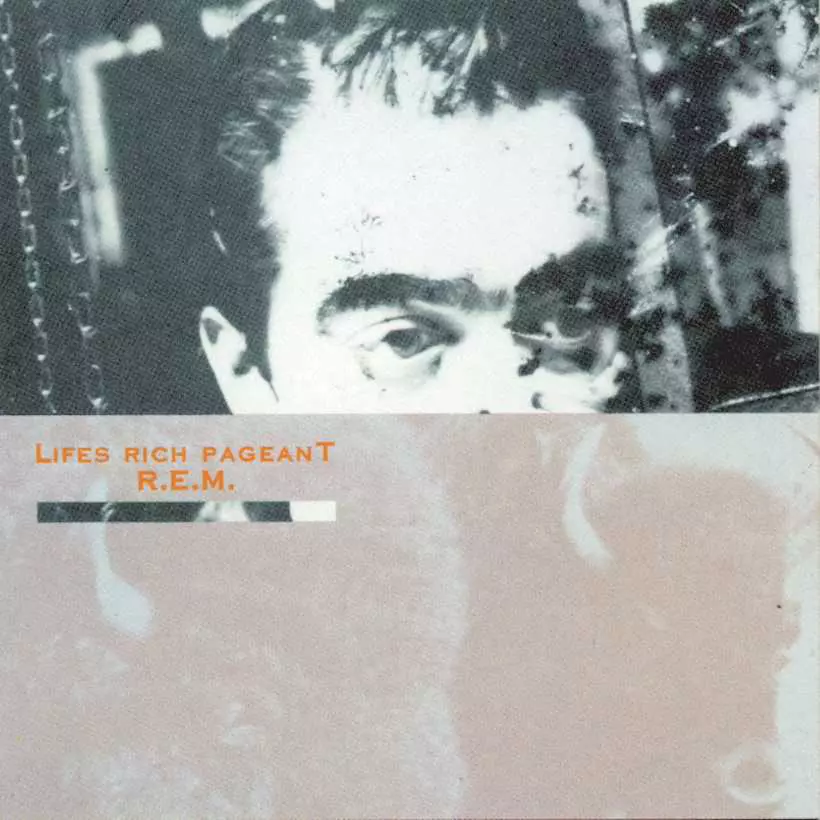
R.E.M. Lifes Rich Pageant

R.E.M. had already built a cult by the time Lifes Rich Pageant arrived in the summer of 1986, but it was still a fragile thing. College radio fame, earnest fanzine devotion, and a reputation for wilful obscurity are not the same as permanence. The first three albums had sketched a band almost mythic in outline: Michael Stipe’s voice half-buried, lyrics treated like overheard conversations, guitars that chimed rather than cut. They were beloved, but they were also evasive. Lifes Rich Pageant is the moment R.E.M. stopped hiding behind atmosphere and decided to speak plainly, loudly, and with intent.

It is their loudest early record, and that matters. Bringing in Don Gehman, fresh from work with John Mellencamp, was a deliberate act of sabotage against their own mystique. Gehman insisted on clarity, punch, and definition. Peter Buck’s guitar was no longer a shimmering fog but a serrated instrument, pushed forward in the mix. Mike Mills’ bass became a melodic force rather than a polite underpinning. Bill Berry’s drumming, often understated on earlier records, snapped into muscular life. This was R.E.M. discovering the value of impact.

The opening run is still startling. Begin the Begin does not drift in, it kicks the door off its hinges. Stipe’s vocal, for once, is up front and intelligible, full of clipped urgency. These are not cryptic mumblings but rallying cries, political and personal tangled together. The world is wrong, systems are broken, and the band sound newly determined to say so. The shift is not just sonic but philosophical. Where Murmur and Reckoning felt inward and impressionistic, Lifes Rich Pageant looks outward, alert to pollution, imperialism, environmental collapse, and moral fatigue.

Fall on Me remains the record’s moral centre. It is a protest song that never once raises its voice, a masterclass in restraint. The lyric is direct without being didactic, the melody aching without self-pity. It is one of the first moments where Stipe’s political writing finds a universal register, rooted in the body and the family rather than slogans. In retrospect, it lays the groundwork for everything from Green to Automatic for the People.

Cuyahoga extends that environmental concern into something almost elegiac. Rivers catch fire, civilisations poison their own wells, and history repeats itself with grim reliability. Yet the song does not despair. There is still a sense of wonder, a belief that naming the damage is a form of resistance. This balance between anger and hope becomes a defining R.E.M. trait, separating them from the hectoring earnestness that doomed many politically minded bands of the era.

Crucially, Lifes Rich Pageant does not abandon joy. These Days barrels along with almost reckless energy, Mills and Berry driving the song like men possessed. I Believe offers a kind of bruised optimism, a declaration of faith that feels hard-won rather than naive. Even Superman, a cover, serves a purpose. Sung by Mills, it punctures any creeping solemnity and reminds the listener that R.E.M. still understood pop pleasure, still valued humour and lightness amid the seriousness.

Within the R.E.M. canon, this album is the hinge. Everything before it is prelude, everything after it is expansion. Without Lifes Rich Pageant, there is no confidence to make Green, no authority to slow things down on Automatic, no credibility when the band take stadiums by the throat in the late eighties and early nineties. It is the moment they realise they can be both principled and powerful, obscure and accessible, righteous and tuneful.

It is also the album where Michael Stipe steps fully into his role as a frontman. Not a rock god, never that, but a communicator. His lyrics sharpen, his vocals project, and his presence anchors the band’s ambitions. He sounds less like a man whispering secrets and more like someone willing to be overheard.

Nearly four decades on, Lifes Rich Pageant feels less like a transitional record and more like a manifesto. It is R.E.M. announcing what they stand for, sonically and ethically, and proving they can do so without sacrificing complexity or grace. Many bands have a moment where talent hardens into purpose. This is R.E.M.’s, and it still crackles with urgency, intelligence, and the thrilling sound of a group realising exactly how good they can be.

RETROSPECTIVE: Bowie, Standing By The Wall

Revisiting David Bowie’s Heroes decades on, this article explores its Berlin origins, the band behind the album, Brian Eno’s role and whether it stands apart from Low.

David Bowie Heroes Album Retrospective


By the time Heroes emerged in October 1977, Bowie had already disposed of the rulebook. Low had landed like a communiqué from another future, half songs, half atmosphere, a record that seemed to reject the very idea of audience comfort. The temptation has always been to frame Heroes as its louder twin, the one with the anthem, the one that returned Bowie to something approaching recognisable rock form. That reading does the album a disservice. Heroes is not a corrective to Low. It is an expansion, an album that breathes the same air but looks outward rather than inward, shaped by geography, by collaborators, and by a band operating at a rare level of collective intuition.

The setting matters. Hansa Tonstudio, perched within sight of the Berlin Wall, was not simply a studio but a vantage point. The city in 1977 was still scarred, divided, uneasy. Bowie absorbed that atmosphere completely. If Low felt like a psychological evacuation from Los Angeles excess, Heroes feels like Bowie standing still long enough to take in where he had landed. The walls, literal and emotional, are everywhere on this record.

The core band remained unchanged from Low, and that continuity is crucial. Carlos Alomar was once again the spine of the operation, his rhythm guitar style economical, precise, never showy. Alomar’s playing on Heroes is less funky than his work with the plastic soul era Bowie, but his sense of movement underpins everything. Dennis Davis on drums is similarly restrained but vital. His playing has a physical intelligence, knowing when to push and when to pull back, especially on tracks like Beauty and the Beast where tension is built through repetition rather than brute force. George Murray’s bass lines are melodic without drawing attention to themselves, often acting as a bridge between rhythm and texture.

Hovering above and around them is the now legendary pairing of Brian Eno and Tony Visconti. Eno’s influence is often overstated as some sort of ambient fog machine, but his real contribution lies in disruption. His Oblique Strategies cards, his encouragement of chance, his willingness to treat the studio as an instrument all helped Bowie escape habitual thinking. Visconti, meanwhile, grounded the chaos. His production on Heroes is cleaner and more assertive than on Low, particularly on the vocal tracks, but still full of space. The famous gated vocal effect on the title track, achieved by positioning microphones at varying distances that opened only when Bowie sang louder, is a perfect example of technology serving emotion rather than novelty.

The opening track, Beauty and the Beast, announces immediately that this is not a retreat into comfort. Bowie’s vocal is fractured, almost feral, darting between personas. Lyrically, it feels like a continuation of the internal struggle first exposed on Low, but externalised. The city is no longer a metaphor for the mind. It is the stage on which that struggle plays out. Fripp’s guitar slashes through the mix, not as a soloist but as a source of friction, pushing against the rigid rhythm beneath.

Fripp’s presence across the album cannot be overstated. Brought in at the last minute and reportedly completing his parts in a matter of hours, his playing defines the record’s emotional peaks. On Heroes the song, his sustained, soaring lines do not decorate the track, they lift it. The myth around the song often threatens to reduce it to its origin story, Bowie glimpsing Visconti and Antonia Maass kissing by the Wall. What matters more is how the music refuses sentimentality. The lyric never promises permanence, only intensity. We can be heroes, just for one day. It is defiant precisely because it accepts limitation.

Elsewhere on side one, Bowie continues to explore fractured identity and communication. Joe the Lion draws inspiration from performance artist Chris Burden, but it also feels like a self portrait in motion, Bowie throwing himself into the work with no safety net. Sons of the Silent Age is one of the album’s quieter triumphs, its crooning melody undercut by lyrics that hint at repression, at voices denied expression. Blackout closes the side in a rush of nervous energy, all clipped phrases and sudden turns, the sound of a mind overstimulated rather than soothed.

If side one is confrontation, side two is immersion. Like Low, Heroes gives over half its running time to instrumentals, but the mood is different. Where Low often felt like drifting through empty rooms, Heroes feels rooted in place. V-2 Schneider tips its hat to Kraftwerk but refuses pastiche, its groove mechanical yet strangely human. Bowie’s saxophone playing here is deliberately unschooled, cutting through the track like an alarm rather than a melody.

The trio of Sense of Doubt, Moss Garden and Neuköln forms the emotional heart of the album. These are not background pieces. They demand attention. Sense of Doubt is built on a descending piano figure that seems to sink deeper with each repetition, evoking a sense of inevitability. Moss Garden offers a brief illusion of calm, its Eastern inflections suggesting a spiritual escape that never quite arrives. Neuköln is the most unsettling of all, Eno’s treatments and Bowie’s sax combining into a mournful, alien soundscape that captures the loneliness of displacement. Named after a Berlin district known for its immigrant population, it resonates as a study in alienation without a single word being sung.

The closing track, The Secret Life of Arabia, is often treated as a curiosity, but it serves an important function. Its rhythm and melodic energy hint at movement, at travel beyond Berlin, beyond the album’s confines. It suggests that Bowie was already looking ahead, which history confirms. Lodger would soon scatter these ideas across the globe, but Heroes remains anchored, its power drawn from stillness rather than motion.

Over the decades, more details have emerged about the making of Heroes, but none of them diminish its mystery. The speed of the sessions, the reliance on instinct, the willingness to commit to first or second takes all speak to a creative moment that cannot be replicated. Bowie was sober, focused, and surrounded by collaborators who understood when to contribute and when to step back. This was not the sound of a genius imposing his will, but of a band and production team operating as a single organism.

So is Heroes merely a continuation of Low, or does it stand alone. The honest answer is both. It makes little sense without Low, yet it surpasses it in emotional range. Where Low fractures, Heroes reaches. Where Low withdraws, Heroes risks connection. In Bowie’s catalogue, it occupies a rare position. An experimental record with a genuine anthem, an art album that found its way into public consciousness without compromise.

LITERARY REVIEW: Ian Curtis, Post Punk’s Poet.

Ian Curtis is routinely described as a singular figure in post-punk, yet the language used to discuss his work rarely escapes mythology. His lyrics are invoked as evidence of torment, prophecy or doomed authenticity, framed almost exclusively through biography rather than method. What is missing from much of the commentary is a sustained examination of how the writing actually works, its sources, its discipline, its formal intelligence. Curtis was not merely a vessel for darkness but a writer engaged with literary traditions that extend well beyond rock music, and his song lyrics reward the kind of close reading usually reserved for poets on the page. This essay approaches his work not as legend or lament, but as literature: constructed, deliberate, and deserving of serious critical attention.


Ian Curtis Post Punk Poet Joy Division


Ian Curtis and the Literary Intelligence of Joy Division

Ian Curtis never called himself a poet, and nothing in his work suggests an interest in that designation. Yet his lyrics for Joy Division display a literary intelligence rare not only in post-punk but in popular music more broadly. Where many contemporaries relied on provocation, manifesto or abstraction-as-attitude, Curtis wrote with a precision that suggests sustained engagement with language as a moral and psychological instrument. His words do not posture; they observe, diagnose and endure. Stripped of melody and arrangement, they continue to function as texts. That endurance is the mark of literature, not accident.

Curtis’s writing does not emerge from rock tradition so much as runs adjacent to it. Its lineage lies elsewhere: modernism’s fractured consciousness, expressionism’s emotional extremity, confessional poetry’s refusal of discretion, symbolism’s reliance on implication rather than declaration. These influences are not decorative. They structure the work at the level of syntax, imagery and omission.

The modernist inheritance is clearest in Curtis’s handling of fragmentation. Like T.S. Eliot, he constructs meaning through discontinuity rather than narrative development. Decades, Joy Division’s closing statement, is exemplary. The opening question, “Where have they been?” is not addressed to a listener but suspended in space, unanswered. What follows is a series of temporal dislocations: “We waited too long / Through the slackened seas / And the years have gone.” The verbs slide between past and present, action and stasis. Nothing happens, yet everything has already happened. The effect is not despair but exhaustion, a consciousness worn thin by duration itself.

This is not mere mood. Curtis understands time as pressure. His characters are not alienated in the abstract; they are eroded. Like Eliot’s city dwellers, they are trapped within systems that outlast and outscale them. Manchester’s post-industrial landscape is not a backdrop but a condition, present in the songs as corridors, factories, streets without destination. The environment does not oppress through spectacle but through repetition.

German expressionism offers a second key. Curtis was drawn to Weimar-era art for its insistence that psychological truth mattered more than realism. Expressionist distortion exaggerates form to make interior states visible. Curtis achieves something similar through restraint rather than excess. She’s Lost Control is written with clinical detachment, the language stripped of emotive cues. The seizure is described, not interpreted. That refusal of commentary amplifies the horror. We are not told what to feel; we are placed inside a system that cannot accommodate vulnerability.

Expressionist poetry deals in absolutes; guilt, decay, transcendence, annihilation. Curtis’s lyrics operate in the same register. There is little moderation. Emotional states are terminal. In Heart and Soul, the repetition of the title phrase functions less as affirmation than erosion, each return diminishing its meaning until language itself appears to fail. This is not confession but exposure, an anatomy rather than a diary.

The confessional poets provide another point of contact, though Curtis is more disciplined than the term suggests. Sylvia Plath, Anne Sexton and Robert Lowell broke with lyric decorum by writing directly about mental illness and death, yet their power lay in clarity rather than self-dramatisation. Curtis shares that discipline. New Dawn Fades is often read retrospectively as prophecy, but its strength lies in how carefully it avoids spectacle. “A loaded gun won’t set you free” is not a cry for help but a statement of limits. Violence, even self-directed, offers no transcendence. The lyric denies release even as it gestures toward it.

Similarly, Isolation gains its force from direct address stripped of metaphor. “Mother, I tried, please believe me.” The line is devastating precisely because it refuses poetic camouflage. There is no symbol to interpret, no image to decode. It reads like testimony, not performance. As with Plath, the private becomes legible because it is not aestheticised beyond necessity.

Curtis’s debt to symbolism complicates this clarity. The French symbolists believed poetry should suggest rather than explain, building meaning through resonance rather than statement. Atmosphere is perhaps the purest example of Curtis working in this mode. The song is built almost entirely on repetition and instruction: “Walk in silence / Don’t walk away, in silence.” The meaning never settles. Is silence protective or fatal? Is walking away an act of survival or abandonment? Curtis refuses to decide. The lyric functions as an environment rather than an argument, its ambiguity sustained rather than resolved.

This method distinguishes Curtis from many of his peers. He was not interested in narrative confession or social reportage. His lyrics build psychological architecture that mirrors Martin Hannett’s production: reverberant, enclosed, distant. Language and sound operate as parallel systems. Words do not explain the music; they inhabit it.

Importantly, this seriousness was not accidental. Curtis read constantly; Kafka, Ballard, Burroughs, Dostoevsky, and wrote with discipline. He revised. He understood rhythm and weight. He avoided cliché not out of aesthetic snobbery but because cliché collapses meaning into familiarity. Silence mattered as much as statement. What is omitted carries as much force as what is declared.

There are limits to Curtis’s range. His emotional palette is narrow, his imagery recurrent. One could argue that his work risks monotony when detached from Joy Division’s musical context. But limitation is not the same as weakness. Within his chosen territory; alienation, control, collapse, Curtis achieved a density and coherence rare in popular songwriting.

Rock criticism has often struggled to engage with writing that demands close reading. Curtis’s lyrics are frequently treated as artefacts of biography rather than texts in their own right, framed by his death rather than his method. That approach diminishes the work. These songs reward analysis because they are constructed, not merely felt.

If Curtis had written for the page rather than the stage, his work would invite comparison with late-twentieth-century poets concerned with urban modernity and psychological fracture. That he chose the microphone does not invalidate the seriousness of the writing; it merely situates it differently. His lyrics occupy an unstable space between literature and performance, resistant to easy categorisation.

Ian Curtis did not invent post-punk’s darkness. He articulated it. Drawing on modernism’s fragmentation, expressionism’s extremity, confessionalism’s clarity and symbolism’s atmosphere, he synthesised a language capable of bearing emotional weight without collapse. His work remains rigorous, economical and unsentimental.

The songs endure not because of tragedy but because of craft. They read as poems because they were written with a poet’s attention to language, its pressure, its limits, its failures. Curtis understood that words could not save you, but they could tell the truth about why they wouldn’t. That, finally, is his literary achievement.

Ian Curtis 1956-1980.

CURRENT AFFAIRS: USA Rogue State? Part 2

Following the events of January 3rd a continuation piece from my article USA Rogue State? February 2025.

USA: Rogue State? (Part 2) – A New Precedent

The great conflicts of our time still loom. Ukraine grinds on, the Baltic states remain taut, and Taiwan sits under permanent pressure. Yet America’s sudden strike on Venezuela suggests something else is shifting first: the way power is exercised, and the ease with which it is now justified.

The world has not tipped into open war. Not yet.

Ukraine grinds on. The Baltic states remain tense but intact. The Taiwan Strait is still defined more by naval choreography than gunfire. The much-trailed great-power collisions remain, for now, on the horizon. But something else has moved, quieter perhaps, and more corrosive.

The overnight American strike on Venezuela, unilateral and justified after the fact, is not the opening act of global conflict. It is something subtler and potentially more dangerous: a precedent in search of a doctrine.

Washington insists this was exceptional. A sui generis response to criminality, corruption and national collapse. That argument would be more persuasive were it not the standard preamble to almost every intervention of the past three decades. Exceptionalism, after all, has form.

What unsettles is not simply that the United States acted, but how easily it did so, and how thin the legal and diplomatic scaffolding appeared to be. There was no UN mandate. No coalition patiently assembled. No serious attempt to clothe the operation in the rituals of multilateral consent. This was not Iraq redux. There was no effort to persuade the world. There was merely an announcement that it had been done.

For America’s adversaries, this is not hypocrisy newly discovered. Moscow and Beijing have long dismissed the so-called rules-based order as a euphemism for American latitude. But the Venezuelan operation offers them something more useful than rhetoric. Evidence.

Russia, already at war in Europe, will draw a bitter but clarifying lesson. Allies, however loyal, are expendable when they cease to be useful or defensible. Venezuela was a geopolitical bauble: oil-rich, symbolically defiant, but strategically indefensible from Moscow’s perspective. Its removal does not weaken Russia militarily, but it further narrows the map of places where Russian power can plausibly shelter its friends.

This matters not because Venezuela was ever decisive to Russia’s fortunes, but because it represented something Moscow increasingly lacks: the ability to project influence beyond its immediate neighbourhood. One by one, those outposts are disappearing. The loss tightens Russia’s isolation at precisely the moment it can least afford it.

China’s calculation is quieter, but potentially more consequential.

Beijing does not depend on Venezuelan oil to function. It has diversified too carefully for that. But Venezuela has been useful precisely because it lay outside American influence, a supplier insulated from Washington’s leverage, sanctions and electoral mood swings. Energy security is not merely about volume. It is about options.

A Venezuela governed from Washington, or by a government whose survival depends upon Washington, removes one of those options. Oil that once flowed eastward under long-term arrangements may now be repriced, redirected, or simply discouraged. No announcement is required. Markets, like diplomats, understand power when they see it.

None of this proves motive. It does not need to. Geopolitics rarely operates on confession. The point is consequence. The removal of Maduro does not merely tidy up a regional problem. It reshapes the strategic environment in which Russia and China already feel increasingly hemmed in.

For the Baltic states, the lesson is more ambiguous. On the one hand, the operation demonstrates that American power remains overwhelming and decisively usable. On the other, it underlines an uncomfortable truth: US force is increasingly discretionary. It is deployed where Washington wills, not where treaties alone demand. Deterrence depends not only on capability, but on predictability, and predictability is precisely what has been weakened.

China, watching from Beijing, will be less interested in Venezuela itself than in the method. Taiwan is not Caracas. The military, economic and reputational costs of a move across the Strait are of a different order altogether. But the Venezuelan strike sharpens two competing instincts within Chinese strategic thinking.

The first is urgency: act before American resolve hardens further. The second is caution: note how swiftly international opinion curdles when sovereignty is breached without consent.

Beijing’s preferred posture remains pressure without ignition. Encirclement without invasion. Venezuela does not alter that calculus overnight, but it adds a volatile data point to an already unstable equation.

What Ukraine, the Baltics and Taiwan share is that they are already priced into global risk. Markets, militaries and ministries have learned to live with them. Venezuela was different precisely because it was unexpected. It did not emerge from slow escalation or a frozen conflict thawing. It arrived fully formed, announced as fait accompli.

This is why the episode matters beyond Latin America. It suggests a United States increasingly comfortable with post-hoc justification, less concerned with international buy-in, and more willing to test how far its power can be exercised before resistance coheres. That is not rogue behaviour in the cartoon sense, but it is a form of strategic unilateralism that corrodes the very norms Washington claims to uphold.

Supporters will argue that the outcome justifies the method. That a malign regime has been removed. That oil markets will stabilise. That a long-suffering population may yet glimpse reform. All of this may prove true. But outcomes do not erase precedents. They entrench them.

The question, then, is not whether America is a rogue state. The term remains too blunt, too loaded, too performative. The better question is whether the United States is becoming a situational state, one that applies law, restraint and multilateralism when convenient, and dispenses with them when speed or advantage beckons.

History suggests this is not a sustainable posture. Empires can ignore rules only while they write them. The moment others begin to improvise in response, the system fractures.

The great conflicts remain on the horizon. But Venezuela reminds us that the road towards them may not be paved with grand confrontations or red-line speeches. It may instead be littered with smaller, sharper acts, each justified, each exceptional, each making the next one easier.

And that, more than any tank column or missile test, is what should give us pause.


Next. Will a rogue USA look North?

Venezuela will not be the template. It will be the permission. Once permission is granted, the question is no longer where America will act next, but how those closest in Canada and Greenland will recognise the moment when alignment begins to feel like absorption. In his peculiar way Trump has asked nicely, we are beginning to see that this USA will simply take what doesn’t capitulate easily.

POP CULTURE: The Proto-Punk Who Sparked London’s Seditionaries

Malcolm McLaren and Vivienne Westwood’s mid-1970s New York encounter with polymath Richard Hell, the New York Dolls and the CBGB scene reshaped British music, feeding directly into Seditionaries, punk rock, the Sex Pistols and the confrontational style that defined 1976–77.

The punk provocateurs Malcolm McLaren and Vivienne Westwood’s time in New York in 1974–75 was brief, but it was decisive. They arrived in a city that was fraying at the edges, financially broken and culturally fertile, and they treated it less as a destination than as a raid. What they encountered downtown was not simply music or fashion, but a way of assembling identity from debris. It was a lesson they would carry back to London and weaponise.

New York at that moment was defined by a ragged glamour. Clothes were cheap, borrowed, stolen or simply falling apart. The New York Dolls embodied this most theatrically, collapsing glam rock’s lipstick excess into something louche and desperate. Their women’s dresses, platform boots and smeared makeup looked less like fantasy and more like survival. McLaren was drawn to them precisely because they treated image as confrontation. He briefly managed the band, dressed them, and attempted to frame them as a kind of moving scandal. Although the relationship was short-lived and commercially unsuccessful, it sharpened his understanding of how style could precede sound.

More influential still was Richard Hell. If the Dolls represented decadent collapse, Hell represented refusal. His look, assembled rather than designed, became one of punk’s most enduring visual templates. Torn T-shirts held together with safety-pins, hair hacked short and spiked by accident rather than design, trousers ripped at the knee not for effect but because they had given up. Hell’s clothes were not costumes, they were statements of indifference, and that indifference was the point. He did not dress to shock so much as to signal disengagement from polish, aspiration or glamour. McLaren saw immediately that this look was infinitely reproducible and deeply symbolic. You did not need money, training or permission to look like Richard Hell. You only needed nerve.

The music around CBGB reinforced this. Bands played fast, loud and with minimal technique. The Ramones reduced rock to its skeleton, Television stretched it nervously, and Hell’s own bands treated lyrics as fragments rather than sermons. The common thread was an amateur ethic that felt closer to art-school provocation than rock professionalism. McLaren absorbed this wholesale. He was less interested in fidelity than in effect. What mattered was how quickly an idea could be communicated, worn, photographed and copied.

When McLaren and Westwood returned to London, the King’s Road shop became the site where these ideas were translated. By 1974 it was trading as SEX, and it already specialised in provocation, fetish references and sexual frankness. But the New York influence sharpened its focus. The clothes became rougher, more aggressive, and more deliberately unfinished. Westwood began turning garments into arguments. Rips were left visible. Pins were exposed. Slogans were confrontational rather than decorative. This was not nostalgia or homage. It was adaptation.

By 1976 the shop had evolved again, this time into Seditionaries. The name itself signalled intent. Seditionaries crystallised what punk looked like at the moment it broke into public consciousness. Bondage trousers, destroyed knitwear, obscene or political graphics, tartan subverted into something hostile rather than heritage. The lineage from New York was clear. Richard Hell’s torn shirts reappeared, reworked and intensified. The Dolls’ theatricality was stripped of camp and replaced with menace. What had been downtown nonchalance became London antagonism.

Seditionaries did not merely sell clothes. It defined a uniform. This was crucial. Punk’s power lay in its immediacy and recognisability. The clothes could be assembled cheaply, but the Westwood versions carried authority. They were prototypes, templates for replication. Teenagers across Britain copied them with bin bags, razors and marker pens. The look travelled faster than the music.

The Sex Pistols emerged directly from this environment. McLaren’s genius intervention was assembling the band as a Situationist art statement as much as a musical unit. The Situationists were a mid-century art movement made up of artists, writers and political agitators and based in Paris. Their mission was nothing less than the complete transformation of everyday life through carefully engineered provocations designed to expose the empty spectacle of consumer capitalism.  McLaren’s vision for the band was to embody this. John Lydon, later Rotten was recruited because he was not only intelligent and well read but also looked right. His genuine alienation and sneering confrontational vocal delivery was totally on spec. The Pistols wore Seditionaries clothes because they were made for them. The band became the shop’s loudest advertisement, and the shop became the band’s ideological bunker. The Pistols did not invent punk style. They broadcast it. Also in a musical style unlike the atypical New York-New Wave-CBGBs bands. Their sound is more attributable to Detroit, Michigan’s Iggy Pop and MC5, British Glam Rock riffs from Bowie’s ‘Spiders From Mars’ and the original Pistols bassist and primary musical songwriter Glen Matlock was influenced by Sixties bands like The Kinks, The Who and Small Faces.

What McLaren had learned in New York was that chaos could be curated. Richard Hell had demonstrated that refusal could be worn on the body. The Dolls had shown that scandal could be staged. Westwood provided the craft, intelligence and historical literacy to turn these influences into garments that felt inevitable rather than borrowed. Seditionaries was not a copy of New York. It was a distillation, filtered through British class anxiety, boredom and anger.

In the years that followed, arguments over credit and authorship would harden. It is well documented that Hell is begrudging of the duos’ appropriation of his style. McLaren was accused of manipulation, Westwood was elevated to designer-genius status, and the American roots of punk style were sometimes obscured by nationalist mythology. But the chain remains visible. From downtown Manhattan thrift-store wreckage to King’s Road sedition, the same ideas recur: clothes as provocation, music as delivery system, style as a form of speech.

The New York visit did not invent punk, but it gave McLaren and Westwood a grammar. They returned with a sense that culture could be assembled quickly, aggressively and in public. Seditionaries was the proof of concept. Punk, as it appeared in 1976 and 1977, wore its influences openly, ripped and repurposed. It looked the way it did because someone had seen Richard Hell and understood immediately that the future of style lay not in polish, but in refusal.

RETROSPECTIVE: London Is Drowning and I Live By The River

Today marks the 45th anniversary of London Calling, The Clash’s groundbreaking double album that redefined punk and reshaped British music. More than just a record, it was a bold statement, mixing genres, politics and raw emotion with a restless energy that still resonates. In this definitive retrospective, I delve into the album’s iconic sleeve, the sprawling diversity of its songs, and the pivotal role played by producer Guy Stevens in crafting a sound both urgent and timeless.

The Clash London Calling Retrospective


By the winter of nineteen seventy nine The Clash were standing at a crossroads that most bands never reach. Punk had given them a voice and a platform, but it was already clear that the narrow version of the movement being sold back to the public would not hold them. London Calling arrived not as a rejection of punk but as an argument with it. An artful double album crammed into a single sleeve, a density made up of ideas and restless energy, it sounded like a band refusing to be boxed in by its own reputation. This was The Clash insisting that urgency did not have to mean limitation, and that rebellion could be rhythmic, melodic and historically aware all at once.

“London Calling is the first of The Clash’s albums that is truly equal in stature to their legend”. Charles Shaar Murray NME 1979.

The sleeve announced that intent before a note was heard. Pennie Smith’s photograph of Paul Simonon mid swing, bass guitar raised and about to be smashed against the stage floor at the Palladium in New York, is still one of the defining images of British music. It is beautifully blurred, caught in motion rather than reverence. Overlaid with the pink and green lettering lifted from Elvis Presley’s debut album, it made a knowing claim on rock and roll history while quietly asserting ownership of it. The decision to house the double vinyl in a single sleeve was driven by CBS insistence the album was a single album but relented to the inclusion of a 12 inch single. Artfully the band added the further nine tracks to the extra vinyl and flipped the 45rpm to 33rpm – the finished ‘double’ album complimented by a “Pay No More Than” hype sticker. So no gatefold excess, the lyrics were printed on the inner sleeves, practical and open, inviting the listener to engage with the words as part of the experience rather than as an accessory.

Musically the record sprawls, but it never drifts. The title track opens like an emergency broadcast, Strummer’s voice riding a sinewy rhythm as images of nuclear anxiety, flooding and social collapse tumble out with the urgency of a last transmission. From there the album refuses to settle into any single identity. Brand New Cadillac barrels through rockabilly with reckless joy. Jimmy Jazz slouches through smoky shadows. Rudie Can’t Fail lifts the mood with warmth and swing, its horns and skank rhythm sounding like celebration as defiance.

What becomes clear as the sides unfold is that this breadth is not a stunt. These styles were absorbed, argued over and lived with. The historically underrated Mick Jones brings melody and pop intelligence, shaping songs that are generous and emotionally direct. One of the album’s most cherished moments, Train in Vain, sits at the very end of Side Four and was a late addition, originally intended to be given away as a free flexi-disc with NME before that plan fell through. The band insisted it be included on the album, but because the sleeves were already printed it was not listed on the cover or lyric sheets and initially appeared as a surprise hidden track etched into the run-off groove. Its immediacy and vulnerability, sung by Jones, with a narrative of love lost, feel like the intimate counterpoint to the political breadth that precedes it.

Joe Strummer’s writing elsewhere on the record grows more impressionistic and humane, trading blunt slogans for scenes, doubts and contradictions. Paul Simonon’s bass is central to the record’s physical pull, and his vocal turn on Guns of Brixton adds a colder, more controlled shade to the palette. Built on a taut reggae rhythm, the song’s sense of unease and inevitability reflects the lived tensions of South London without theatrical exaggeration. “When they knock on your front door, how you gonna come? With your hands on your head or on the trigger of your gun.” – now that is Thatcher’s London Punk ‘1979 style’.

The deeper cuts are where London Calling truly reveals its confidence. Koka Kola disguises its critique of creeping Americanisation beneath a jaunty shuffle, its irony sharpened by how pleasant it sounds. Spanish Bombs is one of Strummer’s finest lyrics, fragmented and poetic, its half-remembered Spanish phrases and images of civil war and tourism colliding into a meditation on distance, memory and solidarity. The Four Horsemen lurches forward with apocalyptic humour, biblical imagery delivered with a grin that barely masks the anxiety beneath. Death or Glory pairs one of Jones’s most immediate melodies with a lyric that quietly punctures the romance of rebellion itself.

Even the stylistic detours serve a purpose. Lover’s Rock leans into reggae’s sensuality without losing tension. Wrong ’Em Boyo tips its hat to ska’s roots with genuine affection, not as nostalgia but as acknowledgement. Each track adds another voice, another rhythm, sketching a map of London as a listening city where cultures collide and converse.

Holding this sprawl together was producer Guy Stevens, a volatile and divisive presence whose background proved crucial. Stevens came from an earlier era, steeped in rhythm and blues and shaped by his work with Mott the Hoople. He believed in feel above all else. Precision bored him. Commitment did not. His behaviour in the studio has become part of the album’s mythology, but beneath the chaos was a clear philosophy. Stevens pushed the band to play as if the songs might fall apart at any moment, to reach for performances that felt dangerous rather than correct.

That approach suits London Calling perfectly. The record breathes. Tempos flex. Instruments bleed into one another. There is space in the sound, even at its densest, and a looseness that gives tracks like Clampdown and Guns of Brixton their physical weight. The tension between band and producer was real, but it was productive, forcing instinct to override caution.

As a production, the album strikes a rare balance. It sounds expansive without being bloated, raw without being thin. The double album format could easily have sunk it, but instead it allows the band to pace the journey, each side carrying its own momentum and mood. By the time Train in Vain fades out, there is a sense of having travelled not just through styles, but through arguments, fears and affirmations.

Decades on, London Calling remains a challenge as much as a classic. It asks whether a band can grow without losing its edge, whether politics and pleasure can coexist, whether history can be acknowledged without becoming a trap. The sleeve still feels perfect. The songs still feel urgent. Guy Stevens’s restless spirit still hums through the grooves. The Clash did not simply make a great double album. They made a statement of intent that continues to sound alive, unresolved and necessary.

RETROSPECTIVE: Thirty Minutes Of Mayhem. Damned Damned Damned

A retrospective look at The Damned’s 1976 debut Damned Damned Damned, exploring its raw punk impact, riotous sleeve photography and lasting legacy in British music history.

The Damned debut album from 1976.

The Damned crashed into 1976 like a brick through a Woolworths window. Their debut, Damned Damned Damned, was the first British punk LP that truly meant business. While others in the class of 76 mooted revolution, The Damned simply plugged in, bashed it out and left the wreckage where it fell.

Captain Sensible’s guitar is jagged and loud. Brian James’ riffs sound like they were dragged straight from a petrol soaked rehearsal room. Rat Scabies plays as if the kit has personally insulted him. Dave Vanian croons through the chaos with that odd (and enduring) mix of horror film charm and rock ’n’ roll sneer. It was equally messy, sharp and exciting.

“New Rose” remains the lightning strike. It was the first British punk single to hit the shops and it still tears out of the speakers… “Is she really going out with him?”. “Neat Neat Neat” speeds along with a bass line that seems permanently on the edge of collapse. “Born to Kill” and “Fan Club” show they had more depth than the cartoon horror look suggested. Compared to the art-school cool of some of their peers, The Damned sounded like blokes who simply wanted to play faster and louder than everyone else and didn’t care what you thought.

The decades since have added even more shine to the story. The band ended up outlasting nearly every punk rock group they were once lumped in with. While others imploded or retreated into myth, these lads carried on through countless line-up changes, resurrections and strange detours. From goth phases to psychedelic experiments, their legacy stretches far beyond this debut. Yet fans and critics always return to Damned Damned Damned as the moment punk hit tape with no filter.

The sleeve jumped out of the racks in its day. You could spot it from across the shop floor. That Brian Griffin photograph of the band splattered in cream pies looked nothing like the punk imagery doing the rounds. It was chaotic and cheeky, like a food fight in a youth club. The rough black border and the bold caps font gave it a low budget feel, yet it had real intent behind it. Stiff Records always liked sleeves that poked fun at rock seriousness and this one did it perfectly. The original release mistakenly added an Eddie and the Hotrods group pic on the reverse (now collectable) or was it a mistake? Until a reprint was ready Stiff added a sticker ‘Erratum – apologies blah blah blah”, but was that a little cash from chaos before that term was coined by the competition? You’re even wealthier if you own the sleeve with the cellophane near-obliteration of The Damned cover for those Seventies shops whose sensibilities may have been offended.

The story behind the money shot only added to the charm. The band thought it would be a quick prank. Instead the shoot descended into real mayhem, with arguments, laughter and cream everywhere. You can see it in the image. It is not staged rebellion. It is four lads caught mid racket. For fans flicking through racks in 1977, that sleeve was a promise. Buy this and you will get noise, mischief and a band who do not take themselves too seriously. It still works today. ‘Made to be played loud at low volume’, it sez so on the label

The album still feels alive. It captures a time before punk had any rules, before the press boxed it in, before major labels tried to polish it. By modern standards the record is rough. That roughness is its charm. It is the sound of four musicians in a hurry, playing like the whole world is about to shut their gig down.

Looking back almost fifty years later, Damned Damned Damned remains a blast. It is not a museum piece – although the sleeve is now peak-zeitgeist. It is not a nostalgia trip. It is a reminder that British punk began with noise, risk and instinct rather than theory. The Damned were first out of the traps and they made sure no one forgot it.

RETROSPECTIVE: He Danced Right Out The Womb.

A retrospective look at T. Rex’s Electric Warrior, exploring Marc Bolan’s electric transformation and the album’s lasting influence on glam rock and beyond.


There comes a point in every great pop myth when the curtains part. The star steps forward. Everything suddenly makes sense. For Marc Bolan, Electric Warrior is that moment. It is the glitter-splashed big bang that turned a dreamy folky into the patron saint of teenage stomp. People often compare it to Dylan going electric. Yet Bolan did not provoke outrage. He aimed straight for the nation’s hips and the Top 40 followed.

More than fifty years later the record still feels like a private universe. It is not simply a prototype for glam. It is a fully formed world that predicted the next decade before anyone else had a sniff of it. The swagger of glam, the clipped pulse of proto-punk, the teenage charge of a perfect pop single. All of it sits inside these grooves.

Tony Visconti’s genius production has been praised for decades. Hearing it now, it is striking how modern it remains. The strings glide. The guitars smirk. Even the handclaps sound like part of a secret plot. Visconti later called the album “warm and fat” and it still fits. Everything feels close yet huge, like Bolan is whispering into a microphone wired to the Milky Way. Remasters, reissues and old demos released over the years have only confirmed how deliberate the whole palette was. This was not luck. Bolan and Visconti were shaping a style they already believed would last.

“Get It On (Bang a Gong)” is still the landmark track. It has become so familiar that people forget how sly it was at the time. It is pure strut. Lust boiled into a slogan and delivered with a grin that borders on parody. Later generations absorbed it through adverts, films and compilation CDs. The original still shines brighter. Its low-slung groove feels immortal today. You can hear it in Primal Scream, in the Black Crowes and in the swaggering indie bands of the early 2000s who thought attitude alone might save them.

The deep cuts tell a richer story. “Mambo Sun” shimmers like wet tarmac under streetlights. It is languid, slippery and quietly sensual. It shows how far Bolan had travelled from his earlier, Tolkien-tinged whimsy. “Cosmic Dancer” has aged even better. It is now held up as proof that Bolan was far more than a glittered chancer. Its mix of lullaby and melancholy feels like the doorway to a career he never had the chance to complete. When the home demos surfaced in the nineties and beyond, the song grew even larger. It became a kind of Rosetta Stone for Bolan’s tender side.

The album’s afterlife has been busy. Critics were sniffy in 1971 because British reviewers often mistrust anything that sounds like fun. The reappraisals arrived quickly. By the eighties, whole glam revival movements traced their roots back to this record. By the nineties, everyone from Morrissey to Slash to the Manics cited it as essential listening. After the millennium, more reissues and recovered tapes made the craftsmanship impossible to ignore. Electric Warrior settled into its rightful place as a masterpiece of pop economy. Every track earns its keep.

Looking back now, the whole transformation feels inevitable. Bolan did not abandon his old self in the way Dylan did. He simply stepped into the brighter outline that had always hovered around him – ‘Mod Marc had been dancing since he was twelve’ after all. Electric Warrior is not the tale of an artist changing course. It is the moment he finally matched the sound in his head. Glittering stardom was then a formality.

Half a century later, the record still glows with rare magic. It captures the moment when a pop star stops becoming and finally arrives. Bolan lit the fuse for glam, reshaped the idea of pop charisma and left behind a record that refuses to grow old.

Electric influencer.

RETROSPECTIVE: Where Have They Been? Joy Division, Closer

A detailed retrospective on Joy Division’s devastatingly timeless album Closer, exploring the band’s final and most haunting studio album in all its creative, atmospheric, emotional and historical depth. The eternal question, closer or closer?

Joy Division Closer (1980)


Rarely, an album arrives haunted before you even drop the needle. Closer, released in July 1980 just weeks after Ian Curtis’s death, is the ultimate example. It arrived like a final communiqué, a cold transmission from a place beyond exhaustion. If Unknown Pleasures was the sound of a band discovering the architecture of modern despair, Closer was the completed structure: stark, beautiful, desolate and impossibly refined. It remains one of the most unsettling records ever made, not because of the tragedy that surrounds it, but because of how complete it feels. Four young men, barely out of their early twenties, constructing a monument with the calm precision of veteran craftsmen.

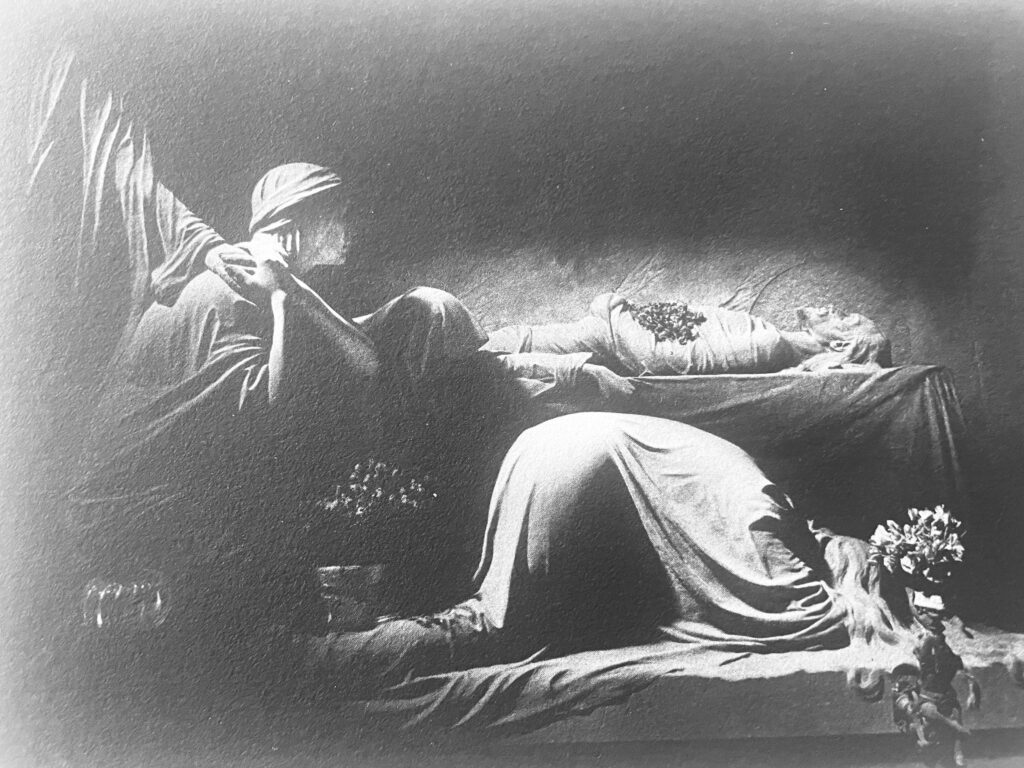
Recorded at Britannia Row Studios in early 1980, Closer was shaped by the same constellation of characters that defined its predecessor. Ian Curtis, Bernard Sumner, Peter Hook and Stephen Morris formed the nucleus, still working under the shadow of Manchester’s derelict industrial gloom. Tony Wilson and Alan Erasmus held Factory together with philosophy, flair and a certain reckless faith. Peter Saville designed the sleeve, this time a funereal photograph of a stone tomb from a Genoan cemetery. And Martin Hannett returned to sculpt the sound, more ghostly, more meticulous, more distant than ever. What they created no longer sounded like post-punk discovering itself. It sounded like something else entirely.

Curtis’s lyrics are the centre of gravity here. Written in short bursts of clarity amid worsening health, collapsing marriage and relentless touring, they possess a startling emotional precision. There is no flailing, no melodrama. Instead, Curtis writes like a man tracing the edges of his own disappearance. “A legacy so far removed” he intones on “Heart and Soul”, a line delivered with such resignation it feels almost weightless. On “Twenty Four Hours” he sounds caught between yearning and surrender, while “Passover” reads like a series of warnings he never expected anyone to hear. Curtis had always been precociously articulate, but on Closer his imagery crystallises. He writes with the concision of a poet and the clarity of someone who knows time is thinning.

Musically, the band had sharpened into an eerie, restrained machine. Hook’s bass leads most of the melodies, mournful but insistent. Sumner’s guitar is sparse, almost pointillist, teasing out glimmers of light through the haze. Morris remains astonishing, turning minimal drum patterns into emotional punctuation. There are moments that hint at what New Order would become, yet nothing here feels transitional. This is a closed circle.

And presiding over it all, Martin Hannett. If his work on Unknown Pleasures turned the band’s rawness into atmosphere, on Closer he goes further, transforming space into an emotional instrument. His production leaves acres of room between the notes. Drums crack like snapped bones in a cathedral. Basslines hover in negative space. Curtis’s voice floats somewhere between the living and the dead. Hannett built these tracks with the attention of a watchmaker, each mechanism ticking in isolation until it formed a whole that feels strangely inevitable.

Side one is almost liturgical. “Atrocity Exhibition” opens with a lurching rhythm and guitars that clatter like loose machinery. It is disorienting, provocative and brilliant. “Isolation” introduces a brittle electronic pulse, as if the band are already stepping into their next form. “Passover” feels like a whispered confession, “Colony” storms with controlled frenzy, and “A Means to an End” ties it all together with one of Hook’s finest basslines.

Side two is something else entirely. It is not a descent so much as a surrender. “Heart and Soul” is spacious, drifting, suspended in its own gravity. “Twenty Four Hours” is devastating, built on one of the band’s most violent dynamic shifts. “The Eternal” might be Joy Division’s most heartbreaking song, Morris’s drum pattern funereal, Sumner’s synths thin and trembling, Curtis sounding utterly alone. And then “Decades”, the closing track, a cold sunrise over ruins. Hook’s bass loops like memory itself while Curtis sings with a calm that chills the spine. It ends not with drama, but with a kind of acceptance.

When Closer arrived, it was instantly framed as a posthumous statement. It is not. It is a fully realised work by a band operating at the peak of their powers. The tragedy does not define it, but it certainly haunts it. Even without hindsight, the emotional gravity is unmistakeable. It is an album made with astonishing clarity by musicians who had no idea it would become a memorial.

Forty-five years on, Closer still stands apart. It is not a companion piece to Unknown Pleasures but a culmination. The purity of its production, the maturity of the writing, the confidence in its restraint. These were four young men building something timeless while their world was falling apart around them.

If Unknown Pleasures is the moment of ignition, Closer is the monument left behind. A cathedral of quiet despair. A masterwork of control, tension and emotional truth.

Enthusiasts return to it not because of its mythology, but because of its craftsmanship. It is immaculate, unsettling, and strangely beautiful. It remains one of the finest records ever to emerge from Britain, and one of the few that still feels like a closed door you can never fully open.

A band at the edge of collapse. A producer at the height of his powers. A label built on belief. And a singer writing with a lucidity that still feels impossible.

Closer endures because it sounds final. And because, in its own stark way, it is. Where have they been?

RETROSPECTIVE – Joy Division Unknown Pleasures

A stark, immersive deep dive into Unknown Pleasures, Joy Division’s 1979 debut that transformed post-punk into something spectral and eternal. Exploring the collision of Ian Curtis’s lyrical brilliance, Martin Hannett’s ghostly production, and Factory Records’ visionary chaos, this retrospective revisits the album that defined modern alienation and still sounds like the future.

Joy Division Unknown Pleasures, the ultimate retrospective review.


Some records don’t just capture a moment. Unknown Pleasures wasn’t merely a debut but a collision of working-class intelligence, creative genius and industrial desolation that turned late-Seventies Manchester into a kind of spiritual proving ground. Released in June 1979, it remains one of those rare works where every element; band, producer, manager, label, sleeve designer and city fuses into perfection. A flashpoint that changed everything.

Joy Division were four awkward young men who didn’t look the part. If the local council office workers put a band together this was it. No poses, no smiles, no pretence. Ian Curtis stood at the centre: pale, intense, eyes fixed somewhere beyond the crowd. Bernard Sumner, all nervous energy, turned thin air into electricity with brittle, searching guitar lines. Peter Hook, with attitude and melody, played bass like lead, as if he’d grown weary of the instrument’s traditional place and decided to reinvent it. Stephen Morris, unflappable and precise, was the human metronome keeping it all from imploding. Together they made music that sounded less performed than conjured.

And yet, at the heart of it all, stood Curtis, not simply the singer, but the reason Unknown Pleasures still feels like revelation. His lyrics weren’t slogans or statements; they were serious literature. Curtis was a working-class intellectual, a devourer of Kafka, Ballard, and Burroughs, a man who could translate alienation into poetry without losing the grit of everyday life. He wrote with eerie precocity, his words carrying the depth of someone twice his age. “Disorder” opens the record with “I’ve been waiting for a guide to come and take me by the hand”, a line that already sounds like a plea from the edge. “She’s Lost Control” was drawn from his encounters at the employment exchange, the story of a woman whose seizures mirrored the illness that would later contribute to his demise. In “New Dawn Fades”, he faces despair with devastating clarity: “A change of speed, a change of style, a change of scene, with no regrets.” Curtis never dramatised his pain; he documented it. Every lyric feels lived, every silence deliberate.

Around him, the band moved with precision. Sumner’s guitar shimmered with nervous energy. Hook’s bass carried the emotional and propulsive pulse. Morris locked everything into place with mechanical rigour. They didn’t just accompany Curtis’s words; they inhabited them, building soundscapes of claustrophobia and strange beauty.

Then came Martin Hannett, the producer who turned Joy Division’s live fury into something spectral. A sonic visionary and a mercurial eccentric, Hannett treated the studio like a laboratory. He recorded breaking glass, lift shafts, and literally empty space, turning silence itself into an instrument. The band wanted raw power*; Hannett delivered atmosphere, detachment, immortality. Hook complained it was too clean, too cold. But Hannett understood that this wasn’t a record about noise, it was about isolation. What he built in Strawberry Studios wasn’t just a mix; it was an environment.

(*for a heavier Joy Division listen to the live side of Still and the BBC John Peel Sessions available on the ‘Best Of’ CD)

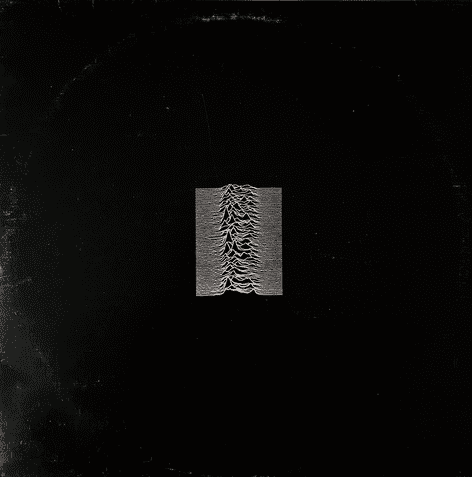
Overseeing it all, Factory Records, Anthony H Wilson’s impossible dream. Tony Wilson was the showman-philosopher-TV presenter and new music advocate, preaching art over commerce. Alan Erasmus his quiet lieutenant, Peter Saville the young graphic designer and aesthetic genius who gave Factory its visual language. Saville’s historic sleeve design for Unknown Pleasures, the white-on-black pulsar from a Cambridge astronomy textbook, became the perfect visual echo of the sound within. No title, no band name, no marketing. Just a transmission from the void. Inspired.

The record unfolds like a descent. “Disorder” rushes in with nervous urgency. “Day of the Lords” trudges through a wasteland. “Insight” floats in eerie calm, as if overheard from another world. “New Dawn Fades” devastates with Hook’s bass in lament, Sumner’s guitar shimmering like fluorescent light. Then side two opens with “She’s Lost Control”, a mechanised tragedy pulsing with inevitability. “Shadowplay” prowls through dim alleyways, “Wilderness” and “Interzone” flicker with punk afterglow before “I Remember Nothing” ends in collapse, static, glass, and Curtis’s voice dissolving into silence.

When it was released, Unknown Pleasures barely registered commercially. Factory’s distribution (like Rough Trade in London) was chaotic, and Manchester’s cultural importance had yet to be mythologised. But those who found it; the lost, the restless, the disillusioned recognised something transcendent. Punk had been about confrontation; Joy Division turned inward and found a new vocabulary for despair. They had created the post punk meisterwerk.

Within just a year, the story turned tragic. Curtis, battling epilepsy and emotional turmoil, took his own life on the eve of the band’s first American tour. Closer followed posthumously an austere requiem with prescient sleeve to match, but Unknown Pleasures remains the genesis, the moment the ordinary became eternal.

It endures because it was never really of its time. Curtis’s lyrics read like prophecy; Hannett’s production sounds perpetually modern. Sumner, Hook and Morris would carry fragments of its brilliance into New Order, but they never recaptured this particular alchemy, the balance of tension and restraint, intellect and instinct, belief and doom.

Unknown Pleasures isn’t just the greatest post-punk album. It’s the blueprint for everything that followed. The hum of fluorescent light in an empty flat. The heartbeat of a city rediscovering its soul. The poetry of disconnection made sacred by four ordinary lads, one visionary producer, and one man’s terrible genius.

Forty-six years on, it still sounds like the future, it still hurts but as Tony Wilson later mused, a record that launched a band responsible for the renaissance and redevelopment of an entire city.