A Commute To New Wave Stardom: The Jam, In The City (1977)

A deep dive retrospective into the debut album from Woking’s finest, The Jam. The politics, their suburban beginnings and the 1977 era of Punk Rock where they made their name with their own played-fast brand of Mod influenced New Wave. What self respecting chart obsessed 14 year old boy didn’t turn their school tie back to front after watching In The City on Top Of The Pops?
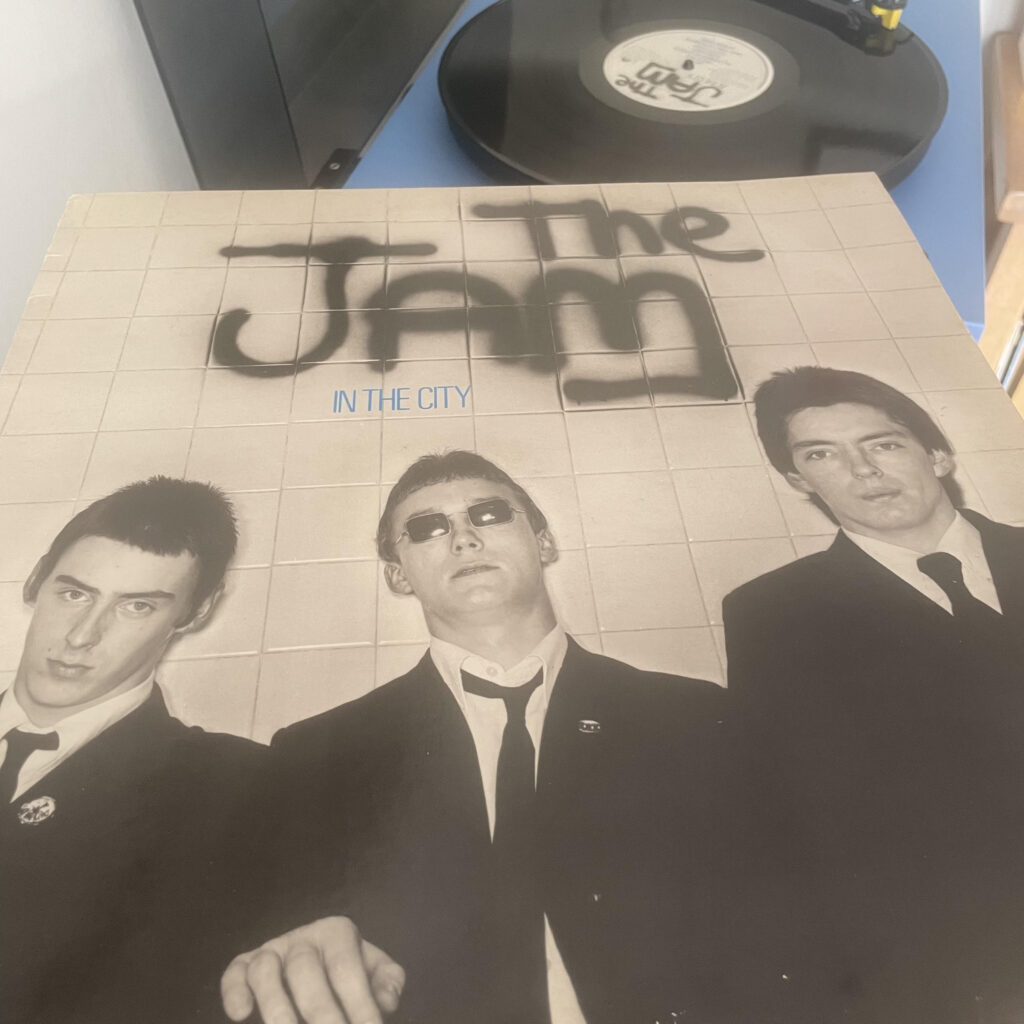
The Jam, In The City. Debut album from 1977. Full retrospective.

Britain, 1976 to 1977

Start with the weather. The summer of 1976 was the hottest anyone alive could remember. Reservoirs shrank, standpipes appeared in the street, and the government appointed a Minister for Drought. Within days of the appointment it rained. That is about as British as a national crisis gets, and it set the tone for a year in which very little went to plan.

Harold Wilson had resigned in the spring and left James Callaghan a country with high inflation, rising unemployment and a currency that kept sliding. By the autumn the Labour government was asking the International Monetary Fund for a loan and accepting the spending cuts that came with it. Unemployment was heading for the one and a half million mark, and school leavers were taking most of the hit. In August the Notting Hill Carnival ended in a riot. The National Front was getting bolder on the street, and the arguments about race that followed spilled into the music press and onto the stage.

For a sixteen-year-old in 1976 the message was plain. The jobs were going, the adults had no answers, and the music on the radio was Abba, Wings and a lot of Elton John. The bands that mattered to teenagers were mostly dinosaurs or exiles. Prog had run out of road. Glam had turned into cabaret. Pub rock was honest and hard-working, and it was also being played by men who looked like your dad.

Then the Sex Pistols swore on teatime television. On 1 December 1976 Bill Grundy invited them onto Thames Television’s Today programme, drew out a few four-letter words, and handed the tabloids a story that ran for weeks. Gigs were cancelled, councils passed bans, and EMI dropped the band within six weeks. In the same period The Damned put out “New Rose”, the first British punk single, and The Clash were rehearsing in a Camden warehouse. By spring 1977 the Silver Jubilee was coming, the Pistols had a single lined up that would make the Queen part of the argument, and punk had become a national row rather than a London fashion.

That is the world In The City was released into. Anyone who tells you it arrived at the start of punk has the dates wrong. It arrived at the moment the record industry finally decided to sign everybody.

Woking, and the boys who came out of it

The Jam did not come from Camden, the King’s Road or the Bromley Contingent. They came from Woking, a Surrey commuter town where people go to escape London and return to it every morning with a season ticket. Paul Weller grew up in a pebbledash semi with his father John, a builder and taxi driver who would become the band’s manager and, for a good few years, its unofficial fifth member and chief disciplinarian.

Weller met Steve Brookes and Dave Waller at school and the first version of the band came together in 1972, when Weller was fourteen. Rick Buckler, another Woking boy, joined on drums. Bruce Foxton arrived around 1973 and took over on bass, later than the others and a couple of years older than Weller. For much of the early period Foxton played lead guitar and Weller played bass. When Brookes left in 1976 the two swapped, and the line-up that would make the record was fixed: Weller on guitar and vocals, Foxton on bass and vocals, Buckler on drums.

What happened between 1972 and 1976 matters more than most punk histories allow. The Jam played for four years before anyone signed them. They did the working men’s clubs of Surrey and, with John Weller pushing the bookings, ventured north to the cabaret circuit, where a group of teenagers doing Motown and Who covers had to win over an audience that had come for the comedian and a plate of chicken and chips. In a 1970s club you either learned to hold a room or you went home. It gave them something the art-school punk bands mostly lacked, which was stamina and a habit of rehearsal. A cassette of their early practice sessions later turned up in Steve Brookes’s book Keeping the Flame, and it shows a young band that was serious about the work well before anybody was paying attention.

What they were listening to

Weller has always been open about it. The starting point was The Who, and specifically the My Generation album, which he found in the early seventies and treated as scripture. From there it ran outward to the Small Faces, The Kinks, early Beatles, Motown and Stax. He bought the clothes and the records and learned the songs. Around 1975 he saw Dr Feelgood, and Wilko Johnson’s fast, choppy, rhythm-and-lead-at-once guitar told him what was possible with one guitar and a very short temper.

None of this was fashionable in 1976. Mod was a memory, and most people under twenty did not care what kind of jacket a Small Face wore in 1966. The Jam looked odd to their own generation, and the punk audience could be hostile to a band in suits playing R&B. That was the tension the debut album carried. It sounded like punk in speed and volume, and looked and behaved like something older.

July 1976, and the trip to town

The turning point is easy to date. On 9 July 1976 Weller went up to London to see the Sex Pistols at the Lyceum, where they were third on a bill headed by the Pretty Things. He knew of them from the music press and wanted a look. He came home changed. Years later he summed it up plainly, saying there was a scene there and he wanted to be part of it. It explains most of the Jam’s next twelve months.

Woking had a stage. London had a scene. Weller started writing quicker, sharper songs about the town he lived in and the one he wanted to reach. He would tell Q magazine in 2011 that “In The City” was “a young man’s song, a suburbanite dreaming of the delights of London”. Read that back slowly, because it is the key to the album. A Londoner did not write about London this way. This came from a lad on the commuter train out of Woking who could not wait to get in.

Other accounts of the song add a further detail. Weller has said he wrote it after seeing the Pistols and The Clash, while in what he calls his Who phase. You can hear both in the record. The urgency belongs to the first two, and the chords and the harmonies belong to Pete Townshend.

Signing

The Jam worked London through the winter. They supported Wire at the Roxy in January 1977, an odd pairing that gives you an idea of how loosely the new bands were being grouped. On 22 January they played the Marquee as support to a group called Bearded Lady. In the audience was Chris Parry, a New Zealander and former drummer with the Auckland band The Fourmyula who had ended up as an A&R man at Polydor. Shane MacGowan, later of The Pogues, had told him to go and look.

Parry signed them within weeks. The terms were not generous. The advance was £6,000, with a royalty of six per cent, and the deal initially covered a single. Polydor soon took up an option that stretched the contract to four years and four albums. That is a lot of album for a band who had not made one. It is also the reason the group were in a studio while their contemporaries were still arguing with lawyers. According to one account, CBS’s chairman Maurice Oberstein phoned John Weller at the last minute with an offer said to be three times Polydor’s. By then Parry already had the band recording, and John Weller declined.

Parry is worth a paragraph of his own. He produced the first two albums alongside Vic Smith, who now goes by Vic Coppersmith-Heaven. He went on to found Fiction Records and sign The Cure. He was also, by most later accounts, the man who understood that the Jam were a pop group at heart and did not need to be pushed into being something angrier.

The sessions

The band cut demos in February, at a small studio in Soho by one account, and these were eventually released as The Polydor Demos in the reissue set. The album itself was recorded in March 1977 at Polydor’s own studio at 17 to 19 Stratford Place, off Oxford Street. It was done fast. Weller was eighteen. He would turn nineteen five days after the record came out.

Bruce Foxton’s memory of the sessions, given to MusicRadar years later, is refreshingly unmythologised. The album was more or less the live set, recorded live and played very quickly. He says you can hear it speeding up as it goes, and he adds that it does not matter, because the excitement was captured. He is right. The record’s biggest flaw and its biggest virtue are the same thing.

A reviewer at Sounds in 1977 wrote that the album sounded rushed, as though the band had been hurled into a studio before they were quite ready. The fairest reply is that they had. The songs were road-tested and the playing was tight. What was missing was time to shape the sound, and the result is a thin, trebly mix in which Buckler’s drums crash around at the front and Foxton’s bass does more of the melodic work than the mix admits. Punk records were being made quickly and cheaply that spring, and the label wanted the single out while the tour was on.

Release

“In The City” came out on 29 April 1977 and reached number 40. It is two minutes nineteen of tremolo guitar, a rolling bassline and a shouted chorus, and it got the group onto Top of the Pops. One retrospective claims the Jam were the first New Wave band to appear on the programme, which I would treat with care because several acts had a claim, but they were certainly among the first.

The album followed on 20 May and reached number 20. The timing tells its own story. The Damned had put out their debut in February. The Clash and The Stranglers released theirs in April, three weeks before the Jam. The Pistols would not get Never Mind the Bollocks out until October. So in May 1977, what the shops had was a run of debut records from London punk bands, and one from Woking that had a Batman theme on it.

The band had also joined The Clash’s White Riot tour from 1 May, though only for part of its run. It put them in front of the biggest punk crowds in the country, and it tied them to the scene in the eyes of the press.

The album

Side one opens with “Art School”, and if you want to understand what the Jam sounded like in the spring of 1977, play the first thirty seconds. It is guitar-led, fast and slightly messy in a way that is obviously intended. The Rickenbacker 330 that Weller played then has a jangle that no punk guitarist wanted, and he plays it like a stick. Foxton’s bass rides underneath. The sound is closer to 1965 than 1977 and much faster than either.

“I’ve Changed My Address” follows and keeps the pace, and then the record slows just enough for a cover of Larry Williams’s “Slow Down”, which The Beatles had also recorded. It is played straight, and you can tell the group regarded it as a favour to the ancestors. “I Got By in Time” is a solid tune that never quite finds the hook you expect from it.

“Away from the Numbers” is the first sign of the writer Weller was about to become. It is about not wanting to be counted, and in the way it moves between sections and leaves room for the bass it points to All Mod Cons rather than back to the pubs of Woking. Ceremony’s retrospective describes it as power chords fused with R&B melodies, and that is close. Side one closes with the theme from Batman, the 1960s television series, written by Neal Hefti. It is a throwaway and it is delivered as a throwaway. It is also a clue. A band at the front of punk who put the Batman theme on their debut are telling you they do not take the rules seriously.

Side two starts with the single. The introduction is Foxton’s bassline, arriving as a fast-moving pulse over which Weller’s guitar cuts in, and then the vocal enters with a lyric about uniformed men and the right to kill, a line that reads oddly now. It sounds like a protest and it works as one, though Weller was eighteen and was not writing a manifesto. The lyric’s real subject is the phrase “the young idea”, which is sung as the chorus and sounds like it came off a badge.

There is a footnote to the song that has become part of Jam folklore. The bass figure resurfaced a few months later on the Sex Pistols’ “Holidays in the Sun”. Weller has told the story of a run-in with Sid Vicious over it, and the accounts of who hit whom vary with the teller. Whatever happened, the resemblance is real, and it is a compliment.

“Sounds from the Street” and “Non-Stop Dancing” keep the momentum going. They are the least distinctive stretch of the album, quick and shouty, and the lyrics circle familiar territory of youth, noise and impatience. “Time for Truth” is the direct political song. Weller lines up the politicians for a kicking and does it in a way that sounds heartfelt and a little naive. It is worth knowing that around this time he told the NME that the band would vote Conservative at the next election. He changed his mind soon enough, and it is a useful reminder that in 1977 no one in the Jam had a settled politics, only a settled dislike of being talked down to.

“Takin’ My Love” shows the R&B and soul roots underneath the speed. “Bricks and Mortar” closes the record with a complaint about redevelopment, the spoiling of old streets by new concrete. It is the closest thing on the album to a preview of the songs he would write about Britain over the next five years, where the target was the whole country and not just the councils.

Twelve tracks, two covers, not much over half an hour. It does not outstay its welcome.

What it does well, and what it doesn’t

The strengths are energy, tunes and precision. The band is tight, and Buckler and Foxton in particular sound like a unit that has spent four years playing in rooms where mistakes are punished. The tunes are better than those on most punk debuts. The vocal is confident. Weller is a much more musical singer than the Pistols’ Johnny Rotten or The Clash’s Joe Strummer, and the harmonies with Foxton have a pop quality that was rare in the scene.

The weaknesses are equally clear. The production is thin. Some of the songs are filler, and one or two are pastiche. The lyrics are teenage in a way that Weller himself outgrew within twelve months. Most tellingly, the album shows a band still working out whether it is a punk group with mod tastes or a mod group with punk pace. The Who influence is so strong in places that some listeners at the time heard a tribute act, and the charge was not entirely unfair. It was a limited way of hearing it. A tribute band does not usually write “Away from the Numbers” or take an album to number 20.

Later views

Time has been kind to the record without turning it into a masterpiece. Fans tend to place it below All Mod Cons, Setting Sons and Sound Affects, which is where it belongs. Pitchfork reviewed it as part of the reissue programme. The 40th anniversary box set, 1977, was released in October 2017 and collected the album, its follow-up, the February demos, live recordings and the Peel sessions.

The band members have looked back on it with varying degrees of fondness. Foxton remains proud of it and talks warmly about the thrill of hearing the single in his local pub. He has also pointed out that the record company and the audience wanted a repeat, and that the group were already moving toward ballads and acoustic guitars when they made the next single, “All Around the World”. That single went to number 13 in July. The second album, This Is the Modern World, followed in November, only six months after the first and widely thought of as the rushed one.

Rick Buckler died on 17 February 2025. In later life he felt that Weller had been given too much of the credit for the band’s catalogue at the expense of the rhythm section. Listen to the record and the point is easy to accept. The drums on “In The City” do the work of pulling the whole thing forward, and Foxton’s bass is an equal partner. In 1977 they were the best rhythm section in the new bands, and they still sound like it.

Verdict

In The City is not the finest Jam album, and it is not a punk record in the way Never Mind the Bollocks or The Clash is. It is a small-town group taking its chance and taking it well. There are perhaps five genuinely excellent songs. There is a great single. There is a set of musicians who could play, and a teenager who was about to learn to write.

The best way to hear it is as a document of one moment: the spring of 1977, when the guitars were loud, the government was on its knees, and a lad from Woking with a Rickenbacker and a good haircut looked at the city on the horizon and decided to catch the train. It sounds like someone who has not been let down yet. Within two years he would be writing about buses, tube stations and the ordinary cruelty of British life, and the music would be far better. This record is where the lad from the suburbs starts.

Play it loud like you’re packed into the 100 Club for half an hour.
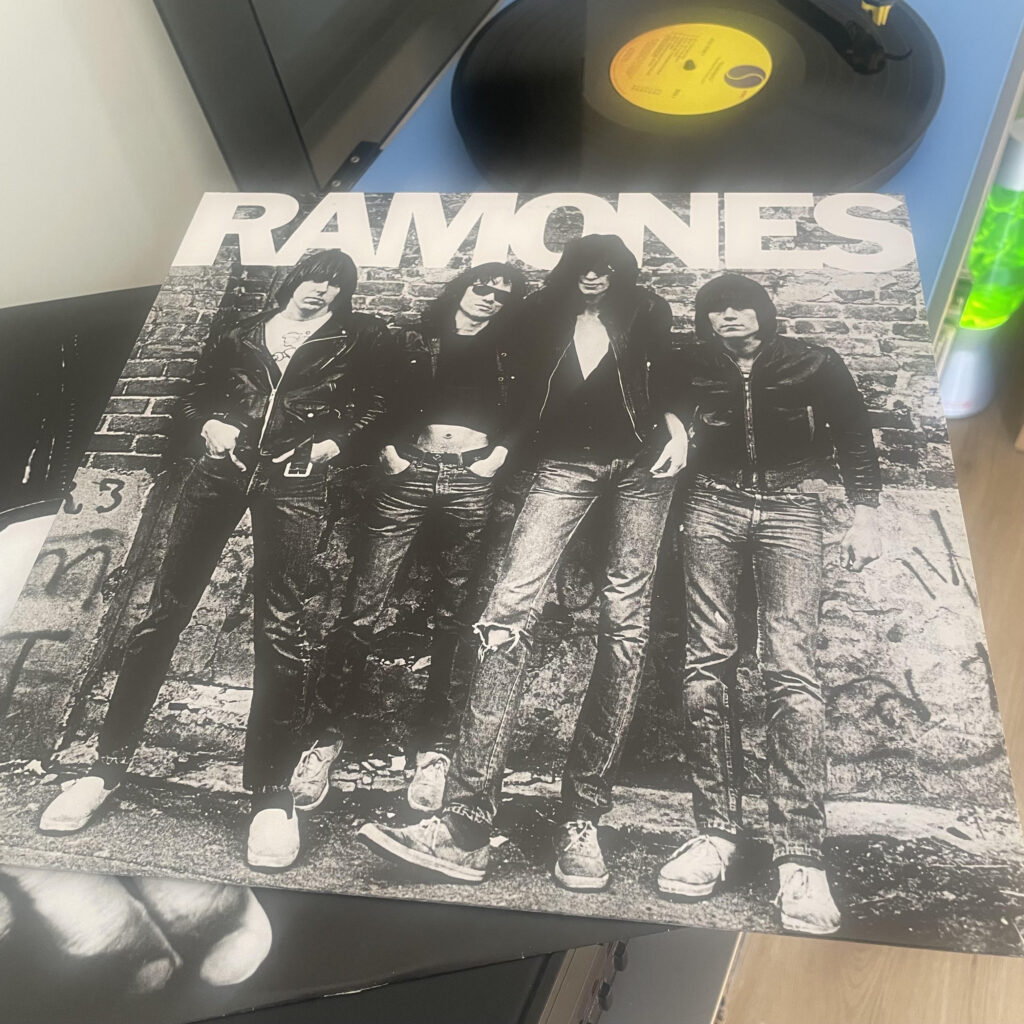
We Wanna Be Your Pen Pals. The Ramones (S/T) (1976)

On 23 April 1976, Sire Records put out a 29-minute LP by four men from Queens who dressed alike, played fast and shared a surname that none of them was born with. It cost $6,400 to make. It reached number 111 on the Billboard chart, its singles missed the chart altogether, and radio mostly ignored it. Fifty years on, it is one of the most copied records in rock.

This piece looks at where the band came from, what New York was doing around them, how the album was made, whether it was the first punk album, and what happened when the Ramones flew to London in the summer of 1976 and met the people who would build British punk.

Forest Hills

The Ramones came from Forest Hills, a residential part of Queens, and the story starts with school friends. John Cummings and Thomas Erdelyi played in a garage band called the Tangerine Puppets in 1966 and 1967. They later got to know Douglas Colvin, who had moved to the area from Germany, and Jeffrey Hyman, who had been singing in a glam band called Sniper since 1972.

In early 1974 Cummings and Colvin asked Hyman to join them as drummer. Colvin wanted to sing and play guitar, and a friend, Richie Stern, was meant to play bass. After a few rehearsals it was clear Stern could not play bass. Colvin moved to bass and kept singing, Cummings became the only guitarist, and the band had a gap behind the kit. Erdelyi was acting as manager and kept sitting down to show auditioning drummers what he wanted. Eventually he took the stool himself. Hyman moved to the front.

The name came from a scrap of Beatles trivia. In the Silver Beetles days Paul McCartney checked into hotels as Paul Ramon. Colvin liked it, became Dee Dee Ramone, and the others followed: Johnny, Joey and Tommy. They were not related, but the fake family did the job. A gang with a uniform is easier to remember than four separate guitarists, and the matching leather jackets and torn jeans made the point before anyone heard a note.

What they listened to matters more than the name. The Stooges and the New York Dolls were in there, but so were girl groups, the Beach Boys, bubblegum and the British Invasion. Tommy Ramone later said “Judy Is a Punk” was built on Herman’s Hermits’ “I’m Henry VIII, I Am”. The Ramones did not reject pop. They stripped it to the frame and played it at speed.

They played their first show on 30 March 1974 at Performance Studios in Manhattan. The songs were fast and short, and most ran under two minutes.

The Bowery

Downtown Manhattan had two rooms that mattered: Max’s Kansas City, which had a reputation from the Warhol years, and CBGB, a bar on the Bowery that had been set up for country and blues and ended up hosting something else entirely. The Ramones made their CBGB debut on 16 August 1974, opening for Angel and the Snake, a prototype Blondie.

Legs McNeil, who co-founded Punk magazine the following year, remembered the black leather jackets and the wall of noise as the band counted in each song. What struck him most was a simple point of difference: “These guys were not hippies.”

That sentence explains a lot about 1974. Rock had grown long-haired, self-serious and expensive. The bands filling stadiums played long solos on records that took months to make. In a small room on the Bowery, a band with no solos and a seventeen-minute set was a rebuke. By the time the album came out, they had played CBGB seventy-four times.

They were not alone. Television, the Patti Smith Group, Talking Heads, Blondie, Johnny Thunders’ Heartbreakers and Richard Hell were all working the same circuit, and they sounded nothing like each other. Talking Heads played some of their earliest shows in support of the Ramones. The scene had no shared sound. What it shared was a rejection of the big-rock model, and the Ramones were the plainest version of that rejection.

Getting signed

Lisa Robinson, an editor at Hit Parader, saw the band and began writing about them. She then pressed Danny Fields, who had worked with the Stooges and the MC5, to manage them. He agreed in November 1975. Fields brought in Craig Leon as producer, and Leon helped persuade Sire president Seymour Stein to come and see them.

Stein signed them in late 1975. Sire offered to release a single, “You’re Gonna Kill That Girl”. The band said no and asked for an album. Sire agreed on one condition: the studio bill would come out of their advance. So the Ramones paid for their own debut, which helps explain the budget.

Seven days at Plaza Sound

The album was recorded at Plaza Sound, a studio on the eighth floor of Radio City Music Hall, in early 1976. Sources differ on whether sessions began in January or February. All agree on the numbers: about a week, with three days for the instruments and four for the vocals, at a cost of $6,400.

Leon said years later that the budget forced the speed, but that it was all the time they needed. The techniques were old-fashioned, close to how the Beatles were recorded, on four tracks. Leon then added overdubbing and doubling, which gave the guitars more weight than a bare live take would have.

That is the trick of the record. It sounds crude, but it is not sloppy. Johnny Ramone’s guitar is a dense, even buzz, with every chord struck downwards, and the bass and drums lock on to it. The songs are arranged. Nothing wanders. Fourteen tracks fit into just over 29 minutes because nobody wastes a bar.

The songs

“Blitzkrieg Bop” opens the record with a chant that works like a football terrace song. Tommy Ramone often pointed to the Bay City Rollers as a model for that kind of shout-along hook, and the joke that a tartan pop band fed the first punk hit is worth keeping. The title borrows the language of war, the tune borrows from pop, and the whole thing runs about two minutes.

The rest of side one is a run of short, blunt sketches. “Beat on the Brat” has a cheerful singalong tune wrapped around a violent idea. “Judy Is a Punk” is a two-line character study. “I Wanna Be Your Boyfriend” is a slow, sweet song with bells in the mix, and it proves the band could write a proper ballad when they wanted to. “Now I Wanna Sniff Some Glue” (does anyone, anywhere even sniff glue now?) and “I Don’t Wanna Go Down to the Basement” are teenage complaint delivered with a straight face, and the humour is dry enough that some listeners missed it at the time.

Side two is darker in places. “53rd & 3rd” is Dee Dee’s song about male hustlers on that Manhattan corner, and it treats its subject without flinching or fuss. “Let’s Dance” is a cover of the Chris Montez hit from 1962, a reminder of how much of this music / scene came from the early 1960s. “Havana Affair”, “Listen to My Heart” and “Today Your Love, Tomorrow the World” complete a set that swings between romance, boredom and menace inside a few minutes.

There is one rule the album never breaks: no solos. Joey Ramone’s voice, a nasal Queens croon, sits on top of Johnny’s dense block of chords and refuses to show off. The effect is comic and unsettling at once. The songs are about glue, hustling and violence, but they are played with the bright tunefulness of a pop group, and that gap gives them their edge.

The sleeve

The cover is a photograph by Roberta Bayley, black and white, grainy and lo-fi of the four band members leaning against a brick wall in their jackets and jeans. Sire paid $125 for it. It has been imitated more often than almost any other sleeve in rock. The title in bold Franklin Gothic all-capital letters, tightly spaced and set as large as possible across the top of the photo followed on the band’s subsequent albums. The band’s eagle logo, adapted from the US presidential seal, came from Arturo Vega, who worked closely with them, and it turned the group into a brand before that word was common in music.

What happened next

The reception was thin. Few critics reviewed it on release, and most who did were neutral. Radio ignored it. In America it stalled at number 111, and it took decades to reach a gold certificate. In the UK it did not chart at all. The follow-up, Leave Home, reached number 45 there in 1977, Rocket to Russia reached 60, Road to Ruin reached 32, and End of the Century reached 14 in 1980. Britain needed time, and the band needed to go there first.

The album’s standing grew slowly and then all at once. It was later placed on the US National Recording Registry, and it now sits near the top of most lists of essential 1970s records.

Was it the first punk album?

It depends on what you mean, the (perpetual) debate is always more useful than the answer.

If “punk” means a spirit, a stance or a set of ancestors, then the Stooges, the MC5, the Velvet Underground and the New York Dolls got there first. The Modern Lovers’ proto-New Wave album was recorded in the early 1970s but did not come out until 1976. Patti Smith’s Horses arrived in 1975, and it is a punk record in attitude but not in sound.

If “punk” means a complete sound, with short songs, fast tempos, no solos, a uniform and a sense of humour, then the Ramones got there first on record. Nicholas Rombes, who wrote the 33⅓ book on the album, and the critic Stephen Thomas Erlewine have both described it as the first album labelled punk rock.

The competition is close but later. Blondie’s debut appeared in late 1976. The Saints’ single “(I’m) Stranded” came out in Australia in September 1976, the first punk record from outside the US, and Ed Kuepper has said that hearing the Ramones a month before recording made him think his band had been beaten at their own game. The Damned’s “New Rose” was the first British punk single in October 1976. The Sex Pistols’ “Anarchy in the U.K.” followed in November. Album by album, the Saints’ (I’m) Stranded and the Damned’s Damned Damned Damned both came out in February 1977, the Clash’s debut in April, and Never Mind the Bollocks in October.

So the fair answer is this. The Ramones made the first album that sounds the way punk records would sound for the next decade, and they made it before most of the people who copied it had recorded a note. Whether you call that “first” depends on how much weight you give the Stooges. I would call the Stooges the parents and the Ramones the first child.

London, July 1976

The Ramones went to Britain because there was interest in the band there. They had grown up on British music and were pleased to be going. Two shows were booked.

The first was on Sunday 4 July, the American bicentennial, at the Roundhouse in Camden. The Ramones supported the Flamin’ Groovies, with the Stranglers also on the bill, and played in front of somewhere between two and three thousand people. That was more than they had played to in total up to then, as Danny Fields recalled. He also said it did not feel legendary at the time.

Two details in the folklore need correcting. First, the Sex Pistols and the Clash were not at the Roundhouse. Both were in Sheffield that night, playing the Black Swan pub, and it was the Clash’s first ever gig. Second, the Roundhouse crowd was full of the people who mattered anyway. Members of the Damned were there, as were Gaye Advert, Adam Ant, Shane MacGowan and Chrissie Hynde.

The reviews split along familiar lines. The NME said the band had turned the old hippy hall into the sleaziest garage in London. Melody Maker‘s Allan Jones called them moronic, which, given the song titles, was not entirely unfair.

The next night, Monday 5 July, they headlined Dingwalls, a Camden club that held about 500. This time the Pistols and the Clash were in the room. That includes Brit Punk Royalty like: Joe Strummer, Paul Simonon, John Lydon, Glen Matlock, Sid Vicious, Chrissie Hynde again, and Brian James, Rat Scabies and Captain Sensible of the Damned. They saw a band play short songs at speed and stop only to count in the next one. Strummer, remembering it later, said you could not slide a cigarette paper between any two of their songs. He also called the first album “the first word of Punk”. Now watch clips of early Clash gigs, they’re going at 100mph in their spray painted boiler suits.

The visit did not create British punk. The Pistols had been playing for months, and the 100 Club scene was already forming. What the Ramones gave the British bands was proof that a full, professional-sounding record could be made at this speed with this little, and a sense that there was somewhere for it to go. John Robb has described the night as one where nearly every band seemed to speed up overnight.

Pen Pals With The Damned

The Damned are the British band most closely tied to that week, and the link is easy to follow.

Brian James had been in London SS, the group that also passed through Mick Jones and Tony James, and he formed the Damned with drummer Rat Scabies. They found Dave Vanian, a gravedigger by day who dressed like a vampire, on vocals, and Captain Sensible on bass. They took the name from Visconti’s film and from Village of the Damned. Accounts of the band’s early days say James played Sensible records by the Stooges and the Ramones as a kind of induction. Whatever the exact details, the Ramones were on the turntable before they were on the stage.

All three of the band’s future core were in the crowd on 4 and 5 July. Two days later, on 6 July, the Damned made their own stage debut at the 100 Club. Sensible has since said the Ramones “kickstarted the whole thing” in Britain, and the timing supports him. The Damned then did what the Ramones had done in New York: they got there first. “New Rose” came out on Stiff on 22 October 1976, produced by Nick Lowe at Pathway Studios in Islington, and it was the first single from a British punk band. It beat the Sex Pistols’ “Anarchy in the U.K.” by about five weeks. Damned Damned Damned followed on 18 February 1977, the first British punk album, and it ended with a Stooges cover, which tells you where their heads were.

The debt ran back the other way as well. In April 1977 the Damned played four nights at CBGB, the first British punk band to do so. Sensible has said the club emptied the room and started soundchecking for a second show on the same day, which was not how things worked at home. The British band that owed the most to the Ramones was now playing the Ramones’ own room.

The record does not show the two bands sharing a UK tour in these early months, so the relationship is better described as mutual recognition than partnership. The bands exchanged handwritten letters, you might say punk-pen pals in the era of expensive long distance phone calls well before social media and direct messaging and before The Ramones returned to Britain in December 1977 on their second UK tour, with the Rezillos supporting at Newcastle City Hall on 20 December, and the New Year’s Eve show at London’s Rainbow Theatre was recorded for the live album It’s Alive. By then the audience they had barely met the year before had turned into a country that knew every word.

Verdict

Ramones is self evidently not the most musically complex album of its year, it is not meant to be. It is the most economical. It shows that a band could do more by subtracting things than by adding them, and that a joke, a hook and a tempo could carry a record. Every good short song since has some of it.

The reputation can get in the way of the record. It is funny and precise, and it is over before you have time to get bored. Put it on. It will be finished in half an hour, and you will probably want to hear it again.


A Few Facts

  • Released: 23 April 1976, Sire Records
  • Recorded: Plaza Sound, Radio City Music Hall, New York, early 1976
  • Producer: Craig Leon
  • Length: 14 tracks, 29:04
  • Cost: $6,400 funded by the band
  • Chart: US 111, no UK chart placing on release
  • First UK shows: Roundhouse, 4 July 1976; Dingwalls, 5 July 1976
  • The Damned’s “New Rose”: 22 October 1976

Retrospective: Soul Mining, The Sound Of a Country Going Under


‘Just a Symptom of the Moral Decay That’s Growing in the Heart of the Country’

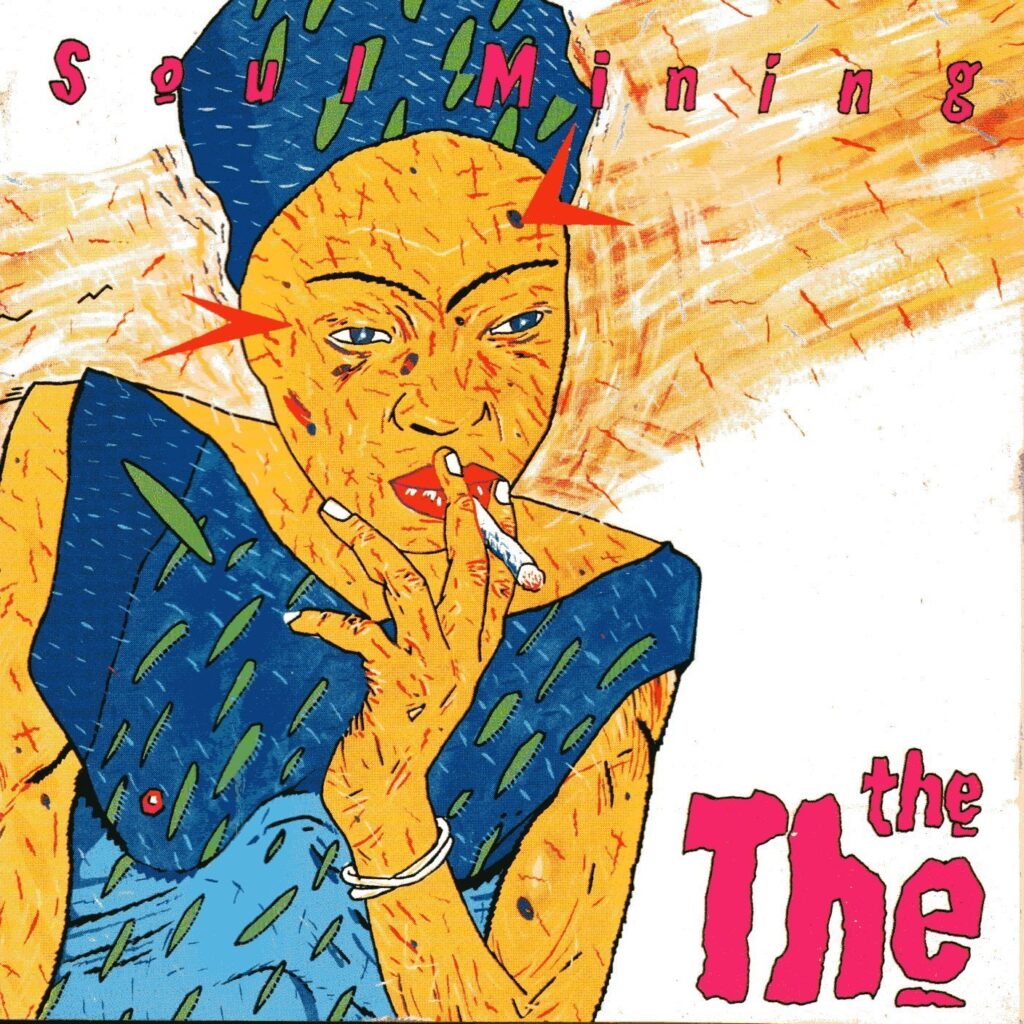
the The, Soul Mining. Some Bizzare/Epic, 21 October 1983

Most British pop in 1983 danced or shouted. Soul Mining sat in the dark and took stock.

Matt Johnson was in his early twenties. He had already made one strange, private record. Now he made seven songs that blended synth-pop, jazz, funk, blues and tape-loop experiment, describing two things at once: a man coming apart and a country coming apart. The album sold steadily, later went gold in the UK, and has never dated because it was never in fashion. Four decades on, it sounds like a warning that was mistaken for a mood.

Britain in 1983

Margaret Thatcher took office in May 1979. Her government cut public spending and fought inflation with high interest rates and tight control of the money supply. Industry took the hit. Factories, steelworks and shipyards closed, and by early 1982 unemployment had passed three million. The inner cities erupted in 1981, in Brixton, Toxteth and elsewhere.

The Falklands War in 1982 restored her standing. In June 1983 she won a landslide, helped by a Labour Party in disarray and an opposition split between Labour and the SDP-Liberal Alliance. The miners’ strike was a year away. Soul Mining came out four months after the election, into a country that had just re-elected the government that was closing its factories.

That timing matters. The record does not sound like protest. Protest assumes someone is listening. It sounds like the morning after a lost argument, when the result is in and the consequences are still arriving.

The man behind the name

Johnson was born in London in 1961 and grew up in a pub family in East London. His father ran the Two Puddings in Stratford for almost forty years. Johnson has said the blues came up through the floorboards. He had been in bands since the age of eleven.

After leaving school he spent something like eighteen months to two years alone, mostly in his bedroom with tape recorders, long walks and books. He calls it a hothouse. It made him a one-man studio. He taught himself tape looping, read up on musique concrète, and learned to build a record by layering his own parts. Burning Blue Soul came out on 4AD in 1981 under his own name and was later reissued as a The The album. It cost about £1,800, and he made it while signing on.

Johnson’s politics

Johnson is left of centre by instinct but no party man. He distrusts every institution: state, church, press and party alike. He has said his quarrel with America is with the corporate powers that steer its foreign policy, not with Americans. He lived in New York for several years and calls downtown Manhattan his spiritual home. He reads geopolitics most nights and has spoken of wanting to write about the people behind the people, without preaching.

Later records made this explicit. Infected (1986) took on Thatcherite Britain and the Cold War with open anger. Mind Bomb (1989) turned on religious fundamentalism and drew mixed reviews for it. In 2002 he walked away from the music business, citing bad publishing and management deals that leave mid-sized bands in debt while their records earn fortunes for others. That is the same suspicion of power, applied to his own trade.

Soul Mining is the quieter, earlier version. The politics arrive as weather. Unemployment, decline and the feeling of being stuck in a place that no longer needs you run through the record, but the songs are about people, not policy. A slogan dates within a year. A person waiting for a job that will not come still reads as true.

Making the record

Work began in spring 1982 in New York, where a twenty-year-old Johnson cut “Uncertain Smile” and “Perfect” with producer Mike Thorne on London Records’ money. When CBS signed him instead, those sessions were dropped and he started again in London. He bought a Portastudio, a Fender Strat, an Omnichord, a couple of small synths and a Roland TR-606 drum machine, and wrote the songs lying on the floor of his flat. With no sequencer, he played parts for ten minutes at a time and used the takes as loops.

The album was then made in Shoreditch at John Foxx’s Garden studio, co-produced with engineer Paul Hardiman, who had worked with Wire. Zeke Manyika, Thomas Leer, Jim Thirlwell and Jools Holland guested. It was mixed at Martin Rushent’s Genetic Sound. Johnson wanted something cinematic, wide and deep, and he did not want two guitars, bass and drums. The full cast and what connects them is in Part 2.

The songs

I’ve Been Waitin’ for Tomorrow (All of My Life). The opener runs on Manyika’s vicious drumming and Leer’s restless synth, built from long loops. The title says it all: a life spent waiting for something to start. The eager rhythm and the deferred hope pull against each other, and that tension sets the tone for the rest.

This Is the Day. Wix Wickens (credited as “Wicks”) plays accordion and Paul Boyle plays fiddle, giving the intro the feel of a French street café. It is the one bright song and the best loved. The opening line turns the old blues line about waking up in the morning on its head. It reached only number 71 in 1983. A reworked version, “That Was the Day”, reached number 17 in 1993, and the original has since turned up in Guardians of the Galaxy Vol. 3 and Netflix’s One Day. Even here the day is passing.

The Sinking Feeling. This is the political centre. The title works twice: the private dread of the small hours and the public sense of a nation going under. Johnson has called it and “The Twilight Hour” the more insecure songs on the record. It reads as a portrait of a man and a country going down together.

Uncertain Smile. It opens on a homemade tape loop of African-sounding percussion, then settles into chiming guitars and synthetic strings. The song grew from a demo called “Cold Spell Ahead”. It is about a relationship where nobody knows what anybody feels. Holland’s piano solo was recorded in essentially one take, and it is among the finest in pop. It runs like a party in the next room, then stops, and the unease returns.

The Twilight Hour. A slow, late-night piece that lets the album breathe. It is closer to a confession than a song.

Soul Mining. The title track has a downcast, Afro-tinged synth pulse. The title states the method: dig into yourself and use whatever you find, however ugly.

Giant. Johnson’s own favourite closes the album. Industrial rhythms, deep bass and chanting build a long groove that keeps shifting and never resolves. My reading is that it is about scale, the feeling of being small beside something too large to fight.

The human condition, without a filter

The lyrics deal with insecurity in relationships, social alienation and dream imagery. Johnson writes about loneliness, desire, jealousy, self-disgust, drink, fear and the slow pressure of time, and he does not tidy any of it into a lesson. There is no last-verse rescue. A song may argue itself towards hope and lose.

He is not a poet of wit, like Morrissey, or of abstraction, like Ian Curtis. He is closer to a reporter of the interior, someone who writes down what he feels at three in the morning and leaves it as written. That is why the record has aged so well. The details of 1983 fall away and the feelings stay.

The music is also generous. Jazz-tinged piano, live percussion, fiddle and accordion sit beside the synths and drum machine. The contrast is deliberate: the sound invites you in and the words tell you the truth.

Reception and afterlife

Johnson refused to appear on the sleeve or to tour. He doubted the record could be played live, since samplers were not yet affordable, and he did hundreds of interviews instead. The European sleeve is a painting by his brother Andy Dog of one of Fela Kuti’s wives holding a joint, and the typeface was drawn by his girlfriend Fiona Skinner.

The label added “Perfect” to the end of some editions without his approval. He fought to have it removed and finally succeeded in 2002. The song began life under the title “Screw Up Your Feelings”.

The 2002 remaster was compressed hard, by Johnson’s own admission. For the 2014 anniversary box he had the tapes remastered at Abbey Road with barely any processing, and he says they sounded as if they had been recorded a week earlier. In 2024 he released Ensoulment, the first The The album in twenty-four years.

Verdict

The album’s central mood is precarity: the ground is not solid and nobody in charge is coming to help. Every decade since has produced its own version of that feeling, and Soul Mining still fits. It does not tell you what to think. It shows you what it felt like and lets you reach your own conclusion.

It is not an easy album to love. It is an easy one to trust.

Part 2, The Web Behind the Record, is a reference guide to the people, studios, machines and management that shaped the album, and to why it shares so much with its 1983 neighbours.


Soul Mining, Part 2: The Web Behind the Record

Part 1 reviewed the songs. This is the reference guide: who managed, played and produced, where it was made, on what equipment, and why the record shares so much with the synth-pop of 1983.

Management: Stevo and Some Bizzare

Stevo Pearce was a Dagenham club promoter who talked Sounds into printing his Futurist chart of new electronic acts. Some Bizzare began in 1981 with a compilation of unsigned bands including Depeche Mode, Soft Cell, The The and Blancmange. It worked more as a management umbrella than a conventional label. The roster later took in Marc Almond, Cabaret Voltaire, Einstürzende Neubauten, Foetus, Swans, Coil and Psychic TV.

His method was to get major labels to fund recordings while he kept ownership. Soft Cell’s number one with “Tainted Love” in 1981 gave him leverage. Johnson lived the sharp end of it: London Records paid for his first New York trip with nothing in writing, then CBS signed him. Stevo is also said to have licensed Soul Mining to more than one label.

Johnson credits Stevo with running the best label in Britain for about three years, before he wrecked it. He remembers the acts as a close scene, with Soft Cell, Psychic TV, Cabaret Voltaire, Foetus, Einstürzende Neubauten, Test Dept and Swans hanging out together. Any problems were with Stevo, not the bands.

People

  • Marc Almond. Johnson was a member of Marc and the Mambas for their first two albums and played guitar on Torment and Toreros. Almond returned the favour in 1982 by joining Johnson on guitar and vocals for a run of Marquee shows in Soho.
  • J.G. Thirlwell (Foetus). He appears on Soul Mining as “Frank Want”, building a rhythm from pots and pans taken from the studio kitchen. The same credit appears on the Mambas record. He also guested on the Mambas as Foetus.
  • Zeke Manyika. The Orange Juice drummer turned up three days late and then produced the drum sound on the opener.
  • Thomas Leer. He plays synth on the opener. His one-man single “Private Plane” was what convinced Johnson he could work without a band.
  • Jools Holland. He played the “Uncertain Smile” solo in one take on a Yamaha C3 grand, having arrived in leathers on a Norton in summer heat.
  • Wix Wickens, Paul Boyle and Andy Duncan. Accordion, fiddle and drums on “This Is the Day”. Wickens later became Paul McCartney’s musical director.
  • Steve Sherlock. A core Mambas member. His flute and sax appear on tracks from Johnson’s shelved Pornography of Despair sessions, which ended up on the 12-inch of “Uncertain Smile”.
  • Wire. Wire’s Bruce Gilbert and Graham Lewis co-produced Burning Blue Soul. Hardiman had engineered for Wire, and Thorne produced Wire’s early records.
  • Design. Andy Dog painted the sleeve and Fiona Skinner drew the typeface.

Producers and studios

  • Mediasound, New York, 1982. The first “Uncertain Smile” and “Perfect”, produced by Mike Thorne, who had produced Soft Cell’s debut. Johnson liked Thorne’s sound but found it soft. Stevo fell out with Thorne, and Johnson switched to Paul Hardiman, who gave the sound more edge.
  • The Garden, Shoreditch. John Foxx’s studio, where the main work was done. Foxx was a founder of Ultravox. Johnson later ran the studio with Miloco until 2012.
  • Advision and Sarm West, London. Used for the 1983 version of “Uncertain Smile” and for “This Is the Day”.
  • Genetic Sound. Martin Rushent’s studio, where the album was mixed. Rushent produced the Human League’s Dare.
  • Trident, London. Where the Mambas made both albums. Flood co-produced Torment and Toreros with Almond and later produced Depeche Mode.

Equipment

Johnson’s own list is modest: a Portastudio, a Fender Strat, a Suzuki Omnichord, a couple of small synths and a Roland TR-606 drum machine, with Tannoy speakers for monitoring. He had no sequencer, so he played parts for ten minutes at a time and used the takes as loops. His earliest work used an Akai tape machine, a Big Muff pedal and echo boxes.

The rest came from outside the machines: a homemade tape loop of percussion on “Uncertain Smile”, pots and pans on the kitchen floor, a good grand piano in a good room, and an accordion and a fiddle. One retailer’s sleeve notes claim the drum machines came from the Human League’s studio. Johnson’s own account contradicts that, so treat it as folklore.

The accordion and the café

The intro to “This Is the Day” is one of the album’s signature sounds. Johnson wanted no fixed line-up, so fiddle and accordion could sit on one song and cellos and synthesiser on another. The French street-café feel is a fair reading of that pairing.

There is a thread to support it. The Mambas’ Torment and Toreros, which Johnson played on in 1983, mixed vaudeville with French chanson and covered Jacques Brel. The same circle was absorbing the same influences. Johnson also recalls a French journalist asking why nearly all his songs were in minor keys, a habit he had never noticed.

Why the 1983 sound overlaps

Listen to Soul Mining with contemporaries and it shares ground with New Order’s Power, Corruption and Lies, the Human League, Heaven 17 and Depeche Mode. The reasons are practical.

  1. Shared rooms and people. A small circle of London studios and a few producers served many acts. Thorne, Rushent and Flood moved between artists, so techniques and textures travelled with them.
  2. Cheap electronics. Drum machines, sequencers and small synths became affordable, so a solo artist could make a full record at home. Johnson’s TR-606 and Portastudio sit at the modest end of that shift. The bigger acts had the same idea with larger budgets.
  3. Post-punk players turning to electronics. Wire alumni, John Foxx and Thomas Leer all came from punk and its aftermath, not conservatory training. They favoured rhythm and texture over virtuosity, and they crossed over between bands.
  4. A label system built on introductions. The 1981 Some Bizzare Album put Soft Cell, Depeche Mode, Blancmange and The The on one disc. Depeche Mode then moved to Mute, but the friendships stayed.
  5. New York club music. The Thorne sessions were made in New York, and the early 1980s club scene there is a stated influence on the album. Dance rhythms with dark lyrics were the common target.
  6. Major-label money. CBS, Phonogram and London funded proper studios and polished mixes, which pushed rough electronic demos towards a cleaner, wider sound.

Where Soul Mining differs

The overlap is in the sheen, not the method. Johnson worked from tape loops and musique concrète, layered his own parts, then brought in live players: drums, piano, fiddle, accordion, percussion from the kitchen. Africa, the blues and jazz piano all sit inside the electronics. New Order and the Human League built their sound on sequencers and machines. Soul Mining used the machines as a frame and filled it with people. That is why it belongs to its year and still sounds like nothing else from it.

Retrospective: Pete Townsend’s Mod Meisterwerk

Four Faces, One Parka: The Who’s Quadrophenia at Full Throttle

After a break, a 45renegade rock and roll long read.

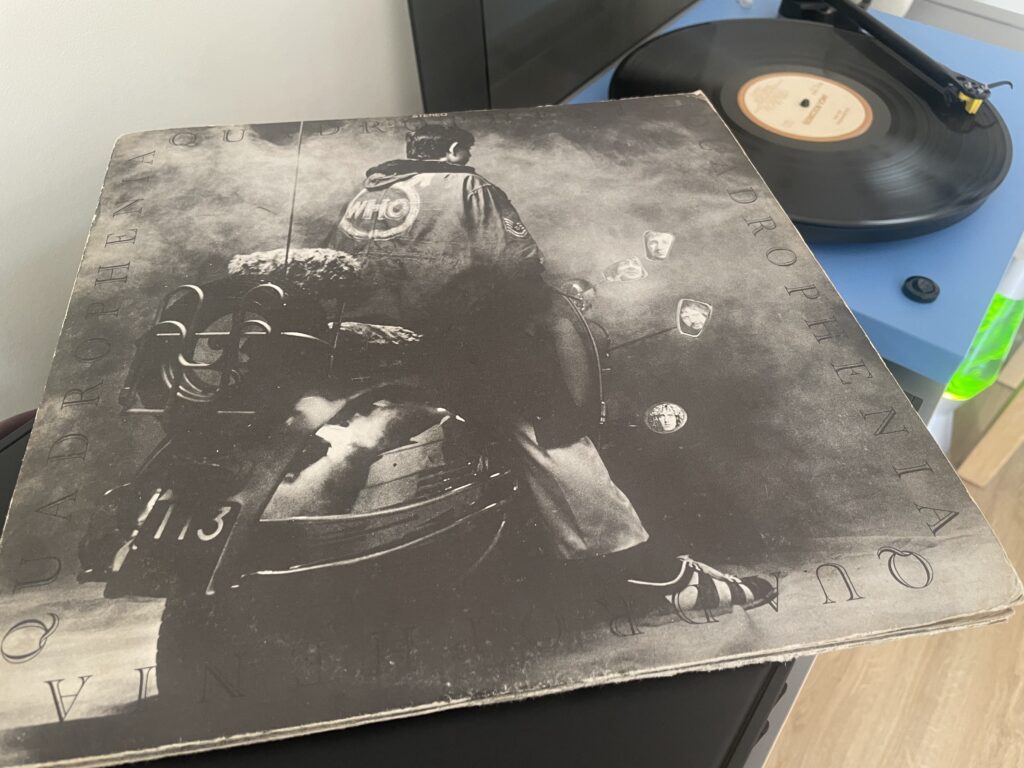
The Who, Quadrophenia. Mod concept double album from 1973.


There is a particular kind of arrogance required to follow a masterpiece with an act of self-demolition, and Pete Townshend has never been short of it. By fifteen minutes into Quadrophenia, the listener has already been drowned, half deafened and abandoned on a rain-lashed beach with nothing but a scooter horn for company. That is precisely the point. This was never going to be a comfortable record, and comfort was never what The Who were selling. What they were selling, in the autumn of 1973, was a working-class boy’s nervous breakdown scored for a rock band that had, by its own reckoning, gone slightly mad trying to make it.

Released as a double album on 26 October 1973 on Track Records, Quadrophenia arrived heavy with expectation. Here was a band fresh from the twin triumphs of Tommy and Who’s Next, the former having invented the rock opera more or less by accident, the latter standing as the tightest, most muscular thing they had ever put on wax. Townshend, never a man to repeat a trick when a bigger one was available, decided the follow-up would be his masterwork: a return to the mod scene that had made The Who in the first place, told through the eyes of a fictional teenager called Jimmy Cooper, and structured around the idea that Jimmy’s cracked personality contained four distinct selves, one for each member of the group. It is a conceit so audacious it could easily have collapsed under its own cleverness. That it mostly doesn’t is the whole story of why this record still matters.

The Concept: A Mirror Cracked Into Four

The title itself is a piece of Townshend wordplay, a splicing of “schizophrenia” with the “quadrophonic” surround sound format the industry was flirting with at the time, itself never quite catching on the way stereo had. But the real meaning sits closer to home. Jimmy is a mod, one of the pilled-up, scooter-riding, sharp-suited kids who had swarmed Brighton and Margate a decade earlier, and his four warring facets are drawn directly from the four members of the band that made him. Daltrey supplies “a tough guy, a helpless dancer”. Entwistle is “a romantic”. Moon, inevitably, is “a bloody lunatic”. Townshend himself settles for “a beggar, a hypocrite”, which tells you rather a lot about how the album’s author saw his own contribution to the story.

Townshend later called it “a sort of musical Clockwork Orange”, and there is something of Alex’s alienation in Jimmy’s arc: a lad chewed up by dead-end work, indifferent parents, a girl who prefers his best mate, and a subculture that promises belonging and delivers only another set of rules to break against. Set explicitly in London and Brighton in 1965, the record trades on the mods and rockers riots that had scandalised middle England the year before, using that moral panic as the backdrop for a story that is really about something much smaller and much more universal: a boy who cannot work out who he is, surrounded by people who claim to know exactly who they are and are almost certainly lying.

What separates Quadrophenia from Tommy is that Townshend was no longer working in symbolism and pinball metaphor. He was writing what he knew. This was his own adolescence, transplanted onto a fictional narrator, full of purple hearts necked on a Brighton-bound train, of humiliating scenes at the family dinner table, of a scooter wrecked in a fit of self-disgust and a final, ambiguous reckoning on a rock out at sea. The record ends not with resolution but with a kind of exhausted clarity, Jimmy stripped of his parka, his pills and his illusions, asking only to be washed clean by something bigger than himself. Whether he lives, dies, or simply grows up is left deliberately unresolved, which is more or less the correct way to end a story about being seventeen.

Production: Chaos in Battersea

The making of Quadrophenia is as much a part of its legend as anything printed on the sleeve. Work began as early as May 1972, but was repeatedly derailed. Entwistle and Daltrey were off making solo records, Moon was distracted by film work, and Townshend himself had a failed multimedia project called Lifehouse still smouldering in the background, its wreckage supplying several of the songs that would eventually surface here. When serious sessions resumed in the summer of 1973, the band’s own new studio, a converted building on Thessaly Road in Battersea nicknamed The Kitchen, was still a building site, plaster dust and all. The solution was to wheel in Ronnie Lane’s Mobile Studio and use it as a makeshift control room while the walls went up around them, which gives you some idea of the seat-of-the-pants energy that runs through the finished record.

Engineering fell to a young American named Ron Nevison, hired more or less by accident and kept on because the band liked what they heard. It was, by his own account, easily the biggest and most technically demanding session he had worked on, and it shows: this is an album stitched together from multi-track synthesiser sequences, sound effects lifted from crashing waves and pouring rain, and a wall of overdubbed brass, all of it performed by Entwistle himself, who by all accounts simply picked up a French horn and got on with it. The band had originally hoped to mix the whole thing in true quadrophonic sound, hence the title, but the format’s technical limitations in 1973 meant the ambition was quietly abandoned in favour of an unusually wide and detailed stereo mix instead. It remains one of the most sonically ambitious rock records of its decade, layered and cinematic in a way few guitar bands were even attempting.

Behind the desk, the record marks a genuine fracture. Kit Lambert, the band’s co-manager and the man who had shaped their sound and their sensibility since the mid-sixties, had drifted into addiction and irrelevance by this point, and his relationship with the group broke down for good during these sessions. He was gone from their day-to-day affairs by the time the album reached the shops, though he retained an executive producer credit as a formality. It is tempting, and probably not wrong, to hear some of the record’s themes of betrayal and abandoned mentors as bleeding directly out of that collapsing relationship. The Who, in other words, made a self-produced record about a boy losing faith in the adults around him while quietly losing faith in one of their own.

There is one more piece of production trivia worth dwelling on, and it says something about how records were actually consumed in 1973 rather than how we imagine they were. The original pressing was what the trade called an auto-coupled release, meaning the two discs were not sequenced the way a listener might expect. Record one carried sides one and four, while record two carried sides two and three, an arrangement that looks like a pressing plant error until you remember the record changer, that now-vanished piece of hi-fi furniture with a fat spindle capable of stacking several LPs at once. Load record one onto the spindle followed by record two on top, and the mechanism would drop and play side one, then side two, in correct running order, without anybody needing to get up. Flip both discs over together and sides three and four would follow in the same fashion. It meant a single owner with a decent changer, or two mates each bringing a copy round, could in theory let the whole eighty-one minute story unfold uninterrupted, an oddly appropriate bit of engineering for a record so preoccupied with continuity and character. It also explains why generations of vinyl collectors, encountering an original Track pressing for the first time and finding sides one and four sharing a disc, have assumed for a moment that they have stumbled on a factory mispress rather than a perfectly deliberate piece of 1973 thinking.

The Personnel: Four Men, Playing Themselves

If Tommy had been Townshend’s story told through the band, Quadrophenia is the band telling Townshend’s story about themselves, and every player rises to the size of the task.

Entwistle’s playing throughout is extraordinary, not least on the opening salvo “The Real Me”, which he has described as essentially a bass solo with vocals attached, and it is hard to disagree. It stands as one of the great recorded bass performances in rock, muscular and melodic at once, and it sets the tone for an album on which “The Ox” is arguably the single most important instrumentalist in the room. His brass arrangements, all performed and overdubbed by himself, give the record its widescreen, almost orchestral quality.

Moon, for his part, delivers what would prove to be his last truly focused studio performance with the band, chaotic and thrilling in equal measure, a man playing as though the kit might escape him at any moment, which by 1973 it very nearly could. Daltrey, so often accused across the band’s catalogue of merely delivering Townshend’s words, finds the role of his career here, particularly on the closing “Love, Reign o’er Me”, where he pushes his voice to a raw, torn extreme that remains one of the definitive vocal performances of the entire classic rock era. And Townshend, credited as sole writer of every note and word on the album, a first and only occurrence in the band’s catalogue, plays guitar with a controlled fury throughout while quietly running the whole ambitious apparatus of synthesisers, orchestration and structure from behind the scenes. He would later call it the best music he had ever written, and on his own instrument’s evidence, it is hard to argue.

The Songs: Seventeen Tracks, One Long Exhale

Across four sides and more than eighty minutes, the record moves with a cinematic patience that rewards, and frankly demands, a single uninterrupted sitting. The opening instrumental collage, “I Am the Sea”, drifts in on surf and gull cries before dissolving into snatches of the four character themes that will recur throughout, “Love, Reign o’er Me”, “Helpless Dancer”, “Bell Boy” and “Doctor Jimmy”, planted here like seeds that will not fully flower for another eighty minutes. It is a device lifted straight from film scoring, and it works.

“The Real Me” then detonates the album proper, all coiled fury and domestic frustration, before the record settles into its narrative stride: the wounded nostalgia of “Cut My Hair”, the desperate pill-popping travelogue of “5:15” as Jimmy rides the train to Brighton, the aching, semi-autobiographical “I’m One”, and the extraordinary “The Rock”, an instrumental piece so densely orchestrated it could stand as a symphonic movement in its own right. “Bell Boy” gives Moon his moment in the narrative spotlight, playing the washed-up former mod hero Ace Face now reduced to fetching towels at a seafront hotel, a piece of very English, very bitter irony about what happens to youth movements once the youth grows up. “Drowned”, written originally as a devotional piece for Meher Baba before being repurposed for Jimmy’s near-suicidal despair, remains one of the rawest, least ornamented things here, and arguably the most purely felt. It all resolves in “Love, Reign o’er Me”, a genuine peak of the entire rock opera form, Daltrey’s voice cracking open over Townshend’s piano and strings in a moment of catharsis that has lost none of its power in fifty years of imitation.

Reception: A Nation Struggling to Keep Up

Critical response on first landing was broadly enthusiastic, if occasionally bewildered by the sheer scale of the thing. Newsweek’s Hubert Saal placed it among rock’s great milestone records. Melody Maker’s Chris Welch called it a masterpiece, the Who at their absolute peak, “sap flowing from the roots of their creation”. Within NME’s own pages the following year, Nigel Rogers went further still, hailing it as the greatest exposition of the rock and roll ethic yet committed to vinyl, a judgement plenty of readers at the time would have thought overblown and which fifty years of hindsight has done nothing to disprove. Rolling Stone’s Lenny Kaye offered the more ambivalent, and in retrospect the more accurate, verdict: The Who at their most symmetrical and most cinematic, and also their most maddening, an album whose ambition occasionally outran its own listenability.

Commercially it did rather better than the reviews suggested it might, going gold on the day of release and platinum within forty-eight hours, eventually reaching number two on both the UK and US album charts, the band’s highest ever placing in America, kept off the top only by Elton John. The touring party that followed was, by every account including Townshend’s own, a genuine disaster. The backing tapes required to reproduce the synthesiser and sound effect parts live were unreliable to the point of sabotage, and the Newcastle date that November ended with Townshend hauling his sound engineer bodily across the mixing desk before smashing his own guitar in fury when the tape sync failed yet again during “5:15”. By February 1974 the band had quietly dropped most of the album from the set. It would be twenty-two years before they attempted it properly again.

Legacy: The Long Afterlife of a Mod Kid

If the initial tour was a wound, the years since have more than healed it. The 1979 film adaptation, directed by Franc Roddam and featuring a young Sting as the doomed Ace Face, arrived at the precise moment of Britain’s mod revival, and did more than perhaps anything else to cement the album’s mythology, dragging the whole story to a new generation of parka-wearing scooter kids who had been in short trousers first time round. Townshend himself has been unambiguous about where it sits in the band’s story, telling NME in 2011 that he had come to regard Quadrophenia as the last truly definitive Who album, the point at which the story, and perhaps the band itself, effectively ended.

It has since taken its place, with little serious argument, among the small handful of rock operas that actually work as records rather than curiosities, name-checked by everyone from Q magazine’s list of the hundred greatest British albums to Rolling Stone’s five hundred greatest albums of all time. The Who returned to it properly in 1996 for a one-off Prince’s Trust performance, then again on a dedicated 2012 to 2013 world tour performing the album in full, and a 2011 Director’s Cut box set unearthed Townshend’s original home demos, revealing just how much careful editing turned a sprawling autobiography into something closer to disciplined cinema.

Fifty years on, what still strikes hardest about Quadrophenia is not its scale, though the scale remains genuinely startling for a band working with 1973 technology in a half-built Battersea studio, but its honesty. This was four men in their late twenties writing about being seventeen and getting it exactly, uncomfortably right: the pills, the parkas, the pack mentality, the sudden lonely comedown on a rain-swept rock when the tribe has scattered and there is nobody left to impress. Jimmy never quite finds himself. Neither, in the end, did the mod movement that spawned him. But the record that tells his story remains one of the very few genuine peaks British rock has ever reached, and it has lost none of its nerve in the telling.

Steve Coulter writes on pop art, punk culture and the music that made them at 45renegade.co.uk.

Retrospective: Bending The Space Time Continuum With Siouxsie and the Banshees

What if the darkest records are not the loudest, but the most controlled? What if the albums that linger are the ones that bend the air in the room rather than batter it? In 1981, Juju by Siouxsie and the Banshees arrived without bombast, yet it altered the physics of post-punk. This is not just a revisit of a proto-gothic touchstone, but a forensic look at how tension, texture and John McGeoch’s discordant guitar architecture combined to create a record that still distorts the light more than four decades on.

Siouxsie and the Banshees Juju Retrospective


Some albums feel as though they were forged rather than pressed, as if the grooves were cut into something denser than plastic. Not vinyl, but matter with its own gravitational pull. The kind of record that seems to bend the space around the turntable, to alter the light in the room once the needle drops. Juju by Siouxsie and the Banshees is one of those records. We remember it as blacker than black not because of chemistry or pressing plant folklore, but because it behaves like dark matter, invisible yet undeniable, distorting everything that drifts too close.

When it arrived in 1981, the Banshees were not evolving so much as condensing. Earlier line-ups had explored abrasion, fracture, psychedelia. With John McGeoch fully integrated alongside Siouxsie Sioux, Steven Severin and Budgie, the band found a way to make tension feel engineered rather than instinctive. This was not a question of genre alignment. It was a question of control. The songs on Juju feel calibrated, their emotional temperature set deliberately cool, their eruptions carefully rationed.

McGeoch’s contribution is often described in terms of texture, but that risks underselling the precision of his discord. He favoured suspended fourths and fifths, open strings ringing against fretted notes a semitone away, small harmonic frictions that never quite resolve. On “Spellbound,” the signature figure is built from interlocking arpeggios that refuse to land squarely on a comforting root. The chorus effect widens the sound, but it is the interval choices that create unease. He lets notes hang just long enough for their overtones to collide. The result is tension without clutter.

Nigel Gray’s production understands that less is not emptiness. The album is remarkably defined. Budgie’s toms are tuned to resonate rather than thud, giving his circular patterns a ritualistic thrum. Severin’s bass is forward enough to be melodic but never woolly. The guitar is bright, sometimes almost metallic, carved into its own frequency range so that every harmonic scrape is audible. Nothing bleeds. Nothing smears. The darkness comes from structure, not murk.

If McGeoch bends the air, Siouxsie controls its pressure. Her vocal performance across Juju is far more technical than its reputation for incantation suggests. She uses vibrato sparingly, often holding notes straight and cool before allowing the slightest tremor at the tail end. On “Arabian Knights,” she tightens her phrasing, clipping consonants, letting certain vowels stretch into faint sneers. The effect is not melodrama but disdain sharpened to a point. She sings slightly behind the beat at key moments, creating drag against Budgie’s insistent patterns.

“Monitor” showcases another facet of her control. She narrows her tone, almost flattening it, reducing expressive flourish so that the lyric feels observed rather than confessed. The performance mirrors the theme of surveillance. She sounds as though she is watching herself sing. That self-conscious distance becomes part of the album’s architecture.

“Into the Light” deserves closer inspection than it often receives. The track is driven by a pulsing, almost motorik bass figure from Severin, but it is McGeoch’s ascending arpeggios that give it lift. He builds the main pattern from repeating shapes that shift position incrementally, creating the sensation of upward motion without obvious modulation. The guitar tone is cleaner here, less abrasive, but the intervals remain unsettled. There is always a note that sits slightly askew, preventing the euphoria from turning soft.

Siouxsie meets that structure with one of her most dynamic performances on the record. She begins in a relatively low register, voice contained, then gradually opens it out, allowing more air into the tone as the song expands. Listen to the way she attacks the word “light,” the initial consonant crisp, the vowel bright but never sentimental. She resists full-throated release. Even at the track’s most expansive moments, she maintains a core of steel in the sound. The transcendence here is disciplined. It rises, but it does not dissolve.

The production reinforces this restraint. Gray keeps the drums dry enough to feel immediate, avoiding cavernous reverb that would have pushed the track into bombast. Delay is used to create width rather than wash. The stereo image feels stretched but anchored, the rhythm section holding the centre while guitars flicker at the edges. The effect is propulsion without chaos.

“Voodoo Dolly” remains the album’s slow detonation. It begins with space. McGeoch voices chords with deliberate gaps, leaving a hollow in the middle of the mix. As the track builds, he increases density rather than distortion. Additional notes are layered, sustains lengthen, dissonances become more pronounced. Budgie tightens his patterns, the toms growing more insistent. Severin’s bass thickens the floor.

And Siouxsie changes. Her repeated line becomes progressively less contained, but never uncontrolled. She allows more grit into the upper register, pushing the note until it strains against pitch without collapsing. The tension is physical. You can hear the breath. You can hear the restraint. Gray captures this escalation with forensic clarity, ensuring each harmonic clash and vocal edge remains distinct.

More than four decades on, Juju still feels heavy because it was designed that way. Its darkness is not cosmetic. It is structural, embedded in interval choices, in drum tuning, in vocal phrasing, in the careful refusal of excess. It does not rely on atmosphere as shorthand. It constructs it from first principles.

Play it now and the vinyl looks unremarkable. The black is ordinary. What is not ordinary is the way the room seems to contract once it begins, the way the air feels fractionally denser. The gravitational pull was never in the plastic. It was in the decisions. And those decisions continue to bend the space around the record, holding it in orbit long after so many of its contemporaries have drifted into background radiation.

Retrospective: Television – Marquee Moon

New York in the mid to late Seventies was a city eating itself alive. Bankrupt on paper, feral in practice, littered with burnt-out cars, shuttered storefronts and the low-level menace of economic collapse. Out of this came CBGB, a former biker bar on the Bowery whose original promise of roots music curdled almost immediately into something far more interesting. It became a refuge for the literate, the maladjusted and the terminally dissatisfied. Punk did not so much arrive there as coagulate. And among the first bands to understand that this new language could be stretched, warped and interrogated rather than simply shouted was Television.

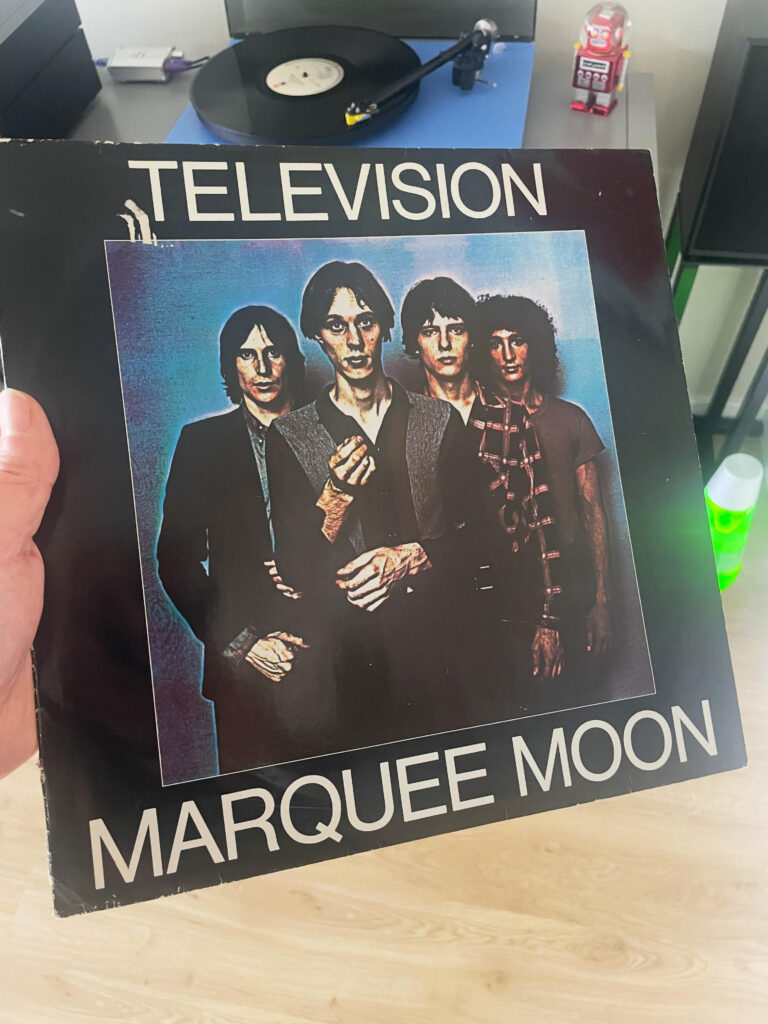
Tom Verlaine had already been living inside this world for years by the time Marquee Moon appeared in early 1977. Alongside Richard Hell he had escaped New Jersey boredom, bonded over poetry, speed and a shared belief that rock music should aspire to something sharper than stadium heroics. The Neon Boys, their early incarnation, were less a band than a sketchbook. When Hell departed in 1975 to form the Voidoids taking with him the ripped shirts and confrontational nihilism that would become punk’s uniform, Television were freed from the obligation to perform rebellion in quotation marks. What remained was a band increasingly obsessed with structure, tone and the slow burn of ideas unfolding over time.

CBGB became their proving ground. While other groups detonated through short sets like flash-bangs, Television played long, winding songs night after night, refining them in public. Guitar lines evolved incrementally. Tempos breathed. Solos were not indulgences but arguments. By the time Elektra committed them to tape, these songs had been lived inside, paced around, stripped back and rebuilt. This was not punk as rupture but post-punk as concentration.

The first thing that still startles about Marquee Moon is its clarity. In an era obsessed with distortion and speed, Television chose exposure. Verlaine and Richard Lloyd rejected the familiar hierarchy of rhythm and lead, opting instead for two guitars in constant dialogue. Lines coil, overlap and contradict each other. Melodies appear, dissolve, then reappear altered. Verlaine’s tone is all treble edge and nervous elegance, like fluorescent light flickering on wet pavement. Lloyd grounds the music without weighing it down, muscular but articulate. Beneath them, Fred Smith’s bass moves rather than anchors, while Billy Ficca’s drumming borrows from jazz as much as punk, restless, rolling, impatient with straight lines.

Andy Johns’ production deserves credit for knowing when to disappear. Best known for capturing the brute force of Zeppelin and the Stones, here he allows space to remain space. You hear fingers scrape strings, cymbals decay naturally, air move in the room. Nothing is smothered. Nothing is disguised.

The album unfolds like a series of nocturnal walks through the same city seen from different angles. “See No Evil” announces itself with a rush of romantic urgency, its guitars darting ahead of the beat as if chasing something just out of reach. “Venus” reframes desire as motion and uncertainty, its lyric more impression than declaration. “Friction” hums with paranoia, Verlaine’s voice hovering between detachment and barely concealed anxiety, a perfect document of urban overstimulation.

Then there is the title track, still one of the most audacious statements ever made by a band nominally associated with punk. Ten minutes long, refusing any conventional chorus, it unfolds patiently, methodically. The closing guitar passage is not a solo in the heroic sense but a gradual ascent, Verlaine circling a figure, stretching it, worrying at it, until something breaks open. It feels earned rather than delivered. The listener is trusted to stay with it.

That trust is why Marquee Moon continues to endure. It has never belonged comfortably to its moment. While safety pins and sneers quickly dated, this record remained oddly ageless. Its concerns alienation, romantic idealism, intellectual hunger, the solitude of city life still resonate because they were never tied to fashion. Each generation finds it not as an artefact but as an invitation.

Its influence is everywhere yet curiously diffuse. You hear its DNA in post-punk, indie and art rock, in bands who learned that guitars could converse rather than compete. Sonic Youth, R.E.M., The Strokes and countless others absorbed its lessons, but no one has ever really replicated it. That is because its magic lies in a precise convergence of people, place and temperament that cannot be reverse engineered.

Most new wave guitar records chased velocity and attitude. Marquee Moon chased precision and clarity. It demonstrated that intensity did not require volume, that virtuosity did not need flash, and that punk’s most radical gesture might be patience. Television never surpassed it and never needed to. The album stands complete, self-contained, immune to time.

It remains the sound of New York before it was cleaned up, when danger and beauty shared the same bar stool and ideas mattered as much as noise. A record that asks you to listen closely, think longer, and walk home alone replaying its guitar lines like secret diagrams. Not just one of the greatest new wave guitar albums, but one of the rare rock records that feels inevitable, as though it was always there, waiting for the right minds to tune into it.

OPINION: The 51st State Thought Experiment

Britain becoming the 51st state is fantasy. Britain choosing to behave like one is not. This what-if examination explores how a pro-US Reform government could radically reshape the economy, science and social contract by embracing American models rather than apologising for them.


The fantasy is not that Britain becomes the 51st state of America. The fantasy is that Britain can continue as it is – adrift from Europe and with a tenuous US trade agreement. The more plausible future is less dramatic and far more unsettling: a sovereign Britain that keeps the Crown, the pound and its sense of self, but quietly reorganises its economy and institutions around an American centre of gravity.

A pro-US Reform government would not ask for stars on the flag. It would do something more radical and more realistic. It would ask whether Britain’s post-war settlement, its economic etiquette and its suspicion of ambition are still fit for a century shaped by American power, capital and technology.

The 51st state thought experiment matters not because it might happen, but because it exposes what would change if Britain stopped pretending it was something other than what it already is: a mid-sized, high-talent, under-leveraged economy living inside an American system without admitting it.

Britain already inhabits an American world. Its security is guaranteed by American military power. Its technology sector is fuelled by American capital. Its cultural output is measured against American benchmarks, even when it pretends to resist them. What Britain lacks is not independence, but honesty.

A Reform government aligned with the United States would frame this not as submission, but as realism. Growth before comfort. Scale before sentiment. Outcomes before process. Britain would remain sovereign, but it would stop behaving as though sovereignty meant insulation from global gravity.

This would mark the end of Britain’s long habit of moralising its own inertia. The language would change. Decline would no longer be described as dignity. Stagnation would no longer be defended as fairness. Alignment would become a choice, not an embarrassment.

The central economic shift would be philosophical. Growth would cease to be treated as a happy accident and start being treated as a moral obligation. Labour markets would be loosened. Planning laws would be stripped back in the name of speed. Capital would be welcomed without apology. Failure would be tolerated rather than stigmatised.

The results would look uncomfortably American. More volatility. More visible inequality. More upside for those prepared to move quickly and take risk. Regions that adapt would accelerate. Regions that do not would fall further behind.

This would be defended as an end to managed decline. Britain has spent decades spreading stagnation evenly and calling it social justice. A pro-US Reform government would argue that fairness without growth is simply decay with better manners.

In this Britain, personal wealth would stop being something that required apology. Equity would matter more than salary. Ownership would matter more than tenure. The cultural suspicion of ambition would be quietly retired.

This would produce more millionaires and more discomfort. Britain’s class system has always existed, but it prefers to operate in soft focus. An American-style economic reboot would sharpen the image. Winners would be obvious. So would those left behind.

The political wager would be that aspiration matters more than equality, and that people tolerate inequality better than they tolerate the sense that nothing ever improves.

Britain’s strongest case for alignment lies in science and technology. This is not a declining sector, nor a fragile one. Britain is already a serious force in artificial intelligence, life sciences, quantum computing, climate tech and fintech. Its problem is not ideas, but scale.

A pro-US Reform government would align regulation, funding and research priorities with the American innovation system. Capital would move more freely. Defence and dual-use research would be expanded. Universities would be treated less as heritage institutions and more as strategic assets.

The effect would be immediate. Fewer startups selling early to Silicon Valley. More companies scaling at home. London, Cambridge, Oxford, Manchester and Edinburgh operating as an integrated research and innovation corridor plugged directly into American capital and compute.

The cost would be autonomy. Britain would risk becoming a research engine for American priorities rather than a global rule-setter in its own right. But the counter-argument would be blunt. Ideas without scale are just exports waiting to happen.

The NHS would survive a Reform reboot, but it would lose its untouchable status. A hybrid system would emerge, closer to American reality than European idealism. Public provision would remain a floor, not a ceiling. Private care would be normalised rather than whispered about. Insurance-style supplementation would spread quietly.

Outcomes would improve for those with money and worsen for those without resilience. Access would speed up. Anxiety would rise. But the system would become more honest about what it can and cannot provide.

The Reform case would be unapologetic. A healthcare system that functions primarily as a moral symbol is not a functioning system.

Education would be reframed as strategic infrastructure. Elite universities would be celebrated rather than apologised for. Fees would be defended as investment. Student debt would be normalised. Skills pipelines would be aligned ruthlessly with technology, defence, engineering and energy.

Inequality would arrive earlier, but ceilings would rise. Britain would stop pretending that universal sameness produces excellence, and start admitting that outcomes depend on concentration of resources and intent.

The most disruptive change would be cultural. Politics would become louder, faster and more confrontational. Consensus would be treated as delay. Consultation would be seen as obstruction. Media would grow more polarised, more performative and more American.

Britain would lose some of its quiet decency and gain a sense of direction. Whether that trade is worth making depends on how much one values calm over momentum.

Would this Britain work? Economically, almost certainly. Technologically, very likely. Socially, only if Britain accepts that equality of outcome is no longer the organising principle.

This is the truth buried inside the 51st state thought experiment. Britain does not need to become American. It needs to decide whether it still believes in growth, ambition and power, or whether it prefers decline that feels fair.

A pro-US Reform government would not be asking Britain to surrender its identity. It would be asking whether that identity has become a comfortable excuse for underperformance. The future on offer is not annexation. It is acceleration.

The real question is not whether Britain could survive behaving more like America. It is whether it can survive continuing to pretend it is not already living in America’s world.

OPINION: Is A Purged Conservative Party More Electable?

Part two of a two part article analysing Conservatism in the U.K. in the medium term.

There is a quietly growing temptation within Conservative circles to believe that renewal might come not through unity, but through separation. Let the hard right go, the thinking runs. Let the most ideologically driven MPs, the culture-war entrepreneurs and permanent insurgents, drift over to Reform. Once they are gone, the Conservative Party can finally stop arguing with itself and start sounding like a government again.

In this version of events, Reform ends up holding the baby. All the anger, all the absolutism, all the promises that only work so long as nobody has to implement them. The Conservatives, relieved of the need to placate a faction that thrives on opposition, are left with something closer to a centre-right governing party. Sober, technocratic, mildly unexciting. In other words, electable.

It is an attractive theory. It also carries far more risk than many of its advocates are willing to admit.

The case for letting the far right peel away is rooted in the damage the Conservative brand has suffered over the past decade. This is no longer simply about policy disagreement. It is about credibility. After fourteen years in office, the party is widely seen as chaotic, emotionally volatile and prone to promising things it knows it cannot deliver. Much of that impression has been reinforced by a wing of the party that treats compromise as weakness and governing constraints as proof of betrayal.

Remove that faction and something important changes. A Conservative Party no longer constantly looking over its shoulder could talk about the economy without indulging in unfunded tax fantasies. It could talk about immigration without theatrical cruelty or legal brinkmanship. It could stop flirting with withdrawal from international frameworks it has no realistic intention of leaving, and start presenting itself once more as a steward of institutions rather than their sworn enemy.

That kind of party would not excite. But it might begin, slowly, to rebuild trust.

The assumption underpinning this strategy is that Reform, emboldened by defecting MPs, would ultimately be exposed by proximity to responsibility. Protest parties flourish in opposition because they are never forced to reconcile slogans with consequences. Give Reform a parliamentary cohort with ministerial experience and suddenly the questions become unavoidable. How is this paid for? What happens when policy collides with the courts? How does Britain function the morning after the rhetoric ends?

In theory, Reform ends up louder but thinner, its appeal dulled by the realities of power. The Conservatives, meanwhile, recover their sense of seriousness.

The difficulty is that British elections are not won on theory. They are won under a first-past-the-post system that is unforgiving of fractured coalitions. The Conservative Party has never succeeded by being universally admired. It has succeeded by being the default option for a broad and often uneasy alliance of voters who see it as the least risky vehicle for government.

Split that alliance and the consequences are brutal. A centre-right Conservative Party polling in the mid-twenties might be more respectable than the version voters have rejected. It might even be quietly welcomed back into polite society. Under the electoral system, it would still lose heavily if Reform were taking a significant share of the vote in the same seats. Respectability does not translate into majorities. Arithmetic still matters.

This is where historical comparisons begin to mislead. There is a fond tendency to invoke the John Major era, a time when Conservatism felt quieter, less performative, more managerial. But Major governed at the end of a long period of Conservative dominance, with a Labour opposition still struggling to persuade voters it was ready for office. Neil Kinnock never governed, and by the time Labour finally won, it did so having reshaped itself almost beyond recognition.

A modern centre-right Conservative Party would be rebuilding from opposition in a far harsher environment. Labour today is not tentatively approaching power but settling into it. The media landscape is faster, angrier and less forgiving. The right is not unified but splintered, with Reform positioned not as a temporary irritant but as a permanent rival.

Competence alone will not be enough to overcome that. It may be necessary, but it is not sufficient.

Where a renewed Conservative Party could make genuine progress is not immediately at the ballot box, but in the public imagination. At present, many voters do not feel permitted to vote Conservative, even if they share some of its instincts. The party feels exhausting. Unstable. Locked in arguments that have little to do with their lives.

‘A post-exodus Conservative Party that quietly abandons legal grandstanding, accepts the basic architecture of the state, and speaks honestly about trade-offs would begin to change that perception. Slowly, it could restore the idea that voting Conservative is a responsible choice rather than an act of frustration.‘

But this is a long process. It requires a leader who looks credible rather than transitional. It requires policies designed to work rather than to signal. It requires, above all, time in opposition that is used productively rather than resentfully.

The greatest risk is that Reform does not implode on schedule. It may not collapse under the weight of responsibility. It may instead harden into a durable political identity, one that no longer sees itself as a protest but as a cause. At that point, the right does not realign. It divides permanently, leaving the Conservatives facing a choice between accommodation and irrelevance.

So could a renewed centre-right Conservative Party thrive after a far-right exodus, leaving Reform holding the baby? Eventually, perhaps. But not quickly, and not without pain.

Letting Reform take responsibility may expose its limitations. It may also entrench a split that keeps Labour in power for a generation. Renewal, if it comes, will be slow, disciplined and unglamorous. It will require the Conservatives to accept a deeply unfashionable truth.

Growing up in politics often means losing first, and learning while others govern. The question is whether the party has the patience, and the nerve, to endure that process rather than reach again for the comfort of noise.

OPINION: Reform And The Politics Of Absolution

Can Reform’s promise of a clean sweep of politics withstand the adoption of ex-Conservatives with ‘form’? Part one of a two part article considering Conservatism in the U.K. in the medium term.

There is a comforting fiction in British politics that collapse can be cured by costume change. When a party has governed badly for long enough, when the slogans curdle and the faces harden, the solution is not reckoning but relaunch. New name, new logo, new promise of authenticity. The country, weary and overstretched, is invited to believe that this time the people responsible for the mess have seen the light. History suggests otherwise.

Reform sells itself as rupture. It trades on the language of outsiders, of broken systems, of a political class that has failed and must be swept aside. It speaks fluently to a public mood shaped by falling living standards, collapsing public services and the sense that politics has become an exercise in self preservation rather than public good. This is not a marginal complaint. It is the defining economic and cultural experience of the past decade and a half. Reform’s appeal rests on the claim that it stands apart from that record, that it represents something clean, unsullied and impatient with the habits of Westminster.

That claim becomes harder to sustain the moment Conservative MPs are welcomed through the door.

The problem is not moral purity. Politics is not a monastery and experience is not a sin. The problem is narrative credibility. You cannot plausibly run as the antidote to fourteen years of Conservative economic mismanagement while recruiting people who voted for it, defended it and remained loyal to it long after its failures were obvious and cumulative. Voters may be cynical, but they are not amnesiac. They know who was in the room.

There is a sleight of hand at work here that British politics has become dangerously comfortable with. Failure is treated as a collective fog rather than a series of choices. Responsibility dissolves once a rosette is removed. The same politician who defended austerity, waved through Brexit without a delivery plan, nodded along as public investment withered and stood silent during the Truss episode is reborn overnight as a truth teller who was somehow trapped inside the wrong organisation. It is a politics of absolution without confession.

Reform’s defenders argue that these defectors were never really Conservatives in spirit, that they were marginalised or ignored, that the party left them rather than the other way round. This is a convenient story, but it collapses under even light scrutiny. Politics is not therapy. If you sit on the government benches, vote with the whip and enjoy the privileges of office, you own the outcomes. You do not get to claim outsider status simply because the building later caught fire.

What makes this more than a branding problem is the economic context. The damage of the past fourteen years is not abstract. It is felt in mortgage statements, in tax bills, in the visible decay of public space. Britain is poorer relative to its peers than it was, less confident, more tightly wound. Any party promising renewal has to reckon with that record honestly. Reform has instead chosen to blur it.

There is a cold tactical logic behind the decision. First past the post is brutal to insurgents. MPs bring procedural knowledge, media oxygen and local infrastructure. A party made entirely of political novices risks looking unserious, especially to voters who want competence as much as anger. From that perspective, defectors are not ideological converts but useful tools, proof that Reform is no longer just a protest but a parliamentary force.

‘The risk is that in trying to look serious, Reform ends up looking familiar.‘

This is where the Farage paradox becomes acute. Farage’s political strength has always rested on distance. He flourishes as a commentator on failure, not as its custodian. His gift is to articulate discontent from the outside, to channel grievance without owning the consequences of power. That posture weakens the moment his party fills up with people who very much owned things. The outsider myth frays when the insiders arrive carrying their voting records.

There is also a deeper identity problem that Reform has not resolved. Insurgent movements and replacement parties are not the same thing. Insurgents exist to destabilise, to force issues onto the agenda, to break taboos. Replacement parties inherit the system, its rules, its compromises and its moral baggage. Reform is trying to be both at once. It wants the electricity of revolt and the respectability of office. It wants to burn down the old house while quietly moving the furniture in next door.

‘British political history is littered with movements that failed at this exact point. They mistook anger for consent and novelty for absolution. They discovered too late that voters will forgive inexperience more readily than they forgive complicity. A fresh face can learn. A familiar one has already had their chance.‘

The most dangerous assumption Reform makes is that disillusioned voters are shopping only for tone. That they want someone to say the right things loudly enough and that the backstory is secondary. In reality, economic decline sharpens moral judgement. When people feel poorer, they become less tolerant of narrative tricks. They ask simpler questions. Where were you when this happened. What did you vote for. Why did you stay.

Reform could, in theory, confront this head on. It could set clear conditions for entry, demand public reckonings, draw hard lines between those who resisted and those who acquiesced. It could articulate structural reasons why it would not repeat Conservative failure rather than relying on vibes and volume. It has not done so. Instead, it has opted for absorption and hope.

The danger is not just that voters will see through it. The danger is that Reform slowly becomes what it claims to oppose, a vessel for recycled careers, a shelter for politicians seeking moral laundering rather than renewal. At that point the promise of change collapses into something more familiar and more depressing, the idea that British politics is an endless loop of the same people failing under different banners.

In the end, voters will make a judgement less ideological than Reform expects. They will not pore over manifestos or factional histories. They will look at faces and ask whether this feels like escape or continuation. If the answer is continuation, no amount of rhetoric about refreshment will save it. A system does not renew itself by rehiring its own authors and asking the public to pretend they are new.

OPINION: Art Punk & The Dismissal Of Punk Orthodoxy

Art punk was the moment punk stopped congratulating itself and started asking harder questions. Emerging in the late Seventies as a dismissal of punk orthodoxy and refusal to let that rebellion calcify into costume. It channelled punk’s energy through conceptual art, minimalism, electronics and a deep suspicion of rock mythology. Bands on both sides of the Atlantic treated punk less as a sound than as a method, stripping it down, warping it and, in some cases, dismantling it altogether. What followed was music that alienated as often as it thrilled, and in doing so quietly reshaped everything that came after.


Art punk was never a genre anyone involved bothered to name at the time. Like most labels that later harden into received wisdom, it was applied by critics trying to explain why certain Seventies punk records sounded wilfully strange, emotionally evasive and intellectually awkward compared to the pub-brawl version of punk that nostalgia prefers to freeze-frame. Punk, in the familiar story, was about demolition, a righteous zero hour where rock was burned down and rebuilt from instinct alone. Art punk accepted the need for destruction, then immediately started asking what else might be salvaged from the wreckage. Ideas, for one. Doubt, irony, formal experiment, the suspicion that rock music might actually benefit from thinking too hard about itself.

The distinction was not technical ability or even experimentation for its own sake, but intent. Art punk distrusted punk’s own emerging clichés almost as much as it despised the bloated theatrics of Seventies rock. It had no interest in authenticity as sweat or sincerity, seeing both as just another costume. Instead, it treated rock as a medium to be dismantled, reframed and occasionally mocked. Songs could be cut short, stretched into abstraction or reduced to repetition. Lyrics might read like fragments, slogans or private jokes at the listener’s expense. Performance itself became a problem to be solved, often by draining it of charisma altogether.

New York provided the first sustained proof that punk did not have to mean bluntness. Television looked like a rock band but behaved like a literary salon with amplifiers. Their long, spiralling guitar lines owed more to jazz, poetry and restraint than to punk’s scorched-earth economy. Marquee Moon remains a provocation precisely because it refuses easy allegiance. It is neither punk-as-slogan nor rock-as-spectacle, but something cool, elevated and faintly aloof, a record that suggested punk might be a framework rather than a rulebook.

Talking Heads took a different route, draining punk of romance and replacing it with tension. Early Talking Heads records sound like anxiety formalised, clipped rhythms and minimal figures supporting lyrics obsessed with alienation, systems and self-surveillance. Borrowing freely from Dada, conceptual art and pop anthropology, they treated the modern city as both subject and laboratory. Punk here was no longer about escape but about exposure, about making the listener sit with their own discomfort.

If Talking Heads intellectualised punk, Suicide obliterated its remaining assumptions. Drum machines, primitive synthesisers and confrontational repetition stripped rock to its barest, most threatening elements. Suicide were not interested in scenes, solidarity or even approval. Their music functioned like an endurance test, daring audiences to confront boredom, menace and emotional void. In retrospect, they feel less like a punk band than a warning about where punk might end up if it followed its own logic to the extreme.

That logic became even more unstable in the American Midwest. Pere Ubu sounded like industrial collapse rendered as art. Drawing on musique concrète, free jazz and an atmosphere of civic decay, they made punk that felt genuinely alien. The Modern Dance was not a refinement of punk but a mutation, proving that the form could absorb noise, abstraction and paranoia without becoming polite. It is no accident that later British post-punk musicians treated Pere Ubu less as peers than as evidence that almost anything was possible.

Conceptual control reached its most explicit form with Devo, who turned the band into a piece of performance art. Their theory of de-evolution, identical uniforms and mechanical rhythms drained rock of humanist pretence. Devo’s satire was not playful but forensic, exposing the stupidity and conformity beneath American optimism. Punk, for them, was simply the most efficient delivery system for bad news.

In Britain, art punk arrived not as an opening statement but as punk’s second thought. Once the safety pins were commodified and the outrage routinised, bands began interrogating what punk could still do. Wire understood earlier than most that punk’s real weapon was not speed or volume but reduction. Pink Flag treated songs as raw material, slogans rather than statements. What followed was even more radical: a steady erasure of punk itself in favour of electronics, abstraction and distance. Wire did not betray punk. They completed it, then moved on.

Magazine offered a more overtly literary escape route. Howard Devoto replaced punk’s blunt nihilism with modernist unease, his lyrics circling alienation, desire and power rather than simply rejecting everything in sight. The music incorporated keyboards and art-rock structures without lapsing into comfort. Magazine mattered because they insisted that punk intelligence did not have to disguise itself as rage.

If some of this still looked like rock music, Throbbing Gristle arrived to ensure that nobody in the U.K. at least felt safe confusing art punk with entertainment. Emerging directly from the performance art collective COUM Transmissions, Throbbing Gristle treated sound as material and provocation as principle. Tape loops, electronics, transgression and deliberate moral discomfort replaced songs altogether. Their work sits at the outer edge of art punk, but it is essential, because it demonstrates the endgame of punk taken seriously as an artistic idea rather than a style. Once you accept that anything can be questioned, you eventually question whether music needs to behave like music at all.

The influences that shaped these bands rarely pointed backwards. Minimalism suggested repetition without payoff. Krautrock offered propulsion without blues heritage. In praise of negative space Dub revealed space and absence as compositional tools. Conceptual art legitimised irony, framing and emotional detachment. Above all, art punk rejected sincerity as a moral virtue. Authenticity, as rock had defined it, was exposed as another sentimental fiction.

What makes art punk still matter is how badly it fits with the way punk is now remembered. Contemporary punk nostalgia prefers leather jackets, simple narratives and the comforting lie that rebellion can be endlessly replayed without consequence. Art punk tells a harsher truth. It says that punk only mattered when it refused to behave, when it alienated its audience, when it dismantled its own myths faster than the market could package them. Very little of that spirit survives in a culture that treats punk as heritage branding.

Art punk was not about saving punk. It was about proving that punk was disposable. That once its job was done, the only honest response was to push it somewhere uncomfortable and leave it there. The real scandal is not that punk ended, but that so much of what followed pretended it never asked these questions at all.