‘Just a Symptom of the Moral Decay That’s Growing in the Heart of the Country’
the The, Soul Mining. Some Bizzare/Epic, 21 October 1983
Most British pop in 1983 danced or shouted. Soul Mining sat in the dark and took stock.
Matt Johnson was in his early twenties. He had already made one strange, private record. Now he made seven songs that blended synth-pop, jazz, funk, blues and tape-loop experiment, describing two things at once: a man coming apart and a country coming apart. The album sold steadily, later went gold in the UK, and has never dated because it was never in fashion. Four decades on, it sounds like a warning that was mistaken for a mood.
Britain in 1983
Margaret Thatcher took office in May 1979. Her government cut public spending and fought inflation with high interest rates and tight control of the money supply. Industry took the hit. Factories, steelworks and shipyards closed, and by early 1982 unemployment had passed three million. The inner cities erupted in 1981, in Brixton, Toxteth and elsewhere.
The Falklands War in 1982 restored her standing. In June 1983 she won a landslide, helped by a Labour Party in disarray and an opposition split between Labour and the SDP-Liberal Alliance. The miners’ strike was a year away. Soul Mining came out four months after the election, into a country that had just re-elected the government that was closing its factories.
That timing matters. The record does not sound like protest. Protest assumes someone is listening. It sounds like the morning after a lost argument, when the result is in and the consequences are still arriving.
The man behind the name
Johnson was born in London in 1961 and grew up in a pub family in East London. His father ran the Two Puddings in Stratford for almost forty years. Johnson has said the blues came up through the floorboards. He had been in bands since the age of eleven.
After leaving school he spent something like eighteen months to two years alone, mostly in his bedroom with tape recorders, long walks and books. He calls it a hothouse. It made him a one-man studio. He taught himself tape looping, read up on musique concrète, and learned to build a record by layering his own parts. Burning Blue Soul came out on 4AD in 1981 under his own name and was later reissued as a The The album. It cost about £1,800, and he made it while signing on.
Johnson’s politics
Johnson is left of centre by instinct but no party man. He distrusts every institution: state, church, press and party alike. He has said his quarrel with America is with the corporate powers that steer its foreign policy, not with Americans. He lived in New York for several years and calls downtown Manhattan his spiritual home. He reads geopolitics most nights and has spoken of wanting to write about the people behind the people, without preaching.
Later records made this explicit. Infected (1986) took on Thatcherite Britain and the Cold War with open anger. Mind Bomb (1989) turned on religious fundamentalism and drew mixed reviews for it. In 2002 he walked away from the music business, citing bad publishing and management deals that leave mid-sized bands in debt while their records earn fortunes for others. That is the same suspicion of power, applied to his own trade.
Soul Mining is the quieter, earlier version. The politics arrive as weather. Unemployment, decline and the feeling of being stuck in a place that no longer needs you run through the record, but the songs are about people, not policy. A slogan dates within a year. A person waiting for a job that will not come still reads as true.
Making the record
Work began in spring 1982 in New York, where a twenty-year-old Johnson cut “Uncertain Smile” and “Perfect” with producer Mike Thorne on London Records’ money. When CBS signed him instead, those sessions were dropped and he started again in London. He bought a Portastudio, a Fender Strat, an Omnichord, a couple of small synths and a Roland TR-606 drum machine, and wrote the songs lying on the floor of his flat. With no sequencer, he played parts for ten minutes at a time and used the takes as loops.
The album was then made in Shoreditch at John Foxx’s Garden studio, co-produced with engineer Paul Hardiman, who had worked with Wire. Zeke Manyika, Thomas Leer, Jim Thirlwell and Jools Holland guested. It was mixed at Martin Rushent’s Genetic Sound. Johnson wanted something cinematic, wide and deep, and he did not want two guitars, bass and drums. The full cast and what connects them is in Part 2.
The songs
I’ve Been Waitin’ for Tomorrow (All of My Life). The opener runs on Manyika’s vicious drumming and Leer’s restless synth, built from long loops. The title says it all: a life spent waiting for something to start. The eager rhythm and the deferred hope pull against each other, and that tension sets the tone for the rest.
This Is the Day. Wix Wickens (credited as “Wicks”) plays accordion and Paul Boyle plays fiddle, giving the intro the feel of a French street café. It is the one bright song and the best loved. The opening line turns the old blues line about waking up in the morning on its head. It reached only number 71 in 1983. A reworked version, “That Was the Day”, reached number 17 in 1993, and the original has since turned up in Guardians of the Galaxy Vol. 3 and Netflix’s One Day. Even here the day is passing.
The Sinking Feeling. This is the political centre. The title works twice: the private dread of the small hours and the public sense of a nation going under. Johnson has called it and “The Twilight Hour” the more insecure songs on the record. It reads as a portrait of a man and a country going down together.
Uncertain Smile. It opens on a homemade tape loop of African-sounding percussion, then settles into chiming guitars and synthetic strings. The song grew from a demo called “Cold Spell Ahead”. It is about a relationship where nobody knows what anybody feels. Holland’s piano solo was recorded in essentially one take, and it is among the finest in pop. It runs like a party in the next room, then stops, and the unease returns.
The Twilight Hour. A slow, late-night piece that lets the album breathe. It is closer to a confession than a song.
Soul Mining. The title track has a downcast, Afro-tinged synth pulse. The title states the method: dig into yourself and use whatever you find, however ugly.
Giant. Johnson’s own favourite closes the album. Industrial rhythms, deep bass and chanting build a long groove that keeps shifting and never resolves. My reading is that it is about scale, the feeling of being small beside something too large to fight.
The human condition, without a filter
The lyrics deal with insecurity in relationships, social alienation and dream imagery. Johnson writes about loneliness, desire, jealousy, self-disgust, drink, fear and the slow pressure of time, and he does not tidy any of it into a lesson. There is no last-verse rescue. A song may argue itself towards hope and lose.
He is not a poet of wit, like Morrissey, or of abstraction, like Ian Curtis. He is closer to a reporter of the interior, someone who writes down what he feels at three in the morning and leaves it as written. That is why the record has aged so well. The details of 1983 fall away and the feelings stay.
The music is also generous. Jazz-tinged piano, live percussion, fiddle and accordion sit beside the synths and drum machine. The contrast is deliberate: the sound invites you in and the words tell you the truth.
Reception and afterlife
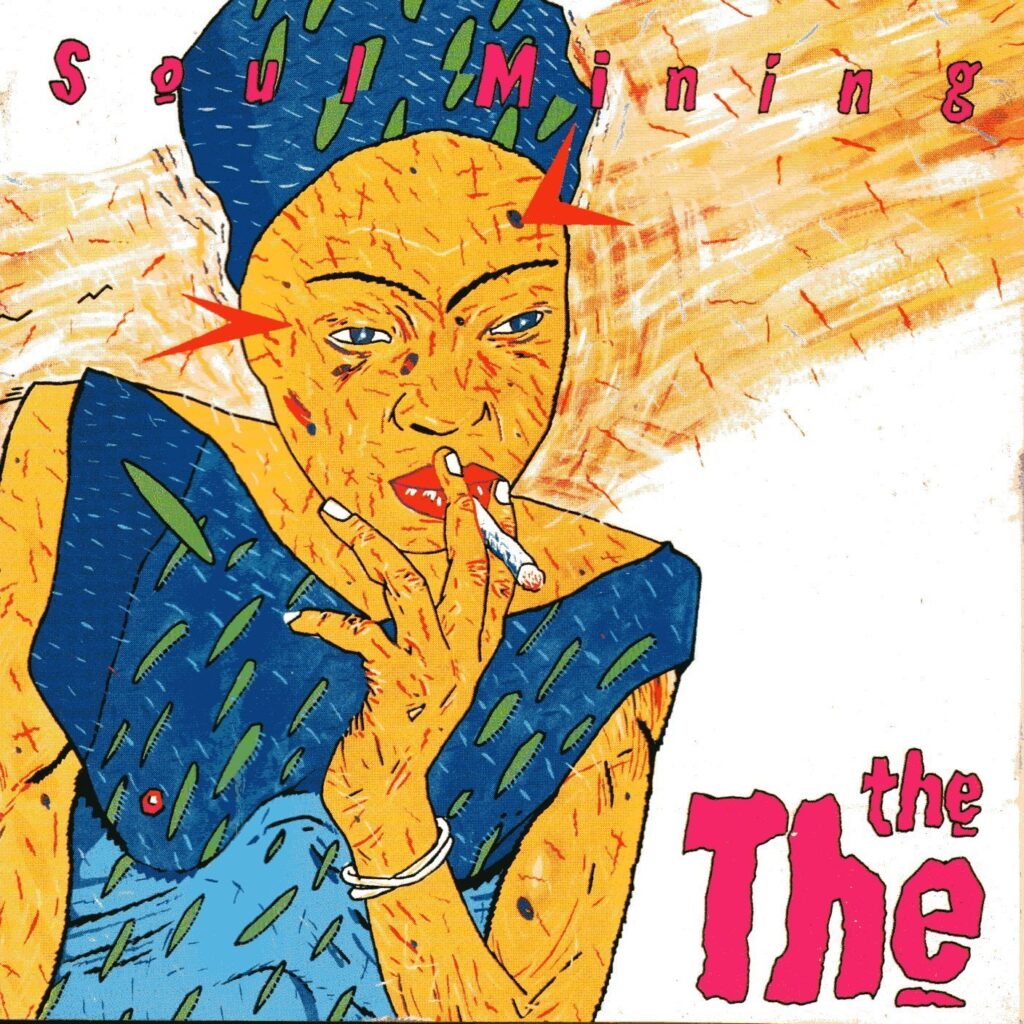
Johnson refused to appear on the sleeve or to tour. He doubted the record could be played live, since samplers were not yet affordable, and he did hundreds of interviews instead. The European sleeve is a painting by his brother Andy Dog of one of Fela Kuti’s wives holding a joint, and the typeface was drawn by his girlfriend Fiona Skinner.
The label added “Perfect” to the end of some editions without his approval. He fought to have it removed and finally succeeded in 2002. The song began life under the title “Screw Up Your Feelings”.
The 2002 remaster was compressed hard, by Johnson’s own admission. For the 2014 anniversary box he had the tapes remastered at Abbey Road with barely any processing, and he says they sounded as if they had been recorded a week earlier. In 2024 he released Ensoulment, the first The The album in twenty-four years.
Verdict
The album’s central mood is precarity: the ground is not solid and nobody in charge is coming to help. Every decade since has produced its own version of that feeling, and Soul Mining still fits. It does not tell you what to think. It shows you what it felt like and lets you reach your own conclusion.
It is not an easy album to love. It is an easy one to trust.
Part 2, The Web Behind the Record, is a reference guide to the people, studios, machines and management that shaped the album, and to why it shares so much with its 1983 neighbours.
Soul Mining, Part 2: The Web Behind the Record
Part 1 reviewed the songs. This is the reference guide: who managed, played and produced, where it was made, on what equipment, and why the record shares so much with the synth-pop of 1983.
Management: Stevo and Some Bizzare
Stevo Pearce was a Dagenham club promoter who talked Sounds into printing his Futurist chart of new electronic acts. Some Bizzare began in 1981 with a compilation of unsigned bands including Depeche Mode, Soft Cell, The The and Blancmange. It worked more as a management umbrella than a conventional label. The roster later took in Marc Almond, Cabaret Voltaire, Einstürzende Neubauten, Foetus, Swans, Coil and Psychic TV.
His method was to get major labels to fund recordings while he kept ownership. Soft Cell’s number one with “Tainted Love” in 1981 gave him leverage. Johnson lived the sharp end of it: London Records paid for his first New York trip with nothing in writing, then CBS signed him. Stevo is also said to have licensed Soul Mining to more than one label.
Johnson credits Stevo with running the best label in Britain for about three years, before he wrecked it. He remembers the acts as a close scene, with Soft Cell, Psychic TV, Cabaret Voltaire, Foetus, Einstürzende Neubauten, Test Dept and Swans hanging out together. Any problems were with Stevo, not the bands.
People
- Marc Almond. Johnson was a member of Marc and the Mambas for their first two albums and played guitar on Torment and Toreros. Almond returned the favour in 1982 by joining Johnson on guitar and vocals for a run of Marquee shows in Soho.
- J.G. Thirlwell (Foetus). He appears on Soul Mining as “Frank Want”, building a rhythm from pots and pans taken from the studio kitchen. The same credit appears on the Mambas record. He also guested on the Mambas as Foetus.
- Zeke Manyika. The Orange Juice drummer turned up three days late and then produced the drum sound on the opener.
- Thomas Leer. He plays synth on the opener. His one-man single “Private Plane” was what convinced Johnson he could work without a band.
- Jools Holland. He played the “Uncertain Smile” solo in one take on a Yamaha C3 grand, having arrived in leathers on a Norton in summer heat.
- Wix Wickens, Paul Boyle and Andy Duncan. Accordion, fiddle and drums on “This Is the Day”. Wickens later became Paul McCartney’s musical director.
- Steve Sherlock. A core Mambas member. His flute and sax appear on tracks from Johnson’s shelved Pornography of Despair sessions, which ended up on the 12-inch of “Uncertain Smile”.
- Wire. Wire’s Bruce Gilbert and Graham Lewis co-produced Burning Blue Soul. Hardiman had engineered for Wire, and Thorne produced Wire’s early records.
- Design. Andy Dog painted the sleeve and Fiona Skinner drew the typeface.
Producers and studios
- Mediasound, New York, 1982. The first “Uncertain Smile” and “Perfect”, produced by Mike Thorne, who had produced Soft Cell’s debut. Johnson liked Thorne’s sound but found it soft. Stevo fell out with Thorne, and Johnson switched to Paul Hardiman, who gave the sound more edge.
- The Garden, Shoreditch. John Foxx’s studio, where the main work was done. Foxx was a founder of Ultravox. Johnson later ran the studio with Miloco until 2012.
- Advision and Sarm West, London. Used for the 1983 version of “Uncertain Smile” and for “This Is the Day”.
- Genetic Sound. Martin Rushent’s studio, where the album was mixed. Rushent produced the Human League’s Dare.
- Trident, London. Where the Mambas made both albums. Flood co-produced Torment and Toreros with Almond and later produced Depeche Mode.
Equipment
Johnson’s own list is modest: a Portastudio, a Fender Strat, a Suzuki Omnichord, a couple of small synths and a Roland TR-606 drum machine, with Tannoy speakers for monitoring. He had no sequencer, so he played parts for ten minutes at a time and used the takes as loops. His earliest work used an Akai tape machine, a Big Muff pedal and echo boxes.
The rest came from outside the machines: a homemade tape loop of percussion on “Uncertain Smile”, pots and pans on the kitchen floor, a good grand piano in a good room, and an accordion and a fiddle. One retailer’s sleeve notes claim the drum machines came from the Human League’s studio. Johnson’s own account contradicts that, so treat it as folklore.
The accordion and the café
The intro to “This Is the Day” is one of the album’s signature sounds. Johnson wanted no fixed line-up, so fiddle and accordion could sit on one song and cellos and synthesiser on another. The French street-café feel is a fair reading of that pairing.
There is a thread to support it. The Mambas’ Torment and Toreros, which Johnson played on in 1983, mixed vaudeville with French chanson and covered Jacques Brel. The same circle was absorbing the same influences. Johnson also recalls a French journalist asking why nearly all his songs were in minor keys, a habit he had never noticed.
Why the 1983 sound overlaps
Listen to Soul Mining with contemporaries and it shares ground with New Order’s Power, Corruption and Lies, the Human League, Heaven 17 and Depeche Mode. The reasons are practical.
- Shared rooms and people. A small circle of London studios and a few producers served many acts. Thorne, Rushent and Flood moved between artists, so techniques and textures travelled with them.
- Cheap electronics. Drum machines, sequencers and small synths became affordable, so a solo artist could make a full record at home. Johnson’s TR-606 and Portastudio sit at the modest end of that shift. The bigger acts had the same idea with larger budgets.
- Post-punk players turning to electronics. Wire alumni, John Foxx and Thomas Leer all came from punk and its aftermath, not conservatory training. They favoured rhythm and texture over virtuosity, and they crossed over between bands.
- A label system built on introductions. The 1981 Some Bizzare Album put Soft Cell, Depeche Mode, Blancmange and The The on one disc. Depeche Mode then moved to Mute, but the friendships stayed.
- New York club music. The Thorne sessions were made in New York, and the early 1980s club scene there is a stated influence on the album. Dance rhythms with dark lyrics were the common target.
- Major-label money. CBS, Phonogram and London funded proper studios and polished mixes, which pushed rough electronic demos towards a cleaner, wider sound.
Where Soul Mining differs
The overlap is in the sheen, not the method. Johnson worked from tape loops and musique concrète, layered his own parts, then brought in live players: drums, piano, fiddle, accordion, percussion from the kitchen. Africa, the blues and jazz piano all sit inside the electronics. New Order and the Human League built their sound on sequencers and machines. Soul Mining used the machines as a frame and filled it with people. That is why it belongs to its year and still sounds like nothing else from it.